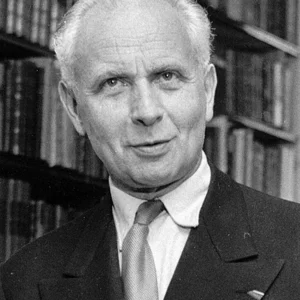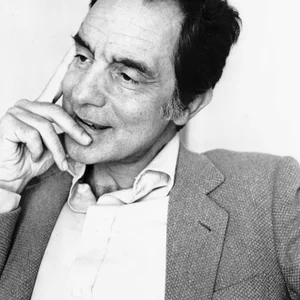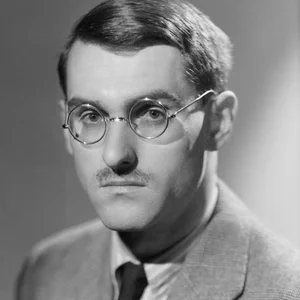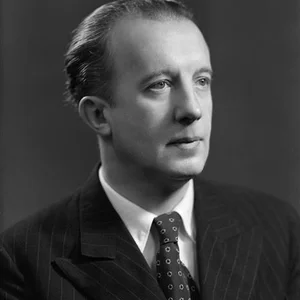

French poet (1895-1952), a major figure of Surrealism and committed poetry. Author of 'Liberty' (1942), he joined the Resistance during World War II and became a symbol of militant poetry against oppression.
Paul Éluard(1895 — 1952)
Paul Éluard
France
8 min read
Frequently asked questions
Famous Quotes
« There is no chance, there are only appointments.»
« Poetry must have both beauty and usefulness.»
Key Facts
- 1914-1918: Participates in World War I, an experience that deeply shapes his poetry
- 1924: Joins the Surrealist movement and co-founds the journal 'Littérature'
- 1942: Publishes 'Liberty' during the German occupation, a poem that became an anthem of the Resistance
- 1942-1944: Actively engages in the French Resistance
- 1951: Receives the Lenin Peace Prize
Works & Achievements
A major collection that reveals Éluard as a great poet of love and suffering. It contains poems of exceptional musicality, blending surrealist imagery with pure lyricism.
A surrealist collection exploring the inseparable bond between love and poetic creation. It opens with the famous line 'The earth is blue like an orange', which became an emblem of surrealist language.
A collection published clandestinely during the Occupation, whose poem 'Liberty' became the symbol of the French Resistance. Dropped by the RAF, it was read throughout occupied Europe.
A collection of resistance poems written during the Occupation and published at the Liberation. It bears witness to Éluard's commitment against Nazism and for human dignity.
An artist's book pairing Éluard's poems with photographs of Nusch taken by Man Ray. This collaboration illustrates the surrealist fusion of poetry, photography, and desire.
A collection illustrated by Pablo Picasso, bearing witness to the deep friendship between the two artists. It blends love poems with reflections on artistic creation.
A collection written after the sudden death of Nusch in 1946, a true cry of pain and grief. It stands as one of the most poignant testimonies to love and loss in French poetry.
Anecdotes
In 1942, Éluard's poem 'Liberté' was parachuted by the RAF over occupied France in the form of leaflets. Thousands of copies fell from the sky to encourage the Resistance, transforming a lyrical poem into a symbolic weapon against the Nazi occupier.
Éluard had met his first wife, Gala, in a Swiss sanatorium in 1912 while he was being treated for tuberculosis. She later left him for Salvador Dalí, deeply wounding the poet, who sublimated this pain into an intense lyrical body of work on love and loss.
In 1924, in the midst of a profound existential crisis, Éluard suddenly disappeared without warning anyone and set off on a spontaneous trip around the world. André Breton and his Surrealist friends organised a collection to bring him back to Europe, concerned for his mental health.
A member of the French Communist Party from 1942, Éluard refused to leave the party following the death of Paul Nizan, despite pressure to do so. He publicly defended his political convictions until his death in 1952, convinced that poetry should serve the cause of human emancipation.
The poem 'Liberté' was initially composed as a love poem intended for his companion Nusch. At the last moment, Éluard decided to replace his beloved's name with the word 'Liberté', transforming an intimate declaration into a universal manifesto of resistance.
Primary Sources
On my school notebooks / On my desk and the trees / On the sand on the snow / I write your name / [...] / And by the power of a word / I begin my life again / I was born to know you / To name you / Liberty.
The earth is blue like an orange / Never a mistake words do not lie / They no longer give you songs to sing / Now it is the turn of kisses to understand each other.
I told you so for the clouds / I told you so for the tree of the sea / For each wave for the birds in the leaves / For the pebbles of sound.
You are the woman of my life and you remained so even when you left me. The pain you caused me only served to feed the verses I write, and for that I cannot hold it against you.
Paris is cold Paris is hungry / Paris no longer eats chestnuts in the street / Paris has put on old women's old clothes / Paris sleeps standing up without air in the metro.
Key Places
Birthplace of Paul Éluard, born in 1895 in this working-class town in the northern suburbs of Paris. His working-class origins influenced his social sensibility and later political commitment.
The neighbourhood where Éluard lived and frequented literary and artistic cafés (La Rotonde, Le Dôme), at the heart of the Surrealist ferment of the 1920s–1930s. It was here that he mixed with Breton, Picasso, Ernst and Man Ray.
Mountain resort where the young Éluard stayed in a sanatorium between 1912 and 1914 to treat his tuberculosis. It was there that he met Gala, his first muse and future wife.
Town in the Paris suburbs where Éluard lived with Max Ernst and Gala in a complex Surrealist and romantic ménage in the early 1920s, an experience that left a profound mark on his life.
The town where Paul Éluard died on 18 November 1952 of a heart attack. He is buried at Père Lachaise Cemetery in Paris.
Typical Objects

Éluard wrote his verses in notebooks he constantly carried with him. Handwritten composition was for him a fundamental stage of poetic work, the act of writing being an integral part of the creative process.

During the Occupation, Éluard's poems circulated as mimeographed or clandestinely printed leaflets. 'Liberté' was distributed throughout France and dropped by the Allies, becoming a symbol of cultural resistance.

A close friend of Max Ernst, Salvador Dalí and Pablo Picasso, Éluard lived surrounded by surrealist artworks. He regularly collaborated with painters, writing poems in response to their canvases.

Published from 1924 to 1929, this journal was the main organ of the Surrealist movement to which Éluard regularly contributed. It embodied the Surrealists' ambition to transform life through art and poetry.

In the 1930s and 1940s, Éluard used a typewriter to produce clean copies of his manuscripts before publication. This tool symbolises the transition between intimate creation and the public dissemination of his work.

Éluard carefully preserved photographs of his second wife Nusch, who posed both for Surrealist artists and for intimate portraits. These images fed his poetic imagination until the young woman's death in 1946.
School Curriculum
Vocabulary & Tags
Key Vocabulary
Tags
Mouvement
Daily Life
Morning
Éluard rose early and often began his day by reading newspapers and correspondence with his poet and artist friends. He would jot down images and verses that came to mind in a notebook he kept at his bedside, convinced that the unconscious worked during sleep.
Afternoon
Afternoons were often devoted to meetings in the cafés of Montparnasse or visits to artists' studios. Éluard regularly collaborated with painters such as Picasso and Ernst, discussing art, politics, and literature in a constant intellectual ferment.
Evening
Evenings frequently brought together the Surrealist group — Breton, Aragon, Péret — for readings aloud, automatic writing games, and lively political debates. Under the Occupation, these gatherings became more discreet and dangerous, organized clandestinely.
Food
Like many intellectuals of his generation, Éluard shared the simple meals of Parisian cafés — soups, bread, cheese, table wine. During the war years and Occupation, food was rationed and scarce, a reality evoked in his resistance poems ('Paris a froid Paris a faim').
Clothing
Éluard dressed soberly in the manner of the bohemian intellectuals of his time: dark suit, open shirt, sometimes a tie worn casually. He affected neither bourgeois elegance nor working-class attire, but a modest appearance reflecting his egalitarian convictions.
Housing
Éluard lived in several Parisian apartments over the years, often modest but always filled with artworks given by his painter friends. His walls were covered with canvases by Picasso, Ernst, and Dalí, turning his home into a genuine informal Surrealist museum.
Historical Timeline
Period Vocabulary
Visual Style
Un style visuel ancré dans l'esthétique surréaliste — images oniriques et couleurs intenses — contrebalancé par la sobriété graphique et tendue des imprimés clandestins de la Résistance.
Sound Ambience
Entre les cafés animés du Montparnasse surréaliste et le silence tendu de la clandestinité sous l'Occupation, l'univers sonore d'Éluard oscille entre effervescence créatrice et résistance feutrée.
Liens externes & ressources
Références
Œuvres
Capitale de la douleur
1926
L'Amour la Poésie
1929
Poésie et Vérité (contenant 'Liberté')
1942
Au rendez-vous allemand
1944
Facile (avec Man Ray)
1935
Les Yeux fertiles
1936
Le Temps déborde
1947