Kids interview Louis Aragon
by Charactorium · Louis Aragon (1897 — 1982) · Literature · 4 min read
Two twelve-year-old students, on a school trip, push open the door of an apartment on the Rue de Varenne. On the desk, manuscripts, photographs of a woman with deep eyes. An old gentleman with white hair invites them to sit down.
—Where did you meet your best writer friend?
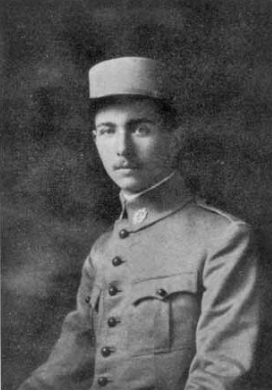
You know, my child, it was in 1917, at the military hospital of Val-de-Grâce, in Paris. The First World War was raging. We were both orderlies, young, barely twenty. Imagine two boys dressing wounds by day, and talking poetry by night. That friend was named André Breton. We thought we were the only ones in the world who loved words like that. From this friendship was born a review, Littérature, then a whole movement, Surrealism. You see, sometimes a great adventure begins in a sad place, between two hospital beds.
Sometimes a great adventure begins between two hospital beds.
—What was your first book you were proud of?
Le Paysan de Paris, written in 1926. Let me explain. In my day, there were glass-covered galleries in Paris, called covered passages. Little streets under a roof, with dusty shops, barbers, cane sellers. I walked through them as if in a waking dream. I wrote: “There are forests in books as there are in dreams.” I wanted to show that the marvelous is not far away, my child. It is around the corner of your street, if you learn to look at it.
The marvelous is around the corner of your street, if you learn to look at it.
—What did Surrealism mean to you?
Good question! Surrealism was about trying to free what lies hidden at the back of your mind: dreams, strange images, thoughts you dare not say. With Breton, in 1924, we even did “hypnotic sleeps.” Imagine: friends would half-fall asleep and write without thinking, to let their unconscious speak. It was strange, sometimes a little frightening. We were searching for a truth deeper than ordinary reality. I had the wonderful feeling of exploring a new land. But a land, you see, you always end up wanting to leave to see others.
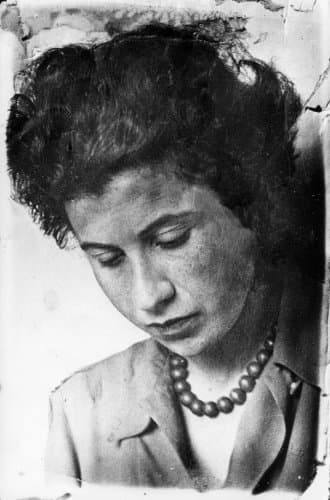
—Were you in love? Who was the lady in the photos?
Ah, you noticed her portraits on my desk. That's Elsa Triolet. I met her one evening in 1928, in Paris, at a party. A Russian writer, with a gaze you don't forget. You know what it's like, to cross someone's path and feel your life has just changed? That's what happened to me. She became my wife, my companion, and above all the one who inspired my poems. For forty years, until her death in 1970. I wrote for her a line that people still repeat: “Woman is the future of man.”
Woman is the future of man.
—Is it true you wrote about her all the time?
Almost, yes. My most beautiful collection is called Les Yeux d'Elsa, from 1942. Listen to these words: “Your eyes are so deep that when I bend to drink / I have seen all the suns come to mirror themselves there.” You hear how it sings? Elsa was my treasure, and also my courage. When I was afraid, when the war made everything dark, I thought of her, and I wrote. Treasure those you love, my child. They are the ones who give you the strength to move forward, even in the darkest nights.
—During the war, how did you manage to write without getting arrested?
It was dangerous, my child, very dangerous. During the Occupation, the Nazis banned our words. So I invented a trick. I wrote poems that looked like simple love songs, with old-fashioned rhymes, like in the time of the troubadours. But inside, I hid messages of Resistance. They were printed in secret, in clandestine reviews like Les Lettres françaises, and passed from hand to hand under the cloak. Imagine a sheet of paper traveling from hand to hand, in the evening, without a sound. My old rhymes had become silent weapons.
My old rhymes had become silent weapons.
—Did you write a poem about executed people? What was the story?
Yes, La Rose et le Réséda, in 1943. It's a true and sad story. Men had been executed by the occupier. Some were believers, others did not believe in God; some communists, others Catholics. Before the war, everything separated them. But they died side by side, for the same France. So I wrote: “He who believed in heaven / He who did not believe in it.” You understand? I wanted to say that we can be very different and fight together for what matters. Death had united them; my poem had to make them unforgettable.
We can be very different and fight together for what matters.
—Why did you become a communist after being a surrealist?
You ask a big question there. In 1927, I joined the Communist Party. You see, Surrealism sought to change dreams. I also wanted to change the lives of workers, of the poor. I believed that over there, in Russia, they were building a fairer world. So around 1930, I fell out with my surrealist friends and took another path. I traveled to Moscow, full of hope. I believed in it with all my heart, maybe too strongly. When you're young, my child, you need to believe in something greater than yourself.
—And afterwards, were you disappointed? You seem sad about it.
You read my face well. In 1956, a Russian leader, Khrushchev, revealed the terrible crimes committed by Stalin, whom I had admired. Imagine suddenly learning that your hero was doing harm. It broke my heart. I put that pain into a book, Le Roman inachevé, a kind of confession. I write: “I resemble that monarch / More unhappy than unhappiness.” Believing strongly is beautiful, my child. But you also have to keep your eyes open, and sometimes accept that you were wrong. That is what it means to grow up.
Believing strongly is beautiful, but you must keep your eyes open.
—If we remember only one thing about you, what would you like it to be?
What a lovely question to end with. You know, I was a poet, novelist, resistance fighter; I wrote Aurélien, La Semaine sainte, so many pages. But if you must keep only one thing, keep this: I loved. I loved Elsa, I loved my country, I loved words. All my life, I tried to make beauty and justice stronger than fear. A poem, you see, never really dies; it is still recited, long after the one who wrote it. So read, my child. Learn verses by heart. It is my most beautiful way to go on living.
A poem never really dies.
This imaginary interview was generated by artificial intelligence from sources documented in Louis Aragon's profile. It dramatises what the figure might have said based on what we know about them, but does not constitute attested historical testimony. For primary sources and factual documentation, refer to the full profile.