Kids interview Ludwig van Beethoven
by Charactorium · Ludwig van Beethoven (1770 — 1827) · Music · 5 min read
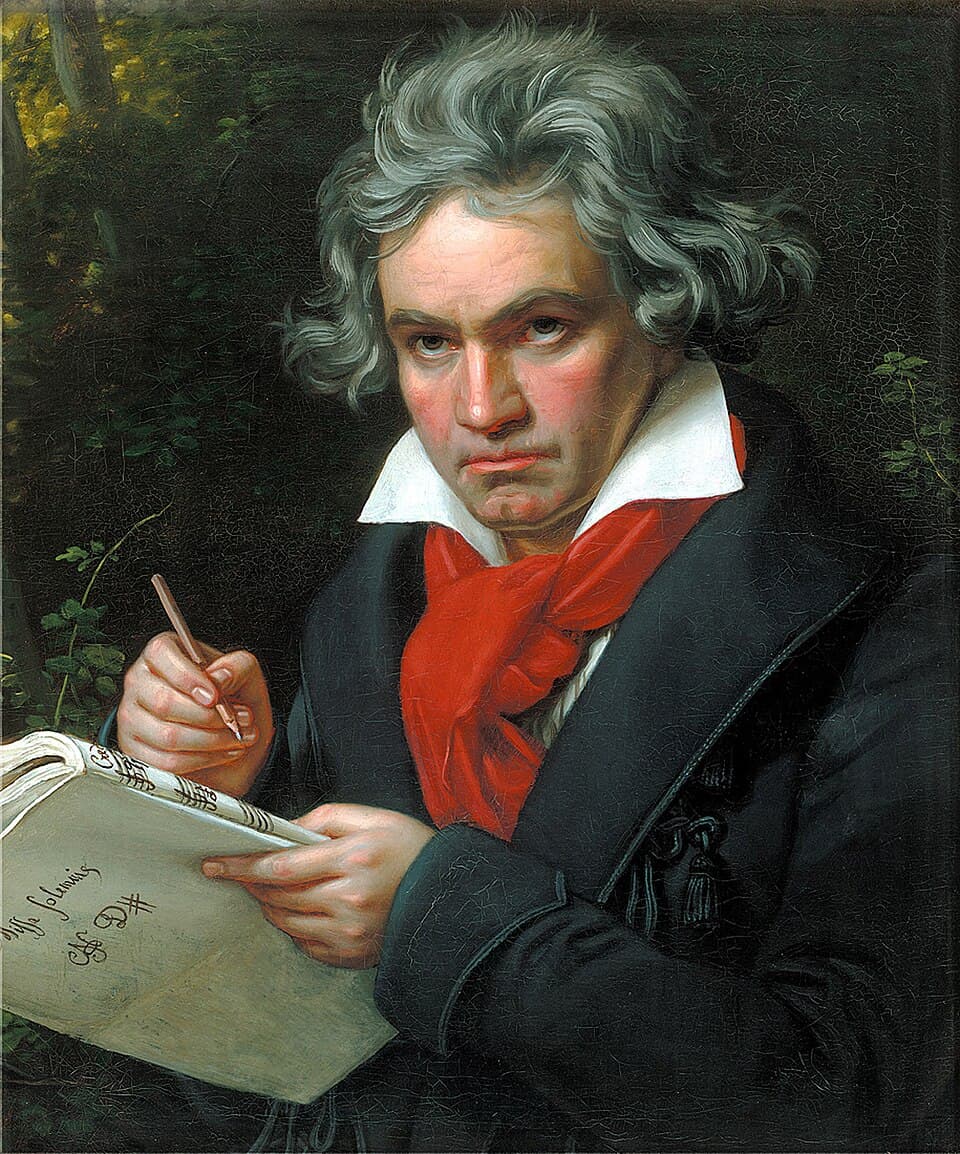
Two young visitors of twelve push open the door of a messy Viennese apartment. Sheet music lies everywhere, a cold cup of coffee waits on the desk. In the middle of it all, an old gentleman with tousled hair waves them over and asks them to write down their questions.
—What was your house like? It looks like a mess everywhere!
Ah, you have a sharp eye, my child! Yes, it's quite a mess here. You see those papers on the floor? Those are my musical ideas. I sleep poorly, so I work from dawn, sometimes before even getting dressed. And in the morning, I make my own coffee. But careful: I count the beans. Sixty beans, not one more, not one less, for each cup. My neighbors don't like me much. I forget to clear my plates, I sing loudly, I stomp my feet. In Vienna, elegant people find me a bit wild. But imagine: if you had a whole symphony in your head, would you think about the dishes?
Sixty coffee beans per cup: on that, I was as precise as a score.
—Why did you move so many times? Didn't you like your houses?
You won't believe me: I changed apartments more than sixty times! Each time, I left behind debts and a great mess. Sometimes an angry landlord threw me out. But the real problem is that I always dreamed of a window with a view of the countryside. You know, in my time, a musician like me didn't earn his bread alone. I had rich protectors, nobles. They were called patrons: Prince Lichnowsky, Archduke Rudolph. They paid me an annuity, a little money each year, so I could compose in peace. Without them, I would have been cold and hungry. But I never agreed to become their servant.
A patron feeds you, but your music belongs to no one.
—Is it true that you went deaf? When did it start, and were you scared?
Yes, my child. And it's the hardest thing in my life. It started around 1798, when I was still young. First a ringing, then sounds fading away. For a musician, you understand, it's like a painter going blind. I was ashamed, I wanted to hide it. I wrote to my friend Wegeler: “I lead a miserable life.” I avoided people, because I couldn't tell them: I am deaf. Imagine you have to hide a huge secret, every day, from everyone. That was my fear. But I made a decision: my music, it would keep singing, even if my ears fell silent.
My ears fell silent, but I decided that my music would still sing.
—Did you write a sad letter to your brothers? What did you say in it?
You're talking about my testament. In 1802, I went to rest in a small village, Heiligenstadt, near Vienna, to treat my ears. But nothing helped. So, in despair, I wrote a long letter to my brothers. I began: “O you men who think me malevolent, stubborn or misanthropic, how unjust you are to me!” I wanted them to understand: if I seemed cold, it wasn't out of malice. It was because I dared not admit my deafness. I even thought of dying, I confess. And then no. I put that letter away, I took up my pen again. Music kept me alive.
They thought me cold and mean; in truth, I was hiding my sick ears.
—But how do you write music when you can't hear anything anymore?
Ah, that's the real question! You know, I could still hear music… but inside my head. And to feel my piano, I found tricks. I sawed off the legs of my instrument to put it directly on the floor. That way, when I played, the vibrations traveled through the wood and the floor. I felt them in my body. Sometimes, I would hold a wooden stick between my teeth and press it against the piano: the sound traveled up through my jaw into my skull. Imagine that! My friend Mälzel also made me ear trumpets, sort of horns for the ear. The whole body becomes an ear when it has to.
When the ear closes, the whole body starts to listen.
—And how did people talk to you if you couldn't hear them at all?
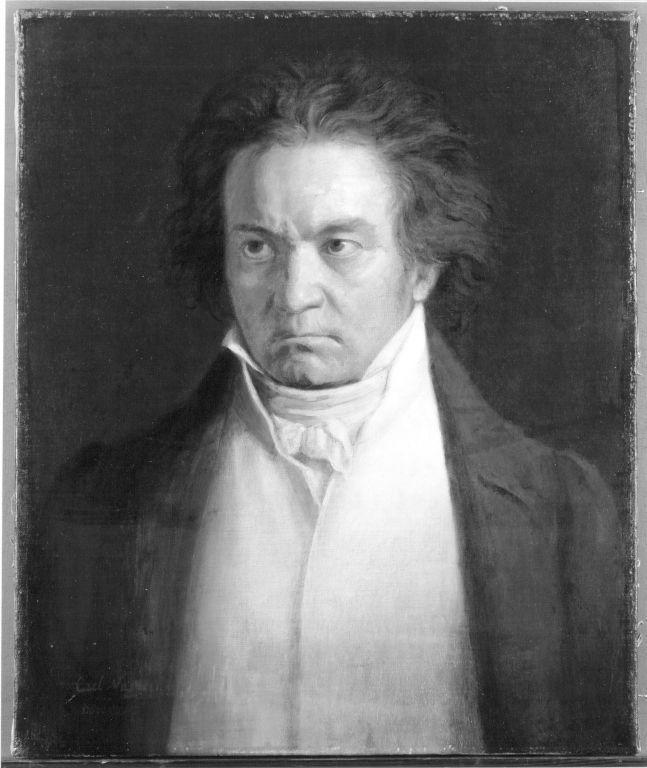
With a pencil, my child! From 1818, I really couldn't hear a voice anymore. So my visitors brought little notebooks. When they wanted to tell me something, they wrote it down, and I answered aloud. They were called my conversation books. Imagine a discussion where half is spoken and half is written! My publishers, my friends, my students: all scribbled in them. We've kept nearly four hundred. They became, without anyone intending it, the diary of my life. You see, even silence leaves traces, if you know how to keep them.
—I heard you really liked Napoleon. Why does a musician like a general?
It's true, I admired him, that Napoleon! Understand: I was young when the French Revolution broke out in 1789. People talked of liberty, equality, they said men no longer had to bow to nobles. And this Bonaparte, I saw him as the hero of those ideas. A man of the people who overthrows kings! So, in 1804, I composed a huge symphony, my Third, and I wanted to put all that heroic force into it. On the title page, I had written his name. For me, it was like dedicating my music to liberty itself. I believed in it with all my heart, you know.

—And is it true that you tore up the page with his name? Were you angry?
Angry? I was beside myself! Listen carefully. That same year, 1804, I learned that Napoleon had crowned himself Emperor. Emperor! He, the man of liberty, putting a crown on his head like the kings before! I felt betrayal. I seized the title page of my symphony, and I scratched out his name so hard I almost tore the paper. Then I gave my work another title: the Eroica Symphony. Not the heroism of one ambitious man: the heroism of all those who fight for something greater than themselves. Beware of heroes, my child: sometimes the crown goes to their head.
Beware of heroes: sometimes the crown goes to their head.
—What is your most beautiful work, the one you are most proud of?
If I had to keep only one… it would be my Ninth Symphony, from 1824. By then, I was completely deaf, I couldn't hear a single note. And yet, I dared something no one had ever done: to have a whole chorus sing in the middle of a symphony. Imagine dozens of voices rising at once! The words came from a poem by my friend the poet Schiller, the Ode to Joy. A song that says all men can become brothers. I, the lonely man, messy, half in silence, wanted to give the world a great cry of joy. It's my favorite music because it speaks to everyone.
Deaf and alone, I wanted to give the world a great cry of shared joy.
—On the night they played this symphony, did you hear the applause?
No, my child… and it's one of the most moving moments of my life. It was at the theater, the Kärntnertortheater in Vienna. I was on stage, facing the musicians, beating time. But since I couldn't hear anything, another conductor was actually leading the orchestra. When the music stopped, I stood there, my back to the audience, not moving. I didn't know the hall was standing, waving handkerchiefs, shouting with joy. Then a singer gently took my arm and turned me toward the crowd. And there, I saw. I saw all those people cheering me… whom I could not hear. I wept, you know.
I saw the applause I could no longer hear.
This imaginary interview was generated by artificial intelligence from sources documented in Ludwig van Beethoven's profile. It dramatises what the figure might have said based on what we know about them, but does not constitute attested historical testimony. For primary sources and factual documentation, refer to the full profile.