Imaginary interview with Machiavelli
by Charactorium · Machiavelli (1469 — 1527) · Philosophy · Politics · 6 min read
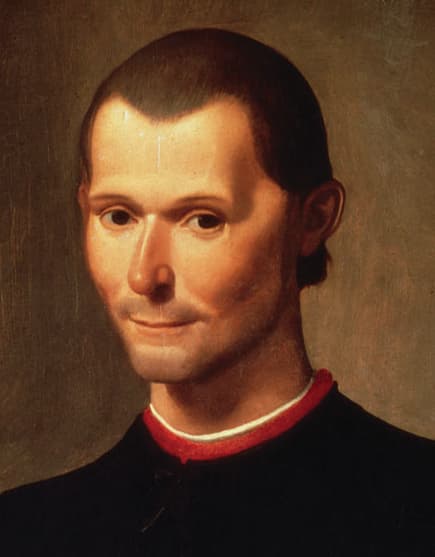
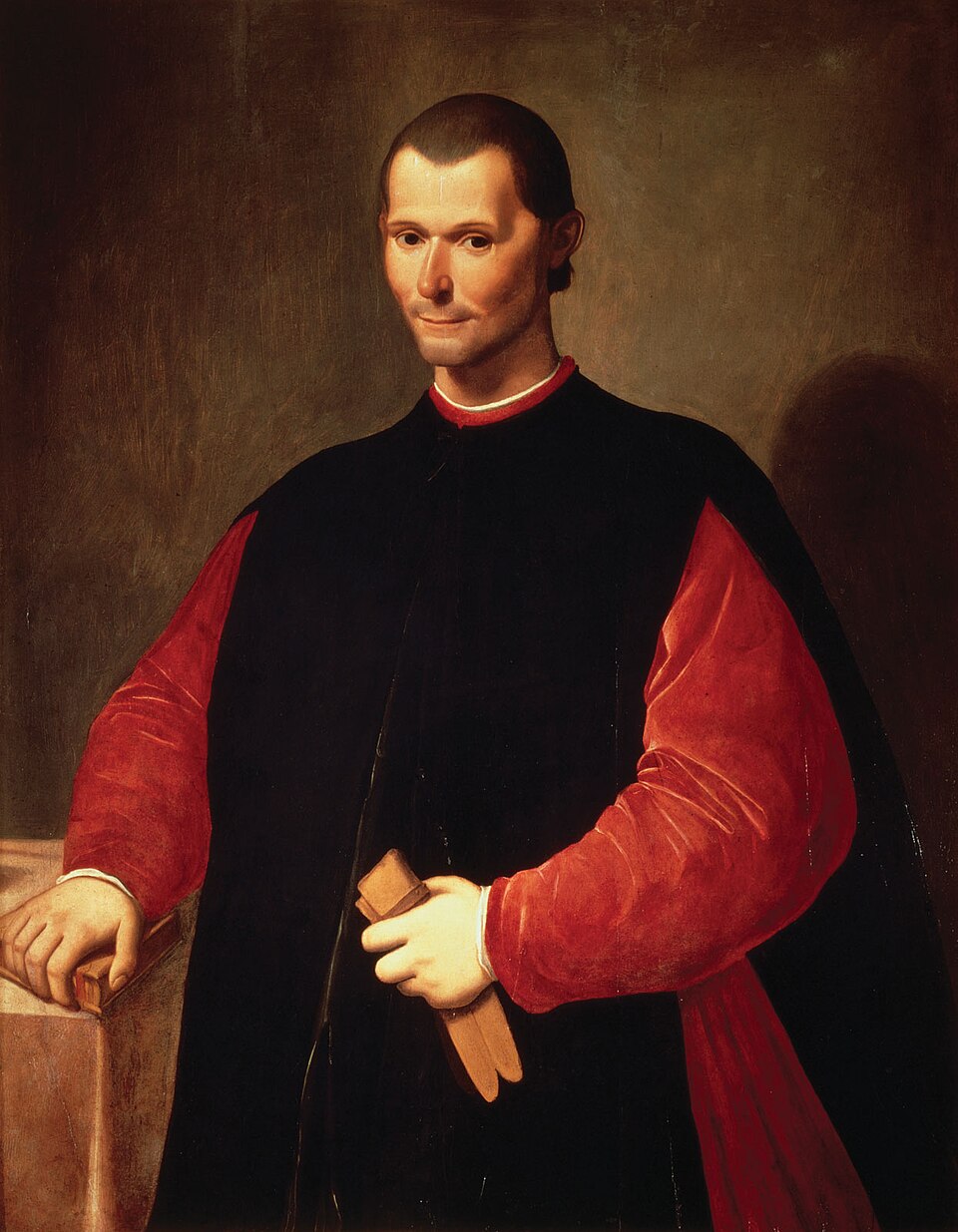
San Casciano, winter 1521. At the end of a muddy road in the Val di Pesa, a Tuscan stone house watches over the bare vineyards. In a cramped study where ink is still drying, a fifty-year-old man receives us, his face gaunt and his eye mocking: the former secretary of Florence, fallen from the heights of the state to the village taverns, agrees to speak of power as he has seen it with his own eyes.
—How did you enter the service of Florence, and what did you learn from those years at the heart of government?
I was entrusted with the second chancellery in 1498, and I remained there for fourteen years, goose quill in hand, drafting dispatches and reports in the halls of the Palazzo della Signoria. Believe me, I did not learn politics from books alone: I learned it on the roads, sent from one court to another, watching the face of a pope, the silence of a king, the mood of an emperor. La Signoria sent me wherever eyes were needed, and I understood that princes never say what they think nor do what they say. It was in this work of observation, more than in any study, that my conviction was formed: one must look at power as it is exercised, not as preachers would wish it to be.
Princes never say what they think nor do what they say.
—Do you remember your meeting with Cesare Borgia, in Romagna?
How could I forget it? 1502, the towns of Imola and Cesena, and that young duke who conducted his affairs with the swiftness of a beast of prey. The pope, my master, had sent me to watch him; I left fascinated. Borgia struck before one had finished fearing him, deceived without remorse, and held his Romagna through fear and admiration combined. I saw there, in flesh and blood, what I would later call virtù: not the virtue of monks, but the energy of a man who bends Fortuna to his will. He fell in the end, for lack of foreseeing his father's death and the election of an enemy in Rome; but the model of the energetic prince, without scruple or illusion, I drew from those weeks spent following him from town to town.
I saw there, in flesh and blood, what I would later call virtù.
—You are said to be wary of mercenary armies. Why did you insist so strongly on a citizen militia?
Because a soldier you pay dies for no one. The condottieri, those captains for hire, change sides as easily as they change shirts: they prolong wars to prolong their pay and flee when blood truly flows. In 1509, I had the joy of organizing and leading the Florentine militia beneath the walls of Pisa — peasants and artisans from our own territory — and we retook the city. That is what I wanted to demonstrate: a state that entrusts its defense to foreigners has no backbone. In my Art of War, I repeated it tirelessly — arm your own citizens, bind them to the homeland through interest and honor, and you will have a force that no gold can buy or corrupt.
A soldier you pay dies for no one.
—The year 1512 overturned everything. What would you say about that fall?
The wheel turned, sir, as it always turns. The return of the Medici in 1512 drove me from my post in a single day; and the following year, accused of conspiring against them, I was thrown into a cell and subjected to the strappado — arms tied behind my back, hoisted up then dropped, until my shoulders gave way. I had done nothing; I swore it, and I was finally released. But one does not forget what a man is worth when Fortuna withdraws her favor. That pain, believe me, is worth many treatises: it taught me in my own flesh how little power holds, and how foolish is the confidence of one who believes himself safe from reversal. I was hurled from the palace to the farm, and from that fall all the rest was born.
One does not forget what a man is worth when Fortuna withdraws her favor.
—What do your days look like, here in this rustic exile of Sant'Andrea?
Mediocre, I confess without pretense. I rise at dawn to oversee my woodcutters, bargain over my timber, count my fagots — I who once negotiated with kings! In the afternoon, I go down to the village tavern, and there, among the miller, the butcher, and the innkeeper, I play dice, shout, argue over a game like a common man. People think me fallen, and I am. But this Sant'Andrea in Percussina to which I was relegated after my disgrace is not entirely a prison: it also has its cellar, its kitchen, and deep within, a small study. That is where my true life awaits me, the one that the muddy day denies me, and that the night restores.
—What happens, precisely, when evening comes?
In the evening, everything changes. I wrote it to my friend Francesco Vettori, in December 1513, and I will tell you in the same words: “When evening comes, I return home and enter my study. On the threshold, I take off my everyday clothes, covered in mud and filth, and I put on court robes, royal and pontifical.” This is not an old man's vanity. Dressed decently, I cross the threshold as one enters a court; and there the Ancients await me, Livy, the Romans, all those great dead who welcome me to their table. I question them, they answer me; for four hours, I forget the filth, the exile, and the boredom. There is no better company in the world than that of those men.
On the threshold, I take off my clothes covered in mud and put on court robes, royal and pontifical.
—It was in that study that The Prince was born. In what state of mind did you write it?
In fever and hope, I do not hide it. I threw it onto paper in a few weeks, in the autumn of 1513, like a drowning man grasping at a plank. My idea was simple: to offer this little book to the Medici, to Lorenzo, to prove that a fallen man could still serve, and thus regain a place in the administration of Florence. I put into it everything that fourteen years of embassies had taught me about real power. Fate decreed that this treatise, conceived as a letter of application, would open no doors for me in my lifetime — not a post, not a word of thanks. I gave the powerful the key to their trade, and they did not even deign to try the lock.
I gave the powerful the key to their trade, and they did not even deign to try the lock.
—Many reproach you for separating politics from morality. How do you answer them?
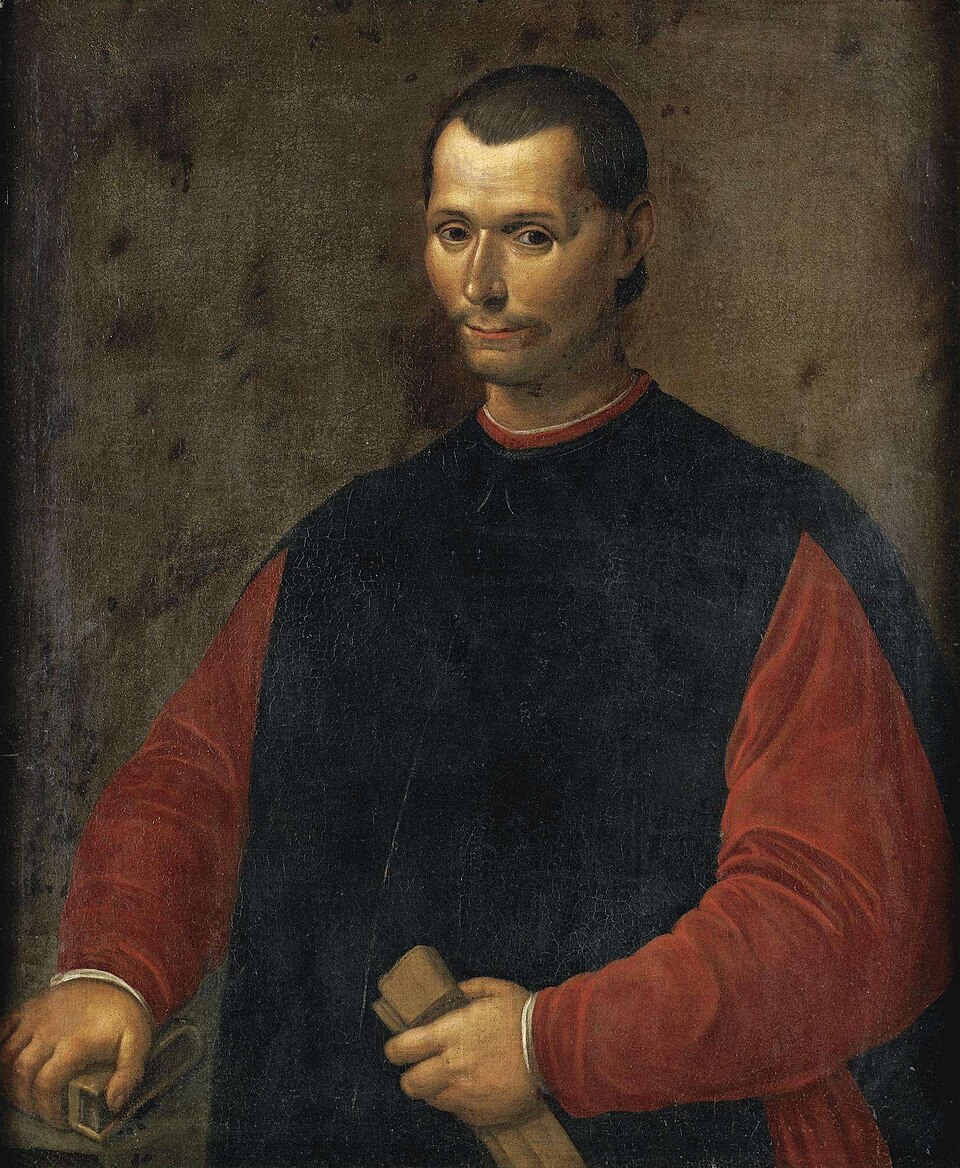
I separate nothing; I observe what is already separated in the world. Preachers paint princes as they ought to be, and those fine princes lead their states to ruin. I, at my table, among my books of ancient history, wrote what I saw: “It is necessary for a prince, if he wishes to maintain himself, to learn how to be not good, and to use or not use that ability according to necessity.” That is my crime. They will find me harsh; I find myself merely honest. A physician who flatters the disease kills his patient. I preferred to name the ill, because a state is not governed with pious wishes but with cold knowledge of what men are capable of — and they are capable of much.
—Of all your works, only The Art of War appeared in your lifetime. What meaning do you give to that?
One more irony, of which Fortuna holds the secret. Of all my writings, it is this dialogue on arms, published in 1521, that they deigned to print while I still breathed — while The Prince and my Discourses still wait in manuscript copies passed from hand to hand. In it, I defended my old conviction: “A prince who understands nothing of war cannot be respected by his soldiers, nor count on them.” A state without its own arms is a body without nerves. I led militias, I saw Pisa fall; I know what I am talking about. And it pleases me that it was on the subject of arms that the printers finally recognized that a disgraced secretary might have something to teach.
—You speak constantly of Fortuna. At the end of your life, what is your final lesson about her?
That she governs half our affairs, and leaves the other half to us — that is already much, and it is all we have. Fortuna is a raging river that devastates the plains; but when the weather is calm, the foresighted man builds dikes and digs canals, so that the next flood does not sweep him away. That is my whole philosophy. I have known favor, then the strappado, then the oblivion of this farm where I speak to you; I have seen Florence, torn by its factions, never find peace. If, by some impossibility, I were to be read in a century, I would want this to be remembered: do not curse the river, build the dike. Audacity, in the end, pleases fortune more than the timid prudence of men who wait.
Do not curse the river, build the dike.

This imaginary interview was generated by artificial intelligence from sources documented in Machiavelli's profile. It dramatises what the figure might have said based on what we know about them, but does not constitute attested historical testimony. For primary sources and factual documentation, refer to the full profile.