Kids interview Machiavelli
by Charactorium · Machiavelli (1469 — 1527) · Philosophy · Politics · 5 min read
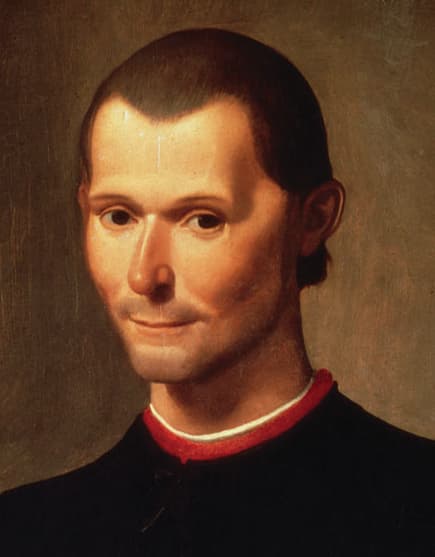
Two twelve-year-old students visit an old Tuscan farmhouse at Sant'Andrea. A thin man with a sharp gaze waits for them by the fireplace. It is Niccolò Machiavelli, and he agrees to tell them about his life.
—Why were you living here, on this farm, far from the city?
You know, my child, it wasn't my choice. In 1512, the Medici returned to power in Florence. I had served the Republic for fourteen years. Overnight, I was thrown out of my office. Worse: I was accused of conspiracy, arrested, and even tortured. Imagine your arms being twisted with ropes until they dislocate. I denied everything, because I was innocent. They released me, but I was ruined. So I took refuge here, in this stone house, with my olive trees and chickens. A statesman turned peasant. It was like falling from the top of a tower.
A statesman turned peasant: it was like falling from the top of a tower.
—And is this where you wrote your famous book?
Yes, The Prince. I wrote it very quickly, in a few weeks, during the year 1513. I had all that free time that I hated, so I put down on paper everything I had learned about power. And I had an ulterior motive, I admit. I wanted to offer it to Lorenzo de' Medici, the master of Florence. My dream was that he would read my little book, think 'this man knows politics better than anyone,' and give me a job again. You know what? It didn't work. He never called me back. My book, however, has lasted for centuries.
My dream failed, but my little book has lasted for centuries.
—What were your evenings like when you were writing?
Ah, that's my favorite part, and I told my friend Francesco Vettori about it in a letter. During the day, I worked in the fields, covered in mud, chatting with woodcutters. But when evening came, everything changed. I would go inside, take off my dirty clothes, and put on my finest garments, my court attire. Then I would enter my study. There, I would open my old books of Roman history. And believe it or not, I felt as though I were visiting the great men of antiquity, like friends. I would ask them questions, and in the books, they would answer me. Then I would forget all my sadness.
In the evening, I would change clothes to go visit the great men of the past.
—Why did you dress up just to read alone?
That's a lovely question, my child. You see, for me, reading Livy or the other Romans wasn't a chore. It was a visit to people I immensely respected. And when you visit someone important, you don't come in dirty clothes, do you? You make yourself presentable. So I dressed as if to meet a king. It was my way of thanking them. Those authors, dead for fifteen hundred years, taught me how peoples rise and fall. During those hours, I was no longer a ruined peasant. I was their student, and I was happy.
—Before all this, had you met dangerous people in real life?
Oh yes! For fourteen years, I was the secretary of the Florentine chancellery. In short, I was a kind of messenger-spy: they sent me to talk to princes and report what they were plotting. I saw Pope Julius II, terrible and hot-tempered. I saw Emperor Maximilian. But the most striking was Cesare Borgia, in 1502. I observed him in Romagna, in the towns of Cesena and Imola. Imagine a handsome young man, full of energy, but cold as ice. He struck quickly, without mercy, and no one saw him coming. He fascinated me and frightened me at the same time.
He fascinated me and frightened me at the same time.
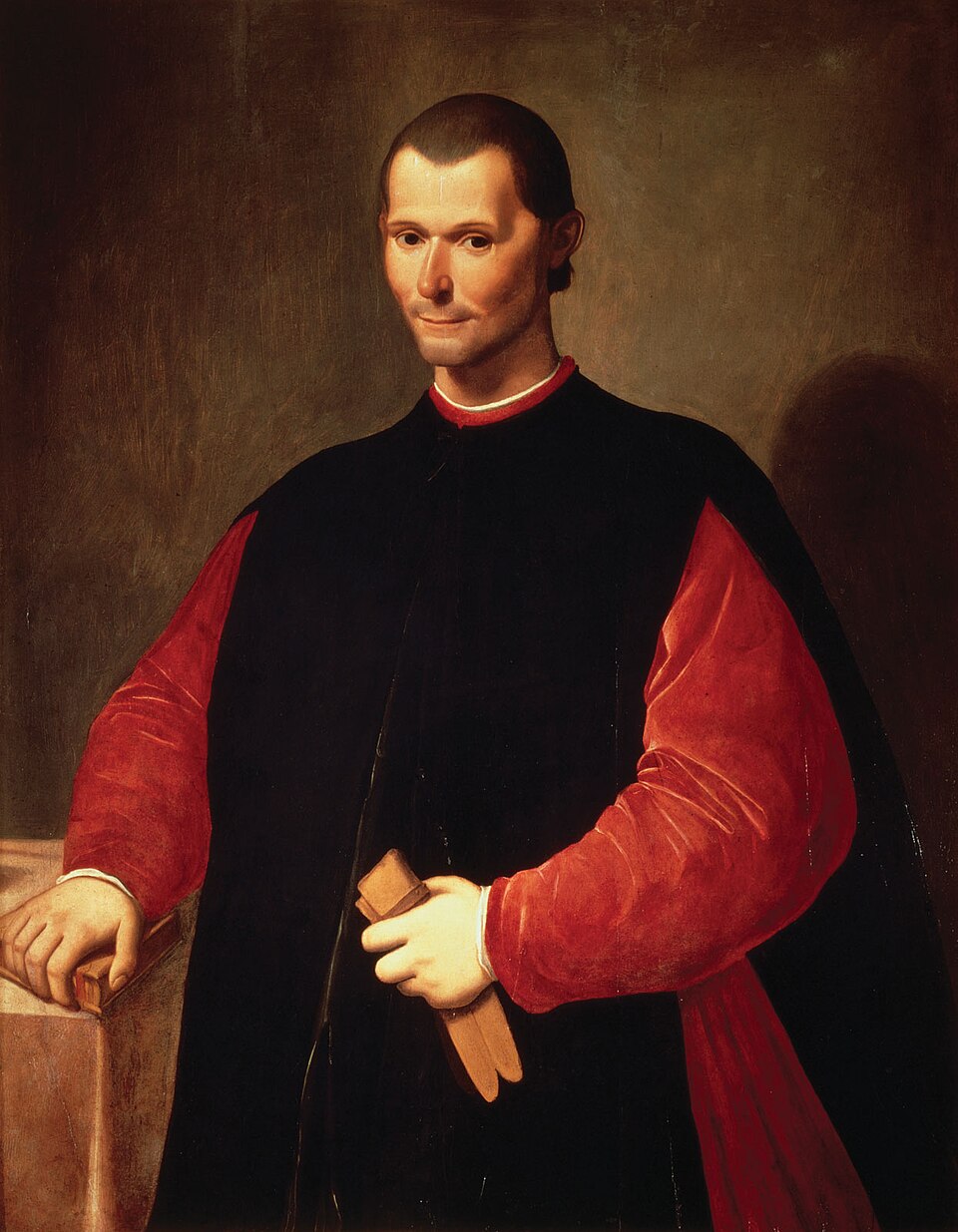
—And is he the one who gave you the idea for your prince?
You guessed right! Watching him act, I understood something important. In my books, leaders were always wise and good. But Borgia wasn't like the books. He was real. He did what he had to do to keep his power, even when it was cruel. So I thought: what if I wrote about men as they really are, not as we wish they were? That became my whole method. I didn't invent a perfect prince in my head. I looked at real princes, with their tricks and dirty deeds, and I wrote the truth.
I wrote about men as they are, not as we dream them to be.
—Is it true that people say you were a bit evil?
Ah, that reputation follows me everywhere! They even invented a word, 'Machiavellian,' to mean 'cunning and ruthless.' But it's unfair, my child. In The Prince, I wrote that a leader must sometimes learn to be not good, and to use it according to necessity. That shocks, I know. But I wasn't saying 'be cruel.' I was saying: power is a tough job. A leader who is too kind sometimes lets his people sink into chaos. Imagine a ship captain in a storm: if he's too gentle, the whole crew drowns. I described the world, I didn't make it evil.
I described the world as it is, I didn't make it evil.
—What is this 'fortune' you talk about all the time?
Good question! In my time, we said Fortuna. It's chance, luck, everything you can't foresee. I used to say that Fortuna governs about half of what happens to us. Imagine a calm river that suddenly floods and sweeps everything away. No one saw it coming. But the other half, my child, depends on us! I called that virtù: courage, energy, the skill to act at the right moment. Facing the threatening river, the courageous man builds dikes before the storm. That's my idea: luck does a lot, but the prepared man does the rest.
Luck does half; your courage does the other half.
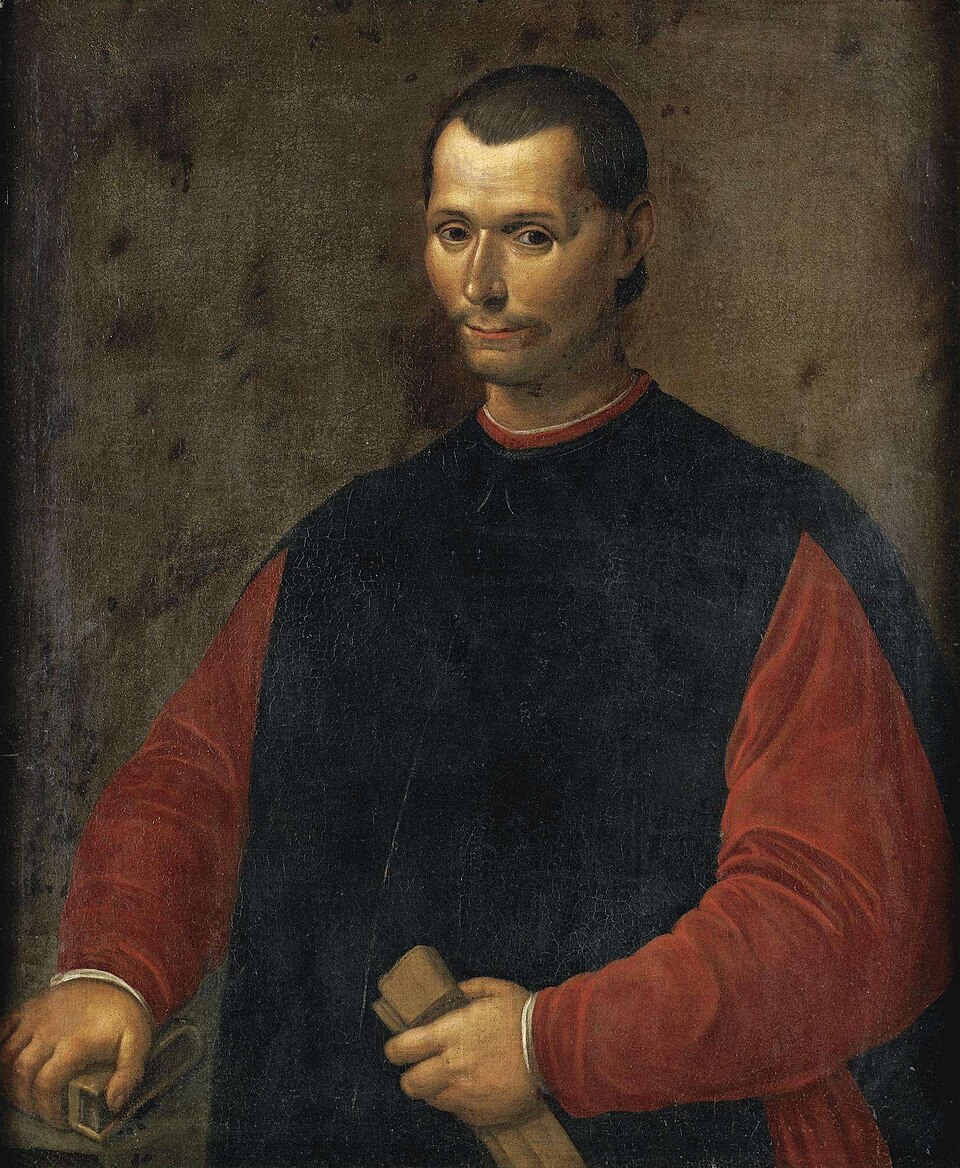
—Did you do anything besides writing? Like, practical things?
Of course! I wasn't just a man of letters. In 1509, I organized an army myself for Florence, and we recaptured the city of Pisa. I was very proud of that. And believe it or not, I hated one thing: the condottieri. They were soldiers you paid to fight, mercenaries. The problem? They fought for money, not for their homeland. If the enemy paid more, poof, they changed sides! I wanted an army of real citizens, people who defend their own city, their own home. A man who fights for his family is worth ten paid soldiers.
A man who defends his home is worth ten soldiers paid to fight.
—And did you explain that in a book too?
Yes, in The Art of War, published in 1521. It's the only major book that came out during my lifetime, you know. The others were printed after my death. I wrote it as a conversation, friends chatting in a beautiful garden in Florence. I explain why a city must have its own citizen-soldiers. In my time, Italy was divided into small principalities constantly at war with each other. And they hired mercenaries who betrayed them. I thought that was crazy. A strong city, to me, is one whose inhabitants know how to wield a spear to defend themselves.
—If you came back today, what would you want people to remember?
My child, I would want people to really read me, not just repeat nonsense about me. They say that on my deathbed, I said I preferred hell with great men rather than heaven with saints. True or false, that story fits me: I loved understanding powerful men, even the worst. What I want to pass on to you is this: look the world in the face, with courage, without fooling yourself. Understand how things really work. Only then can you act rightly. Don't believe everything you're told. Observe, think, and always keep your virtù, your own courage.
Look the world in the face, without fooling yourself.
This imaginary interview was generated by artificial intelligence from sources documented in Machiavelli's profile. It dramatises what the figure might have said based on what we know about them, but does not constitute attested historical testimony. For primary sources and factual documentation, refer to the full profile.