Imaginary dialogue between Joseph ben Judah (Joseph ben Yehouda) and Maimonides
by Charactorium · Maimonides (1135 — 1204) · Philosophy · 5 min read
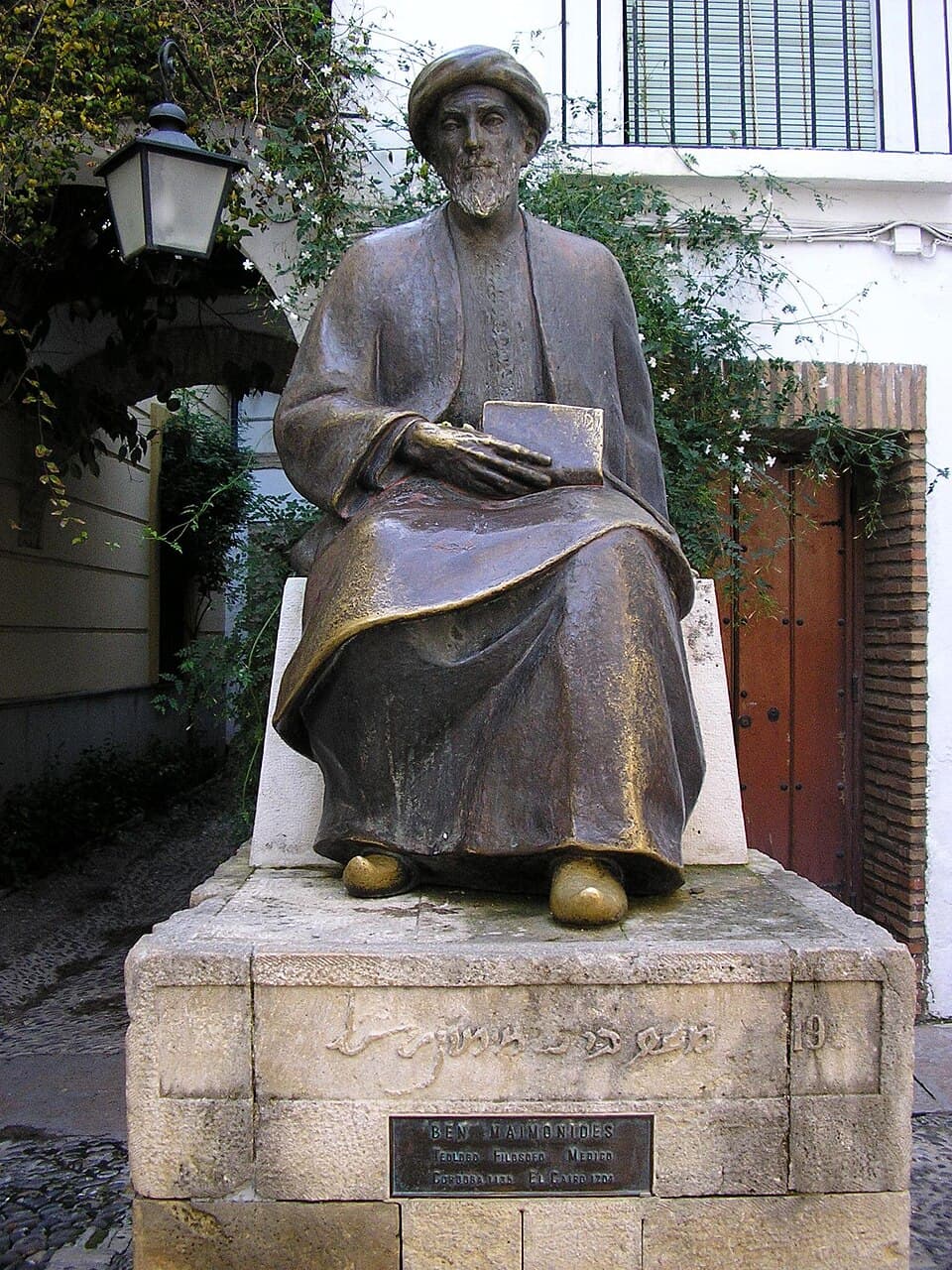
It is in the inner courtyard of the house in Fustat, on this evening in 1190, that Joseph ben Judah finds his master again. The copper oil lamp casts its flickering light on the stacked manuscripts; outside, the bustle of the Jewish quarter gradually fades. The disciple, now settled far from Egypt, has returned for a few days to the one who dedicated his great work to him. He comes with the questions he never dared to ask aloud when they studied side by side.
—Master, when you wrote the Guide for the Perplexed to me after my departure, you inserted apparent contradictions. Why hide your thought from your own readers like this?
You who studied at my side, Joseph, you know that I would never have expounded these matters to you orally while you were here, for fear they might fall into unworthy hands. A metaphysical truth delivered naked to an unprepared mind becomes poison: it shakes his faith without giving him the reason that replaces it. So I wrote in Judeo-Arabic, for the learned, and I arranged the work so that the superficial reader finds one thing, and the sincere thinker another. The contradictions are not errors: they are doors that only he who knows how to read crosses. You were among those, and that is why this book bears your name.
The contradictions are not errors: they are doors that only he who knows how to read crosses.
—Do you remember, master, the evening when I waited for you and you came back from the palace exhausted? How do you bear this division between the court and your patients?
I remember it, Joseph, and I think you witnessed my exhaustion more than once. My days belong to the sultan: I ride to the palace at dawn, stay as long as the princes need me, and return hungry to find my hallways filled with sick people, Jews and non-Jews, who have been waiting for hours. I treat them lying down, so broken by fatigue am I, until nightfall. I was told that a king of the Franks wished to attach me to his person; I declined, because my community holds me here. Only the night remains to me, that moment of silence, to write what may perhaps survive me.
Only the night remains to me, that moment of silence, to write what may perhaps survive me.
—Master, you rarely speak of your childhood. What remains in you of the thirteen-year-old child who had to flee Cordoba before the Almohads?
Everything remains, Joseph. I was thirteen when the Almohads took Cordoba and demanded that we abjure or leave. My father refused the lie of conversion, and here we were cast onto the roads: Andalusia, then Fez, then the Holy Land, and finally Egypt. Years of wandering, without a fixed library, without a stable master, studying at night in borrowed houses. This exile taught me one thing that no book gives: that truth does not belong to a place, and that a thinking man cannot be entirely dispossessed. Tyranny drives away bodies, but it does not seize the intelligence on the move.
Tyranny drives away bodies, but it does not seize the intelligence on the move.
—When you completed the Mishneh Torah, master, you wrote it in clear Hebrew, without citing your sources. Many were surprised. What was your design?
My design, Joseph, was that every man of Israel, from the humblest to the most learned, might know the law without getting lost in dozens of contradictory volumes. I gathered all the oral law, the ordinances and customs from Moses to the Talmud, in fourteen books of limpid Hebrew, ordered as one arranges a house. I am reproached for not naming my authorities: but I did not want a work of erudition, I wanted a work of use. As Nagid, I have charge of this community; I know what a faithful expects from his law. Let him open it and find, without intermediary. That is why some have called it The Strong Hand.
I did not want a work of erudition, I wanted a work of use.
—In your practice as a physician, master, you mix Galen and observation. Do you heal the soul as much as the body of your patients?
The one does not go without the other, Joseph. I have verified with my own hands the prescriptions inherited from Hippocrates and Galen, for medicine is not a matter of reverence but of experience. When an Ayyubid prince suffered from asthma, I did not only give him remedies: I prescribed the pure air of the heights, sober food, rest of the mind. For the passions of the soul disturb the body as much as the humors. I tell my patients never to eat to full satiety, to prefer poultry to red meat, to flee smoky cities. To heal is to restore a measure: in the body as in conduct, the golden mean cures.
To heal is to restore a measure: in the body as in conduct, the golden mean cures.
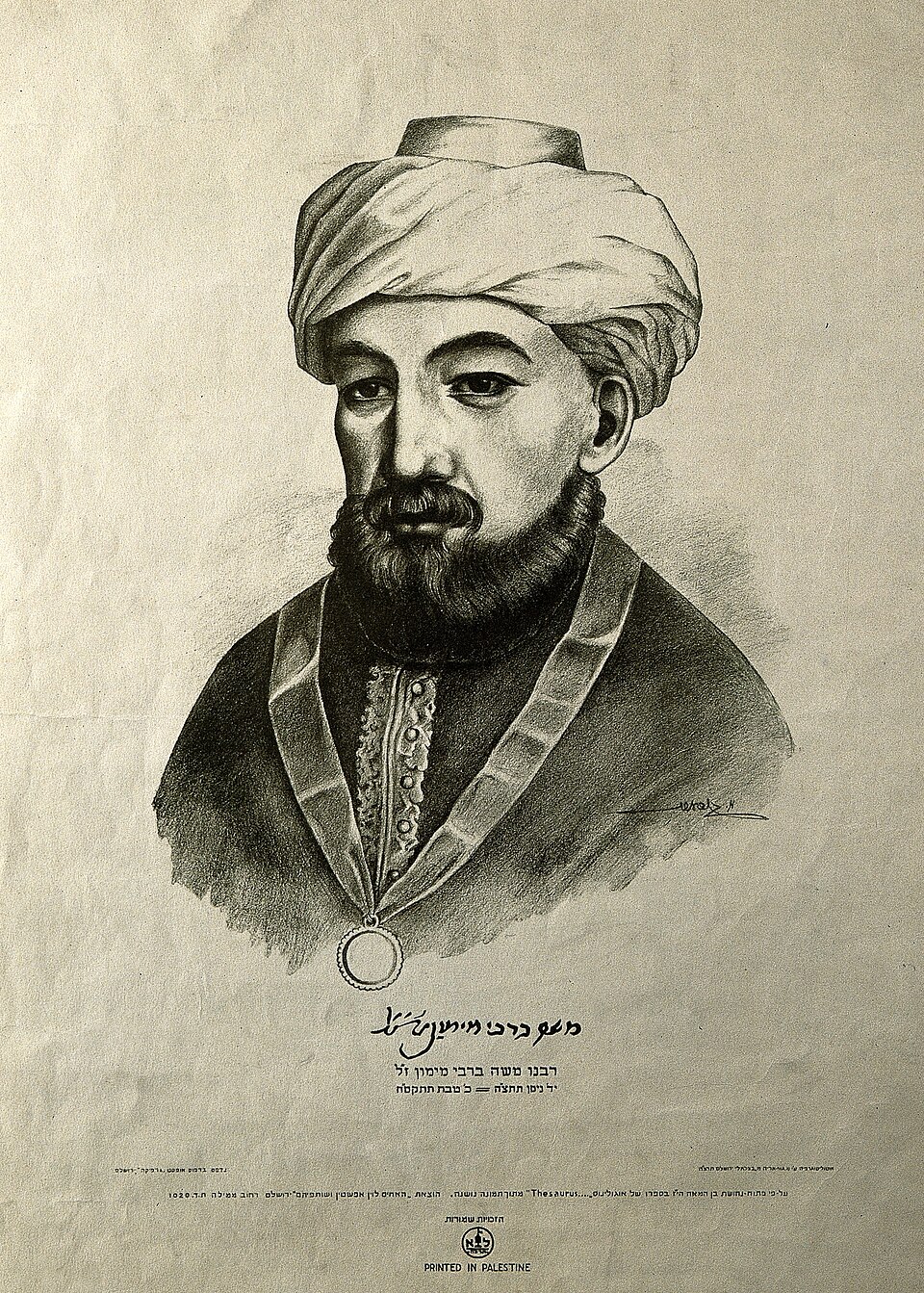
—Master, your Thirteen Principles are authoritative, but I have heard Western rabbis accuse you of leaning too much toward Greek thought. Does this distrust hurt you?
It saddens me more than it hurts me, Joseph. I am accused of having brought Aristotle into the study house, as if reason were the enemy of the Torah. But God gave us intelligence to lead us to Him, not to sleep. Some reproached me for neglecting the resurrection of the dead in the Guide; I wrote an entire treatise to answer them and clear up the misunderstanding. Yet I fear that the quarrel will outlive me. That sons of Israel should one day come to consign my books to the fire, that is what I dread. Reason and faith are not two enemy kingdoms; they are two paths to the same city.
Reason and faith are not two enemy kingdoms; they are two paths to the same city.
—You once told me, master, that certain truths are transmitted only away from the crowd. Is that why you wrote to me from afar rather than teaching me here?
That is exactly it, Joseph. As long as you were near me, I hesitated to expound these matters to you, fearing that an ill-disposed ear might overhear. It was your distance that loosened my pen: what I could not say in a low voice, I entrusted to writing, for you first, and for the few who resemble you. A master does not pour out his knowledge like filling a jug; he adjusts it to the receiver. You had a right mind and intelligence perfected in the sciences: you were ready. The Guide was born from this distance between us, and that is perhaps the most intimate thing in all I have written.
A master does not pour out his knowledge like filling a jug; he adjusts it to the receiver.
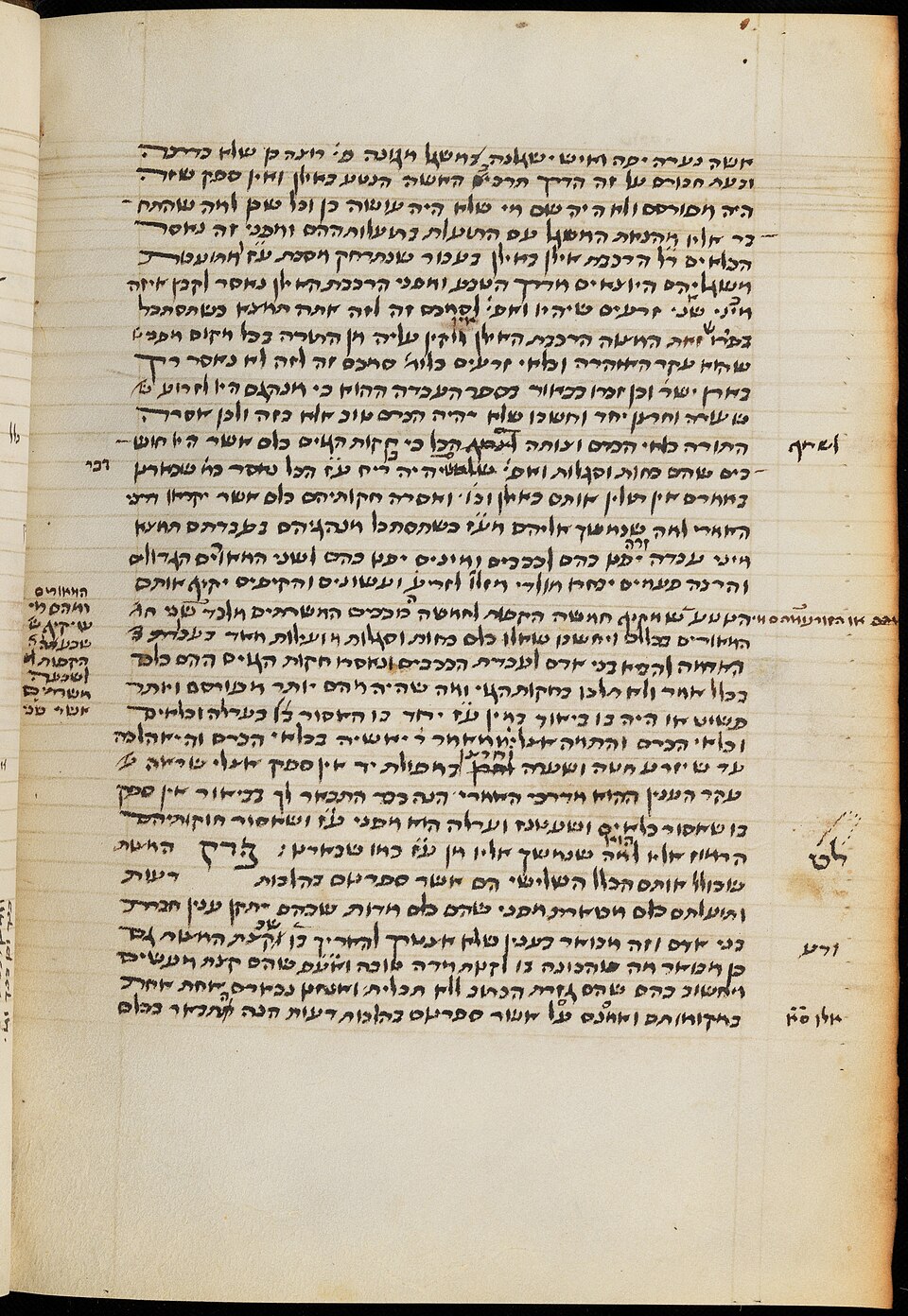
—Master, after so many cities traversed — Cordoba, Fez, the Holy Land — do you finally feel at home in this house in Fustat?
At home? I do not know if that word still has meaning for me, Joseph. Fustat gave me rest after years of walking, a cool courtyard, a library where my Hebrew, Arabic, and Greek manuscripts sleep. It is here that I wrote almost everything that matters. And yet I remain a dhimmi in another's land, living by the protection of sultans and the jizya I pay. My true dwelling, I have understood, is not a quarter or a country: it is study. When I sit at night before this lamp, among my books, only then am I somewhere. The rest is only passing hospitality.
My true dwelling is not a quarter or a country: it is study.
—You answer, master, questions of law from Spain to India. How do you bear the weight of being the recourse of so many communities?
These are the responsa, Joseph, and they never cease to flow in. Letters reach me from Spain, Yemen, to the borders of India, asking questions of law, ritual, conscience. I devote my first hours of the day to them, before the palace takes me. It is an overwhelming burden: a word from me commits the religious life of communities I will never see. When the Jews of Yemen were threatened by persecution and false messiahs, I wrote to them to strengthen them in the name of God. To lead from afar through writing is to accept that one's word is worth more than one's presence. That is perhaps the true burden of the Nagid.
To lead from afar through writing is to accept that one's word is worth more than one's presence.
—One last question, master. If your detractors prevail, if your books are one day condemned, would you regret having united Aristotle and the Torah?
No, Joseph, I would not regret it for an instant. I wrote what I held to be true, and a man should not measure his work by the reception it receives. That one burns a book does not extinguish the idea that inhabits it; fire blackens parchment, never thought. I wanted to show the perplexed that he does not have to choose between his reason and his God, and this task was worth the quarrel. If I am condemned, they will condemn themselves to rediscover me later, for truth has the patience of lasting things. You who understood me better than others, keep this book: it will defend you when I am no longer there to do so.
Fire blackens parchment, never thought.
This imaginary interview was generated by artificial intelligence from sources documented in Maimonides's profile. It dramatises what the figure might have said based on what we know about them, but does not constitute attested historical testimony. For primary sources and factual documentation, refer to the full profile.