Kids interview Maimonides
by Charactorium · Maimonides (1135 — 1204) · Philosophy · 5 min read
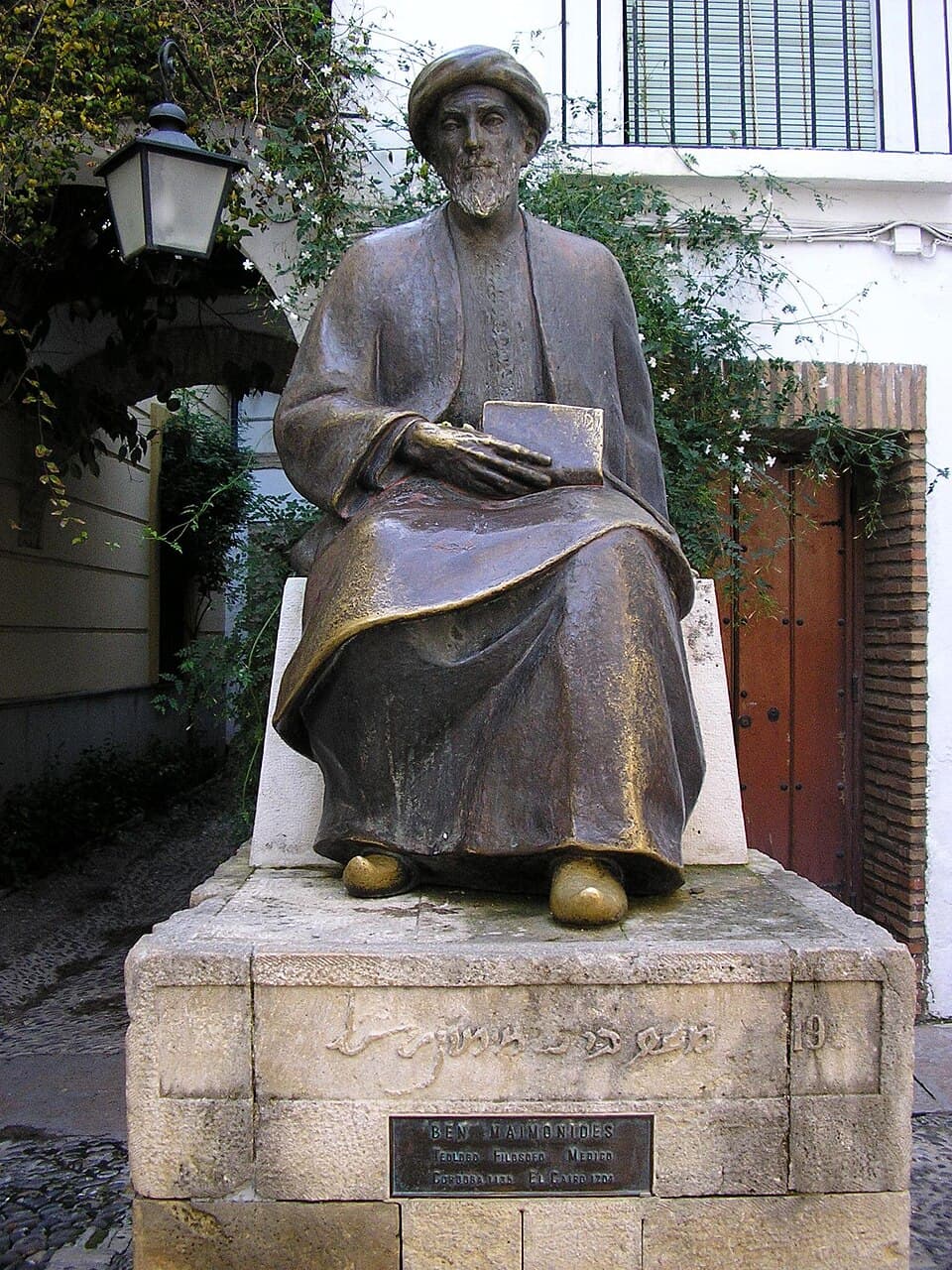
Two young visitors from a school field trip push open the door of a house with an inner courtyard in Fustat, Old Cairo. A tired but smiling old man awaits them, an oil lamp placed near his manuscripts. He sets down his reed pen and gestures for them to come closer.
—How old were you when you had to leave your city?
I was thirteen years old, my child, about your age. I lived in Cordoba, in al-Andalus, a city full of Jewish, Arab, and Christian scholars. Then the Almohads arrived—a dynasty from the desert that wanted to force everyone to become Muslim. My family refused. So we left. Imagine: you pack your bag, and you walk for whole years, from one city to another, never knowing where you will sleep. We crossed the Maghreb, then the Holy Land, before stopping in Egypt. When you are chased away like that, you learn one thing very early: truth is not found in a single country.
When you are chased from everywhere, you learn that truth has no country.
—What was it like, always moving like that?
It was hard, you know. In each new city, you had to relearn everything: the streets, the faces, the habits. We lived for a few years in Fez, Morocco, a great city of scholars. I studied medicine and philosophy there, nose in books to forget the fear. Imagine a family that packs and unpacks its manuscripts ten times, like a treasured treasure. But this misfortune also gave me a gift. By meeting Jews, Muslims, and Christians, I understood that you could learn from everyone. My exile did not kill my thought—it opened it.
—Is it true that you were the doctor of a great king?
Yes, my child. I was a physician at the court of Sultan Saladin, the master of Egypt. But don't think it was easy! I left for the palace in the morning, on a donkey, and returned in the evening exhausted. And then, surprise: my house was already full of sick people from the neighborhood waiting for me! I treated them until night, barely having time to eat. They even say that King Richard the Lionheart, the great knight of England, wanted me as his physician. I refused. Healing is not serving the most powerful—it is serving those who suffer.
Healing is not serving the most powerful, it is serving those who suffer.
—How did you treat people without today's medicines?
With my hands, my eyes, and a lot of common sense, my child! I had a mortar to grind plants, glass vials, a small scale to weigh each remedy. A prince who was choking once asked for my help: he had trouble breathing. I wrote a whole treatise on asthma for him. And do you know my first advice? Not a magic potion. I told him: flee cities full of smoke, go breathe the pure air of the heights, eat sparingly, sleep well. The body is first healed by the way of living. A good physician heals life before disease.
—Why did you deliberately hide things in your book?
Ah, you guessed my little secret! My great book is called The Guide for the Perplexed. I wrote it for those who are lost between their faith and their reason, like someone standing between two paths. But these ideas are delicate. In the wrong hands, they could trouble fragile minds. So I did something a bit cunning: I slipped small contradictions into the text, like hidden riddles. The lazy reader gives up. The courageous reader, on the other hand, digs, reflects, and finds the true meaning. Imagine a chest that only opens to those who take the time to look for the key.
My book is a chest: it opens only to those who take the time to look for the key.
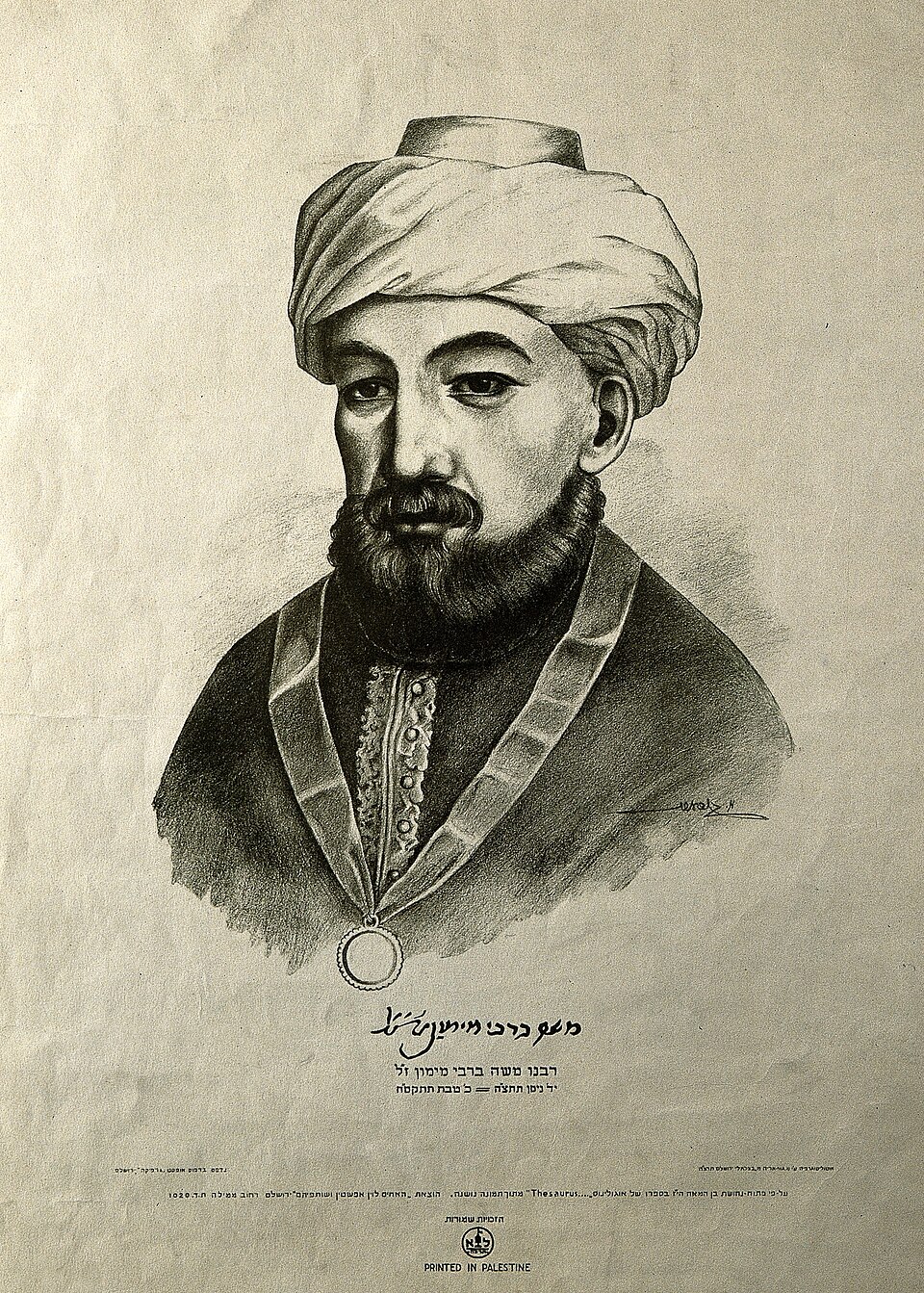
—Why did you love the philosopher Aristotle so much?
Because Aristotle, a Greek sage who died long before me, knew how to observe the world and reason better than anyone. In my time, great Arab thinkers like Al-Farabi had kept his ideas alive. This was called falsafa, philosophy. I wanted to marry two things that were thought to be enemies: the reason of the philosophers and the faith of my ancestors. Imagine two rivers said to be separate, and you discover they come from the same source. For me, understanding the world through intelligence was another way to approach God. Reason is not the enemy of faith—it is its friend.
—What is that big book of laws you wrote?
It is called the Mishneh Torah, my child—fourteen volumes! Before me, Jewish law, the Halakha, was scattered across dozens of difficult large books. To find a single rule, a man had to search an entire library! That seemed unfair to me. So I gathered everything, classified it, wrote it in clear and simple Hebrew, so that even a beginner could understand. Imagine taking a thousand scattered pieces and making a single beautiful, well-ordered house. I wanted everyone, rich or poor, learned or not, to know the law. Hidden knowledge serves no one; shared knowledge enlightens everyone.
Hidden knowledge serves no one; shared knowledge enlightens everyone.
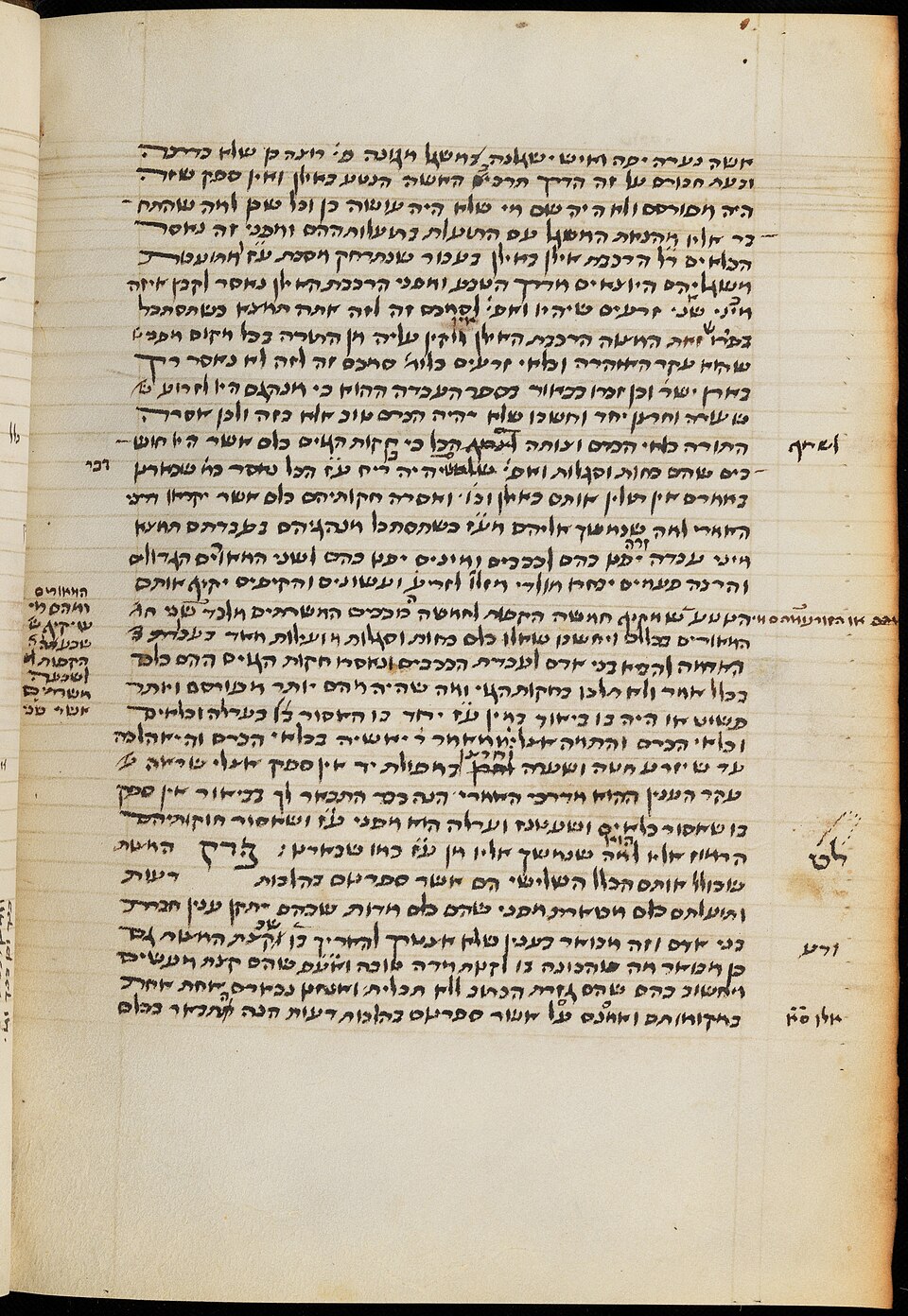
—What was your day like, in the morning, before the palace?
I got up before sunrise, my child. First, morning prayer at the synagogue with the other Jews of Fustat. Then I sat at my table to study the Torah and answer letters. And what letters! Questions came from everywhere, from Spain, Yemen, even India, carried by travelers and merchants. These answers were called responsa. Imagine a mailbox filled by the whole world, and one man trying to answer everyone. I wrote with a reed pen, in black ink, on linen paper. The morning was my only moment of calm before rushing to the palace.
—Why did you write a letter to people so far away, in Yemen?
Because they were suffering, my child, and a cry of distress should not go unanswered. The Jews of Yemen were persecuted, and a man was promising them a false savior to deceive them. They were afraid, they doubted. So I wrote the Letter to Yemen in 1172, to tell them: hold on, be courageous, do not let your faith be stolen. I had become the Naguid, the leader of the Jewish community in Egypt, and my voice carried far. Imagine a lamp lit in a city, whose light reassures people hundreds of leagues away. A sage does not write only for scholars—he writes to console.
—Is it true that after your death, your books were burned?
Alas, it is true, my child, and it still pains me. Some rabbis, especially in France, found my books too philosophical, too full of Greek ideas. They were afraid. So, years after my death in 1204, they burned my works in the public square. But do you know what happened? Many bitterly regretted it. You cannot kill an idea with fire; you only give it more strength. Yet, on the day of my death, Jews and Muslims together observed three days of mourning. That is what I want you to remember: a burned book is always reborn in the mind of the one who loved it.
You cannot kill an idea with fire; you only give it more strength.
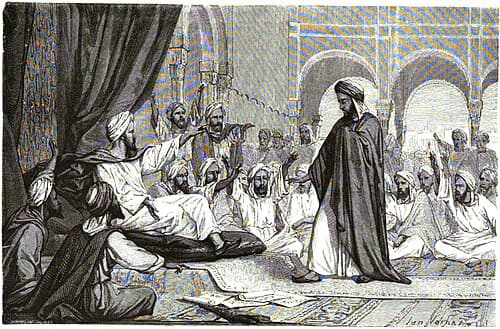
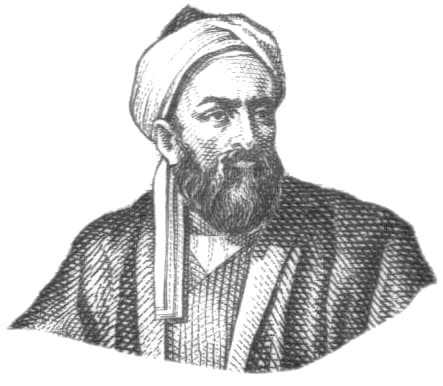
This imaginary interview was generated by artificial intelligence from sources documented in Maimonides's profile. It dramatises what the figure might have said based on what we know about them, but does not constitute attested historical testimony. For primary sources and factual documentation, refer to the full profile.