Imaginary interview with Maimonides
by Charactorium · Maimonides (1135 — 1204) · Philosophy · 6 min read
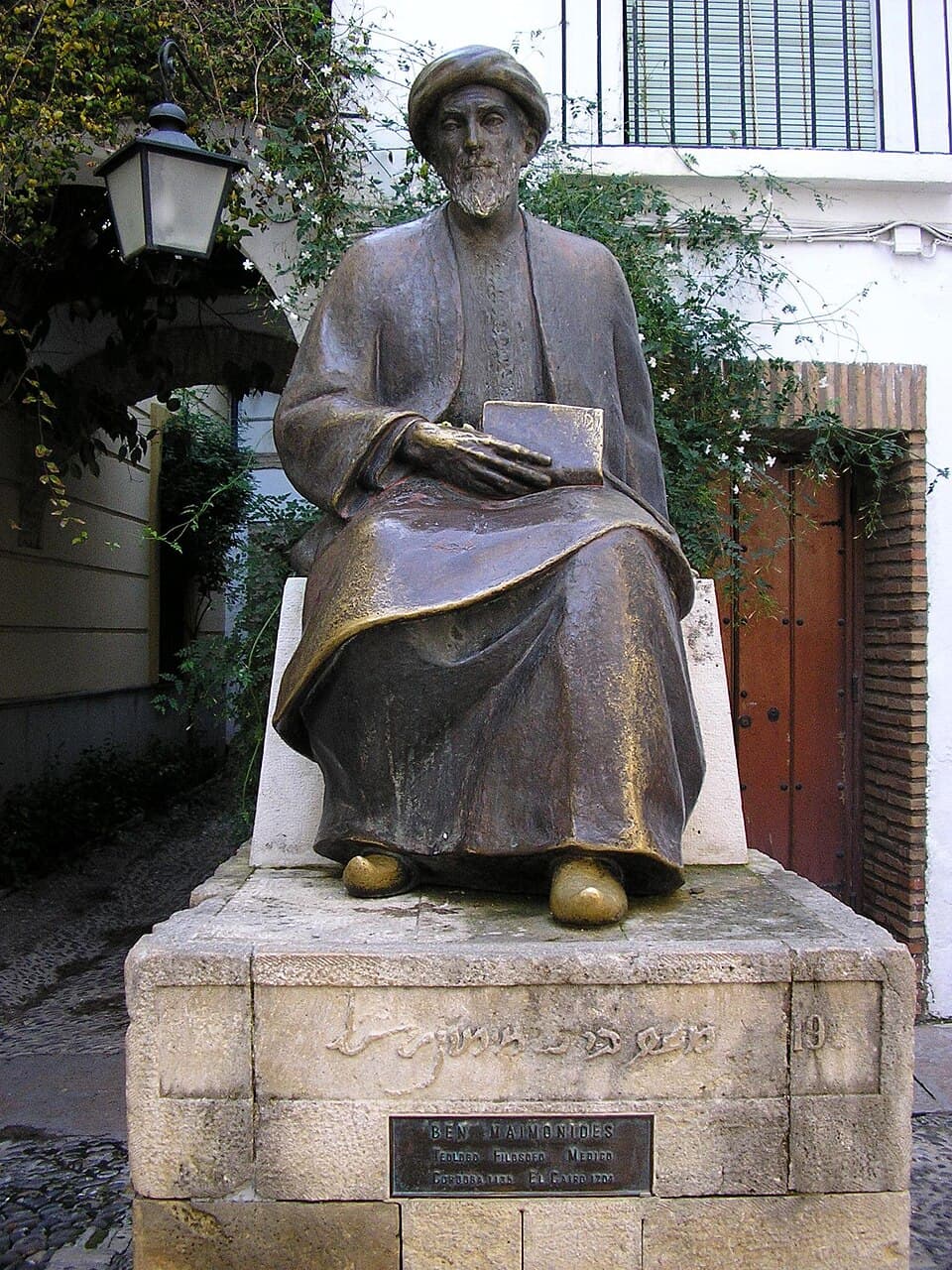
Cairo, the district of Fustat, at dusk. The philosopher returns from the Ayyubid palace, his face marked by long hours of consultation, and lingers for a moment in the courtyard of his home, near the fountain. By the light of a copper oil lamp, he agrees to speak of his exile, his books, and the burden of enlightening his perplexed brothers.
—What memory do you keep of the fall of Cordoba, when you were only a child?
I was thirteen years old when the Almohads entered Cordoba. These people from the Maghreb, the al-Muwaḥḥidūn, left the believer only one choice: abjure or perish. My father, a scholar of the Law, could not bow before a faith imposed by the sword. So we took to the road, and we kept it for years — Andalusia first, then Fez in Morocco, then the Holy Land, until at last we found rest in Fustat. One does not know, when young, that a city can vanish in a single night. This exile taught me that truth cannot be commanded by force, and that a man who prays under threat does not truly pray. All my concern for tolerance was born on those dusty roads.
A man who prays under threat does not truly pray.
—How did those years of wandering, from Andalusia to the Maghreb, shape the scholar you became?
In Fez, a great metropolis of learning, I deepened my knowledge of medicine, astronomy, and the wisdom of the Greco-Arab philosophers, for a mind deprived of a roof must build an inner dwelling that no one can burn. Wandering among peoples showed me how fragile the fortune of communities is under rigorist masters. That is why, later, I wanted to put all the Halakha in writing: so that a Jew driven from his land could carry the entire Law in his baggage, without depending on libraries that would be taken from him. My thought owes as much to the roads of the Maghreb as to the books of Aristotle. Uprooting teaches, to those who survive, that the homeland of a sage is study, and that God is found as much in exile as in the destroyed Temple.
The homeland of a sage is study.
—Why did you write the Guide for the Perplexed in Judeo-Arabic rather than in sacred Hebrew?
Because I was not writing for the simple-minded. The Guide for the Perplexed, which Arabic speakers call Dalālat al-Ḥā'irīn, addresses the religious man whose soul is upright but whose intellect, trained in the philosophical sciences, is torn between the faith of his fathers and the reason of Aristotle. I chose the language of the scholars of my time to reach those minds, and no others. Reconciling the Aristotelianism transmitted by Al-Farabi and Averroes with the Law of Moses is not meat for tender mouths. He who believes without understanding is at peace; he who understands poorly is in peril. It is to this latter, the perplexed one, that I extend my hand, in the language he reads best.
He who believes without understanding is at peace; he who understands poorly is in peril.
—It is said that you inserted deliberate contradictions into this book. Is that true?
It is true. I placed apparent contradictions in the Guide, like a veil before a sanctuary, so that the superficial reader would stop at the threshold and only the patient spirit, capable of lifting the veil, would reach the hidden meaning. To my disciple Joseph ben Judah, to whom this book is dedicated, I confided that I would never have expounded these matters orally, for fear they might fall into unworthy hands; it was his distance that decided me to set them down in writing. Some truths, misunderstood, burn those who grasp them. I did not wish to lie, but to protect — the weak from what would crush them, and the truth from those who would distort it. To seek is a trial; to find must be earned.
I placed contradictions like a veil before a sanctuary.
—Did your days at the sultan's palace leave you any respite?
Respite? I sought it and rarely found it. My afternoons belonged to the Ayyubid palace, where I served the court with my scalpels, my cupping glasses, and my precision scales, verifying myself the remedies inherited from Hippocrates and Galen rather than trusting them blindly. In the evening, I returned to Fustat exhausted, and still found my hallways full of Jewish patients from the neighborhood waiting for me until nightfall. I received them lying down, my strength so depleted. For my Treatise on Asthma, composed at the request of a breathless prince, I wrote that a change to the pure air of the heights is worth more than all syrups. But I myself breathed the air of the heights only in dreams, a prisoner of my duties.
I received them lying down, my strength so depleted.
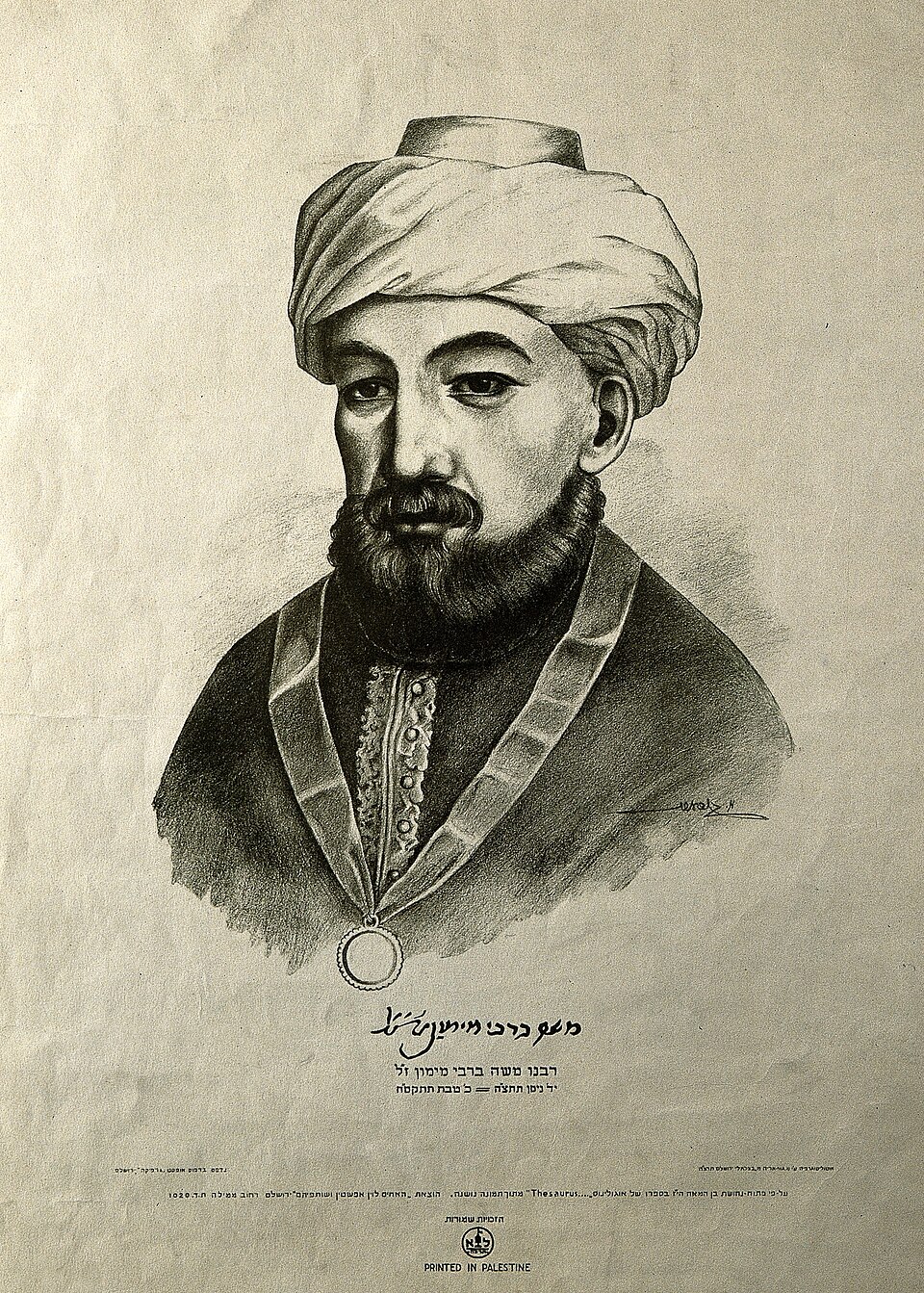
—What do you think of this renown that precedes you, to the point that a Frankish king is said to have wanted to attach you to his person?
It is reported that Richard the Lionheart, the Frankish king who came to wage war against Saladin, offered to make me his physician. If that happened, I declined — my place was with my people and the court that had welcomed me, not on the ships of a foreign prince. The glory of a physician is a burden as much as an honor: the more you are esteemed, the more you are overwhelmed. I treated the bodies of the powerful as well as the poor, for fever does not distinguish between sultan and porter. Serving Saladin and his household earned me protection and relative rest for my nightly studies; but no palace, even that of a king, is worth the freedom to close one's door in the evening on one's own books.
Fever does not distinguish between sultan and porter.
—What drove you to undertake the Mishneh Torah, that colossal work?
Disorder. The Oral Law had scattered across dozens of obscure volumes, and the faithful lost themselves in this labyrinth like a traveler without a star. I saw the need to gather into a single work all the ordinances, customs, and decrees instituted from Moses to the redaction of the Talmud, so that every man could know them clearly. So I composed the Mishneh Torah in fourteen volumes, in a clear Hebrew, without the clutter of disputes. It was called The Strong Hand, and I devoted ten years to it. My dream was that a Jew could open this code and read the entire Halakha, from the Sabbath to the laws of the tallit and tefillin, without running after a hundred masters. To bring order to the Law is to make God accessible.
To bring order to the Law is to make God accessible.
—Was it not audacious to want to codify the entire Law, you who lacked the authority of an ancient court?
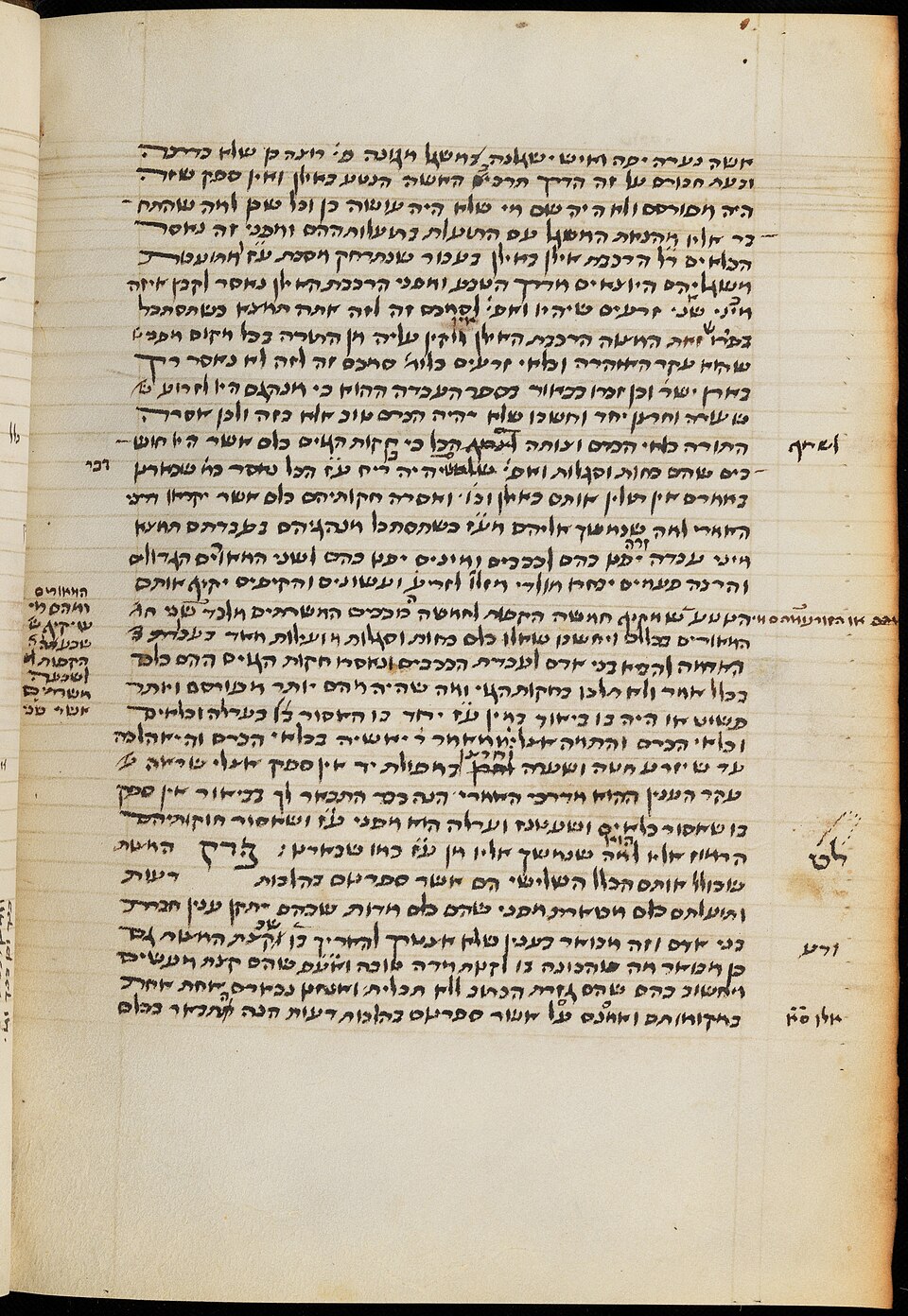
Audacious, perhaps, but also necessary. The Mishnah, that first corpus of the Oral Law compiled long ago by Rabbi Judah HaNassi, I had already given a complete commentary on in Judeo-Arabic, which includes my thirteen principles of faith. From there to embracing the entire Halakha was a step that my conscience commanded me to take. I worked on Torah codices copied by hand, in that beautiful square Hebrew script of the Sephardim. Some reproached me for omitting to cite my sources, as if I wanted to reign alone over the Law. But my goal was not glory: it was that a father, in the evening, could instruct his son without owning an entire library. Clarity is a form of charity.
Clarity is a form of charity.
—What did the office of Nagid, at the head of the Jewish community of Egypt, represent for you?
To be Nagid is to carry both the shepherd's crook and the steward's seal. The community had recognized me as its leader, responsible before it and before the Ayyubid power alike. All my adult life, I lived as a dhimmi, protected by Islamic law in exchange for the jizya, that tax which reminds the Jew and the Christian of their condition as tolerated subjects. From this fragile position, I had to represent my people, settle their disputes, intercede with the masters of the palace. In the morning, after prayer at the synagogue of Fustat, I answered questions of law — those responsa that reached me from Spain to India. To guide a people without land or sword, by the sole authority of the Law and of speech: that was my true charge.
To carry both the shepherd's crook and the steward's seal.
—Do you remember the letter you addressed to the persecuted Jews of Yemen?
How could I forget? My brothers in Yemen were bending under an unparalleled ordeal: persecuted by fanatics, troubled by a false messiah who promised them imminent deliverance. They wrote to me, and I answered them in 1172 with this Letter to Yemen, in Arabic so that they all could read it. I told them to be firm and courageous for the name of God, to hold fast against the seduction of lying prophets as well as against the violence of oppressors. A tested community needs a voice to remind it that Israel has already passed through many nights without perishing. That my word, from Fustat, could strengthen hearts as far as the edge of Arabia: that is what justifies a man overwhelmed with work to still take up the reed pen in the evening.
Israel has already passed through many nights without perishing.
—At bottom, how do you reconcile the reason of Aristotle and the faith received from Moses, which seem to pull in opposite directions?
They pull in opposite directions only for those who misunderstand them. Reason and Revelation proceed from the same God; if they seem to contradict each other, it is our intellect that fails, not the truth. The Falsafa, that Aristotelianism cultivated by Al-Farabi and Averroes, gave me the tools to scrutinize what the Law teaches in images to ordinary people. When Scripture attributes a hand or anger to God, the philosopher knows to read there something other than a body or a passion. The entire Guide for the Perplexed is that patient work: to untie figurative language in order to reach the pure idea. This is not to diminish faith, but to elevate it. The fool worships a letter; the wise man worships what the letter signifies.
The fool worships a letter; the wise man worships what the letter signifies.
This imaginary interview was generated by artificial intelligence from sources documented in Maimonides's profile. It dramatises what the figure might have said based on what we know about them, but does not constitute attested historical testimony. For primary sources and factual documentation, refer to the full profile.