Kids interview Mansa Musa
by Charactorium · Mansa Musa (1280 — 1337) · Politics · Economics · Spirituality · 5 min read
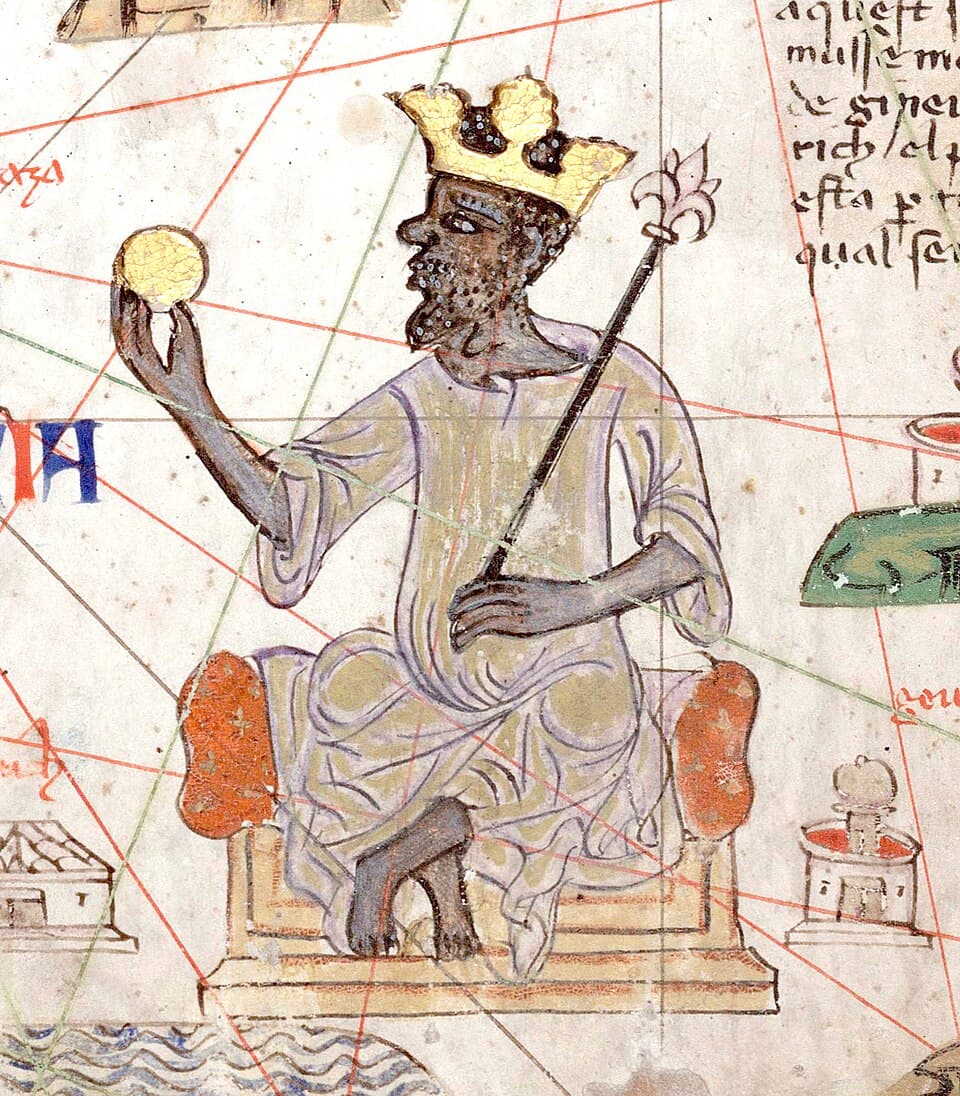
Two young visitors step quietly into a sunlit hall, notebooks pressed against their chests. Their teacher has told them they are about to meet the most powerful king of the medieval world — a man who once crossed the Sahara with more gold than any city had ever seen. Mansa Moussa turns toward them with a slow, warm smile, as if he has been waiting all morning just for this.
—What did you do every morning when you woke up as king?
Every morning, child, before the sun had fully risen, I stood for Fajr — the first of the five daily prayers. That was my anchor. Then, in the great hall of my palace at Niani, the messengers of my governors arrived one by one. I listened to every report: how many caravans had crossed safely, whether the salt roads from Taghaza were clear, which villages had paid their tribute. A king does not simply sit on a throne. He must listen — first to God, then to his people. I had governors called farins who watched over every corner of the empire, and they answered to me every single morning.
—Why did you need 60,000 people with you just to go on a pilgrimage?
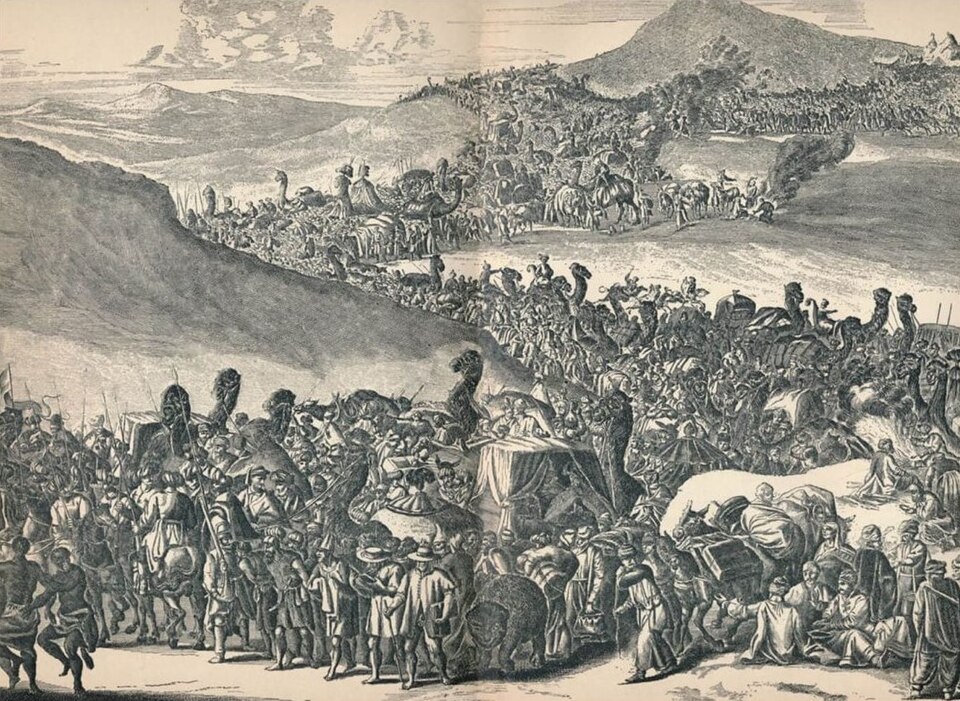
Oh, that question makes me smile! The Hajj — the pilgrimage to Mecca — is one of the five pillars of our faith. Every Muslim who can make the journey must do it once. But I was not just any traveler. I was a mansa, a king of kings, and a king's journey is also a message to the world. Imagine a line of people stretching as far as your eyes can see — soldiers, scholars, poets, merchants, servants — all moving together through the Sahara. Each person I brought was a kind of gift: food for the hungry, safety on the roads, prayers shared with strangers. A pilgrimage is not a solo walk. It is a river of faith moving together.
—Is it really true you built a new mosque every single Friday on the way?
Yes — every single Friday, wherever we camped, a mosque went up. The Friday prayer, Jumuʿa, is sacred. A Muslim cannot miss it, not even a mansa. So if we found ourselves in the middle of the Sahara on a Friday, my builders got to work before dawn. Mud, timber, hands — that is all it takes to raise a house of prayer. Some were simple, some were grand, but every one was real. Think of it: mosques dotted across the whole road between Niani and Mecca, each one marking a Friday where God was not forgotten. That road became, in a way, a chain of prayers stretching from one end of the world to the other.
That road became a chain of prayers stretching from one end of the world to the other.
—What really happened when your gold reached Cairo — why did prices fall?
Ah, Cairo in 1324. I must be honest — I did not plan what happened. My caravan arrived, and I gave generously, as a good Muslim should on pilgrimage. Gold to the poor, gold to the merchants, gold to the scholars. But there was so much of it that traders began to see: this metal is not so rare anymore. When something becomes very common, it loses its value. A scholar named Al-Umari recorded later that the price of gold stayed weak in Egypt for more than a decade after I passed through. I had given so much that I had, without meaning to, broken the market of an entire civilization. That was not something I had ever been taught to imagine.
—Were you upset when you realized your gold had hurt the merchants of Egypt?
I was humbled, yes. I had wanted to show generosity, not cause harm. The traders of Cairo, of Syria, across the whole eastern world — they suffered because of my passing, without having done anything wrong. I had so much gold from the mines of Bure and Bambuk that I did not understand, at first, that my wealth could be dangerous. Power is like that. You carry so much of it that sometimes it spills, and you do not notice until you see the damage. That taught me something I have never forgotten: a generous act that hurts others is not truly generous. You must think about how you give, not just how much.
A generous act that hurts others is not truly generous.
—How did you meet the architect who built the great mosque in Timbuktu?
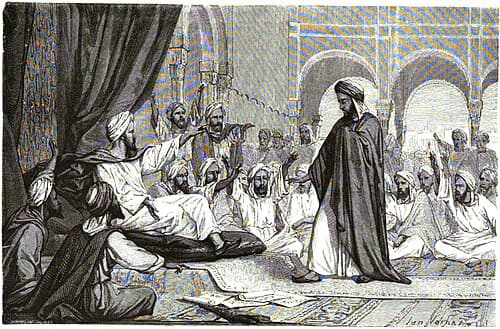
I met him in Mecca itself! His name was Abu Ishaq al-Sahili — we called him Es-Saheli. He was a poet and an architect from Al-Andalus, the great Muslim kingdom of the Iberian peninsula. When I heard him speak and watched how he drew buildings in his mind, I knew: this man must come back home with me. He agreed. On the long road south, we talked about how to build in the Sahara heat. He used banco — a mix of mud and straw pressed into thick walls that breathe in the warmth. The Djinguereber mosque in Timbuktu, finished in 1327, still stands today. That is what friendship between a king and an artist can build.
—Who was allowed to study at Sankoré — was it only for children from rich families?
At Sankoré, child, the doors were open to anyone who arrived with a desire to learn. Timbuktu under my care sheltered up to 25,000 students — think of that number. They came from across Africa, from Arabia, from kingdoms far to the west. They studied the words of God, yes, but also the movements of stars, the laws of medicine, the rules of trade. A student without money could still find a teacher, because scholars were supported by gifts of land and goods from wealthy believers. Knowledge is not like gold. It grows when you share it, not when you hoard it.
Knowledge is not like gold — it grows when you share it.
—How did you make sure governors far away actually followed your orders?
That is the great puzzle of ruling a vast land. My empire stretched further than any road could tell in a lifetime of walking — from the forests of the south to the edge of the Sahara in the north. To govern it, I relied on the farins, military governors who lived in each region, collected tribute, kept the peace, and sent me word regularly. But here is the truth: rules alone do not hold an empire together. What holds it is trust, and faith, and the shared sense that all of us — from the smallest village to the palace of Niani — belong to the same great house. That is the real foundation of any lasting order.
—What was more precious to ordinary people in your empire — gold or salt?
Ah, that is a wise question! Imagine life without salt — no way to preserve food through a burning dry season, no flavor, no survival through the long caravan months. Salt came from Taghaza, a city deep in the Sahara where the very houses were built from solid blocks of salt. Caravans of camels carried it south; we traded it for gold dust from the mines of Bure. For a farmer, a single block of salt could mean the difference between feeding his family or not. For a king, controlling the salt roads meant power. Gold and salt were like two hands: one reaching north to the Arab world, the other holding the people together at home.
—Forty years after you died, a map showed you holding a huge gold nugget — what do you think?
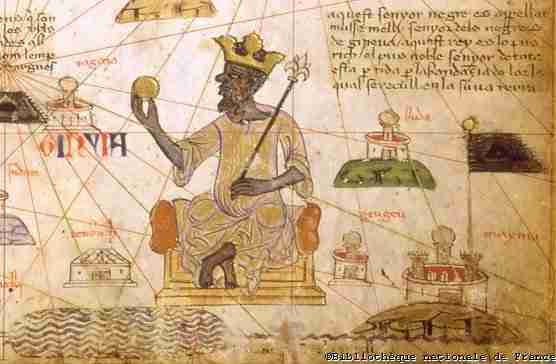
That map — the Atlas Catalan, drawn in 1375 by a cartographer named Abraham Cresques — shows a crowned king holding gold, surrounded by lands stretching beyond sight. The words beside my image call me the richest and most noble lord in all that region. I never saw it. But I understand what it means. When people far away, people who have never met you, draw your face on a map of the world — they are saying: this person changed something. What I hope they also saw, beyond the gold, is what the gold was used for: mosques, schools, roads, manuscripts. Wealth is only a beginning. What you build with it — that is the legacy.
Wealth is only a beginning. What you build with it — that is the legacy.

This imaginary interview was generated by artificial intelligence from sources documented in Mansa Musa's profile. It dramatises what the figure might have said based on what we know about them, but does not constitute attested historical testimony. For primary sources and factual documentation, refer to the full profile.