Imaginary dialogue between Yann Andréa and Marguerite Duras
by Charactorium · Marguerite Duras (1914 — 1996) · Literature · 5 min read
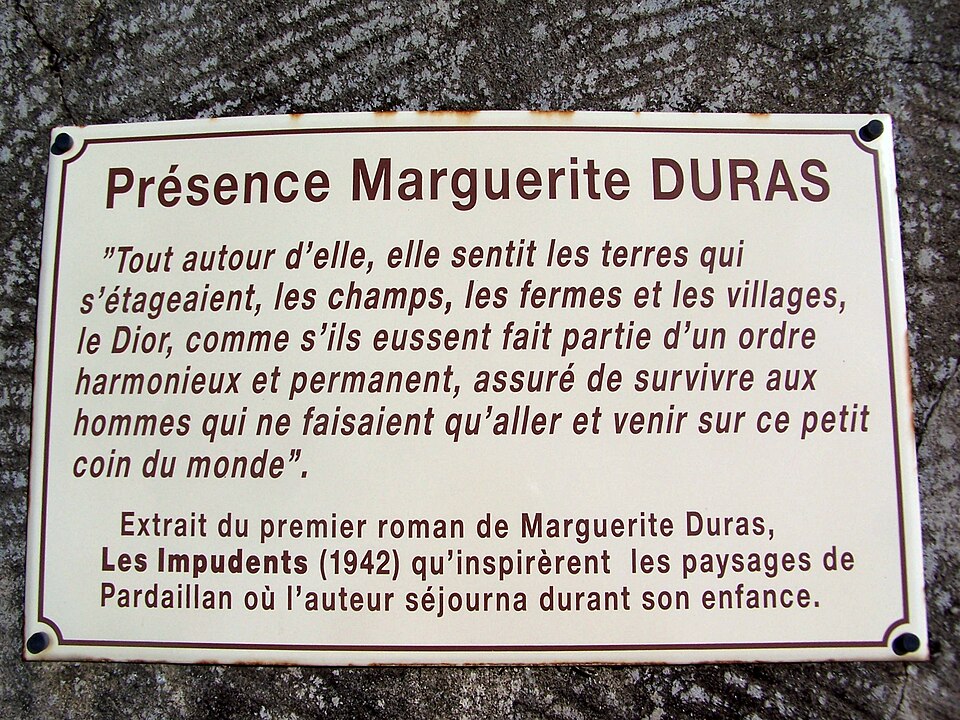
It is in the apartment at 5 Rue Saint-Benoît, one winter evening in the 1980s, that Yann Andréa sits down across from Marguerite. The typewriter sleeps under the lamp, a glass of white wine sits near the notebooks. They have known each other since he wrote to her, a student from Caen, letters she eventually received; since then, he is there, every night, typing what she dictates. Tonight, he wants to hear her talk about what she never says outside.
—Marguerite, you've had me type that sentence about the ferry on the Mekong a hundred times. Why did you wait until you were seventy to write it?
Because that image, Yann, I carried it like a forbidden thing. I was fifteen and a half, crossing on a ferry on the river, and that rich Chinese man in his black car. It took me almost my whole life to be able to face it. When you're young, you think writing your own childhood is cheating. Then the body ages, shame falls away, only the light on the water remains. The Lover is me finally able to speak of poverty, desire, my mother mad with rage against the sea. You were there when the Goncourt came in 1984 — you know I no longer believed in it.
It took me almost my whole life to be able to face that image.
—That Chinese man, you told me once you weren't sure you loved him. Do you still think that, or does writing invent it?
Writing doesn't invent, it unearths. At fifteen you don't know how to name what runs through you. It was the money, my mother's fear, the scandal of a poor little white girl in a Chinese man's car — and in the middle of all that, yes, something that resembled love. I think I loved him afterward, while writing it, seventy years later. A teenage girl's desire in Indochina became, on the page, a story the whole world wanted to read. Forty languages. Millions of people recognizing themselves in something I thought belonged only to me.
I think I loved him afterward, while writing it.
—You know I almost never dare ask you. Those blue notebooks from Neauphle, waiting for Robert — how could you forget them?
I'm not lying, Yann: I have no memory of writing them. I found them years later, in the blue cupboards, and it was the writing of another woman — me, in 1945, waiting for Robert Antelme who wasn't coming back from Dachau. Pain erases even its own trace. When he came back, he weighed less than forty kilos, you couldn't call him alive or dead. I kept a diary so as not to go mad, then I buried it all. The War is the only one of my books I still tremble to re-read.
Pain erases even its own trace.
—When you talk about the Resistance, your voice changes. What remains in you of that woman of 1944 waiting on the docks?
Everything remains. The woman of 1944 never left me. We were in hiding, watching the lists from the camps, the names that came back or didn't. I learned then that waiting is a physical thing, that grips you in the belly like hunger. That's why my sentences became short, stripped down — after waiting for a living dead man, you can't write with ornaments anymore. The war gave me my language. A language of silence and lack. You who type my texts at night, you hear those blanks between the words: they are the ones, the disappeared.
After waiting for a living dead man, you can't write with ornaments anymore.
—I see you writing at night, in a bathrobe, a glass within reach. Tell me truly: why the night, and why the alcohol?
At night, the world finally falls silent and writing can rise. During the day, there are friends, publishers, the telephone, all that noise. At night, there is only the page and me. The alcohol, Yann — you who've picked me up more than once, you know well — it was to endure that silence without screaming. I drank white wine from morning sometimes, I don't hide it, I wrote it. It's not a writer's affectation. It's a disease that walked alongside the work like an animal. In the morning, I reread, black coffee, what that drunken woman had dared the night before.
I drank to endure the silence without screaming.
—You keep those handwritten notebooks everywhere, in drawers, under the typewriter. What are you looking for by writing by hand before dictating?
By hand, it's the body that speaks, the wrist, the ink that hesitates. The typewriter comes afterward, to fix. My notebooks are reserves, deposits — I jot down sentences I don't yet understand, names, images like that of the ferry. Sometimes I forget them, like those of The War, and that's fine: they ripen in the dark. Writing is first accumulating silence on paper. When you later type what I dictate, you give a voice to what I first scribbled alone. The book is that passage from the hand to the noise of the machine.
I jot down sentences I don't yet understand.
—With India Song, in 1975, you separated voice from image. Where did you get that crazy idea to disconnect them?
From the desire to no longer illustrate. In cinema, usually, the image shows what the voice tells — that's redundancy, it's dead. In India Song, voices speak of a love, a ball, an oppressive Indian heat, and the image drifts elsewhere, into motionless bodies, mirrors. The viewer must make the connection themselves, it's they who invent the film. I took the material of The Vice-Consul, that colonial madness, and the music of Carlos d'Alessio that returns like an obsession. With a lightweight camera, almost nothing, you can dig an abyss. Cinema allowed me to do what the sentence could no longer: make absence heard.
The viewer makes the connection themselves: it's they who invent the film.

—They say you made over twenty films against cinema itself. What do you hate so much about other people's cinema?
I hate that it fills everything. Ordinary cinema leaves no room for the viewer, it plugs the holes, it explains, it reassures. I want the opposite: shots that last too long, voices that don't match faces, silence that disturbs. I've been told I'm killing cinema — I think rather I'm returning it to its nakedness. A 16mm camera, two actors, the light fading, and suddenly the screen becomes a mental space. My films cost next to nothing and last. What I seek on screen is the same as on the page: lack, the hollow where the viewer falls.
I've been told I'm killing cinema: I'm returning it to its nakedness.
—Before me, there was the Flore, Saint-Germain, Sartre, Beauvoir. When you received them on Rue Saint-Benoît, did you feel like one of them?
One of them and not one of them. We saw each other at the Café de Flore, my apartment was a potluck for writers, filmmakers, philosophers — for decades we remade the world around my table, glass in hand. I admired Sartre's intelligence, Beauvoir's freedom. But existentialism, all that philosophy that demonstrates, wasn't my language. They thought the world; I wanted to feel it, through the body, through desire, through loss. A woman, in that male milieu, had to shout twice as loud to be heard. I preferred to shout silently, on the page.
They thought the world; I wanted to feel it.
—You were classified in the New Novel. You who hate labels, did you ever recognize yourself in that family?
Never entirely. With Moderato Cantabile, in 1958, they stuck me with them — Robbe-Grillet, Sarraute, that whole crowd who wanted to break the bourgeois novel, plot, tidy psychology. On that point I agreed: the sentence had to fragment, ellipses had to breathe. But they worked like engineers, constructing objects, impeccable descriptions. I write with a wound, not a ruler. My business is passion, crime, the woman watching a love that isn't hers die. Literary schools classify the dead. As long as I write, I refuse to belong to anything.
They worked like engineers; I write with a wound.
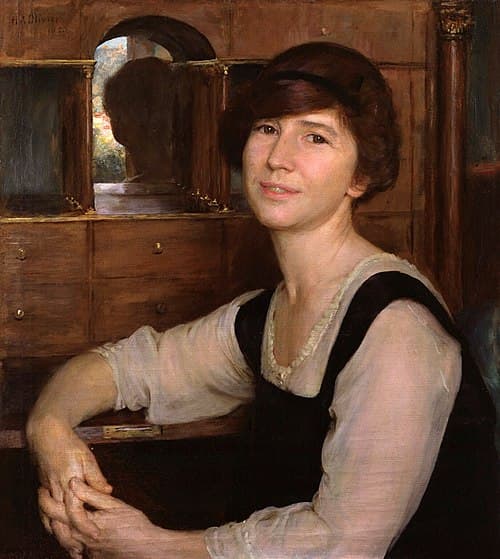
This imaginary interview was generated by artificial intelligence from sources documented in Marguerite Duras's profile. It dramatises what the figure might have said based on what we know about them, but does not constitute attested historical testimony. For primary sources and factual documentation, refer to the full profile.