Kids interview Marguerite Duras
by Charactorium · Marguerite Duras (1914 — 1996) · Literature · 4 min read
That morning, on a school trip, two twelve-year-old students push open the door of a book-cluttered apartment on rue Saint-Benoît. An old woman with a deep voice waits for them, a black coffee in hand. Marguerite Duras gestures for them to sit down: she is going to tell them her life.
—You were born very far from here, right? Where was your childhood?
Yes, my child. I was born in 1914 very far from Paris, in French Indochina — the country we now call Vietnam. At birth, I wasn't named Duras: I was Marguerite Donnadieu. Imagine heavy heat, rice paddies, and a great river, the Mekong, as wide as a sea. My father died when I was four. After that, my mother raised three children alone, and we were poor, very poor. I never left that childhood behind. All my life, I wrote it, again and again, in my books.
—Is it true that you wrote your most famous book very late?
Yes! My novel The Lover tells a story from when I was fifteen. On the ferry crossing the Mekong, I met a young Chinese man, rich, while my family had nothing. That encounter marked me forever. But — and this is funny — I didn't write that book until seventy years later. I was 70 when it won the Prix Goncourt, in 1984, the greatest French literary prize. Imagine: an old woman becoming famous worldwide, translated into forty languages, for telling her adolescence. It's never too late to tell the truth of your life.
It's never too late to tell the truth of your life.
—Where did you live in Paris? Did you have famous friends?
In Paris, I lived for a very long time at 5 rue Saint-Benoît, right in the heart of the Saint-Germain-des-Prés district. You know, in the post-war years, that was where writers and thinkers lived. At the Café de Flore, just next door, I'd run into Simone de Beauvoir and Jean-Paul Sartre, the great philosophers of the time. My apartment overflowed with books and papers, in a beautiful chaos. We'd talk for hours — about politics, novels, life. Imagine a house where the door was never really closed. That was my Paris.
—They say you wrote in a weird way. What was so special?
You know, many people found my sentences strange. Very short. With silences, blanks, things left unsaid. They called it blank writing — a bare writing, without decoration, without big complicated words. With other writers, I was part of the Nouveau Roman: we refused to tell stories neatly, from beginning to end. In Moderato Cantabile, in 1958, I wrote about a woman fascinated by a crime, almost without explaining anything. Imagine a song where silences matter as much as the notes. For me, what is left unsaid is as strong as what is said.
—What time of day did you write?
At night, almost always at night! During the day, I received friends, I talked too much. But when everyone was asleep, I'd sit at my portable typewriter and type in the silence. In the morning, I'd get up late, a big black coffee in hand, and reread what I'd written, still in my dressing gown. I also liked to retreat to my country house, at Neauphle-le-Château, near Paris, to write in peace. Imagine a lamp lit alone in a sleeping house. Writing, for me, was entering another world, at night.
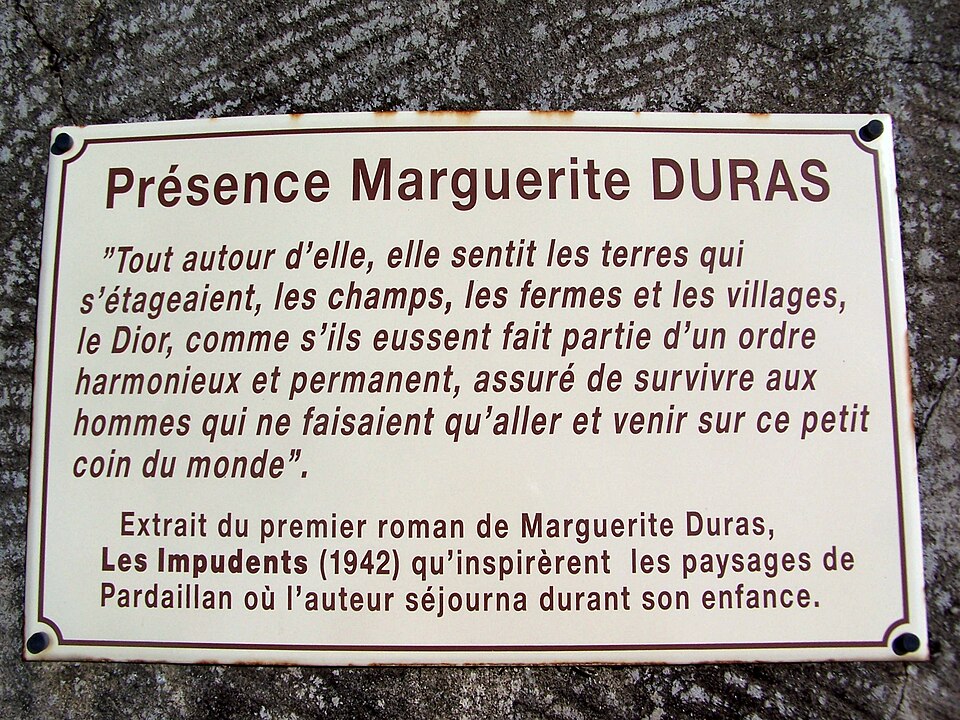
—Was your life hard sometimes?
Yes, my child, I had difficult battles. The hardest was alcohol. I drank too much, all my life, and I never hid it — I even wrote about it in my books. It's a disease, you know, not a party. It made me suffer a lot, and those who loved me too. I tell you frankly, because you mustn't lie to children. You can write beautiful things and carry a great wound within you. Imagine a fire that warms and burns at the same time. Writing, though, always saved me. It was my true strength.
—What was the war like for you?
The war was fear, every day. During World War II, France was occupied by the Nazi German army. I joined the Resistance — those who fought secretly against the occupier, at the risk of their lives. And then one day, the worst happened: my husband, Robert Antelme, was arrested by the Nazi police, the Gestapo, and deported to a camp, Dachau, in Germany. Imagine waiting for months without knowing if the person you love is alive or dead. I listened for every noise on the stairs. It was a terrible wait.

—And did your husband come back?
Yes, he came back — but in what state... In 1945, when the camps were liberated, Robert returned from Dachau so thin, so exhausted, you could barely recognize him. He was close to death for weeks. During his absence, I had written down my waiting and my fear in notebooks. And then I forgot them! Much later, I found them by chance in the blue cupboards of my house at Neauphle-le-Château. I had no memory of writing them. I turned them into a book, The War, in 1985.
Some wounds, you write down so as not to forget them entirely.
—Is it true you also made films?
Yes! I first wrote words for cinema. In 1959, I wrote the screenplay for a film, Hiroshima mon amour, directed by Alain Resnais. It's the story of a French woman and a Japanese man who fall in love in the city of Hiroshima, where a terrible bomb had destroyed everything. The film is about memory and forgetting. At the beginning, a voice says: "You saw nothing at Hiroshima. Nothing." Imagine a city that remembers and wants to forget at the same time. That film shook up the cinema of my time. They called this new cinema the French New Wave.
—And what was special about your own films?
In the end, I held the camera myself. I directed over twenty films! My favorite is India Song, in 1975. In it, I did something strange and new: the voices you hear are not those of the characters you see. Speech on one side, image on the other. Imagine a song where the voice floats above the bodies, like a memory. Many didn't understand at first. Today, they say it's a masterpiece. You see, my child: you must never be afraid to do things differently.
You must never be afraid to do things differently.
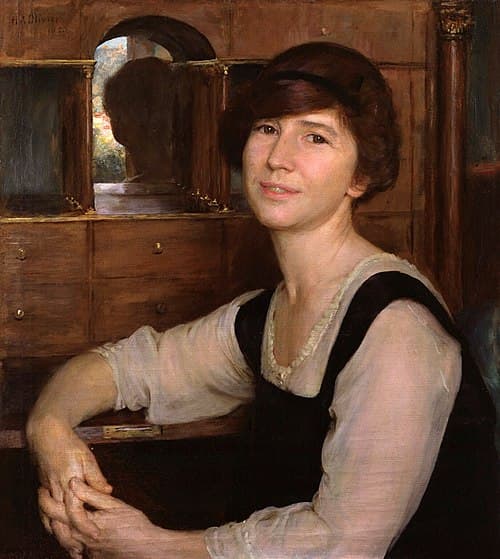
This imaginary interview was generated by artificial intelligence from sources documented in Marguerite Duras's profile. It dramatises what the figure might have said based on what we know about them, but does not constitute attested historical testimony. For primary sources and factual documentation, refer to the full profile.