Imaginary interview with Maria Mitchell
by Charactorium · Maria Mitchell (1818 — 1889) · Sciences · 6 min read
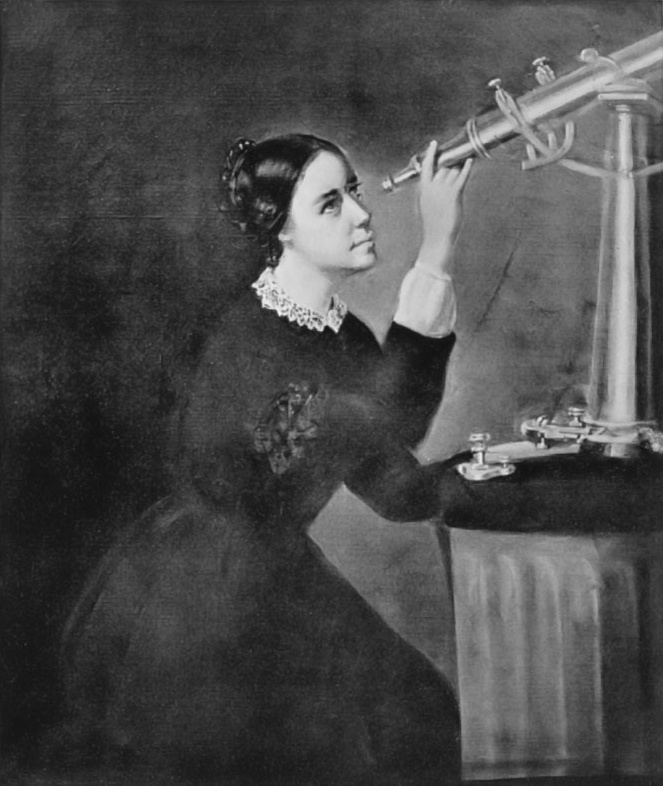
Autumn 1887, Vassar College Observatory in Poughkeepsie. The dome smells of cold metal and the varnish of star charts pinned to the walls. Maria Mitchell, sixty-nine years old, gray hair pulled back, places her hand on the great twelve-inch refractor and agrees to tell, one last time before her retirement, a life spent scanning the sky.
—What exactly happened on the night of October 1, 1847?
It was a reception evening at my father's house, downstairs at the bank in Nantucket. I pretended to have a migraine, climbed the stairs to the roof, and aimed the little two-inch achromatic telescope — my father's — at Cassiopeia. There, a fuzzy patch that my charts didn't show. The next day, I wrote to William Mitchell: 'Tonight, while observing with the two-inch telescope, I found a nebular object not on my charts. Its position and slow motion make me believe it is a comet.' Nothing romantic: a notebook, a chronometer, two positions compared a few hours apart. King Frederick VI of Denmark had promised a gold medal to whoever first reported a telescopic comet. It reached me in 1848. I was twenty-nine and had a very clear feeling that the sky does not ask your sex before showing you something.
The sky does not ask your sex before showing you something.
—How do you explain that an observer from Nantucket, without a large telescope, beat the astronomers of Europe?
People overestimate instruments and underestimate patience. My two-inch telescope was a toy compared to the great refractors at Pulkovo or Greenwich. But Nantucket is an island of whalers, where you calculate your longitude at sea every day of your life: astronomy was a survival skill, not a parlor ornament. My father put me in front of the sky at thirteen to time an eclipse. So my eye was trained on star fields, I knew my constellations like a sailor knows his shoals. A telescopic comet is an intruder in a landscape you've memorized. It's not about seeing farther than others, but recognizing faster what wasn't there the night before. The observer's rigor counts as much as the lens's power.
—You became in 1865 the first professor of astronomy at Vassar. What method did you impose on your students?
The sky, not the textbook. Many colleagues thought you teach astronomy sitting down, reciting tables. I required each one to climb into the dome, notebook in hand, and note for herself the time, coordinates, atmospheric conditions. Under the great twelve-inch refractor, you don't learn a truth, you manufacture it. I told them: do your calculations, then check them again; precision is the only honesty possible in science. Clear nights kept us until two or three in the morning, and I preferred one student exhausted by a real observation to ten rested by a recited lecture. I lived in the apartment adjoining the dome, among my charts and ephemerides: I could wake an entire class for a Jupiter transit. They resented me sometimes. Then they became astronomers.
Do your calculations, then check them again; precision is the only honesty possible in science.
—What does one of your days here at the Vassar Observatory look like?
It begins where the night left off. I get up late from a short sleep, oatmeal porridge and cornbread, then I correct the observation notebooks my students left before dawn. Afternoon belongs to teaching: class, the celestial globe, demonstrations, and I insist they handle the instruments in daylight, so as not to fumble at night. I go down to meals in the common dining hall with them — I refused the separate table offered to professors, that petty segregation of privilege. At twilight, I go back up to the dome. I myself note star transits at the meridian with the chronometer, I continue my sunspot records. My walls are covered with charts and the portrait of Mary Somerville. A life ruled by the Earth's rotation has this virtue: it never lies about the time.
—For nearly twenty years, you calculated the positions of Venus for the Nautical Almanac. What did this work involve?
Arithmetic, lots of arithmetic. From 1849 to 1868, the federal government paid me to predict where Venus would be on a given date, at a given hour, to the arcsecond. These ephemerides ended up in the Nautical Almanac, and from there in the cabins of captains calculating their longitude at sea. I worked at home, in Nantucket, among my astronomical tables and my marine chronometer, filling columns of figures that no one would ever read like a book, but on which a ship depended in bad weather. It was one of the few paid scientific jobs a woman could hold in America. People imagine the astronomer with nose to the telescope; three-quarters of the trade is bent over a sheet, redoing a calculation to hunt for the error of a decimal that, at sea, would cost lives.
A column of figures that no one will ever read like a book, but on which a ship depends in bad weather.
—Did this obscure, meticulous work weigh on you, compared to the glory of the 1847 discovery?
It didn't weigh: it fed, literally. A comet gets you a medal and articles; the Venus ephemerides pay a steady income, which for a woman of my time was almost as valuable as fame. But I won't hide my frustration. I wrote in my journal that I had never studied enough, never worked enough, never been free enough to concentrate fully on science, because domestic duties always claimed their share of my time. That's the truth they keep quiet: a woman's genius is paid for in hours nibbled away between household chores. The chronometer and the broom fought over my days. I calculated Venus in the intervals the house left me — and I often dreamed of what I could have done with whole days.
—Did your trip to Europe in 1857 change your view of your own place in science?
Deeply. In America, I was tolerated; in Rome and Florence, I was welcomed as a colleague. I visited the Italian observatories, and above all I met Mary Somerville, already elderly, whose very existence refuted all the speeches about women's mathematical incapacity. I later wrote of her that she had shown that scientific greatness is not the prerogative of the male sex, and that her work would remain a monument long after her detractors were forgotten. I also crossed paths with Alexander von Humboldt, who spoke of the stars as a common homeland. From those months was born a conviction I never abandoned: science has neither border nor gender. At home, I had been made to feel that my place was a favor; there, I understood it was a right.
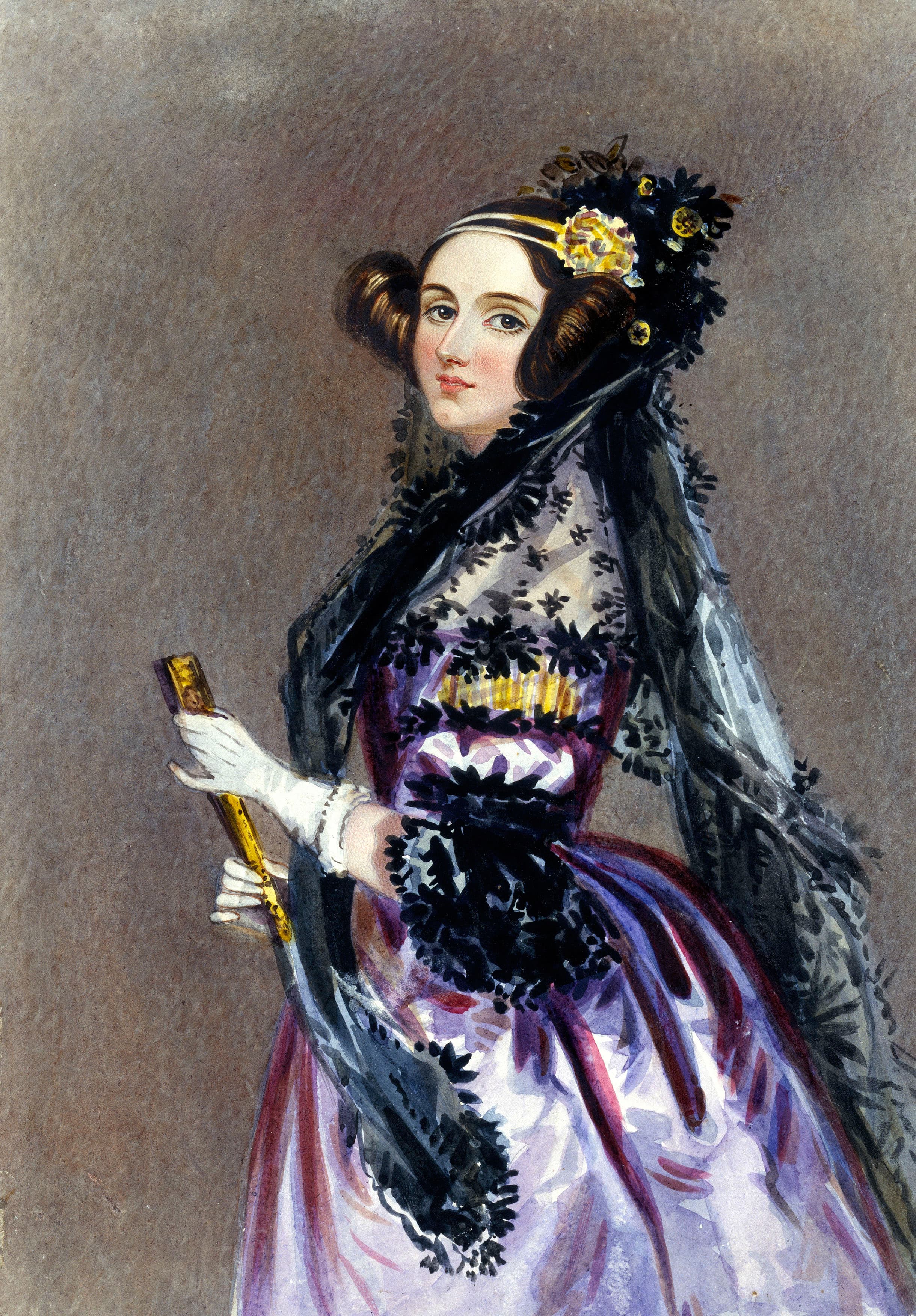
—What did Mary Somerville represent to you, to the point of devoting an essay to her?
A living proof, and a consolation. When I hung her portrait on my apartment wall, next to my star charts, it wasn't devotion but argument: I wanted my students to see a woman's face at the summit of mathematics every morning. In the essay I devoted to her in 1870, I argued that her work would remain a monument long after her detractors were forgotten. For what struck me about her was this: she had not demanded that science be lowered to her level; she had raised herself to the level of science. That is the only answer to the taunts about 'self-taught women' that were also directed at me: produce work so rigorous that mockery has no hold. Somerville did it in celestial calculation; I tried to do it under my dome.
She did not demand that science be lowered to her level: she raised herself to the level of science.
—In 1873, you co-founded the Association for the Advancement of Women. What did you expect from this struggle?
Nothing less than the opening of doors I had had to force one by one. Elected in 1848 to the American Academy of Arts and Sciences — the first woman — then in 1850 to the American Association for the Advancement of Science, I had measured how much these honors remained conceded exceptions, not recognized rights. By founding the Association, then presiding over it, I wanted to turn the exception into the rule. Before my sisters, in 1875, I said this: 'The time has come to stop asking permission to enter the sciences. Women must take their place in laboratories and observatories as a natural right, and not as a favor granted.' A society that excludes half its intelligence from observatories wastes half its genius. I have never argued anything else, and I argue it still.
A society that excludes half its intelligence wastes half its genius.
—If you imagined being read a century from now, what legacy would you like to leave behind this dome?
I distrust prophecies, so I'll speak only hypothetically. If I were read a hundred years from now, I would like them to have forgotten the King of Denmark's medal — one more comet, one less — and to remember the young women who climbed into this dome at Vassar to double-check their calculations. My comet was a happy accident of one October night; my students were the work of twenty-three years. That science has become, for a girl, an ordinary profession and not a scandal: that is the only monument worth reading me for. The rest — the sunspots, the Venus ephemerides — belongs to the slow addition of knowledge, where each person contributes only a decimal. But to loosen a door for those who come after — that, a whole life barely suffices.
My comet was the accident of one night; my students were the work of twenty-three years.
This imaginary interview was generated by artificial intelligence from sources documented in Maria Mitchell's profile. It dramatises what the figure might have said based on what we know about them, but does not constitute attested historical testimony. For primary sources and factual documentation, refer to the full profile.