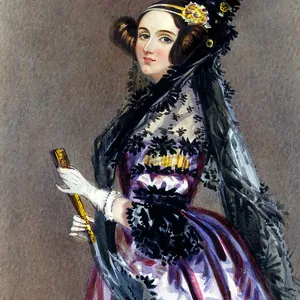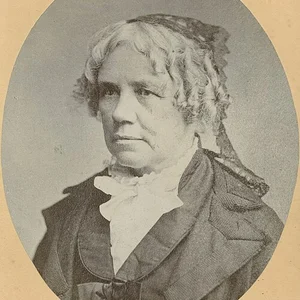

America's first professional female astronomer, Maria Mitchell discovered a comet in 1847, earning her a gold medal from the King of Denmark. She was the first woman elected to the American Academy of Arts and Sciences and advocated for the scientific education of women.
Maria Mitchell(1818 — 1889)
Maria Mitchell
États-Unis
9 min read
Frequently asked questions
Famous Quotes
« We especially need imagination in science. It is not all mathematics, nor all logic, but it is somewhat beauty and poetry.»
« Study as if you were going to live forever; live as if you were going to die tomorrow.»
Key Facts
- 1818: born in Nantucket, Massachusetts, into a Quaker family that supported girls' education
- 1847: discovery of comet C/1847 T1, known as “Miss Mitchell’s Comet,” using a telescope
- 1848: first woman elected a member of the American Academy of Arts and Sciences
- 1865: appointed professor of astronomy at Vassar College, one of the first major women's universities
- 1889: died in Lynn, Massachusetts, leaving a lasting legacy for women in science
Works & Achievements
The first independent and official observation of a telescopic comet by a woman in the history of American science. This discovery earned her the gold medal of the King of Denmark and international renown.
Precision work carried out over nineteen years for the U.S. government: Mitchell calculated the predicted positions of Venus, data essential to the astronomical navigation of military and commercial vessels.
A series of systematic observations of the Sun's surface from the Vassar Observatory, contributing to the understanding of the solar cycle at a time when astronomical photography techniques were still in their infancy.
Among the first women to use astronomical photography in a scientific manner, Mitchell produced images of the gas giants that served in her publications and in teaching.
A scholarly article published in *Hours at Home*, analyzing the astronomical accuracy of Milton's epic poem. It reflects Mitchell's literary and scientific culture, uncommon among scholars of her time.
Mitchell was one of the founders of this organization, which advocated for women's access to intellectual and scientific professions. Her activist work extended her teaching at Vassar beyond the college walls.
Anecdotes
On the night of October 1, 1847, Maria Mitchell climbed onto the roof of the Nantucket bank where her father worked and pointed her telescope at the sky. She spotted an unfamiliar fuzzy smudge in the constellation Cassiopeia: it was a comet that no one had yet reported. Her discovery earned her the gold medal promised by the King of Denmark to the first observer of a telescopic comet.
Although she became the first woman elected to the American Academy of Arts and Sciences in 1848, Mitchell long encountered closed doors. In 1850 she was also admitted to the American Association for the Advancement of Science, yet some male colleagues refused to take her seriously, faulting her for being self-taught. She answered those critics by publishing rigorous work on sunspots and on the surfaces of Jupiter and Saturn.
When Vassar College hired her as its first astronomy professor in 1865
Mitchell insisted on a method that was radical for the time: her students had to observe the sky themselves every night
notebook in hand
rather than simply reading textbooks. She often said:
Do your calculations, then check them again. Precision is the only honesty possible in science.
Mitchell was one of the rare women scientists to work for the United States federal government: for nearly twenty years she calculated the positions of Venus for the American Nautical Almanac, an indispensable reference for maritime navigation. This painstaking work, carried out from her home, provided her with a steady income at a time when women were shut out of virtually every official scientific post.
In 1873, Mitchell co-founded the Association for the Advancement of Women and became its president in 1875. In a celebrated address, she declared that women possessed as much intellectual capacity as men for the sciences, and that society was squandering half its genius by excluding them. That conviction shaped her entire teaching career at Vassar, where she trained generations of women astronomers.
Primary Sources
I have never studied enough. I have never worked enough. I have never been free enough to concentrate fully on science, because domestic duties always claimed their share of my time.
This evening, while observing with the two-inch telescope, I found a nebulous object that did not appear on my charts. Its position and slow movement lead me to believe it is a comet.
Milton had a deep knowledge of the astronomy of his time, and his descriptions of the cosmos show a remarkable precision for a poet.
The time has come to stop asking permission to enter the sciences. Women must claim their place in laboratories and observatories as a natural right, not as a granted favor.
Mary Somerville showed that scientific greatness is not the exclusive domain of men. Her mathematical work will stand as a monument long after her detractors are forgotten.
Key Places
Maria Mitchell's birthplace, a stronghold of whalers and navigators where practical astronomy was a daily necessity. It was from the roof of the local bank that Mitchell discovered her comet in 1847.
Mitchell lived and worked here from 1865 to 1888, training generations of women astronomers. The observatory, equipped with a 12-inch refractor, was one of the best-appointed in the United States.
An observatory built in Mitchell's memory in 1908, on the site of the family home. It now houses her original instruments and carries on her legacy by hosting science programs for young people.
Mitchell collaborated with the naval observatory during her work for the Nautical Almanac Office. There she met the leading American astronomers of her day and advocated for the inclusion of women in federally funded research.
During her European journey of 1857–1858, Mitchell visited Italian observatories and met scholars who welcomed her as an equal — an experience that deepened her conviction that science transcends borders and gender.
Typical Objects

It was with this small telescope belonging to her father that Mitchell discovered her comet in 1847. A modest instrument compared to large professional telescopes, it illustrates that the rigor of the observer matters as much as the power of the tool.

Installed in the Vassar College observatory, this powerful refracting telescope allowed Mitchell and her students to observe the surface of Jupiter, Saturn, and sunspots with professional precision.

An essential precision instrument for measuring the exact time of stellar meridian transits. Mitchell used it for her ephemeris calculations for the Nautical Almanac, which guides ships on the open sea.

These thick volumes of predictive planetary position calculations were Mitchell's daily working tools. She herself wrote entire sections of them for the American Nautical Almanac.

Mitchell meticulously recorded every night of observation: time, coordinates, atmospheric conditions, remarks. These notebooks served as both her scientific archive and her personal research journal.

Awarded in 1848 for the discovery of the 1847 comet, this medal was the highest international astronomical honor of the era. For Mitchell, it represented official recognition that science has no gender.

A sphere representing the starry vault with constellations and celestial coordinates, used in class by Mitchell to teach navigation and sky mapping to her Vassar students.
School Curriculum
Vocabulary & Tags
Key Vocabulary
Tags
Daily Life
Morning
Maria Mitchell rose early, having often spent part of the night awake at the observatory. She ate a frugal breakfast, typically Quaker — oatmeal porridge, cornbread, tea — before correcting the observation notebooks left by her students the previous night and preparing her morning lectures.
Afternoon
Afternoons were devoted to teaching: classroom lectures, demonstrations on the celestial globe, and checking ephemeris calculations. Mitchell insisted on taking her students into the dome even during the day so they could master the instruments before the nighttime sessions. She also set aside time for scientific correspondence with astronomers in America and Europe.
Evening
From dusk onward, Mitchell climbed into the observatory dome. She guided her students through their observations, personally recorded star transits across the meridian with a chronometer, and continued her research on sunspots or planetary surfaces. Clear nights often kept her there until two or three in the morning.
Food
Raised in the Quaker tradition of simplicity, Mitchell ate plainly: soups, boiled vegetables, salt meat, cornbread, and apple pies typical of New England. At Vassar, she shared meals in the dining hall with her students, refusing the separate arrangements offered to faculty out of a commitment to equality.
Clothing
Mitchell wore dark dresses — navy blue, slate gray, black — with starched white collars, typical of educated women of the American Quaker middle class in the 19th century. She avoided the bulky crinolines then in fashion, finding them impractical for climbing the observatory's spiral staircases. She wore neither jewelry nor ostentatious ornaments.
Housing
At Vassar College, Mitchell lived in the observatory building itself, in an apartment adjoining the dome. This lodging, provided by the college, gave her instant access to the telescope on favorable nights. The walls were covered with celestial maps, ephemerides, and portraits of learned women she admired, such as Mary Somerville.
Historical Timeline
Period Vocabulary
Visual Style
Style portrait scientifique américain du milieu du XIXe siècle, mêlant la rigueur du daguerréotype et la lumière chaude des observatoires à lampe à huile, dans des tons bleu nuit, ambre et ivoire.
Sound Ambience
Ambiance nocturne d'un observatoire américain du XIXe siècle : coupole qui tourne, chronomètre de précision, vent atlantique et silence étoilé ponctué d'étudiantes au travail.
Liens externes & ressources
Références
Œuvres
Découverte de la comète C/1847 T1 (comète de Miss Mitchell)
1847
Calculs d'éphémérides de Vénus pour le Nautical Almanac
1849-1868
Études sur les taches solaires
1866-1880
Photographies de la surface de Jupiter et de Saturne
1872-1888
Essay : 'The Astronomical Science of Milton as Shown in Paradise Lost'
1866
Cofondation de l'Association pour l'avancement des femmes
1873