Kids interview Marie Curie
by Charactorium · Marie Curie (1867 — 1934) · Sciences · 6 min read
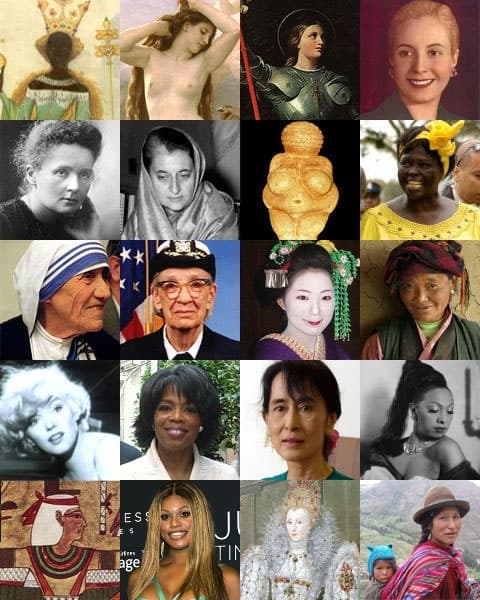
Two twelve-year-olds are sitting across from Marie Curie in a quiet corner of the museum. Their class is on a discovery trip, and they have already forgotten the printed list of questions — they are simply talking. She folds her hands, smiles gently, and waits for the first word.
—When you were young, were girls allowed to go to school in Warsaw?
No — not to a proper university, and certainly not one run by the Russian authorities who controlled Poland at the time. They preferred to keep us quiet and ignorant. But some teachers refused to give up. They organised secret lessons in private flats — kitchens, living rooms, wherever a small group could gather without being noticed. We called it the Flying University, because it moved from address to address so the police could never catch it. Imagine going to school with your coat on, ready to run if someone knocked at the door. That is where I first fell in love with science. And I will tell you something: learning a thing when it is forbidden makes you hold on to it far more tightly.
Learning a thing when it is forbidden makes you hold on to it far more tightly.
—What did your laboratory look like? Was it a proper science building?
Not at all! A famous chemist who visited once said it looked like a cross between a stable and a potato cellar. He was being generous. The roof leaked. Cold air came in through the windows in winter, and chemical fumes in summer. Pierre and I worked there for four years — 1898 to 1902 — processing enormous loads of a dark, heavy mineral called pechblende. We ground it, dissolved it, filtered it, tonne after tonne, our hands always burned and stained. Exhausting, unglamorous work. But it was in that crumbling shed that we found polonium and radium — two entirely new elements no one had ever seen before. The place where a discovery is made does not need to be beautiful.
—How do you even measure something invisible, like radioactivity?
That is exactly the right question. You cannot see radioactivity — but it leaves a trace. When a radioactive substance is near, it makes the surrounding air conduct electricity. Even a very faint, invisible current can be measured if you have the right instrument. Pierre had invented one: an electrometer using a small sliver of quartz crystal that vibrated under pressure to detect the tiniest electrical signals. Think of trying to hear a whisper from the other end of a noisy street — that is the kind of attention I needed every single day. I learned to trust the needle on the dial, even when I could see nothing at all. Science is about listening carefully to what is there before you can name it.
—Is it true your old notebooks are still too dangerous to touch?
Yes — and that still startles me to think about. My laboratory notebooks are kept at the Bibliothèque nationale de France in Paris, stored inside boxes lined with lead. Lead stops radiation from passing through, you see — it acts as a kind of shield. Anyone who wants to read those pages must sign a document accepting the risk. It has been well over a century, and the notebooks are still radioactive. At the time, we had no idea how much danger we were in. I even kept tubes of radium salts near my bed at night — they gave off a faint blue glow in the dark. I thought it was rather beautiful. I did not yet know that the glow was a warning I was not reading.
I thought the glow was beautiful. I did not yet know it was a warning.
—What happened the day you gave your very first lecture at the Sorbonne?
It was November 1906. Pierre had died that spring, knocked down by a horse-drawn carriage in the street. The university offered me his chair — I became the first woman ever to hold a professorship there. When I walked into the lecture hall that morning, it was packed. Students, journalists, curious strangers, all pushing in to see what a woman at that lectern would say. I could have spoken about Pierre, about grief, about what the moment meant for women in science. I did not. I sat down and continued the physics course exactly where he had stopped it, with no personal introduction at all. Some people found that cold. I thought it was the only honest tribute I could give: his work, continuing.
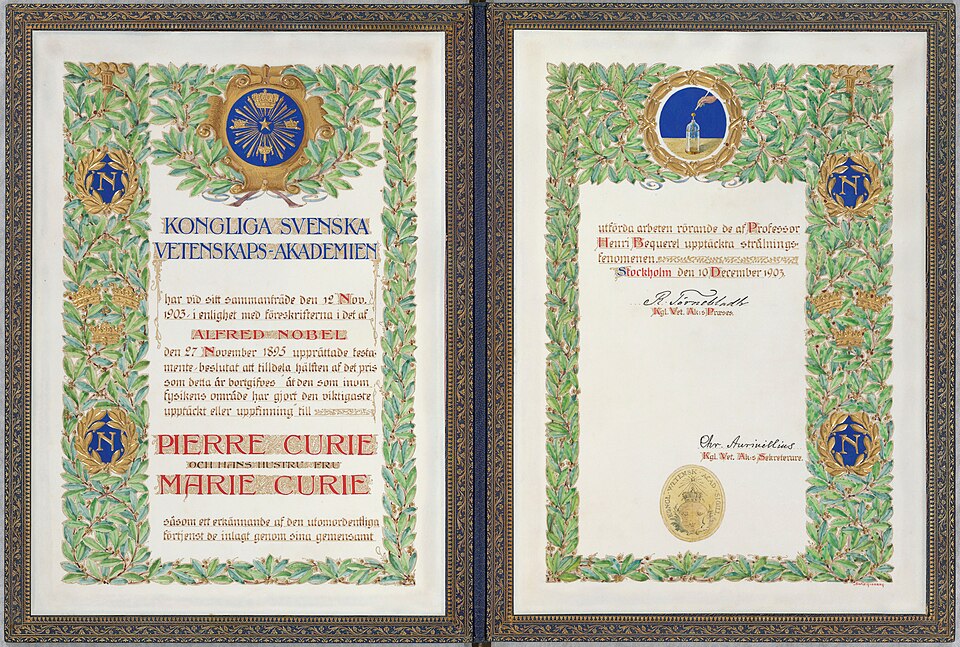
—Did people ever try to push you aside just because you were a woman?
Many times. The clearest example: in 1911, I was awarded the Nobel Prize in Chemistry — my second Nobel Prize. But the Swedish committee sent me a private message asking me not to come to Stockholm for the ceremony, because the newspapers were printing ugly stories about me at the time. Can you imagine? I had just been given the highest honour in science, and they were suggesting I stay home. I refused. I made the journey, I gave my speech, I accepted the medal. I understood something then that I want you to remember: if you allow others to decide when you are permitted to take your place, they will make that decision forever. You go. You show up.
—During the war, you built special cars with X-ray machines — why cars?
When World War One broke out in 1914, surgeons near the battlefields were trying to remove bullets and shell fragments from wounded soldiers — but they could not see where those fragments were lodged inside the body. Operating without seeing is very dangerous. I thought: we have X-ray equipment in laboratories. Why bring the wounded all the way to the machines, when we can bring the machines to the wounded? I fitted automobiles with a small generator and an X-ray tube. We ended up with about twenty of these mobile units, which people called petites Curies. Over the course of the war, they helped doctors radiograph more than a million soldiers. A scientific discovery is not finished when it leaves the laboratory — it finishes when it reaches the people who need it most.
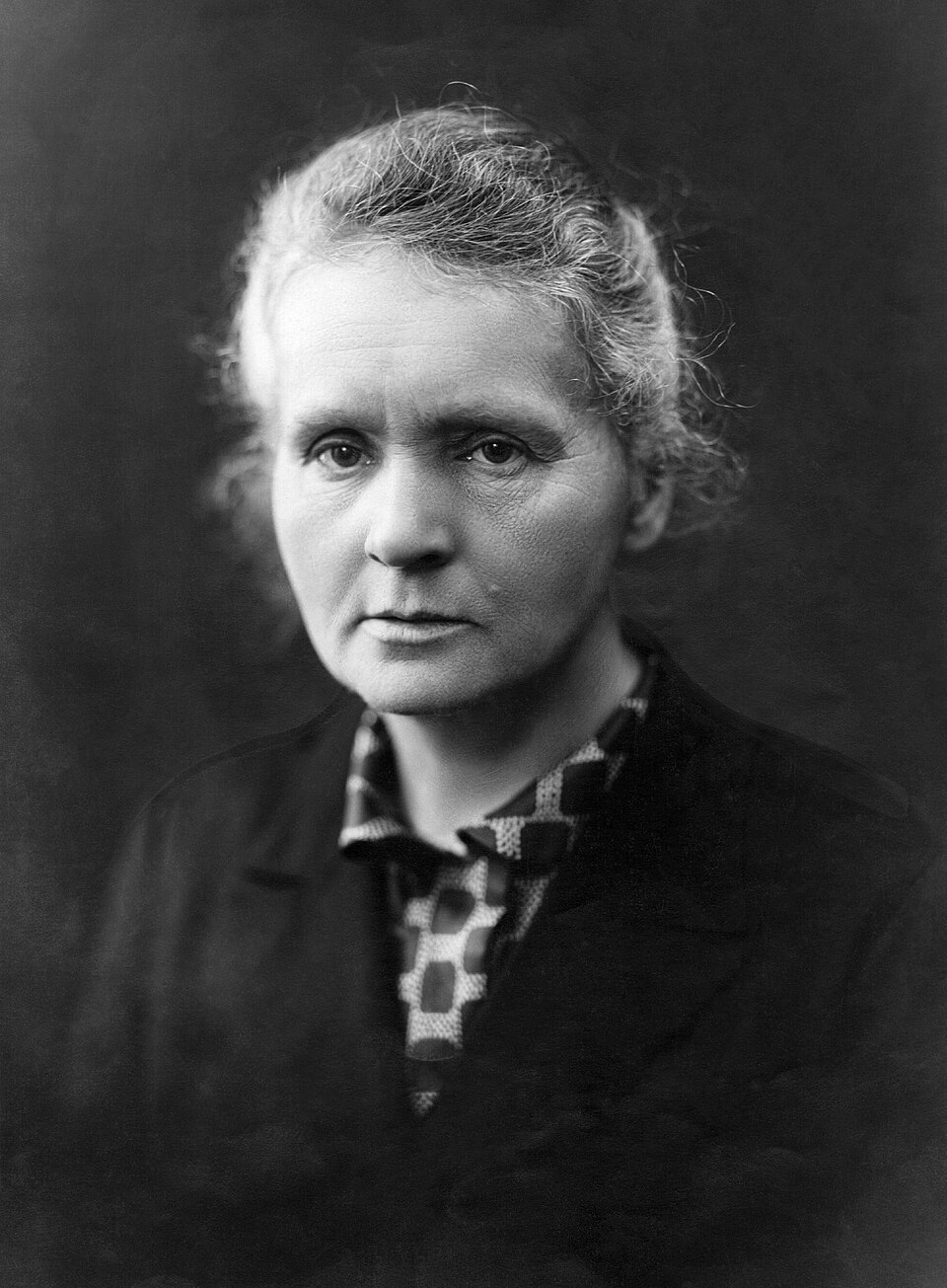
—Did you go to the front yourself? That must have been really frightening.
I went many times, yes. I also trained young women to operate the X-ray equipment, because there were nowhere near enough trained staff and we could not wait. Was I frightened? Perhaps a little — the sound of artillery carries a long way, and it stays in your chest. But I was far more afraid of staying behind with a skill that could save lives and not using it. Every day we delayed was a soldier who might lose a limb because no one could locate the fragment in time. Fear asks you to wait. Waiting was the one thing I could not do. That is what I learned about courage: it is not the absence of fear — it is deciding that something else matters more.
—Why didn't you keep your discoveries for yourself and become very rich?
Pierre and I talked about this the moment we isolated radium, and we agreed straight away: we would not patent our process. A patent would have meant controlling who could use our work — charging other scientists, restricting hospitals, slowing every piece of research that came after us. At my chemistry Nobel ceremony in 1911, I said what I still believe: radium was not a source of personal wealth. It was an element belonging to the whole world. The discovery was mine in the sense that I made it — but what science discovers belongs to everyone who can use it. Locking knowledge behind a price is a way of un-doing the discovery itself.
—Why did you name one of your discoveries 'polonium'? That's an unusual word.
When Pierre and I found that first new element in July 1898, I had to choose a name. Poland — my homeland — had been divided among three empires for more than a century. It did not appear on any official map. No government, no recognised flag, no country. So I gave the element the Latin name of my homeland: polonium. Every chemistry textbook printed anywhere in the world after that would carry that name. Scientists who had never heard of Warsaw would write polonium in their notebooks. Names are a form of memory, you see — they travel across time in ways that borders and armies cannot stop. As long as the periodic table exists, Poland will have a place on it.
As long as the periodic table exists, Poland will have a place on it.
This imaginary interview was generated by artificial intelligence from sources documented in Marie Curie's profile. It dramatises what the figure might have said based on what we know about them, but does not constitute attested historical testimony. For primary sources and factual documentation, refer to the full profile.