Imaginary interview with Marie Curie
by Charactorium · Marie Curie (1867 — 1934) · Sciences · 6 min read
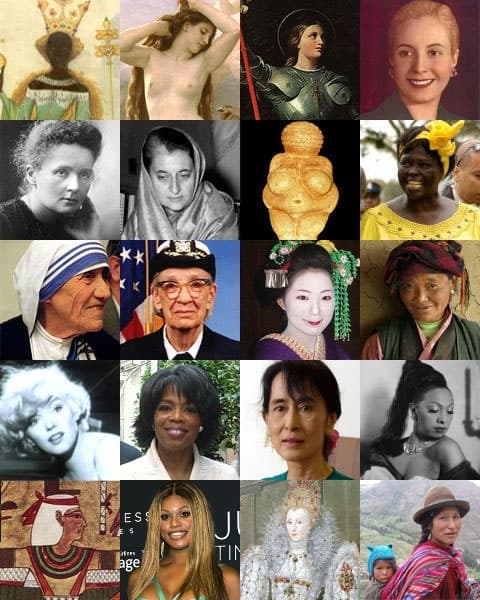
We meet Marie Curie in the autumn of 1923, in her spare office at the Institut Curie on the rue d'Ulm in Paris — the research center she founded and has directed for nearly a decade. A stack of handwritten measurement sheets sits on the corner of her desk; through the window, the courtyard is busy with students. She speaks without preamble, choosing each word with the economy of someone who has spent thirty years reducing things to their essential components.
—Your scientific education began in circumstances most people would find impossible. What did learning mean to you in those early years in Warsaw?
In Warsaw in the 1880s, the universities were closed to women, and the Russian authorities were watchful. We gathered in private apartments — twenty or thirty students at a time, someone always posted at the door, the address changed from week to week. We called it the Université volante. What I remember is not the danger but the quality of attention in those rooms. People who study at risk pay differently — every formula retained feels like something rescued from a fire. I have never lost that kind of attention. It carried me through the years when experiments went badly, through the months when nothing confirmed itself: the knowledge that access to learning is not a given, and therefore not something one wastes.
People who study at risk pay differently.
—How would you describe the physical reality of isolating radium — not the theory, but the years of actual work on the rue Cuvier?
The laboratory was, in truth, a shed. Wilhelm Ostwald came to visit and described it as something halfway between a stable and a cellar for potatoes — he was being precise, not unkind. The roof let in rain; the floor was compacted earth. Pierre had constructed a quartz electrometer of remarkable sensitivity to detect faint ionization currents, and I spent my days stirring boiling masses of pechblende with an iron rod nearly as tall as I was. Tonnes of the ore had been shipped from mines in Bohemia, grey and extraordinarily dense. By 1902, after four years of this work, we had a fraction of a gram of radium chloride pure enough to weigh with confidence. That fraction was the result of two people's physical labor and the patience of a single instrument.
—Your notebooks from that period are still consulted by researchers today. What do those records mean to you?
The notebooks are the truest account of how science actually proceeds — not the polished version one writes afterward for the Comptes rendus, but the real movement: the failed fractionations, the months of columns that only cohere in retrospect, the annotations made past midnight when a result refuses to confirm itself. I write in them daily, and I notice that some of the older pages carry permanent staining from the mineral residues I have handled since 1897. That staining does not wash away. There is something almost geological about it — a record written in matter as well as in ink. What matters to me is that the entries are complete enough to be followed. A result that cannot be replicated from its notes is a result that cannot quite be trusted.
A result that cannot be replicated from its notes is a result that cannot quite be trusted.
—After the discovery of radium, you and Pierre chose not to patent the isolation process. How did you arrive at that decision?
I would not call it a decision in the deliberate sense. Pierre raised the question one evening — whether we should consider protecting the process commercially — and I said the discovery did not belong to us in that way. We had built on Becquerel's observations of uranium radiation, on instruments Pierre and his brother had developed years earlier, on pechblende extracted by miners in Bohemia whose labor we had never shared. What would we have been patenting, exactly? I said as much in my Nobel lecture in 1911: that radium is not a source of personal enrichment, that it is an element belonging to everyone, that a discovery belongs to the whole of science. A scientist who treats knowledge as private property has mistaken what kind of thing knowledge is.
—In November 1906, months after Pierre's death, you walked into a lecture hall at the Sorbonne as its first female professor. What do you remember of that morning?
There was a crowd that filled the hall and overflowed into the corridor — students, journalists, women who had come to see, I think, whether I would say something personal. I had decided to begin exactly where Pierre had stopped: mid-argument, mid-physics, without any remark about myself or about what had happened. When I stated the sentence that continued his last lecture, there was a moment of silence I could feel across the room. I did not intend it as a gesture; it was simply the honest course. The loss was not a subject for a lecture hall. The lecture hall existed for physics, and physics had not stopped. What it means to carry on — not as a figure of speech but as a literal act — that morning, I believe, showed it plainly.
—When war came in 1914, you redirected entirely from the laboratory and organized mobile X-ray units for the front. What made that feel necessary?
The reasoning was straightforward. Röntgen's radiography could show a surgeon exactly where a shell fragment had lodged in bone or tissue — the difference, often, between a saved limb and an amputated one. The equipment existed. The question was how to bring it close enough to the wounded to be useful before the wound became more serious than it had to be. I designed motor cars fitted with a generator and an X-ray tube, mobile enough to operate near the lines. We eventually had some twenty of them running. I trained teams myself, many of them women who had never touched laboratory apparatus before 1914. I made several trips to the front. The machine performs the same function in a barn as in a hospital.
The machine performs the same function in a barn as in a hospital.
—You trained many women to operate those radiological units during the war. Did you think of that as a deliberate opening of a door?
I thought of it as practical necessity — trained operators were scarce, and women willing to train were not. But I noticed what the work meant to the women themselves. Several had never handled scientific instruments before; within weeks they were reading radiographs, calibrating apparatus, making technical assessments that affected surgical decisions. Some of them, after the armistice, moved into medical or scientific careers and stayed. I cannot say I planned that consequence, but I am not indifferent to it. The obstacles placed between women and scientific education are artificial, not natural — a matter of accumulated habit and convenience, not of capacity. A war is a poor method of removing them. It demonstrated, at least, that they could be removed.
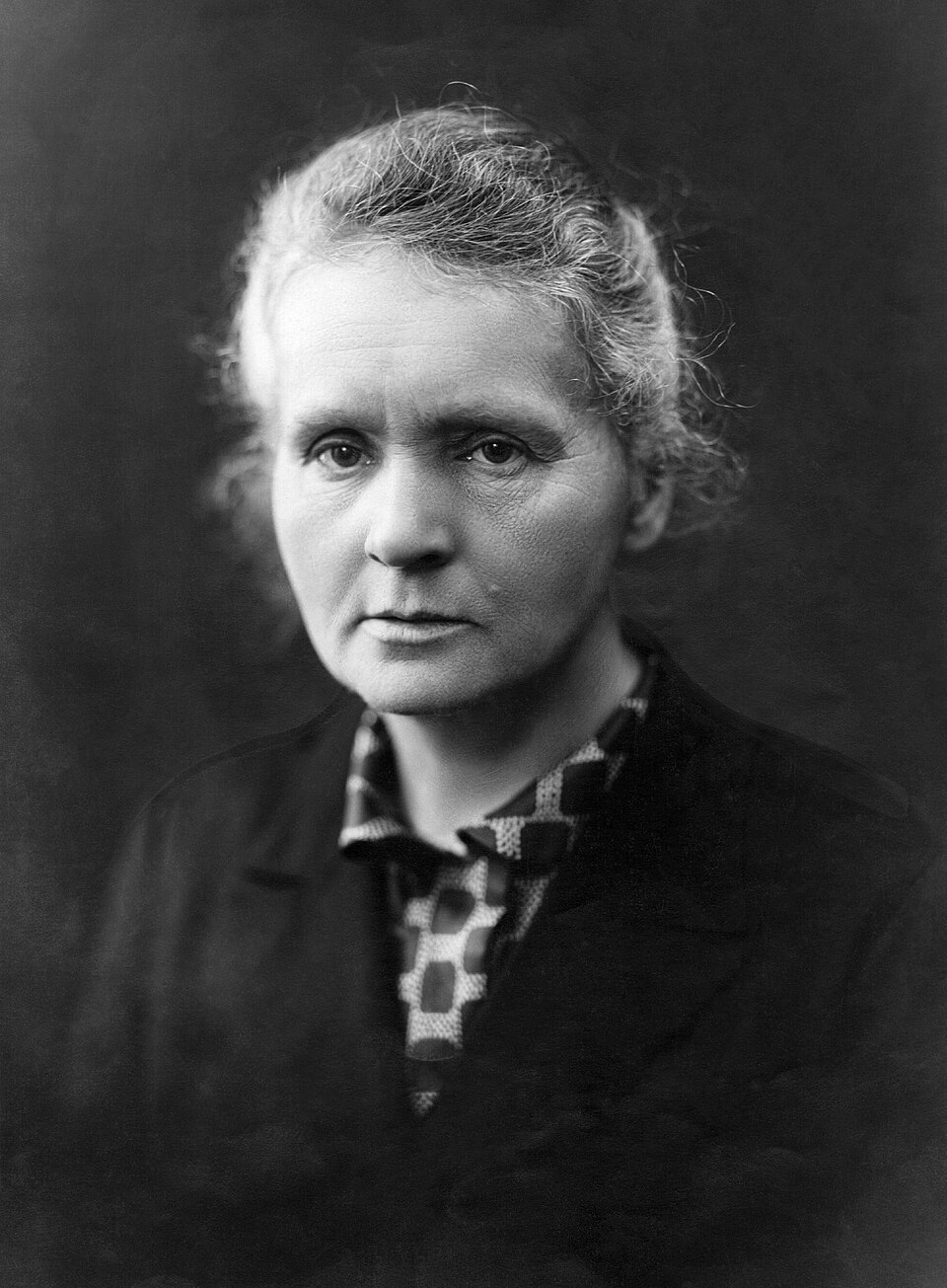
—In 1911, the Nobel committee and others suggested, with some delicacy, that your presence in Stockholm might be awkward given what was appearing in the French press. You came anyway. How did you think about that?
The prize was awarded for scientific work: for the isolation of polonium and radium, for what is set out in the Traité de radioactivité, for decades of laboratory and theoretical effort. The committee's letter was carefully phrased — it suggested my presence might create difficulties given circumstances in the newspapers. I replied that I saw no connection between my scientific work and my private life, and that I intended to attend. I have never found it useful to manage one's reputation through absence. The work is either sufficient or it is not; if the noise is louder than the work, the work must speak more clearly — not the scientist less visibly.
—For more than twenty-five years you have handled radium salts directly — carried samples, kept them at your workbench. What is your relationship now to this material?
The salts, in darkness, give off a faint blue-white luminescence that is quite beautiful — I say that without sentiment, only as an observation. I kept a small tube near where I worked in the evenings at home for many years. Becquerel once carried a tube of radium in his waistcoat pocket and found afterward a lesion burned into the skin beneath it; he showed it to Pierre with a kind of rueful curiosity. I have noticed that my own fingertips carry marks that do not heal cleanly, and my eyesight has been declining for some years. I take the precautions I know to take. What troubles me is not those precautions but the ones I do not yet know are necessary.
—You have written that life is not easy for any of us, but that perseverance and belief in one's purpose are what carry a person through. What has perseverance looked like for you, in practice?
I wrote that in notes about my own life last year — that life is not easy for anyone, that what matters is to persist and to believe one is suited for something and must reach it without making terms. I meant it plainly, not as encouragement. After Pierre died in 1906, the laboratory was for a time the only place I could function at all — not because I was strong, but because the problem in front of me was still unresolved and demanded attention regardless of what I felt. The radioactivité that I named in my doctoral thesis of 1903 is still imperfectly understood; the properties of the atom continue to be mapped. One does not abandon an unfinished question. That is not perseverance in any noble sense — it is simply the recognition that the question does not accommodate the circumstances of the person asking it.
This imaginary interview was generated by artificial intelligence from sources documented in Marie Curie's profile. It dramatises what the figure might have said based on what we know about them, but does not constitute attested historical testimony. For primary sources and factual documentation, refer to the full profile.