Imaginary interview with Mechthild of Magdeburg
by Charactorium · Mechthild of Magdeburg (1207 — 1282) · Spirituality · Literature · 6 min read
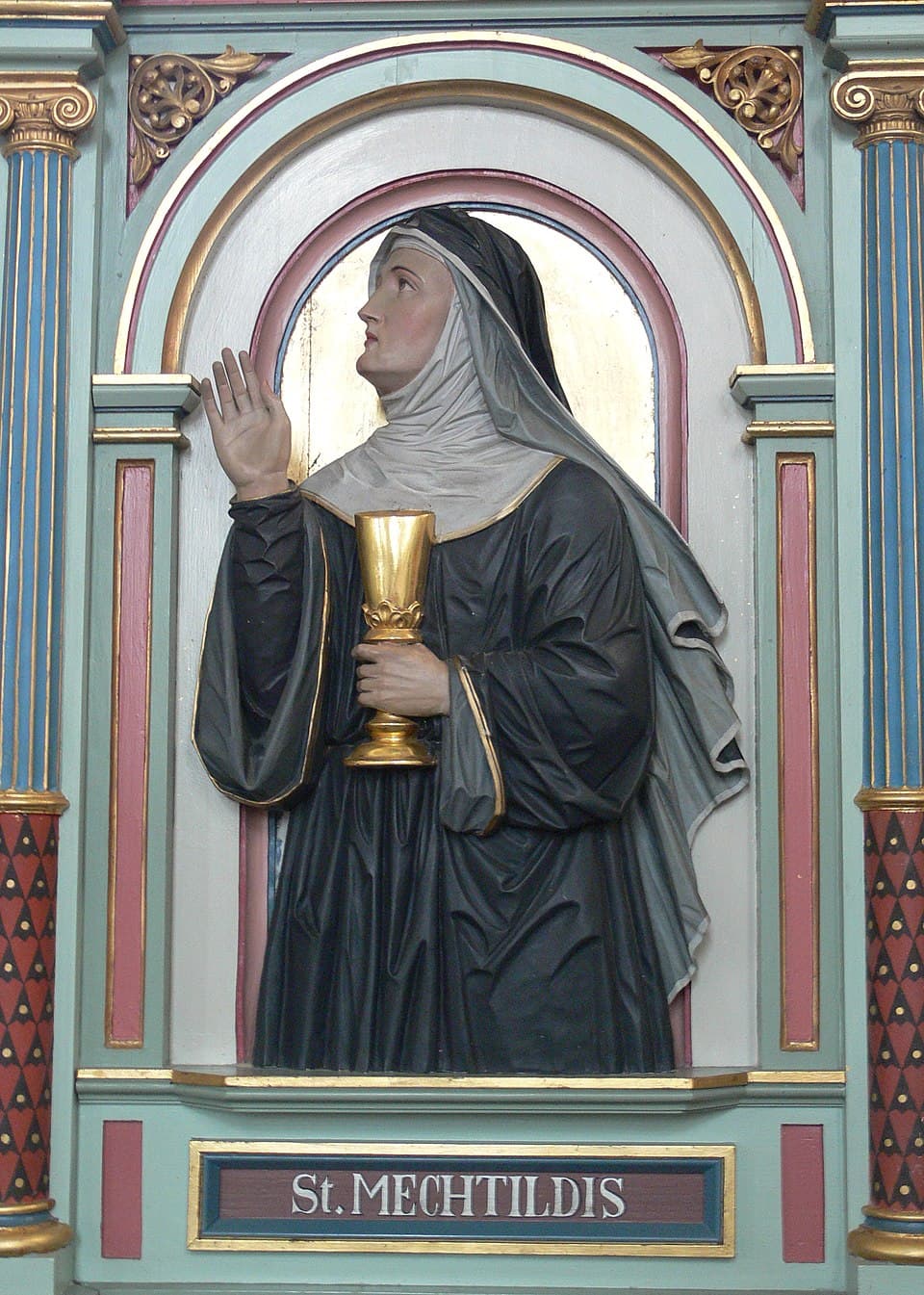
Helfta, in Saxony, on a winter evening in the 13th century. In a cell lit by a single candle, an old woman almost blind sits near her desk, where the pages of her great book still lie. Mechtilde of Magdeburg, a beguine who became the hostess of the nuns, agrees to look back on a life spent writing the unspeakable.
—What prompted you, as a young woman, to leave the court where you grew up?
I was twenty-three, and the court where I was raised weighed on me like a coat too rich. In Magdeburg, I untied the finery, left behind the prestige of my house, and asked for the beguine veil — that gray veil worn by women given to God without taking eternal vows. People thought me mad to reject so many worldly pleasures. But a higher sweetness was calling me, and I could only answer it with empty hands. I became a stranger in my own city, living on little, praying much, among those women the world looked askance at. It was there, in that destitution, that the Lord began to speak to me more clearly than to anyone.
A higher sweetness was calling me, and I could only answer it with empty hands.
—Why did you not take the veil of nuns, with permanent vows and the safety of a cloister?
To be a beguine is to hold a middle ground that few understand: neither a lady of the world nor a cloistered nun behind grilles. We lived together, several women, without taking those vows that bind forever; free to pray, to work with our hands, to care for the poor and sick. This freedom frightened the clergy, for a woman who governs herself before God has always worried them. They asked under what authority I lived; I answered that my rosary and my silence were worth all the rules. Yet I was not without a guide: a friar preacher watched over my soul. But the fire, it came from no man. It descended, and I had only to hold myself open like a cup under the rain.
—Do you remember the first time God showed Himself to you?
I was still a child, twelve perhaps, when for the first time the greeting of God came upon me — thus I name that sudden flood that pierces the soul and leaves it trembling. It returned every day, and no one knew. How to tell grown-ups that light speaks to you? I carried it in secret for years, like an ember under ash. Only later did I dare to keep a memory of it on the manuscript. "I saw a light descend upon me and felt my soul expand in the ineffable sweetness of the divine presence." That is what I recorded, not to boast, but because one does not silence what fills one to overflowing.
—Why did you write in German, and not in the Latin of clerics and schools?
I did not know Latin like the masters of the universities; I had my mother's tongue, that rough Middle High German spoken by merchants and maidservants. For a long time I was ashamed of it — who am I, an unlettered woman, to speak of the things of God? But the Lord made me understand that His light is not reserved for the learned. If I had written in Latin, who among my beguine sisters would have read me, among the laity hungry for God without having known school? So I took my common tongue and poured the unspeakable into it, mixing prose and verse as the soul passes from cry to song. Thus was born the Flowing Light of the Godhead — a book written in the language of everyone.
—How did you write? Were you afraid of what the pen fixed on the page?
My reed pen often trembled in my hand, for putting onto the page what God whispers is like trying to put the sea into a cup. I did not write to compose a fine work; the words came to me, and I gave them back as one gives back what does not belong to one. Sometimes I begged the Lord to spare me this task — I was weary, ill, and people reproached me for wanting to teach. But a voice told me that this book was from Him, not from me, and that touching it with pride would lose it. So I wrote on, page after page, and these pages passed from hand to hand among the communities, far beyond what my smallness would have dared to hope.
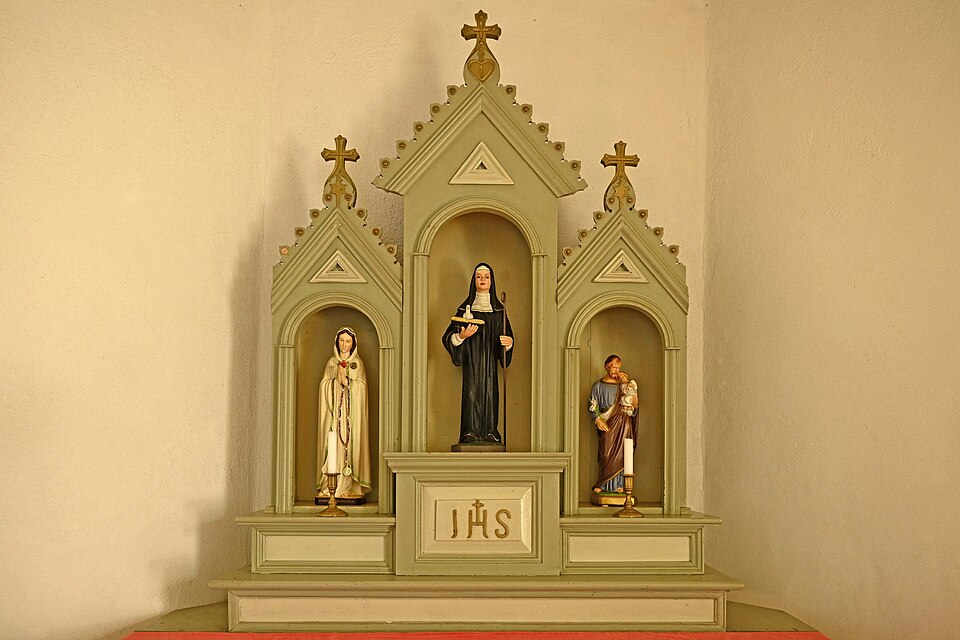
—How would you describe this union with God that your pages speak of?
There is only one image for it, and that is water. "Love without measure flows in me like a river that overflows its banks. My soul unites with God in the secret of my heart, and I cannot express in human words this ineffable bliss." That is what I wrote, and I have no better word. Divine love is not a well-behaved stream that stays in its bed; it rises, it breaks the dikes, it drowns the one it visits. This is called ecstasy, that moment when the soul overflows beyond itself and no longer possesses itself. The clerics speak of God with scale and compass; I can only speak of Him with thirst and overflow.
Divine love is not a well-behaved stream that stays in its bed.
—You speak of God as a bridegroom. Is that not audacious for a woman, such language?
When the Lord said to me "You are my beloved bride," it was not I who chose those words — it was He who gave them to me. The soul is woman before God, as the bride before the bridegroom, and all the love the world knows is but the shadow of that love. I know this nuptial word frightens some: that a simple beguine dares to call herself the bride of the Most High! But I invent nothing that the Scriptures do not already sing in the Song of Songs. Love knows no ranks; it lowers the King to the servant and raises the servant to the King. In this exchange, I am no longer anything and I am everything, and that is the secret that my contemplation taught me.
—Were you not afraid of being accused of heresy for such writings?
Fear, yes, I knew it. People murmured against me; some clerics wanted to throw my pages into the fire, judging that an uneducated woman had no right to speak of God in that way. I trembled for my book as a mother for her child. But the Lord reassured me: what comes from Him, no fire consumes. I had also learned to speak harshly of the faults of bad priests, and that did not win me friends. Growing old, nearly blind, I saw the danger grow around me. That is partly why I withdrew to the convent of Helfta, where learned sisters welcomed me and gathered my words, making my trembling voice something to be preserved.
What comes from Him, no fire consumes.
—How did you experience these last years at Helfta?
I came to Helfta old, sick, and nearly blind, a stranger once again — I, the beguine among nuns of noble lineage. And yet I found there a rest I no longer expected. The sisters surrounded me with care; the younger ones would come sit near my cell to hear what God had done in such a long life. It was there, in this convent in Saxony, that I dictated the last parts of my book, for my hand could no longer hold the reed pen. At night, when compline rang, I gave thanks for having been led along so many paths to this last shelter. The light that had visited me as a child did not leave me in the darkness of my eyes.
—What was an ordinary day like in this convent?
Everything is governed by the bells. Before dawn, one rises for matins and lauds, and the cold of the flagstones enters the bones. Then comes holy reading, and for those who can, work in the scriptorium where sacred texts are copied. I never truly loved anything but prayer and writing, but common life also requires service: the refectory, where one eats brown bread and vegetables from the garden while a sister reads aloud; silence; obedience. People think the days of a cloister all resemble each other. That is true of the hours, but not of the soul: beneath this unchanging rule, God works in us a labor that never rests.
This imaginary interview was generated by artificial intelligence from sources documented in Mechthild of Magdeburg's profile. It dramatises what the figure might have said based on what we know about them, but does not constitute attested historical testimony. For primary sources and factual documentation, refer to the full profile.