Kids interview Mechthild of Magdeburg
by Charactorium · Mechthild of Magdeburg (1207 — 1282) · Spirituality · Literature · 5 min read
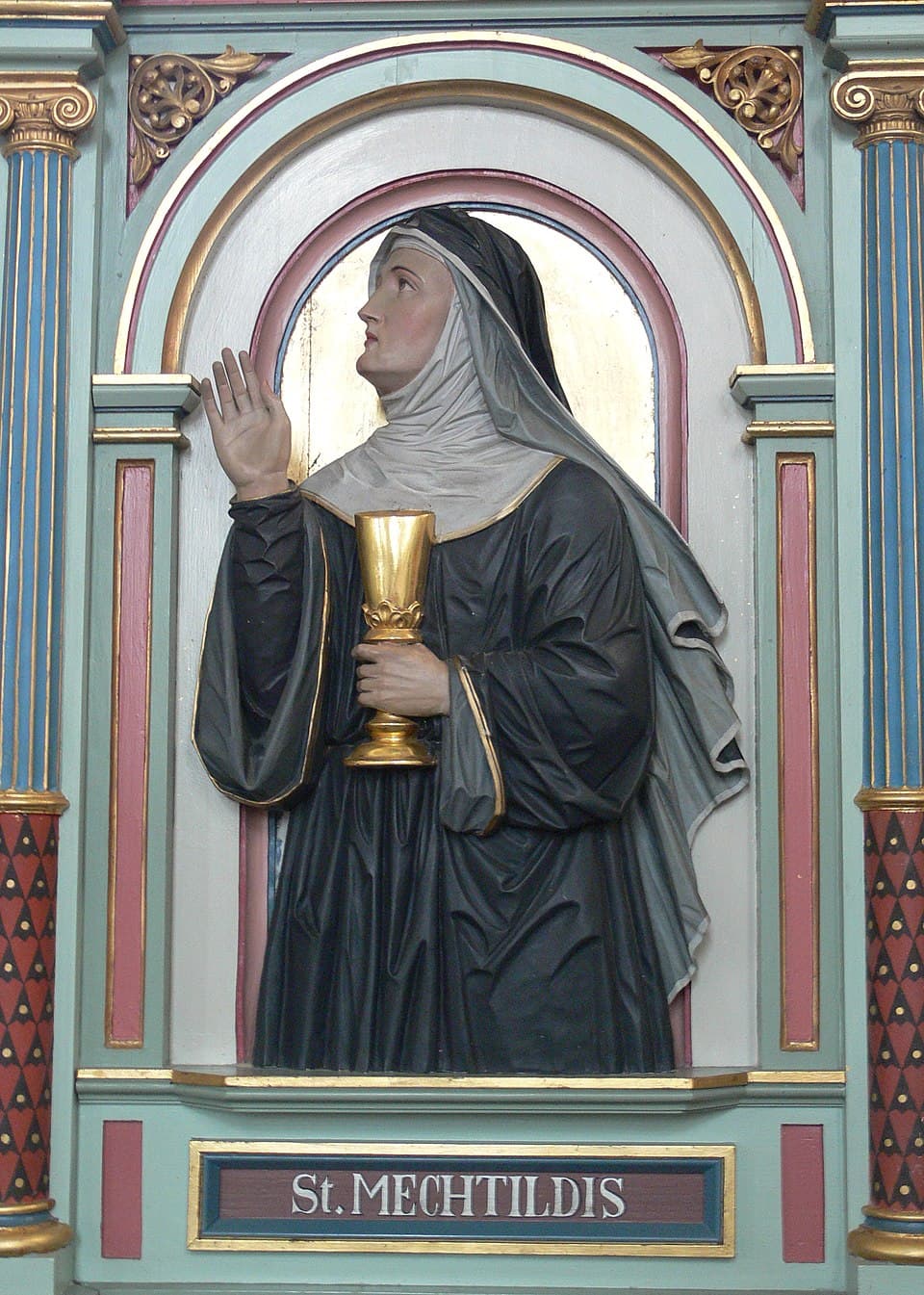
Two young visitors, on a school trip in the heart of old Saxony, pushed open the door of a silent cell. An old woman in a worn veil awaited them, a smile in her eyes. She said her name was Mechtilde, and agreed to tell them about God, visions, and ink.
—How old were you when you left home to go off on your own?
You know, my child, I was 23. I grew up near a court, in comfort, with beautiful dresses and servants. And one morning, I left it all. Imagine setting a crown down on a table and never touching it again. I went to Magdeburg to become a beguine. A beguine is a woman who prays and lives with other women, but without becoming a full nun, without lifelong vows. My family didn't understand. But I felt a fire inside. I wanted God, not money. And that day, I was richer than ever.
I set the crown down on the table, and I never touched it again.
—What was it like being a beguine? What did you wear every day?
Picture a very simple woman, no jewelry, no ornaments. I wore a gray veil over my hair, a thick woolen dress, a little rough. Nothing pretty, and that was intentional. We beguines lived together, prayed together, but each remained free. We weren't locked up like nuns in a convent. We could go out, help the poor, nurse the sick. You see, it was new for the time: women choosing God without a man deciding for them. It surprised people, sometimes worried them. But under my veil, I finally felt in my place.
—You said you saw things? How long had that been happening?
Since I was very little, my child. I was still a child, younger than you perhaps, and already a light would come to visit me. How can I explain? It wasn't a dream. It was like a gentle warmth that descended and filled my heart to the brim. I called it divine grace, that gift God gives you without your having earned it. At first I was afraid, I told no one. Then I understood that I had to keep it all, write it down, lose nothing. So I wrote, year after year. Those visions became my whole life.
—Were you afraid at night when those lights came to see you?
At first, yes. Imagine yourself alone in a small cell, a candle flickering, and suddenly something bigger than you envelops you. Your heart beats fast. But little by little, I learned not to tremble. Those visions weren't there to hurt me. They spoke to me like a faithful friend speaks to a friend. Fear turned into trust. You know, the hardest part wasn't the night. It was the morning, when I had to tell others about it. Because a woman who says she sees God, in my time, could anger many people.
Fear turned into trust, like a friend speaking to a friend.
—Why did you write a book? Did women do that in your time?
Very few, my child, very few. And that's exactly why my book caused a stir. I called it The Flowing Light of the Godhead. The most surprising thing: I didn't write it in Latin, the language of scholars and priests. I wrote it in my own language, the one spoken in the street, everyday German. So that even a simple woman could read me. Imagine a treasure finally taken out of its locked chest. Many found it scandalous. A woman speaking of God in the people's language? What audacity!
I wrote in the people's language, so that a treasure might finally leave its chest.
—What did you write with? And was it a long process to make a book?
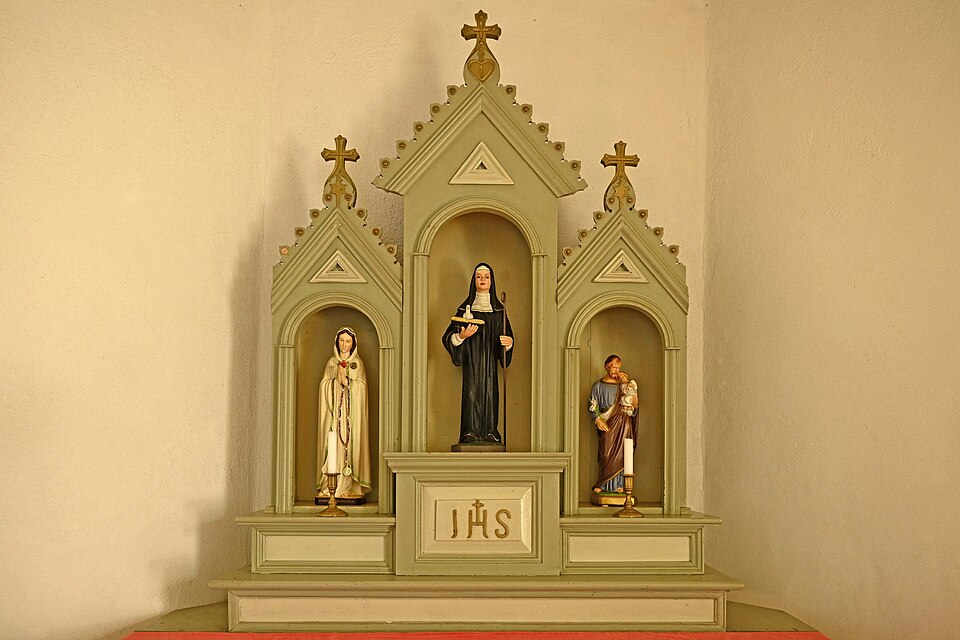
I wrote with a cut pen, dipped in black ink, on parchment. No hurry: each letter took its time. You dip, you trace, you dip again. It took me years, almost twenty, to put everything in writing. Sometimes my hand trembled, sometimes words wouldn't come. How can you say with human words something that transcends words? It was my greatest struggle. And do you know the hardest part? After my death, churchmen nearly burned my book, judged it dangerous. Fortunately, friends protected it. Ink, sometimes, is stronger than fire.
Ink, sometimes, is stronger than fire.
—In your book, what exactly do you talk about? Is it complicated?
Not so complicated, my child. I talk about love. An immense love between my soul and God. I said that this love flowed in me like a river overflowing its banks. Have you ever seen a stream after rain, water spilling over the edges? That was it, in my heart. To say it, I used poetic words, not lessons. I spoke of the soul as a bride, and of God as the one she loves. It surprises, I know. But when you love deeply, you search for the most beautiful words. And I loved very deeply.
Love flowed in me like a river overflowing its banks.
—Why do you call God like a lover? Isn't that weird?
I understand that surprises you. But listen. When you love someone with all your heart, what do you call them? My dear child, my treasure, my beloved. Well, that's what I felt for God. In my visions, it seemed I heard him call me his beloved spouse. It wasn't a marriage as you imagine. It was the soul and God drawing so close that they become one. We called it ecstasy, that moment when you forget your body because you're so filled with joy. Ordinary words aren't enough. So I used the words of love.
—Where did you live at the end? What was your room like?
At the end of my life, my child, I went to Helfta Convent in Saxony. I was old, tired, and there the sisters welcomed me like a grandmother. My room? A tiny cell. A hard bed, a desk for writing, a wooden cross on the wall. Nothing else. Imagine a room where you hear only the wind and the bells. In the morning, before sunrise, we got up to pray. It was there, in that quiet, that I finished my great book. Helfta was my last nest, gentle and silent.
—What did you eat in the convent? And how were your days?
Oh, very simple meals, my child! Dark bread, vegetables from the garden, cheese, fish on meatless days. Never a feast. We drank water and a little light beer. My days followed the bells: prayer before dawn, then work in the scriptorium, the room where we copy and write texts. In the afternoon, I gardened or helped with chores. In the evening, a meal in silence while a sister read aloud. Then I withdrew to pray alone. A well-ordered day, like a clock of prayers. And in that peaceful rhythm, my soul breathed.
—If you are still read today, would that make you proud?
Proud, I don't know, my child. Happy, yes. When I wrote, alone in my cell, I wasn't thinking of you, children from so far away. I was just thinking not to lose the light I had received. But if my words still speak to you, after so many winters, then the river still flows. That touches me. I was a simple woman, a beguine who dared to take up the pen when almost no one did. If you remember one thing from me, remember this: even a small voice, written with courage, can cross the centuries.
Even a small voice, written with courage, can cross the centuries.
This imaginary interview was generated by artificial intelligence from sources documented in Mechthild of Magdeburg's profile. It dramatises what the figure might have said based on what we know about them, but does not constitute attested historical testimony. For primary sources and factual documentation, refer to the full profile.