Imaginary interview with Meryl Streep
by Charactorium · Meryl Streep (1949 — ?) · Performing Arts · 6 min read
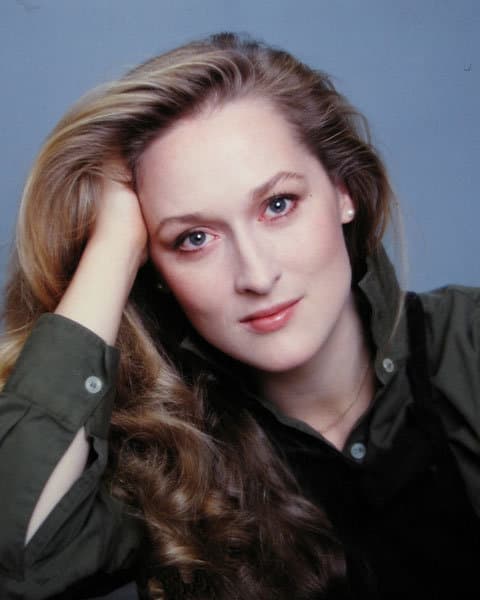
A late autumn afternoon, in a New York City apartment where the piano occupies the far end of the living room and scripts pile up, annotated to the margins. Meryl Streep receives without fuss, in simple attire, a cup of cold tea near a voice recorder forgotten on the table. She speaks softly, choosing her words like one adjusts a line.
—How does the work on a role begin for you, long before the first take?
It always begins with paper. I take the script and cover it with handwritten notes — the psychology, the silences, the places where the voice should tremble and doesn't. Around it, I build a small library: biographies, press archives, period recordings. I arrive on set with my own documented convictions, not to impose, but to have ground under my feet. What's called the Method, that idea inherited from the Actors Studio, has never been enough for me alone: I don't just want to draw from my memories, I want to understand a woman I am not. In the morning, at makeup, during those endless hours, I let the outside act on the inside. The costume, the face, the walk — all of it thinks for me, if I let it.
The costume, the face, the walk — all of it thinks for me, if I let it.
—Do you remember the filming of Kramer vs. Kramer in 1979, and what you asked to change?
I remember it very precisely. Robert Benton had entrusted me with Joanna, that mother who leaves, and on paper she was almost indefensible — a woman written to be condemned. I asked to rewrite some of my lines, because I didn't believe a woman would leave without a reason one could at least hear. It wasn't a whim; it was a matter of truth. At the 52nd Academy Awards, receiving my first prize, I spoke about transformations in family life, the silences in couples — because this film, the first to look divorce in the face, said something new. That battle for Joanna was, without my really deciding it, the beginning of everything else.
I didn't believe a woman would leave without a reason one could at least hear.
—What does learning Polish and German for Sophie's Choice represent to you?
In 1982, to embody Sophie, the language had to be true, otherwise everything would collapse. So I recorded speakers, listened to them obsessively, learned Polish and German with their accents — that recorder never left me. Voice, for me, is the first organ of a character; before the gesture, before the gaze, there is the grain of a language. But it wasn't a technical feat. Sophie is a camp survivor, and lending her a false mouth would have been a betrayal. William Styron's novel carried a memory; my job was not to tarnish it. Receiving the Oscar for that role, I said that those voices must continue to be heard. I still think that.
Voice, for me, is the first organ of a character.
—Why did this concern for the memory of victims seem to you to be an artist's responsibility?
Because a film reaches millions of people who will never open a history book. Sophie's Choice brought the memory of the Holocaust into theaters where people came to be entertained, and that's where it becomes serious. 'Those voices must continue to be heard' — I said that at the 55th Academy Awards, and it wasn't a formula. An artist carries, whether they like it or not, the burden of what they represent. I learned that language, pored over those archives, not for the performance, but because oblivion is a second death. When I put together my files, my research books, it is that conviction that keeps the lamp lit: one does not play History lightly.
Oblivion is a second death.
—How does one become Margaret Thatcher, to the point that her loved ones are unsettled?
Through listening, stubbornly. For The Iron Lady in 2011, I studied hundreds of hours of video footage of Margaret Thatcher — her deep, slightly nasal voice, that rigid posture, those gestures that never gave themselves away. Again the recorder, again the voice as entry point. I was told that people who had known her were unsettled, and that is not a compliment I store away: it is the sign that one has stopped mimicking and begun to understand. I didn't share her ideas, but my job is not to judge, it is to inhabit. That third Oscar, in 2012, made me the most awarded woman in the history of the Academy — a number that amuses me more than it defines me.
It is the sign that one has stopped mimicking and begun to understand.
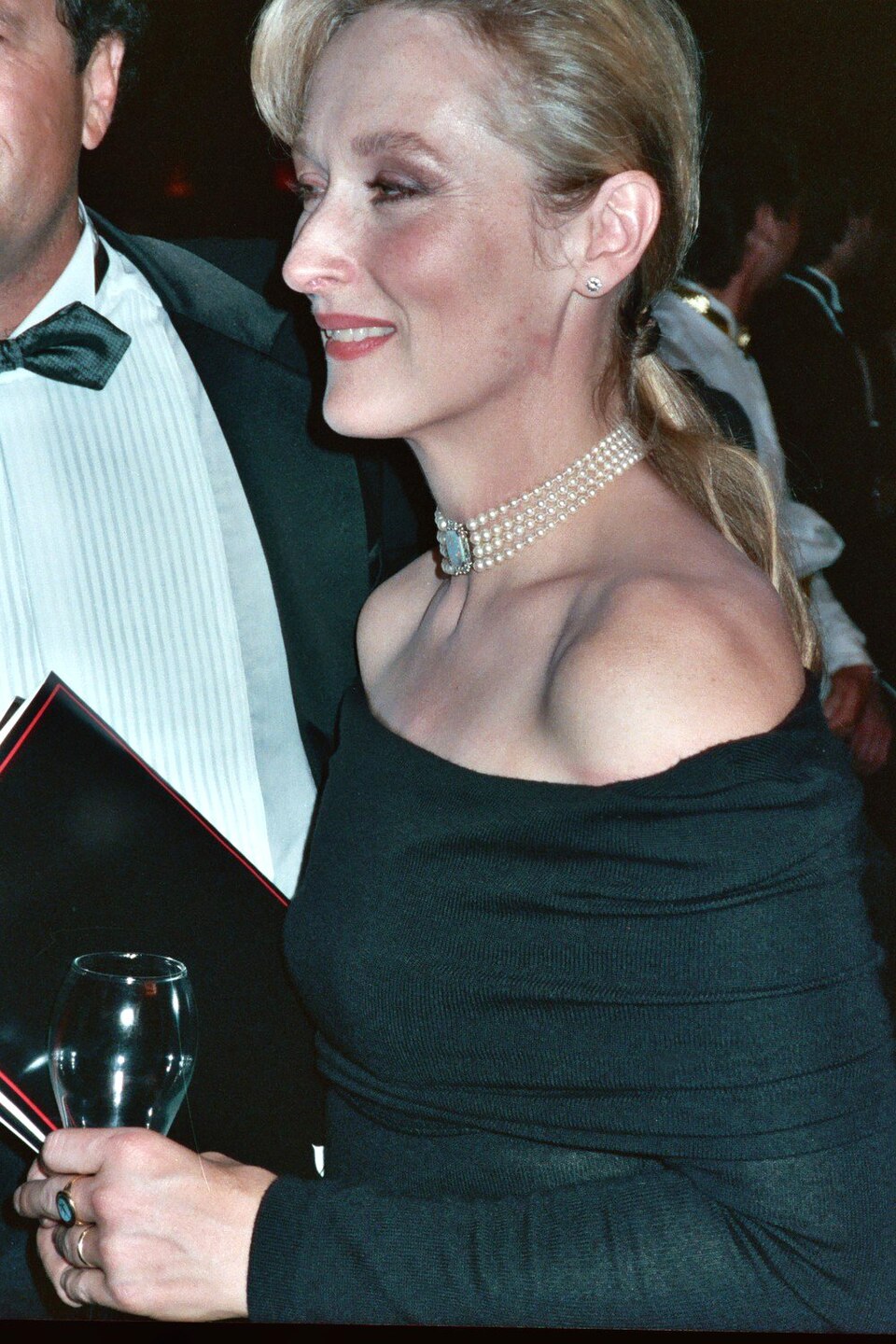
—Embodying a woman whose convictions you didn't share — is that an obstacle or a driving force?
It is the very heart of the craft, and no one should find it comfortable. Thatcher was politically foreign to me, and yet I had to find, beneath the Prime Minister, the woman — the solitude of power, the aging body, the faltering memory. Inhabiting is not approving. I fill my scripts with notes precisely so as not to impose my judgment: each annotation is a way of saying 'this isn't you, listen to her.' The vocal transformation, the posture, all that patient work serves that purpose — to disarm the trial and let a person exist. A successful role doesn't ask you to agree; it asks you to be just. And justice often begins where comfort ends.
A successful role doesn't ask you to agree; it asks you to be just.
—Do your shooting days have a rhythm of their own?
They have a slowness that people don't suspect. In the morning, very early, there are the hours of makeup and costume — I use them to slip gently into the other's skin, the outside first. In the afternoon, there are takes, rehearsals, discussions with the director about the intention of a scene. Off set, I read scripts, dig into my research, work with my partners. And in the evening, I go home. Mother of four children, I have always fiercely defended that space: the table, the piano I've played since childhood, a book, far from the Los Angeles spotlights. That piano, by the way, is not an ornament: rhythm, breathing, everything I know about the breath of a line, I learned there, on a keyboard.
Everything I know about the breath of a line, I learned on a keyboard.
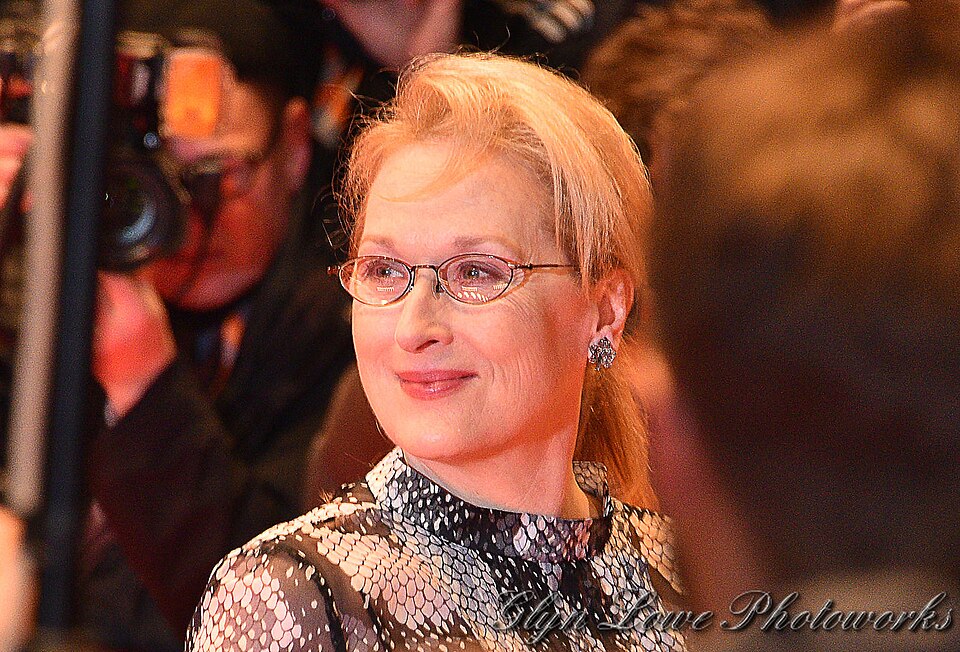
—One imagines you glamorous, but your daily life seems the opposite — why this sobriety?
Because glamour is just another costume, and I reserve it for ceremonies. In life, I dress simply, for comfort and for work, and I leave the haute couture outfits for statuette nights. I have three of those Oscars — those little golden knights holding their swords — and I look at them with both tenderness and distance. What truly nourishes me is more discreet. At Barnard College in 2010, I told the graduates to take care of what nourishes them inwardly: reading, music, travel, sometimes solitude. That is where everything you give later comes from. The rest — red carpets, box office — is the noise around the work, not the work.
Glamour is just another costume, and I reserve it for ceremonies.
—In January 2017, you stepped onto the Golden Globes stage. What made you decide to speak?
The feeling that a threshold had been crossed. At the 74th Golden Globe Awards, I hadn't planned a manifesto; I had a speech to receive, and a concern I could no longer keep quiet. I said this line: 'When the powerful mock the weak from a podium, and everyone laughs, that is the decline of democracy.' It wasn't against a man, it was against a gesture — humiliation turned into spectacle. Within hours, it went viral, and I measured, a little frightened, the echo chamber one is lent. I also defended press freedom that night, because an actor and a journalist live on the same thing: the right to look, and to report what one sees.
It wasn't against a man, it was against a gesture — humiliation turned into spectacle.
—A few months later, you committed to Time's Up. What were you trying to change, deep down?
The rule of silence. After the revelations of fall 2017 and the wave of #MeToo, it became impossible to act as if we didn't know; in 2018, with other women in the industry, we launched Time's Up to give victims, in all sectors, the legal means to defend themselves. A viral speech is a spark; it doesn't fix anything on its own. What was needed were funds, lawyers, a structure — something that would outlast the emotion. I spent a career rewriting lines so that the women I played had a voice; it would have been indecent not to lend mine when real women, in the very wings of Hollywood, demanded to finally be heard.
A viral speech is a spark; it doesn't fix anything on its own.
This imaginary interview was generated by artificial intelligence from sources documented in Meryl Streep's profile. It dramatises what the figure might have said based on what we know about them, but does not constitute attested historical testimony. For primary sources and factual documentation, refer to the full profile.