Imaginary interview with Moses
by Charactorium · Moses · Spirituality · 6 min read
At the edge of the desert, under a tent of goat hair that the wind of Sinai makes flap, an old man with a veiled face receives the traveler. The campfire lights up a shepherd's staff leaning against the canvas. He is one hundred twenty years old, they say, and he agrees to speak of Egypt, of the sea, and of the mountain.
—What do you keep from the very beginning, from that birth in persecution?
I was born when Pharaoh had ordered all the sons of the Hebrews to be thrown into the river. My mother hid me for three months, then she wove a basket of bulrushes, coated it with bitumen and pitch, and entrusted me to the Nile as one entrusts a secret to the waters. Pharaoh's daughter drew me from the current and gave me this name — Moshé, the one who is drawn from the waters. Think of the irony of the royal house: I was raised in the very palace of the one who wanted me dead. I grew up among stone columns and painted ceilings, a prince among princes, without yet knowing that this river that had saved me would one day become red as blood under my hand.
My mother entrusted me to the Nile as one entrusts a secret to the waters.
—How would you describe the day your shepherd's life turned upside down?
I was tending the flock of my father-in-law Jethro, on the side of Mount Horeb, where the stone is bare and the silence total. And behold, a bush was burning — it was burning, yet it was not consumed. I drew near, barefoot, for the ground under me had become holy. A voice called me by my name. When I asked who was speaking, who was sending me, the name that was given to me was not a name like others: I AM WHO I AM. Do you understand? One does not grasp this fire, one does not possess it. I was a stammering shepherd, and I was asked to go speak to the master of Egypt. I was afraid. The fire, for its part, did not tremble.
It was burning, yet it was not consumed.
—To present yourself before Pharaoh, to demand the freedom of a people of slaves: where did you find the audacity?
The audacity was not mine, it was lent to me. I returned to the land I had fled, to the worksites of Rameses and Pithom where my brothers sweated under the whip shaping bricks. Before the throne, my staff turned into a serpent, and Pharaoh's heart hardened like clay in the kiln. Then came the ten plagues: water turned to blood, frogs, darkness so thick it could be felt, and finally the terrible night when the firstborn of every Egyptian house died. Believe me, I took no joy from this struggle. Breaking an empire is not a victory one sings. It is only that a people does not let itself be held in slavery when the Covenant calls it elsewhere.
Breaking an empire is not a victory one sings.
—And the sea? Tell us about that moment when it stood before you.
We were trapped, the Sea of Reeds before us, Pharaoh's chariots behind us, and the people were already murmuring that it was better to serve in Egypt than to die in the desert. I raised the staff, that simple shepherd's wood, and the east wind blew all night. The waters split, standing up as a wall to the right and left, and we walked on dry ground where no one had walked. When the chariots launched after us, the sea returned over them. On the other shore, I could not keep silent: with all the people, and my sister Miriam with the tambourine, we sang the Song of the Sea. It is the oldest song in our memory, born not of calculation but of an overflow.
We walked on dry ground where no one had walked.
—Why does this staff, such a humble object, occupy such a place in your story?
Because it reminds me of what I was before all this: a man leading beasts toward the sparse grass of the desert of Midian. This staff was worth nothing — dry wood picked up on a path. And yet, through it the serpent rose before Pharaoh, through it the Sea of Reeds opened, through it water gushed from the rock of Meribah when the people were dying of thirst. You see, I think it is deliberate: I was not given a golden scepter or a sword. A shepherd's staff, so that no one would imagine that the strength came from the object or the man. I was only the hand that held it. The power, for its part, came from elsewhere.
A shepherd's staff, so that no one would think the strength came from the man.
—Tell us about those forty days spent on the summit of Sinai.
I climbed Mount Sinai in the cloud, and there, forty days and forty nights, I neither ate nor drank. Time no longer had hold on me. It was there that I received the two Tablets of the Law, engraved with the ten words of the Decalogue — not advice, but the foundation of the Covenant between the one God and a people barely out of slavery. You cannot imagine the weight of those stones in my arms, nor the light. When I came down, my face shone so much that the children of Israel dared not approach me, and I had to cover it with a veil. What I had touched up there left its mark on the flesh, like fire marks metal.
What I had touched up there left its mark on the flesh.
—And yet, coming down, you broke those Tablets. How do you explain that gesture?
When I reached the foot of the mountain, my people were dancing around a golden calf. Forty days of absence, and already they had melted an idol from their gold rings, they who had seen the Sea of Reeds open! Anger seized me completely. I threw the Tablets and they shattered on the rock. I was reproached for that gesture. But how could I carry an intact Covenant to a people who had already broken it? The broken Tablets told the truth of the moment. I had to go back up, to intercede, to beg that they not be abandoned — and to come down with second Tablets. The Law, you see, is not received once and for all. One receives it, one loses it, one reconquers it.
The Law is not received once and for all. One loses it, one reconquers it.
—In daily life, in the desert, what did your task among the people consist of?
People imagine the prophet on the mountain; but the bulk of my days I spent sitting, judging. From morning to evening, people stood around me for me to settle their disputes in the name of the Law. It was my father-in-law Jethro who, seeing me exhausted, opened my eyes: 'You will wear yourself out, and the people with you.' He advised me to appoint chiefs of thousands, of hundreds, of tens, and to keep only the great causes. In the evening, I withdrew to the Tent of Meeting, apart from the camp, to listen to what I was to transmit. Leading a people is not only parting seas. It is also knowing how to delegate so as not to fall.
Leading a people is not only parting seas. It is also knowing how to delegate.
—This people, you described them murmuring, doubting. How did you hold up against their complaints?
Ah, the murmurs! As soon as hunger or thirst took them, they regretted the pots of Egypt, forgetting the whip that accompanied them. At Meribah, they reproached me for leading them to die in the desert; I struck the rock with my staff and water gushed for them and their flocks. Every morning, the manna fell from the sky like white dew — they asked 'man hu?', what is it? — and in the evening, quail. Everything was given to them, and everything still worried them. I learned that leading men toward freedom is harder than wrenching them from slavery. Servitude, at least, they knew. Freedom, they had to learn to carry.
Leading men toward freedom is harder than wrenching them from it.
—When you think back to that name revealed at the bush, what does it mean to you today?
That name, I AM WHO I AM, has accompanied me from Horeb to this desert where I grow old. At first, I wanted a name to show the people, something to grasp, to pronounce to reassure. I was given the opposite of an idol: a name that cannot be enclosed in stone or gold, like that calf that made me break the Tablets. That is why, I think, I am called nabi, prophet — not because I know the future, but because I bear a word that is not my own. A prophet is only a borrowed mouth. The fire speaks; I, I only repeat, trembling a little, what the fire has said.
I was given the opposite of an idol: a name that cannot be enclosed.
—Here you are at the end of the journey, in sight of a land where you will not enter. What is your view on that?
I climbed Mount Nebo, and from there I saw the land toward which I walked forty years — Canaan, the Promised Land — spread before my eyes like a dream. And I know that I will not set foot there. Another, Joshua, will lead the people across the Jordan. Do you think this embitters me? A shepherd does not possess the pasture where he leads his flock. I received the Torah, I built the Tabernacle to house the Ark, I saw a people of slaves become a nation bound by the Covenant. To die facing the land, without treading it, is perhaps my last lesson: one never finishes oneself what one has begun. One transmits. The promise holds beyond our steps.
A shepherd does not possess the pasture where he leads his flock.
Read further
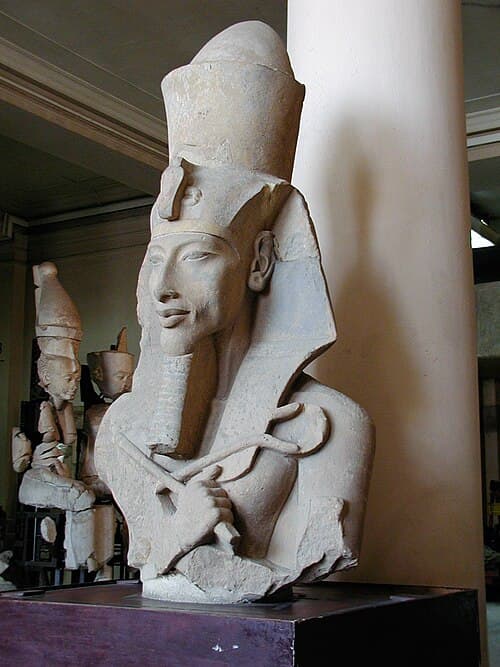
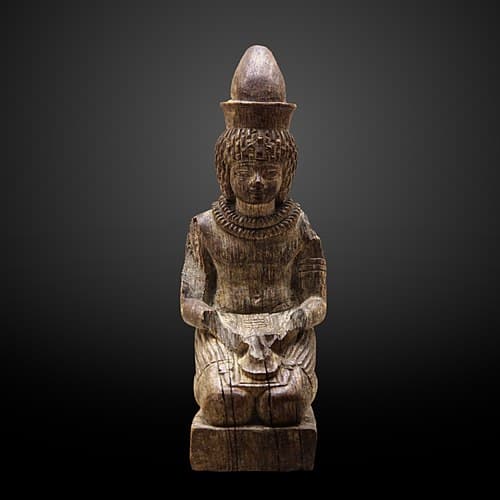
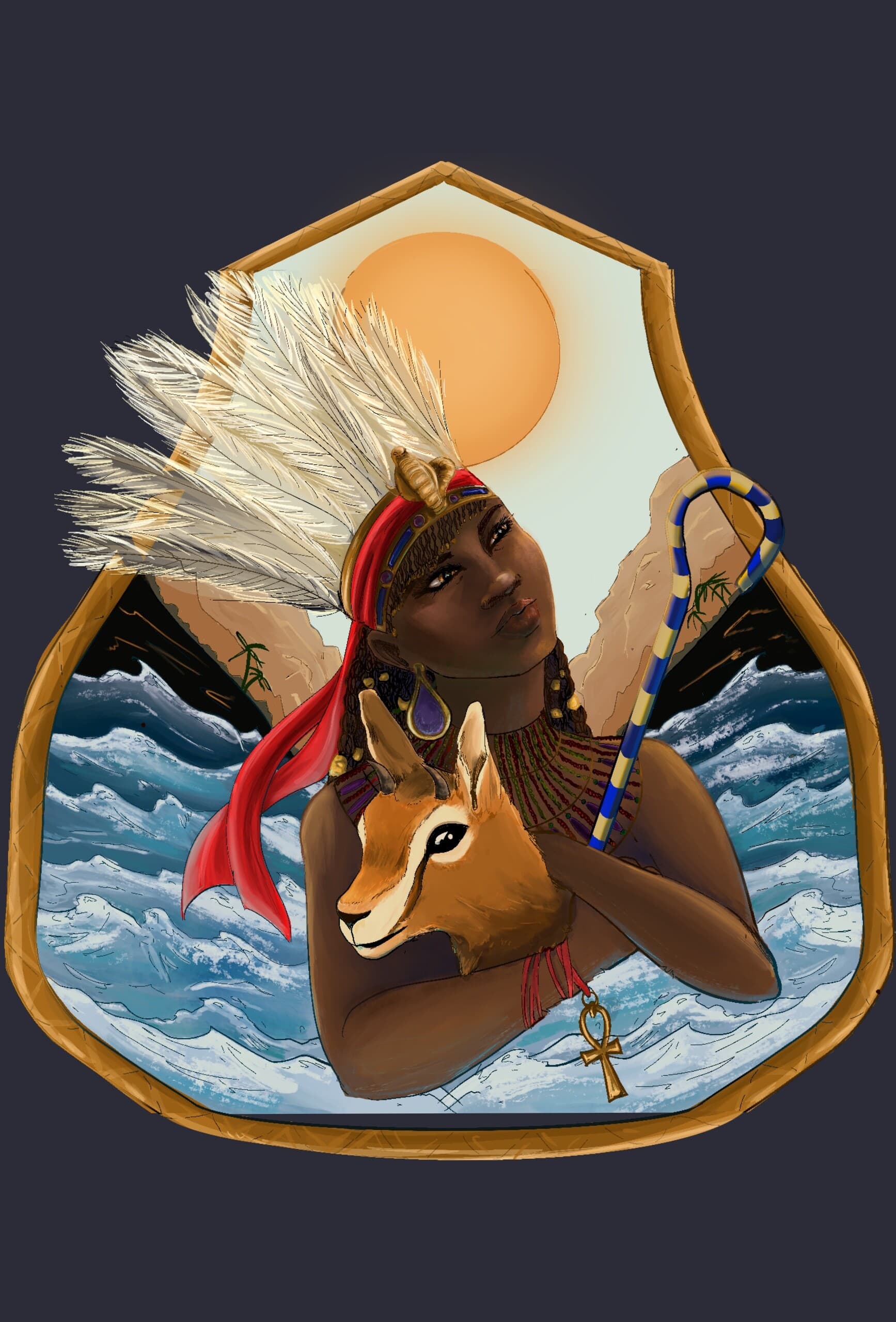
This imaginary interview was generated by artificial intelligence from sources documented in Moses's profile. It dramatises what the figure might have said based on what we know about them, but does not constitute attested historical testimony. For primary sources and factual documentation, refer to the full profile.