Imaginary dialogue between Louis XIV and Molière
by Charactorium · Molière (1622 — 1673) · Literature · 5 min read
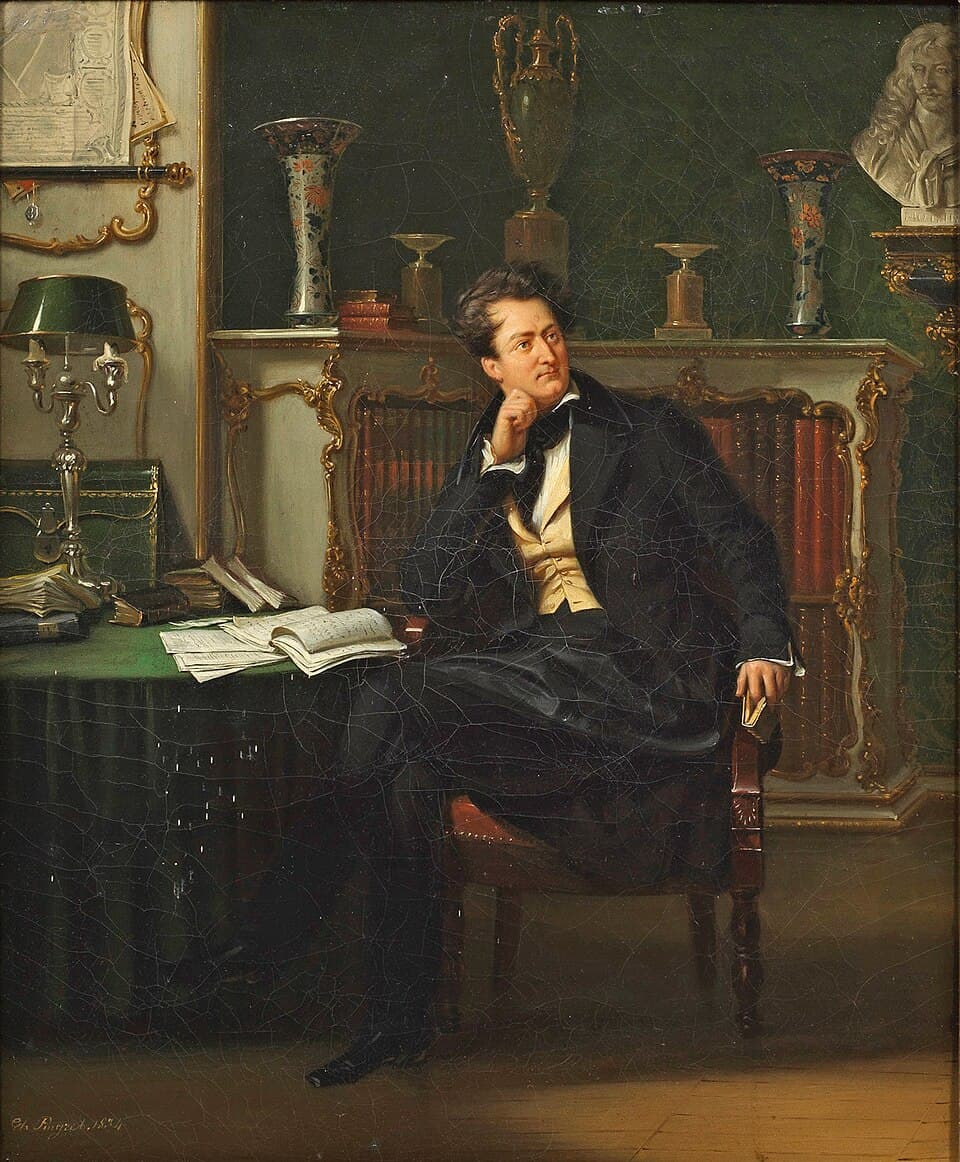
It is at the Palais-Royal, on a cold winter evening in 1673, that King Louis XIV lingers in his actor's dressing room after the performance. The candles are still smoking, and Molière, his complexion gray, struggles to suppress a cough that exhausts him. The sovereign has known him for over ten years: he has protected his plays, held his son at the baptismal font, laughed at his farces. Tonight, he comes as a friend as much as a king, and wants to hear the man behind the mask.
—Molière, long before my court applauded you, you knew the provinces and debts. Who were you, that actor whom Paris first drove away?
Sire, I was first a tapestry-maker's son who had given up his father's position to take to the stage. In 1645, my Illustre-Théâtre, founded with the Béjarts, collapsed under debts; I was even thrown into the Châtelet for a few days, unable to pay. So I took to the road. For thirteen years, I performed in barns and tennis courts in the provinces, in Pézenas and elsewhere, observing merchants, doctors, pedants. That wandering was my true school: I learned about men better than from any book. When I returned to Paris in 1658, and Les Précieuses ridicules triumphed the following year, I invented nothing — I gave back to Parisians what the provinces had taught me.
—They say you are an author, but I have seen you act, direct, count your receipts. How do you bear so many burdens on your shoulders alone?
Sire, a troupe leader does not have the leisure to choose. In the morning, pen in hand, I write and correct; in the afternoon, I rehearse my actors at the Palais-Royal, I arrange costumes, entrances, silences. And in the evening, I myself go on stage to play the comic roles — Harpagon, Argan, Monsieur Jourdain. I also must keep the account book, pay wages, manage sensitivities. People think I am cheerful because I make them laugh; but directing actors is like governing a small kingdom where everyone thinks they are king. You know better than anyone, Sire, what it costs to hold everything together.
Directing actors is like governing a small kingdom where everyone thinks they are king.
—Do you remember Chambord, in 1670, where you presented your Bourgeois gentilhomme with Lully? How are these festivals that I commission from you born?
How could I forget, Sire? Le Bourgeois gentilhomme was written, arranged, and staged in just a few weeks, for your entertainments at Chambord. That is the whole art of the comédie-ballet, the genre that Lully and I shaped together: marrying speech, music, and dance into a single spectacle. Your commissions brook no delay — one must invent quickly, and yet well. I have sometimes cursed those deadlines, but they forced me to an invention that leisure would never have produced. And when I saw Your Majesty laugh at that bourgeois who dreams of being a gentleman, I knew that satire had hit its mark, without ever wounding the throne that protected it.
—In 1664, at Versailles, you presented me with your Tartuffe. I liked it — and yet I had to suspend its performances. Did you resent me for it?
Resent you, Sire? Never. You took my play away with one hand, but with the other, that same year 1664, you held my son at the baptismal font — an honor no cabal could deprive me of. I knew that the dévots of the Compagnie du Saint-Sacrement were powerful, and that a king, even all-powerful, must reckon with them. My Tartuffe did not mock faith, but the hypocrisy of those who use it as a mask. If I had to be patient, it was not against you — it was the price of prudence. And I never doubted that you would one day return my comedy to me.
—For five years, the dévots kept your play under lock and key. When I finally allowed it in 1669, what did you feel?
A deliverance, Sire. For five years, I had revised, softened, defended my comedy through petitions and prefaces, without ever renouncing its heart. When in 1669 you finally allowed it to the public, the triumph was immediate: the crowd thronged to the Palais-Royal like never before. I saw in it proof that a comedy can survive its censors, provided a king judges it justly. The dévots thought they had silenced me; they had only whetted the public's impatience. Without your steadfastness, Sire, Tartuffe would have remained dead letter in my drawers. I owe this victory as much to you as to my pen.
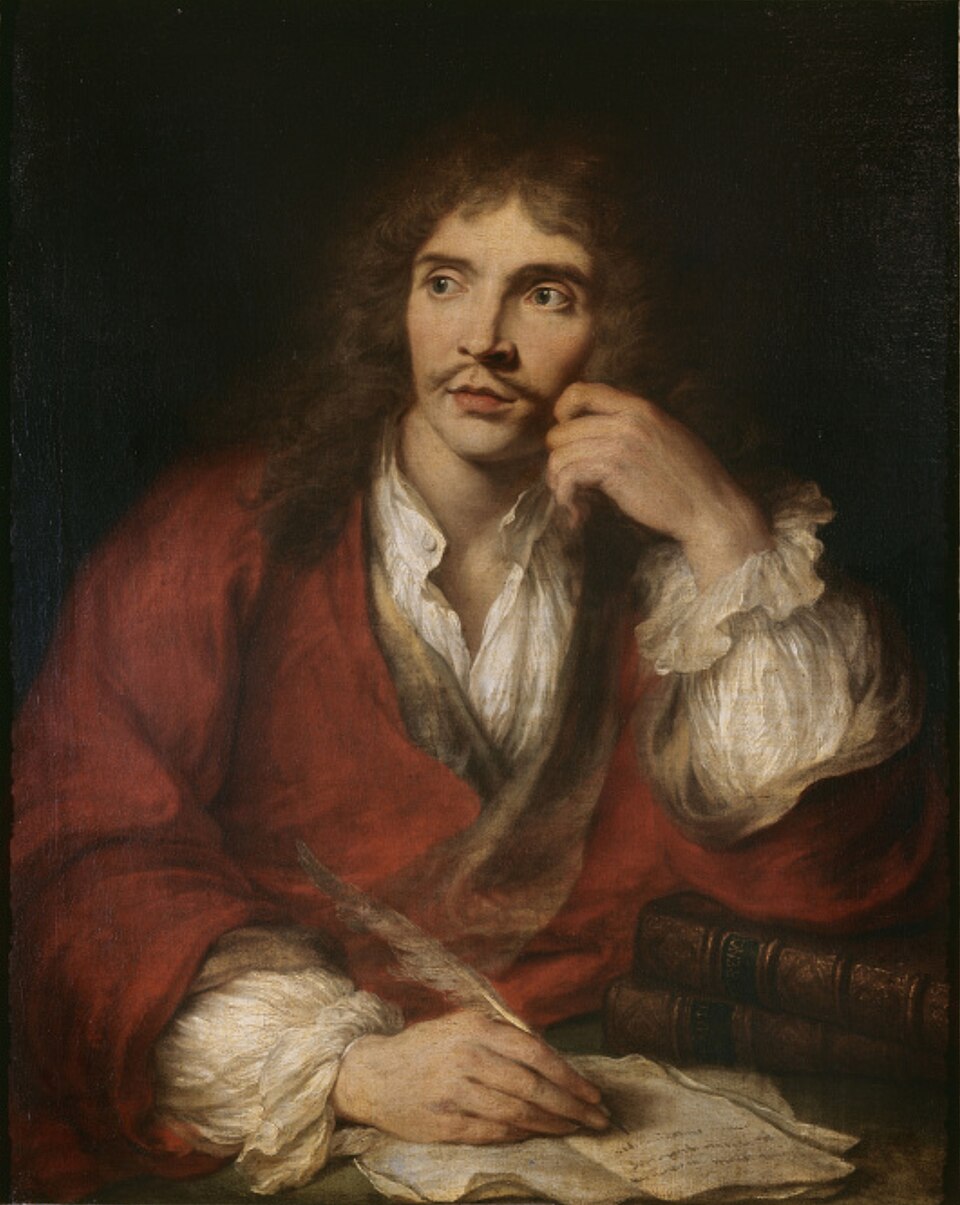
—There was much gossip about your marriage in 1662 to young Armande. Did these rumors about your household hurt you?
More than my enemies imagine, Sire. I married Armande Béjart in 1662, twenty years my junior, and linked to Madeleine, my companion from the early days, since the founding of the Illustre-Théâtre in 1643. Immediately, tongues loosened: people whispered the darkest things about my household, even attributing unnatural relations to me. A man who paints the faults of others exposes himself to all calumnies. I have learned to bear these wounds in silence, and sometimes to turn them into comedy — for nothing disarms slander like laughter. But I will not hide from you, Sire, that a home without peace weighs heavily on one who must make others laugh every evening.
—Tonight, Molière, your cough worries me. And now you are playing an imaginary invalid when your illness is all too real. Are you not tempting fate?
Sire, I have never been better at mocking what touches me closely. For years this illness has been consuming me — since 1666 at least, it gives me little respite. And that is precisely why I wrote Le Malade imaginaire: to laugh at this medicine that promises me healing and gives me only potions. Argan thinks he is dying and is well; I am dying and pretend to be well. There is a cruel joke that heaven plays on me. But what can you do — an actor who stops acting is already half dead. As long as I can stand, I will go on stage.
An actor who stops acting is already half dead.
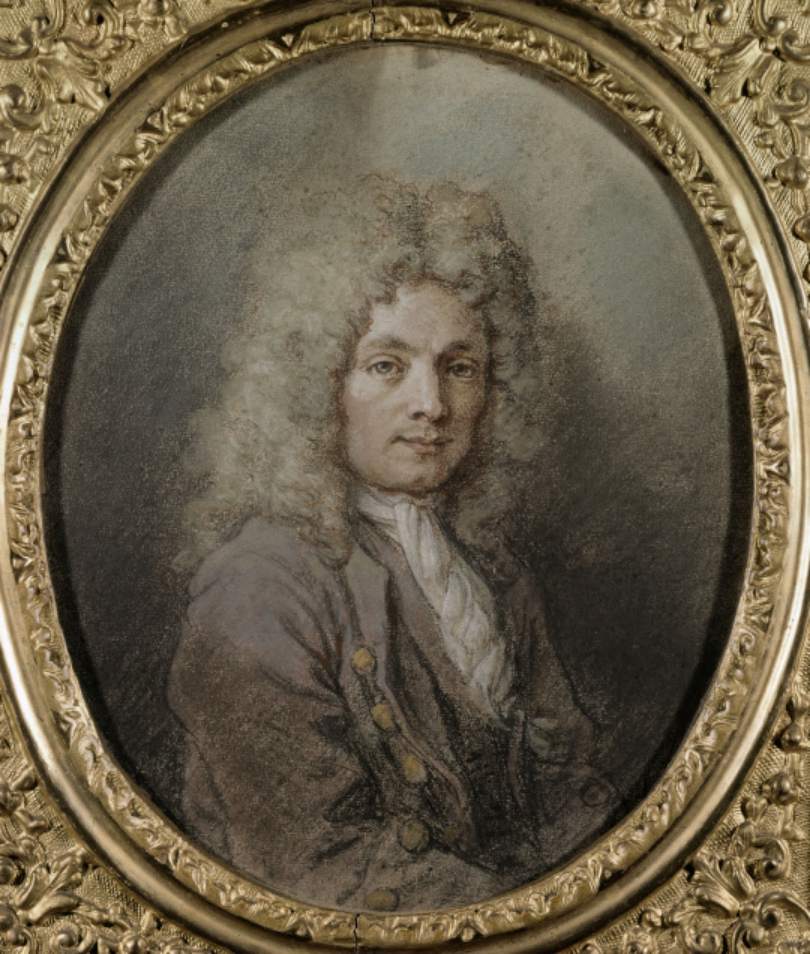
—You know that the Church refuses actors a Christian burial. Does this fear follow you even onto the stage, my friend?
It follows me, Sire, I admit. The Church considers the actor a baladin, an unworthy being, and denies him blessed ground unless he renounces his profession before dying. But I will never renounce what has been my life and my glory. Therein lies the bitter irony of my condition: to make an entire kingdom laugh, to entertain its king, and to risk being thrown into a common grave like a wretch. I want to believe that a sovereign who has honored me so much will not allow such treatment for one whose protector he has been. But tonight, I entrust myself to Providence — and a little, I confess, to your friendship.
—Since 1665, your troupe has borne my name: the Troupe du Roi. What does this title that I granted you represent for you?
Sire, this title was for me more than an honor: a rampart. In 1665, making my actors the Troupe du Roi was to tell all of France that an actor could serve his prince as worthily as a soldier or a magistrate. My enemies could no longer call me a mere mountebank without offending your name. Under this banner, I dared Dom Juan, Le Misanthrope, so many plays that mere prudence would have advised against. You gave me the freedom to paint men as they are. A troupe protected by its king can dare anything, except to bore him — and I have striven to do so every evening.
—It is getting late, and you are trembling with fever. Why not rest, Molière, instead of going back on stage tomorrow, which exhausts you?
Because rest, Sire, does me no good. When I do not act, I brood on my illness, my debts, my quarrels; when I act, I forget everything. My troupe lives on our performances — if I stop, entire families go without bread. And then there is the audience: that noisy parterre that laughs, hisses, keeps me on edge. I think I was born to make them laugh, and one does not change one's nature. Tomorrow, then, I will go back to play my Argan, even if it exhausts me. Making men laugh at their own faults — that is the only medicine I have ever believed in.
Making men laugh at their own faults — that is the only medicine I have ever believed in.
Read further
This imaginary interview was generated by artificial intelligence from sources documented in Molière's profile. It dramatises what the figure might have said based on what we know about them, but does not constitute attested historical testimony. For primary sources and factual documentation, refer to the full profile.