Kids interview Molière
by Charactorium · Molière (1622 — 1673) · Literature · 4 min read
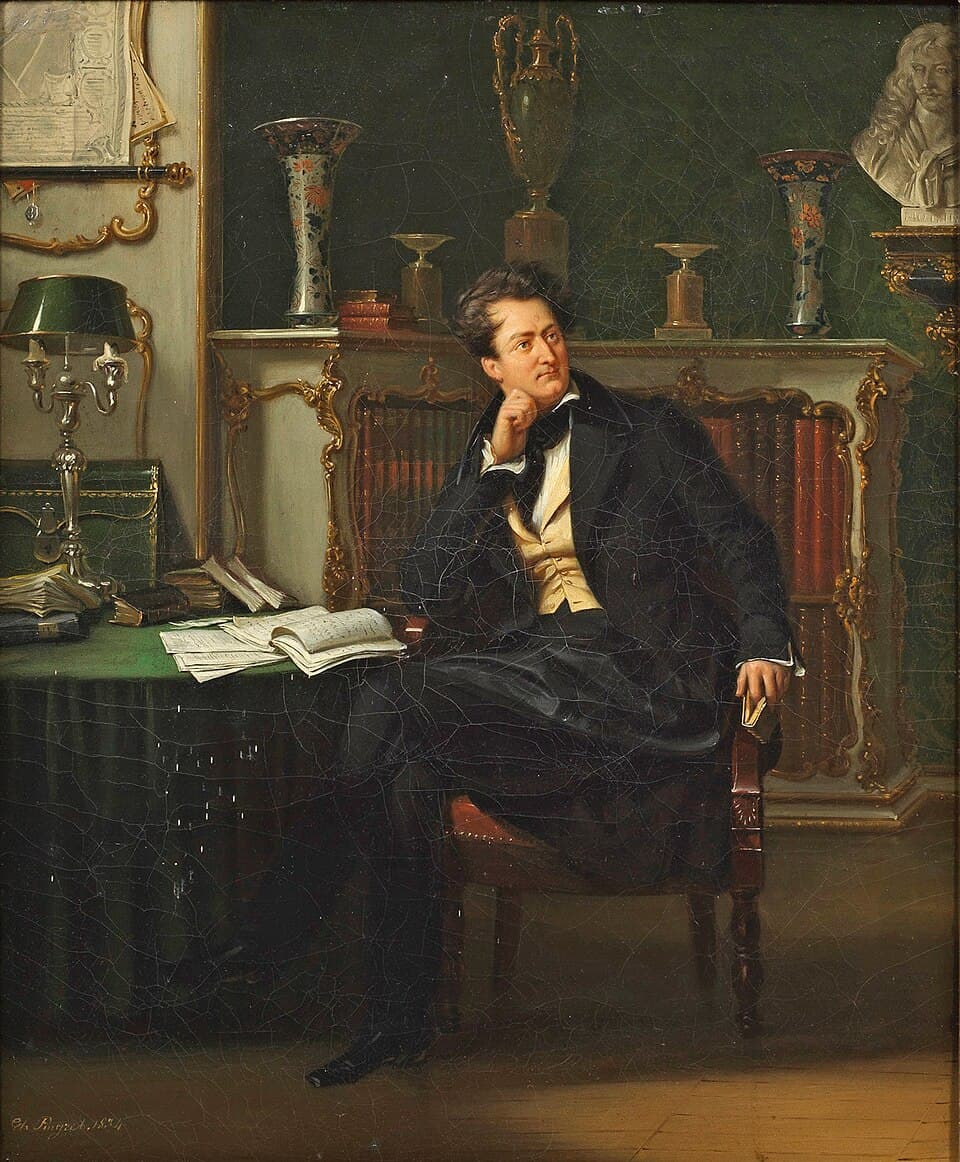
That morning, two students from a school trip pushed open the door of an old Parisian theater. On the empty stage, a man in a doublet awaited them, a mischievous glint in his eye. It was Molière, and he had agreed to tell them everything.
—How old were you when you started your first theater in Paris?
You know, my child, I was barely over twenty. In 1643, with my friend Madeleine Béjart, we founded the Illustre-Théâtre. I believed in it with all my heart. And yet... it was a disaster! Picture a nearly empty hall, debts rising like water in a leaky boat. I was even thrown into prison at the Châtelet, because I couldn't pay anymore. At that moment, I could have given up. But no. I took my troupe, and we set out on the roads of France for thirteen years. A failure is not an end. It is a school that never lets you go.
A failure is not an end: it is a school that never lets you go.
—What was it like, thirteen years of performing in every provincial town?
It was hard, but you know what? I learned everything there. Imagine dirt roads, bumpy carts, and in the evening a barn or a borrowed hall to perform in. We often stopped in Pézenas, in Languedoc. They say I would sit at the barber's to watch ordinary people—their anger, their foolishness, their way of speaking. That's where my future characters were born! Then, in 1659, back in Paris, my Les Précieuses ridicules was a triumph. Thirteen years of observing humans: that was my real college.
Thirteen years of observing humans: that was my real college.
—What was your workday like when you were directing the troupe?
Oh my, I wore three hats at once! In the morning, I wrote, a goose-feather pen in hand, ink drying too fast. In the afternoon, I rehearsed with my actors at the Palais-Royal, our theater. And in the evening, I myself went on stage to play the comic roles. But that's not all: I also kept the troupe's account book! The fees, the costumes, the debts—that was me. Imagine a captain who rows, sings, and counts the money at the same time. Running a troupe is that: you never have the right to be tired.
—Is it true that the king commissioned shows from you? Did you have time?
Time? Never enough! Louis XIV loved festivities, and he commissioned shows from me for his court. So I invented comédies-ballets—a new genre mixing spoken theater, music, and dance, with my friend the musician Lully. Sometimes I had to write an entire play in just a few weeks! And then I had to get into the carriage, rush to Versailles or to the Château de Chambord. Imagine horses galloping down the road, and me in the back, trembling, rereading my text. Pleasing a king, my child, is a job that never rests.
—Why was one of your plays banned for five years?
Ah, Tartuffe! My most fought-over play. You see, I showed a false devotee—a man who pretends to be very pious, very religious, in order to deceive people and rob a family. That really displeased some powerful men, gentlemen of the Compagnie du Saint-Sacrement. They got it banned as early as 1664. Five years! Imagine a child forbidden to speak for five years. I never gave up. I fought for a simple idea: making fun of a liar is not making fun of God.
Making fun of a liar is not making fun of God.
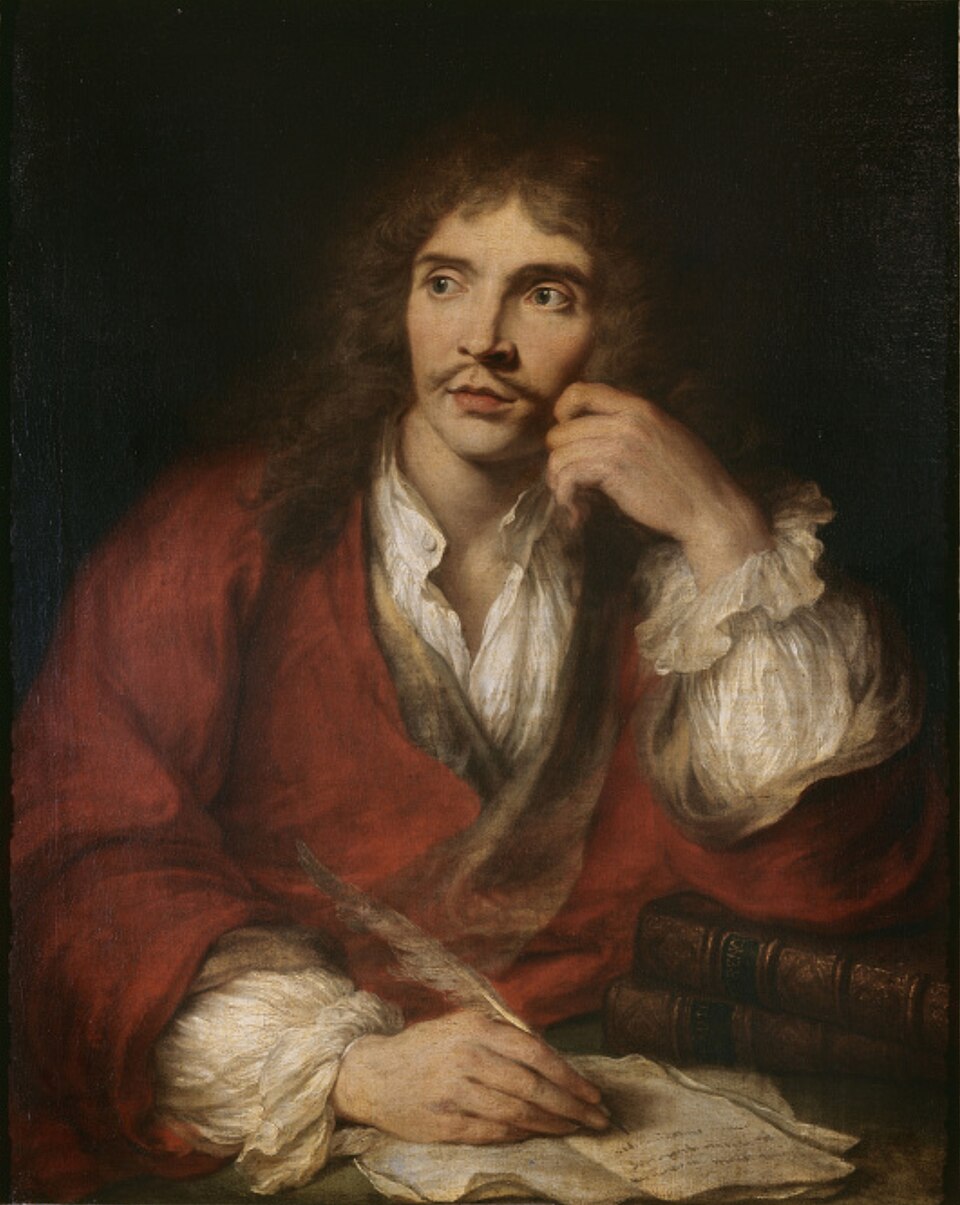
—And how did you manage to get it performed anyway?
Thanks to the king, my child. King Louis XIV liked me. In 1664, he even agreed to be the godfather of my first son—imagine the honor! That protection was like a great shield over my head. For years, I reworked my play, softened it, pleaded. And in 1669, at last, the king allowed it to be performed in public. It was an immediate triumph, packed houses! Without the friendship of a king, my poor Tartuffe would have stayed locked in a drawer forever.
—Is it true that you almost died on stage? That's scary...
It's true, and I'll tell you gently. It was February 17, 1673. I was playing the role of Argan in Le Malade imaginaire—a character who always thinks he's sick when he isn't. What irony: I was truly ill that evening, for real. It was the fourth performance. Taken ill on stage, I gritted my teeth and finished the show to the end. The audience laughed, not knowing. A few hours later, at home, I passed away. You see, I gave my last breath to my oldest companion: the theater.
I gave my last breath to my oldest companion: the theater.
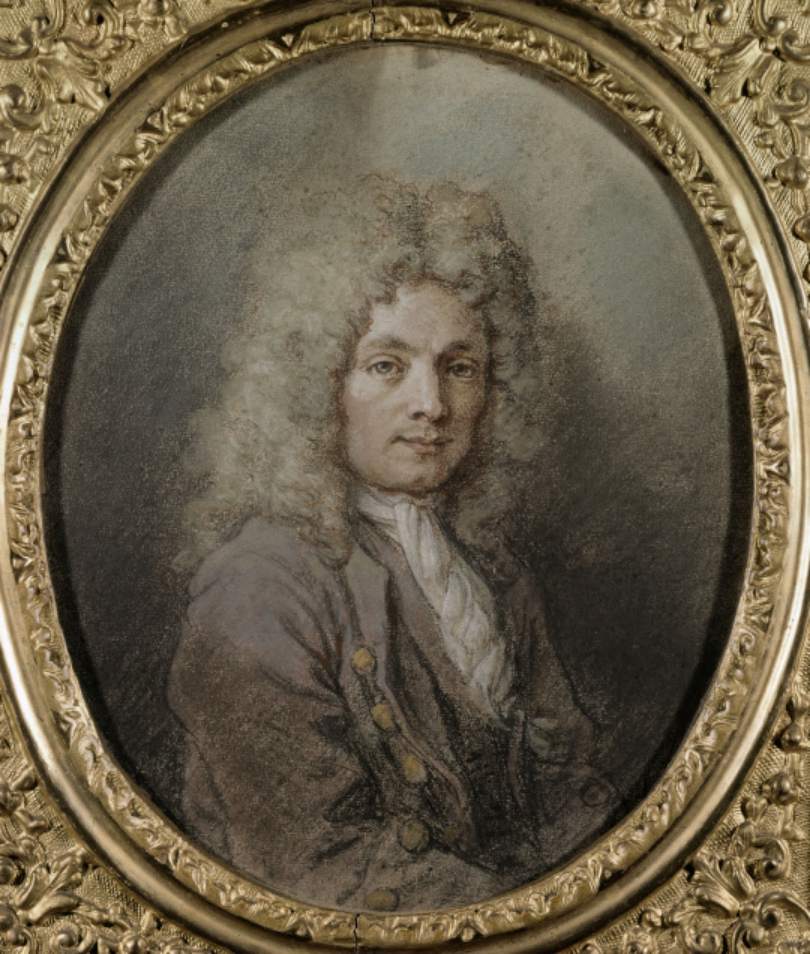
—Why did you keep performing when you were so ill?
Good question, my child. You see, a troupe is a family. If I didn't go on stage that evening, all my actors would lose their pay. The theater would be closed, the workers, actors, musicians wouldn't eat. So I performed, despite the fever, despite the cough tearing at my chest. Imagine a captain who refuses to leave his ship while the crew is on board. That was it. I loved the laughter I created too much to deprive them of even one evening. Sometimes, duty weighs heavier than fear.
—Is it true that they nearly didn't bury you properly?
Alas, yes. In my time, my child, actors were despised. They called us baladins, mountebanks—harsh words for street performers, people of no account. The Church even refused us Christian burial if we hadn't renounced our profession before dying. And I died too quickly for that! So they nearly threw me into the ground like a dog. Imagine: a whole life making an entire kingdom laugh, and not even a corner of a cemetery. Laughter, in my day, was adored in the theater... and despised at the exit.
They adored my laughter in the theater, and despised it at the exit.
—And who saved you so that you still have a grave?
Again the king, you see. Louis XIV intervened personally with the Archbishop of Paris. Thanks to him, I was granted a burial—but discreet, almost shameful. I was buried at night, in February 1673, at the Saint-Joseph cemetery, without great ceremony. Imagine a few lanterns in the dark, and silence. Yet history had its revenge: much later, my remains were moved to the Père-Lachaise cemetery, where my tomb is still visited. Men buried me in the shadows, but my comedies have lived in full light for three hundred years.
Men buried me in the shadows, but my comedies live in full light.
Read further

This imaginary interview was generated by artificial intelligence from sources documented in Molière's profile. It dramatises what the figure might have said based on what we know about them, but does not constitute attested historical testimony. For primary sources and factual documentation, refer to the full profile.