Imaginary dialogue between Nelson Mandela and Nadine Gordimer
by Charactorium · Nadine Gordimer (1923 — 2014) · Literature · 5 min read
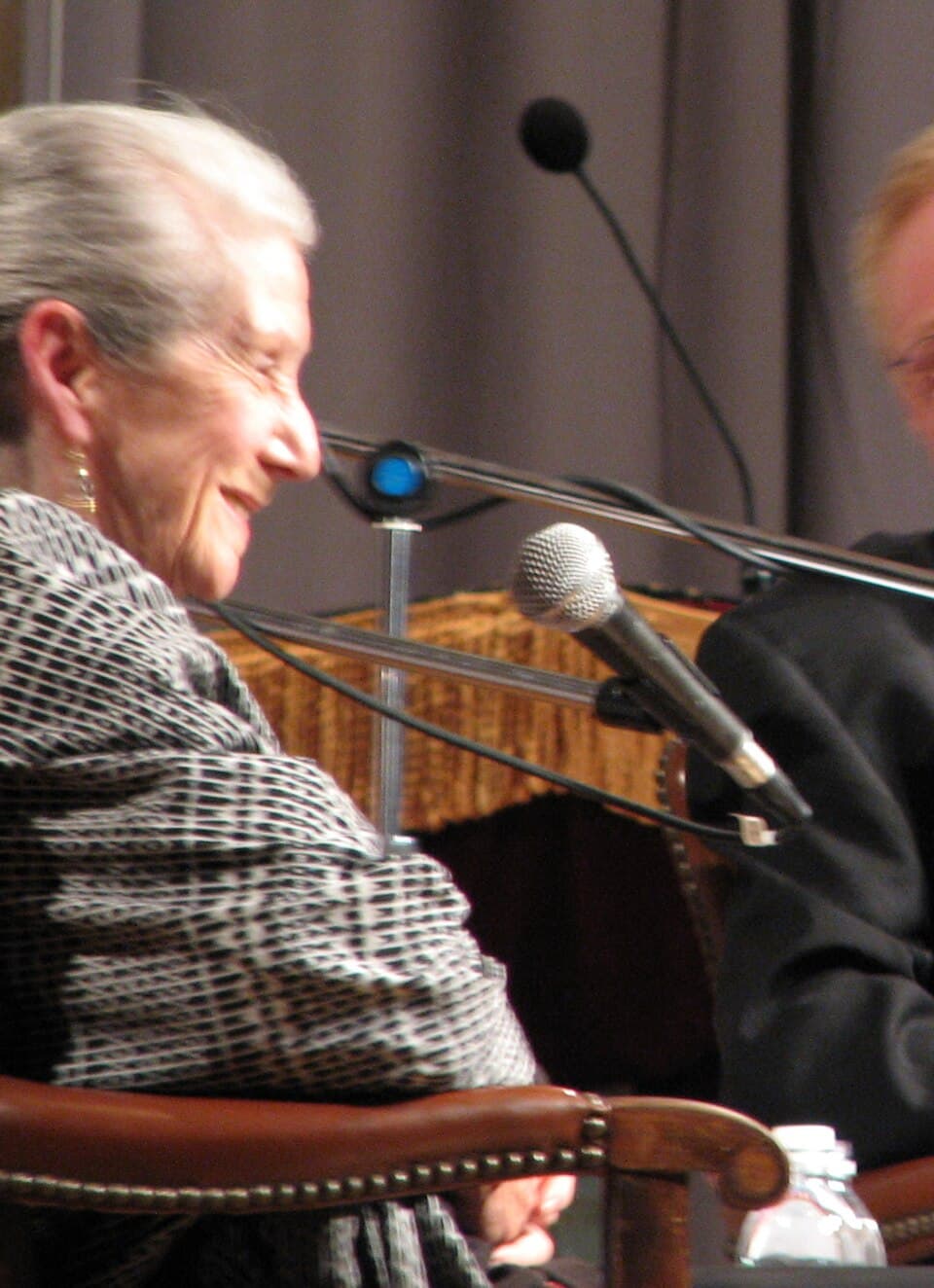
It is in the garden of her house in Parktown, Johannesburg, that Nelson Mandela comes to meet Nadine Gordimer in the autumn of 1995. The slanting light falls on African masks and rows of books lining the living room where, for decades, guests of all colors gathered in defiance of the law. They have known each other since the Rivonia trial, when she lent her pen to the resistance and he visited her in hiding. Today, president of a free country, he comes to listen as a friend, a cup of tea cooling in his hands.
—Nadine, do you remember 1964? When I was preparing my defense for Rivonia, you reviewed my words. What did they inspire in you then?
How could I forget, Nelson? Your pages were smuggled to me, and I realized I was not editing a plea but a testament. When I read that it was an ideal for which you were prepared to die, I put down my pencil: there was nothing to add, only to protect every syllable. I worked through the night, windows closed, because possessing those pages could get me arrested. You were expecting the noose, and you wrote with a calm that terrified me more than fear would have. That day, I felt that the literature I practiced was but a pale reflection of what you accomplished with a single sentence. You taught me that words, sometimes, are worth a life.
You were expecting the noose, and you wrote with a calm that terrified me more than fear.
—You were active in the ANC when our movement was banned. A white woman from Parktown risking her freedom. Why did you take that step?
Because there was no other honest place to stand, Nelson. Carrying an ANC card when it was illegal was simply refusing the comfortable lie of my condition. I was told it wasn't my fight, that my skin exempted me. But apartheid deformed us all, those it crushed and those it privileged. I couldn't write the truth of this country in the morning and, in the afternoon, pretend not to know the faces of those who suffered it. I hosted activists at my home, passed messages, kept silences in front of the police. It was little, compared to what others paid. But it allowed me, in the evening, to look myself in the face.
Apartheid deformed us all, those it crushed and those it privileged.
—On Robben Island, I was told your own books were on the banned lists. What does a writer feel when their country censors them?
It's a strange wound, Nelson. When A World of Strangers was banned for twelve years for depicting a friendship between a white man and a black man, I understood that the regime feared less my ideas than the simple reality I described. In 1968, I wrote that a writer censored in his own country is not only deprived of his freedom: the very reality of his people is denied. That is the real scandal. They weren't crossing out a fiction; they were erasing existences. Paradoxically, the ban gave my pages a force I would never have dared claim: what is hidden suddenly becomes what must absolutely be read. The censor, unwittingly, pointed to the truth.
They weren't crossing out a fiction; they were erasing existences.
—Under the state of emergency in the 1980s, writing became a danger. Did you feel alone, or did the international sanctions tell you the world was watching?
Alone inside, but never forgotten from outside, Nelson. Under the state of emergency, people were arrested without trial, even newspapers were censored, and every meeting at my home could go wrong. We lived in constant tension, ears strained for footsteps in the street. But I knew sanctions were mounting, that universities, artists, governments were now refusing to shake the regime's hand. That didn't protect us physically, but it broke the feeling of being locked in a closed room without witness. For a writer, knowing you are read beyond the borders where you are banned is a breath of fresh air. The world was slow, hesitant, but it was finally beginning to look away from white privilege.
—In Burger's Daughter, you paint the child of an imprisoned activist. How many of our own did you put into that book, which the regime rushed to ban?
More than I could name, Nelson. That young woman who says I am Burger's daughter, there can be no other definition of myself, I shaped her from all those children of activists I saw growing up in the shadow of prison. They inherited a cause before choosing anything. The book was censored a few months after publication, and that scandal paradoxically made it read worldwide. What I wanted to probe was the weight of a political legacy: can one be oneself when the name one carries is already a banner? You, who left your own children behind the bars of absence, know what that question costs.
They inherited a cause before choosing anything.
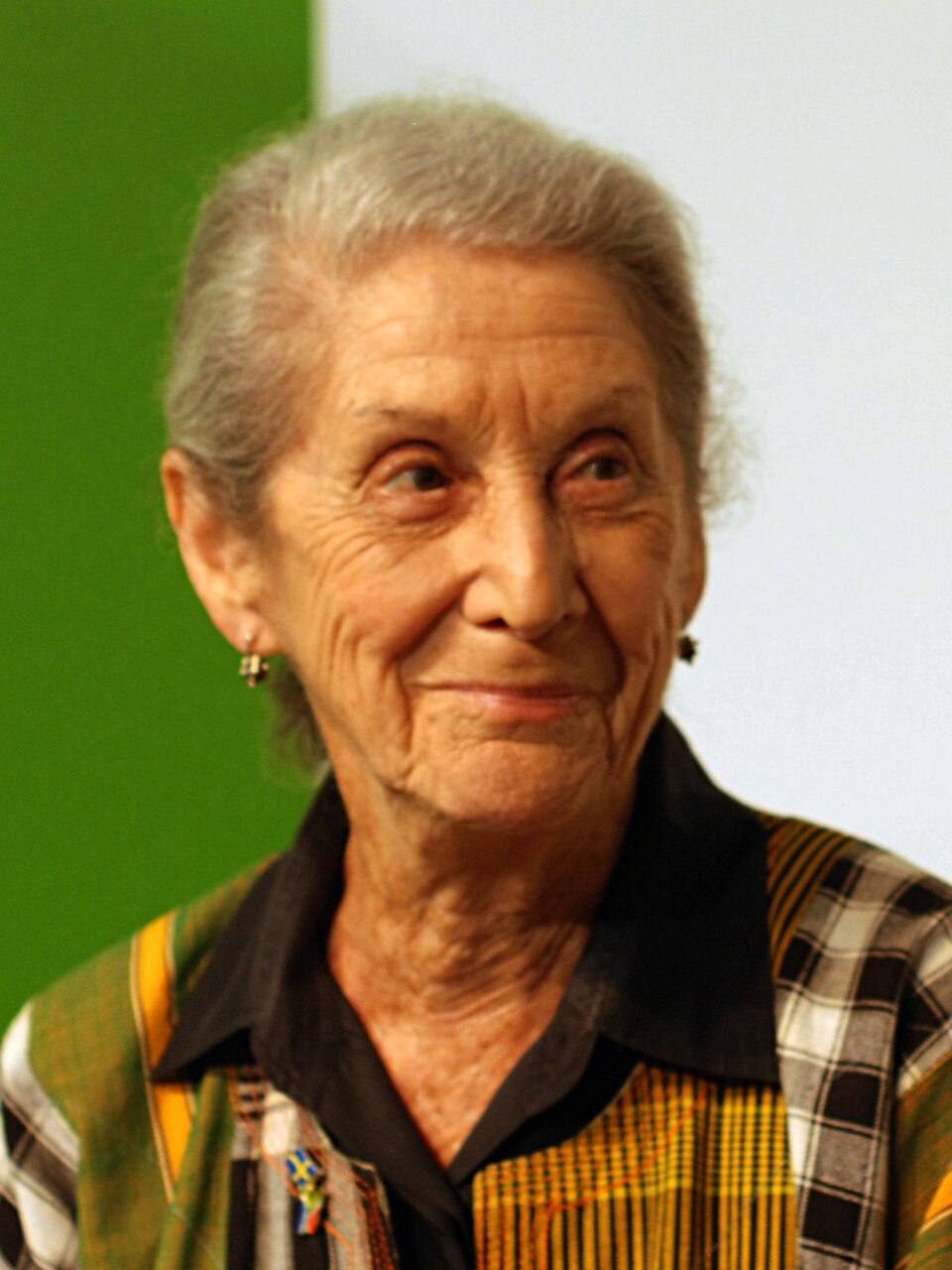
—In July's People, you imagined the collapse of white power and a family saved by their servant. Wasn't it dangerous to write such an ending?
The government deemed it dangerous, indeed, and I took that as a compliment, Nelson. In July's People, I overturned the order apartheid claimed was eternal: those white masters becoming dependent on the black man they had always commanded. Many thought I was prophesying a bloodbath. In truth, I wanted to show how white power rested on a fragile illusion, a willful ignorance. Already in The Conservationist, my landowner stubbornly refused to see that the earth beneath his feet would no longer belong to him. I was writing men incapable of imagining their own end. And history, as you are living proof today, proved them wrong faster than any of my novels dared.
I was writing men incapable of imagining their own end.
—In this living room where we sit, you entertained Blacks and Whites at the same table when the Immorality Act made mixing a crime. How did you dare?
One didn't dare, Nelson: one lived, and living normally had become the forbidden act. Inviting to my table, here in Parktown, writers, journalists, activists of all colors, was to transgress a law that claimed to govern even our friendships. The Immorality Act made the simple sharing of a meal an object of police suspicion. Yet these dinners were nothing heroic in the moment: we laughed, argued over a book, drank wine. But every burst of laughter in this room belied the official lie that we could not be human together. I believe those evenings taught me more about my country than many archives. The real South Africa was born at that table, illegally.
One didn't dare: one lived, and living normally had become the forbidden act.
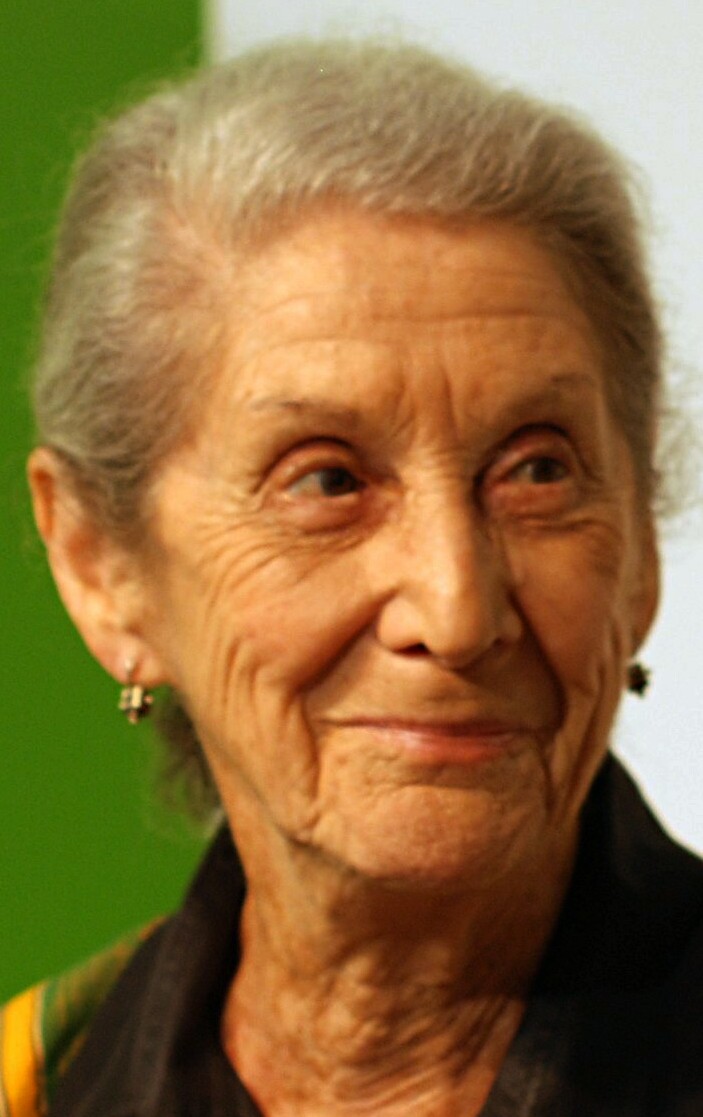
—You went to Soweto, notebook in hand, when most of your kind had never set foot there. What were you looking for in those alleys?
The reality my neighborhood worked hard not to see, Nelson. In Soweto, I visited friends, activists, and I noted everything in my notebooks: a queue at a communal tap, the sound of a packed train at dawn, the tone of a mother speaking to her son. That overcrowded township, a few kilometers from my rose beds, was another world that the law strove to render invisible. My notebooks filled with these contradictions: wealth leaning against misery, geographical proximity and human abyss. A novelist cannot write the truth of a people by observing them from his veranda. One must go see, listen, be silent. Those scribbled pages became the very substance of my books.
—In 1991, I was told you announced your Nobel Prize first to your maid, before the whole world. Why her?
Because she had shared my daily life for decades, Nelson, and this country was barely emerging from apartheid. When the call from Stockholm came, my first impulse was not to call a newspaper, but to cross the house and tell her. It may seem trivial. But in a land where for generations it had been decided who deserved to be informed, to be seen, to be counted, this simple gesture had meaning. This Nobel did not reward stylistic virtuosity: it crowned a body of work inseparable from a struggle that was common to us. And that struggle, I had not waged alone in my study, but surrounded by those whose lives I told. It was only right that she learn of it first.
—In Stockholm, before the whole world, you spoke of the moral role of the writer. What did you mean to say to those who had never known our prisons?
That the writer always seeks what humanity is in its complexity, beyond what society allows to be said, Nelson. That was the essence of my speech. Before that assembly that knew nothing of our pass laws and states of emergency, I did not want to give a picturesque account of our misfortunes. I wanted to affirm that a writer does not have the right to look away, wherever he lives. Complacency is a form of complicity. Our apartheid was only a brutal version of a universal temptation: to deny the humanity of the other in order to preserve one's comfort. In receiving this prize, I carried the voice of all those who had been silenced at home. An honor, yes, but above all a responsibility that I do not intend to lay down now that you have made us free.
Complacency is a form of complicity.
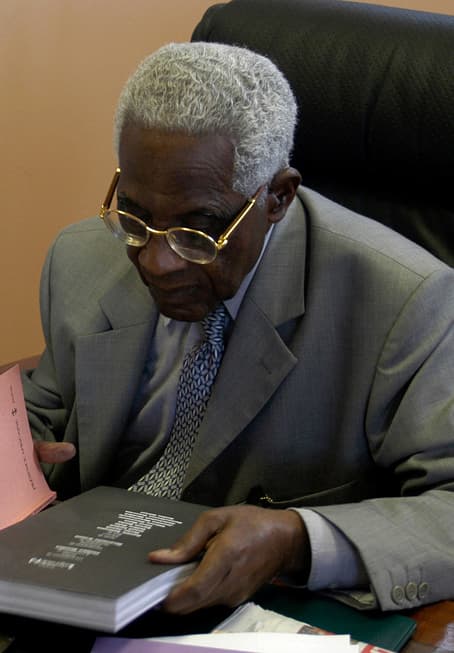
This imaginary interview was generated by artificial intelligence from sources documented in Nadine Gordimer's profile. It dramatises what the figure might have said based on what we know about them, but does not constitute attested historical testimony. For primary sources and factual documentation, refer to the full profile.