Kids interview Nadine Gordimer
by Charactorium · Nadine Gordimer (1923 — 2014) · Literature · 4 min read
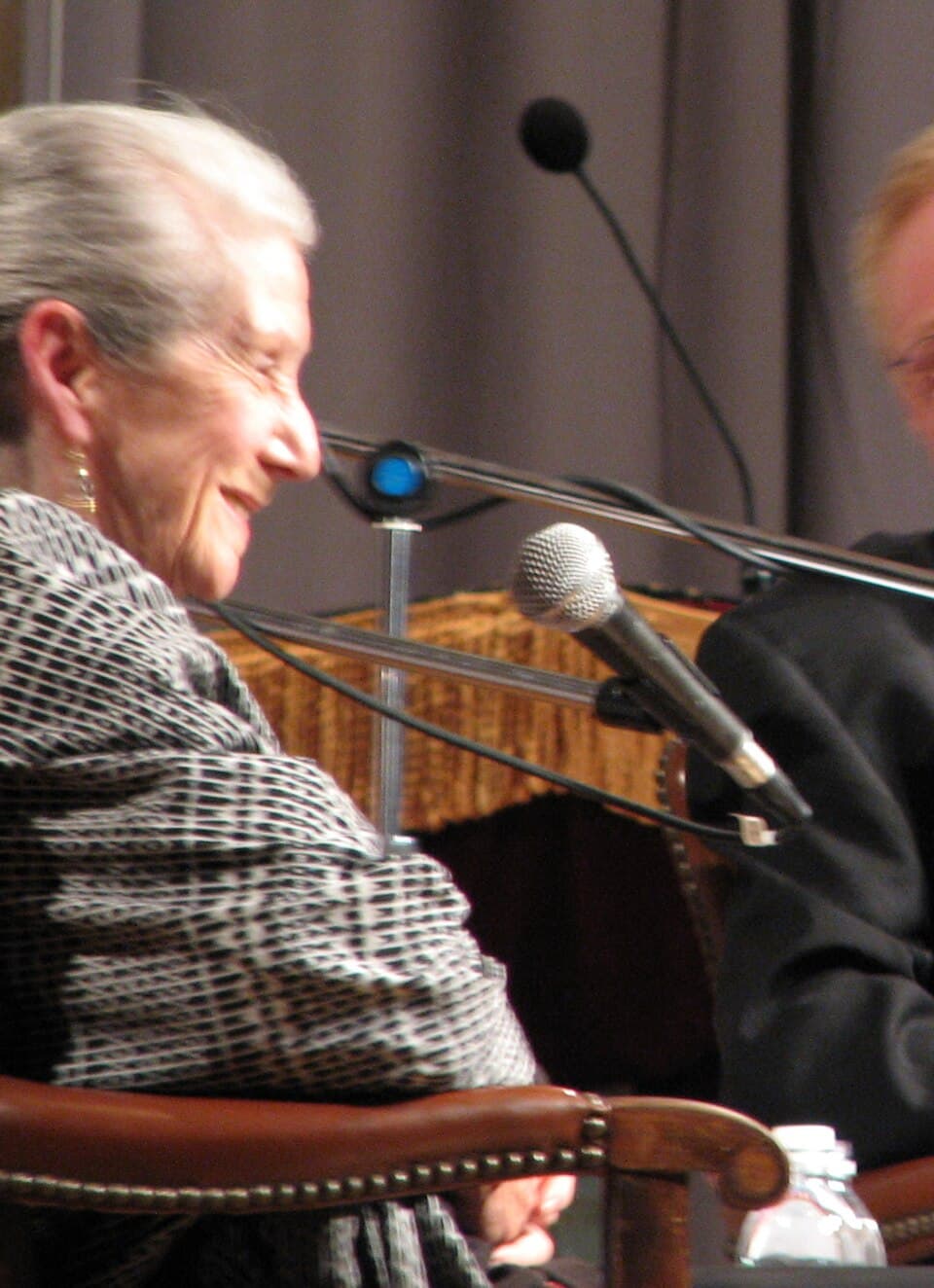
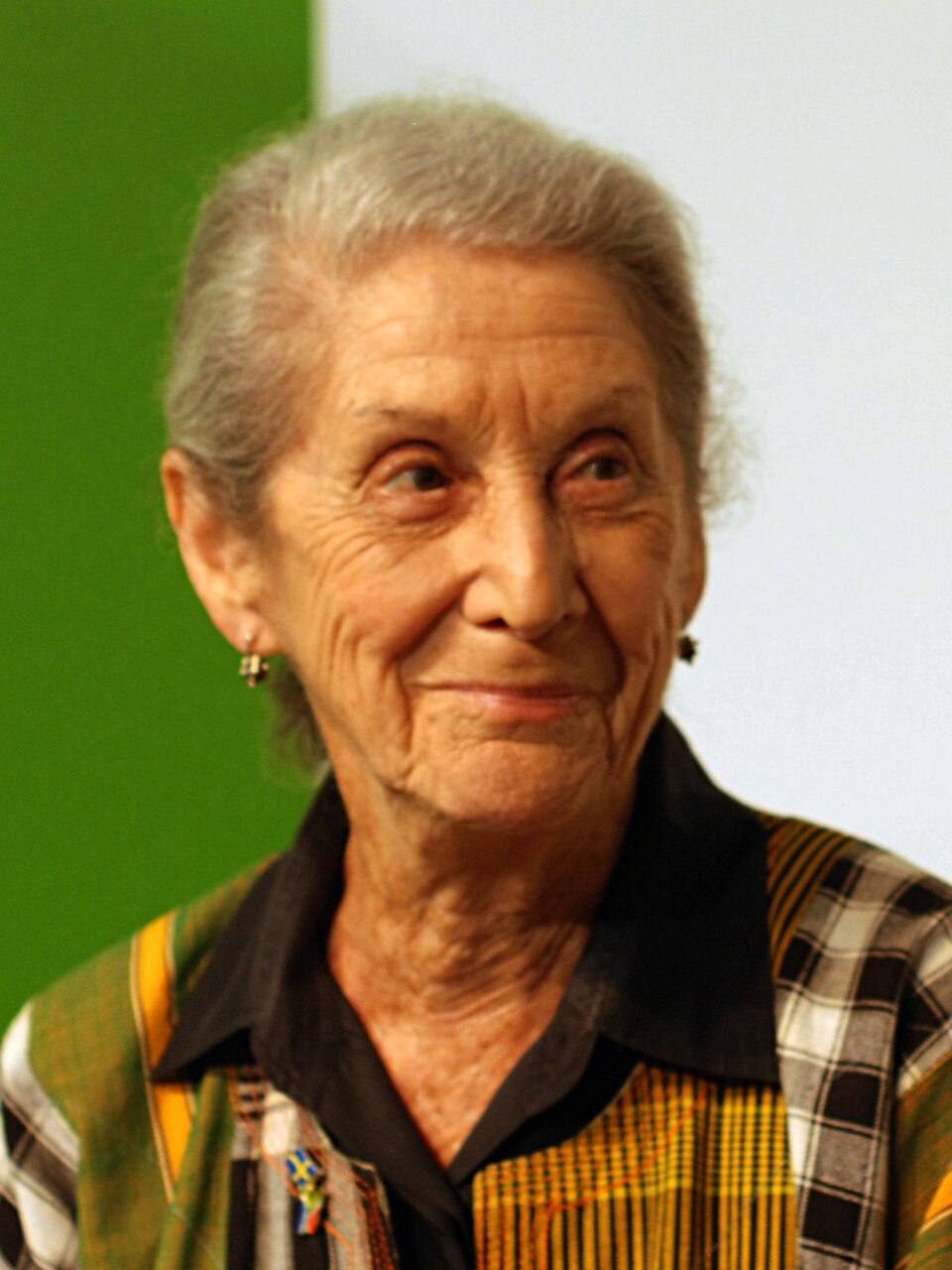
Two twelve-year-old visitors step through the gate of a house full of books in Johannesburg. A smiling old lady awaits them in the garden. It is Nadine Gordimer, and she has so many stories to tell.
—How old were you when you learned you had won the Nobel Prize?
I was 68, my child. It was 1991, and you know what? The phone rang, they told me the news, and the first person I wanted to tell was not a journalist. It was the Black woman who had worked for me for years. Imagine: she had shared my mornings, my meals, my worries. In my country at that time, a white woman and a Black woman were not even supposed to live together as equals. So I went to see her first. For me, this prize was also a little bit hers.
The first to know was her, not the newspapers.
—How did it feel to go so far away, to Stockholm, to receive the prize?
You know, Stockholm is a cold and bright city, far up north in Sweden. I went there in December 1991. In front of people from all over the world, I spoke about the writer's craft. I told them that a writer always seeks what humanity is, beyond what society allows to be said. It was strange and moving. Imagine a little girl kept out of school, reading alone in a silent house... and who finds herself, old, on that big stage. Life takes strange paths, my child.
The writer seeks what humanity is, beyond what is allowed to be said.
—Is it true they banned your books? Why do they do that to a book?
Yes, it's true, and it hurt me. My novel A World of Strangers was banned for twelve years. Why? Because it told of a friendship between a white man and a Black man. That seems crazy, doesn't it? But under apartheid — that word means 'separation' — you weren't allowed to show such things. Later, my book Burger's Daughter was censored a few weeks after its release. The government thought they could silence the book. In truth, the whole world wanted to read it. Banning a book is admitting you are afraid of it.
Banning a book is admitting you are afraid of it.
—Were you afraid when the government declared a state of emergency?
Of course I was afraid, my child. The state of emergency was when the government decided it could arrest people without trial, overnight. It happened often, especially around 1985. Someone could be taken away at night, without explanation. I was writing forbidden things, filing newspaper clippings about hidden violence. Imagine: you keep papers at home that could send you to prison. But I told myself that staying silent was letting the lie win. So I was afraid, and I wrote anyway.
I was afraid, and I wrote anyway.
—Is it true you really knew Nelson Mandela?
Yes, and I am proud of it. Nelson Mandela was my friend. In 1964, he was tried in a great trial at Rivonia, because he was fighting against apartheid. I helped him prepare the speech he gave before the judges. At the end, he said it was an ideal for which he was prepared to die. Imagine the courage that took. He was sent to prison for twenty-seven years, on a windswept island. Knowing him was understanding that one righteous man can stand up to an entire injustice.
One righteous man can stand up to an entire injustice.
—Was it dangerous to be in the ANC? Did you have to hide?
Yes, it was dangerous, especially for me, a white woman. The ANC, Mandela's movement, was banned in my country. Just having a membership card could land you in prison. Do you remember 1960? The police fired on a crowd of Black protesters at Sharpeville: sixty-nine dead. After that, everything became harder and more secret. So yes, we met away from prying eyes, in the afternoon, in hushed voices. Imagine having to hide your friendships like a forbidden treasure. It wasn't a game: it was our way of resisting.
We hid our friendships like a forbidden treasure.
—What did your home smell like in the evening, when you had friends over for dinner?
Oh, what a lovely question! My house, in the Parktown neighborhood, smelled of books, the garden, and good cooking. I kept dishes from my parents, who came from Europe, Jewish flavors from my childhood. In the evening, friends would arrive: writers, artists, Black and white around the same table. You think that's normal? In my time, it was almost forbidden. A law even punished simple friendship between races. So every shared dinner was a small victory. Laughter, around a mixed table, was already a form of disobedience.
A dinner shared between Black and white was already a victory.
—At what time of day did you write? Morning, evening?
Morning, always morning, my child. I got up early, in the silence of Johannesburg, and sat down at my typewriter. Those were my most precious hours, when the mind is fresh like a clean sheet. I would write for several hours straight, not letting the world in. In the afternoon, then, came friends, activists, reading. Imagine a painter mixing his colors before the light arrives: that was my mornings. Writing every day, even when tired, is a discipline. And for me, it was also a way of fighting.
My mornings were fresh like a clean sheet.
—When apartheid ended in 1994, were you happy? Did you stop writing?
Happy? I wept for joy, my child! In 1994, for the first time, Black and white voted together, and Mandela became president. The nightmare was over. But stop writing? Oh no. I published None to Accompany Me that same year, about a country that had to reinvent everything. You see, winning a battle is not enough. New problems were coming: poverty, violence, a terrible disease called AIDS. The fight for justice never truly ends. So I continued, pen in hand, until the end.
The fight for justice never truly ends.
—If people remembered just one thing about you, what would you want it to be?
What a beautiful question to end with. If you remember only one thing, remember this: I believed that writing could speak the truth, even when it was forbidden. I left more than thirty books, translated all over the world. But books are not the main thing. The main thing is that children like you know that one day, in a country, people were separated by color... and people said no. Imagine a chain of hands reaching out across time. Be a link in that chain, my child. That is all I ask.
People were separated by color, and people said no.
This imaginary interview was generated by artificial intelligence from sources documented in Nadine Gordimer's profile. It dramatises what the figure might have said based on what we know about them, but does not constitute attested historical testimony. For primary sources and factual documentation, refer to the full profile.