Imaginary interview with Nadine Gordimer
by Charactorium · Nadine Gordimer (1923 — 2014) · Literature · 5 min read
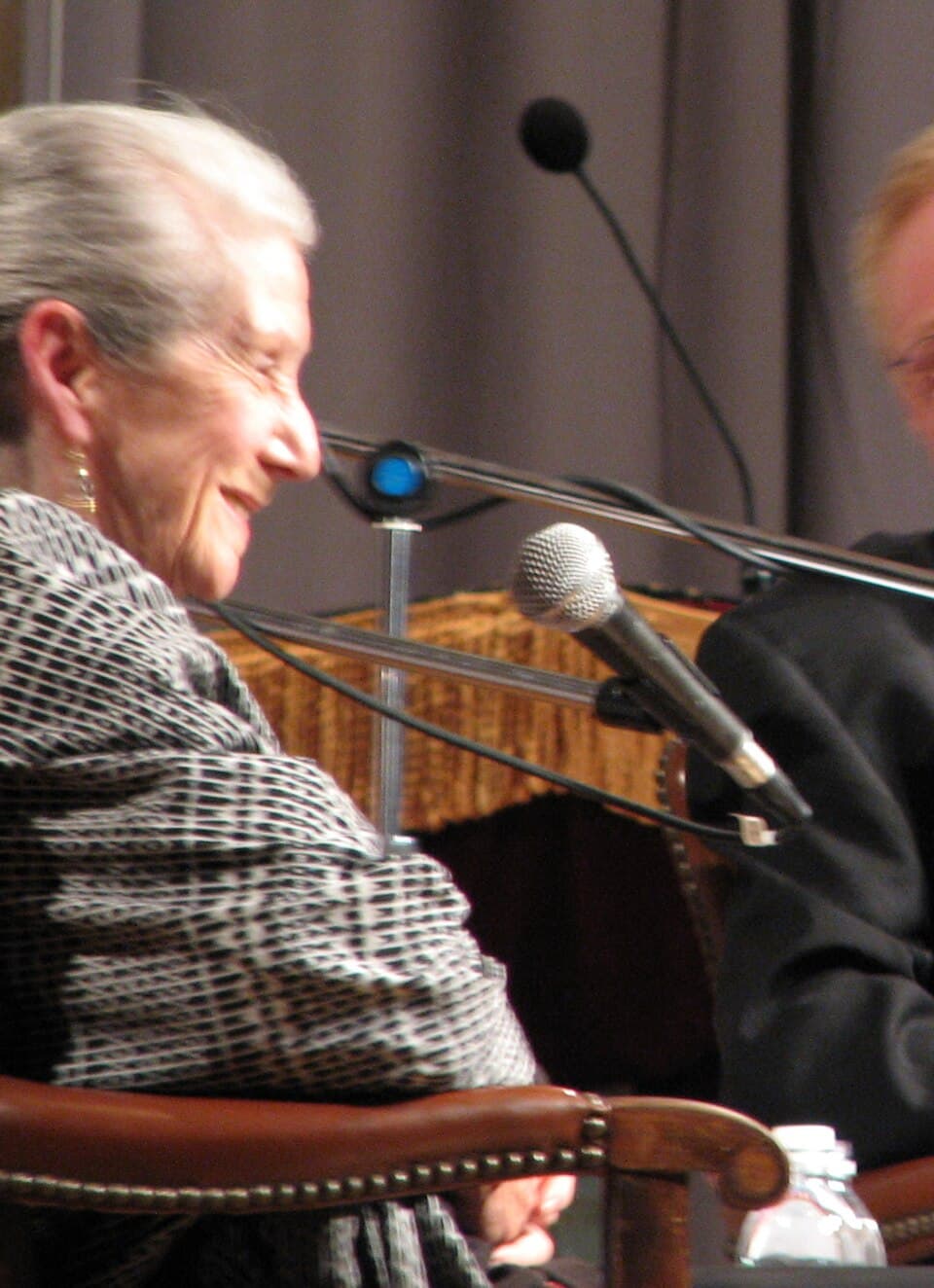
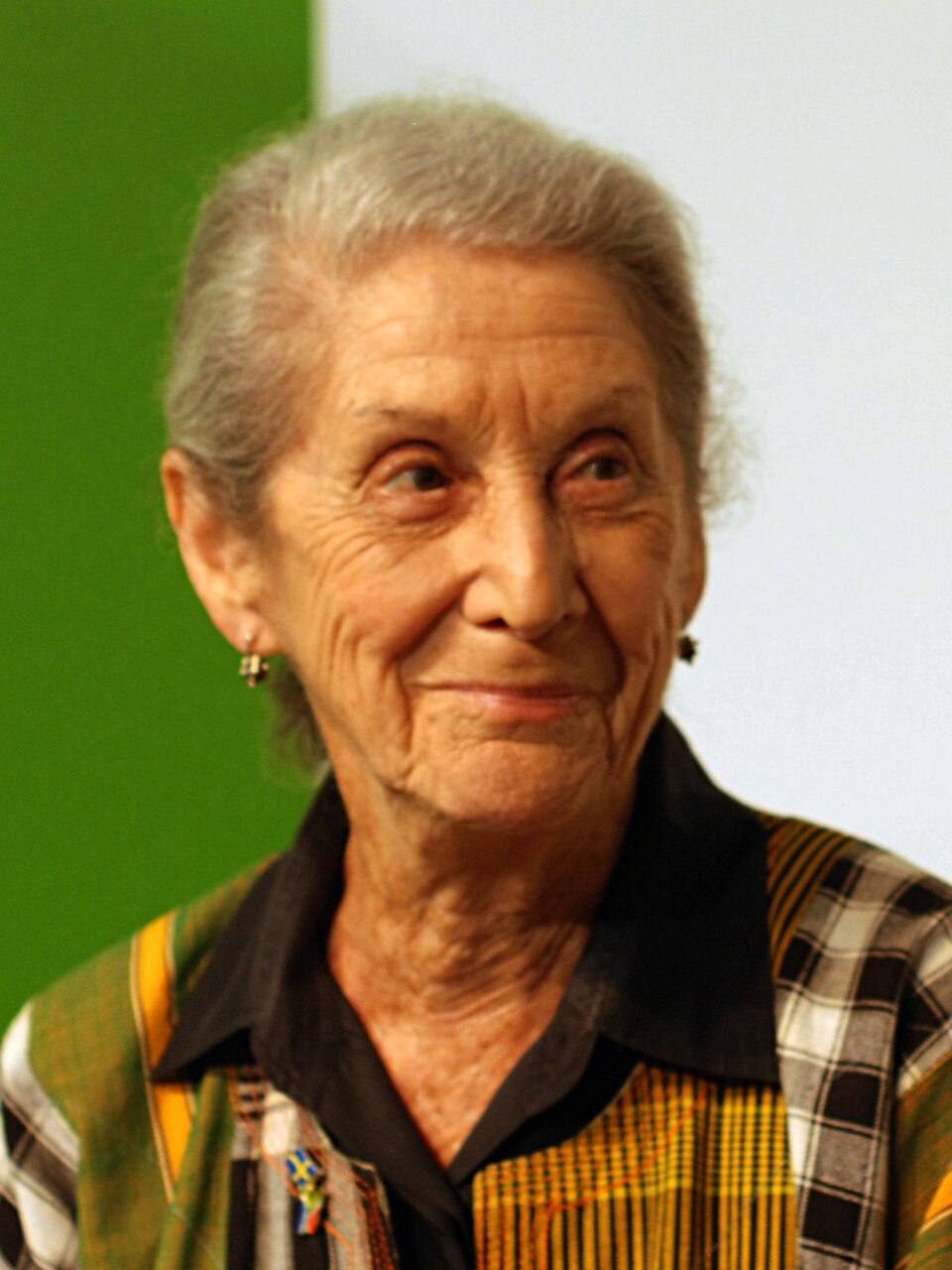
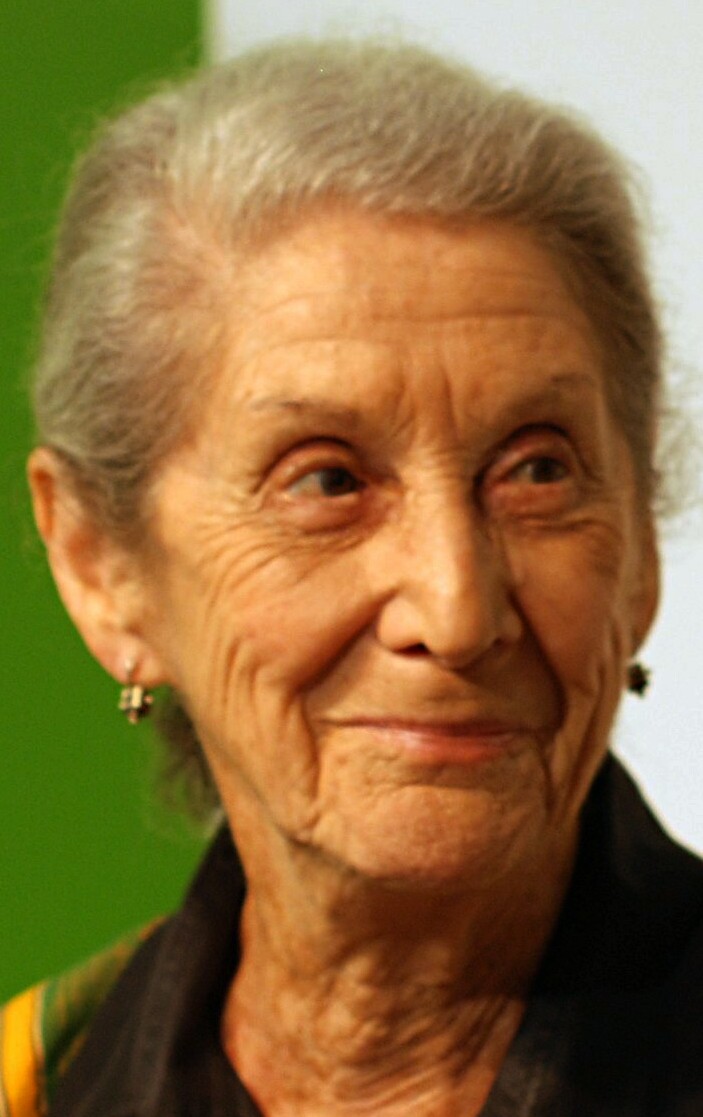
Parktown, Johannesburg, late afternoon. In a low house surrounded by books and African masks, a small woman answers with sharp precision, the golden Highveld veld visible through the window. Nadine Gordimer weighs every word like a sentence she would read again the next morning at her writing desk.
—Do you remember the moment your childhood turned toward books?
I was nine years old, in Springs, that mining town perched above the gold galleries where I was born in 1923. My mother decreed that my heart was fragile — a heart condition that I now suspect was largely imaginary, or at least very convenient. I was taken out of school. Imagine a little girl removed from the world of other children, confined to home, with only bookshelves and the silence of afternoons for company. I didn't wither; I devoured. Reading became my way of entering lives that the white, narrow town of Springs forbade me even to suspect. At fifteen, I published my first short story in a children's magazine. It wasn't an achievement. It was a necessity that had simply found its form.
I was taken out of the world of other children; so I sought it in books.
—How did this early isolation shape the novelist's gaze?
The cloistered child learns to observe like an entomologist watching an anthill through glass. I saw the black housekeeper come and go from our kitchen, I saw the miners emerge from the depths, and no one around me found it strange. It was self-evident, and self-evidence is the most powerful of lies. My first pages, those that became The Lying Days in 1953, come from there: the awakening of a young white woman who discovers that the normality of her childhood rested on a segregation she had been taught not to see. I was already keeping notebooks, noting the contradictions of daily life in Johannesburg. Writing was never for me inventing an elsewhere; it was naming what everyone around me methodically worked not to name.
Self-evidence is the most powerful of lies.
—What does a writer feel when her own country decides to ban her book?
You discover that words weigh, since a government fears them enough to seize them. My novel A World of Strangers was banned for twelve years, simply because it showed a white man and a black man capable of friendship — a scandal under apartheid, where friendship itself became subversive. With Burger's Daughter, in 1979, it was even more brutal: censored a few months after publication. The book tells of the daughter of an imprisoned communist activist, torn between her own life and her father's legacy. The censorship commission thought it was stifling a text; it gave it the whole world as its reader. That is the bitter irony of power: banning a story is publicly admitting that it tells the truth.
Banning a story is publicly admitting that it tells the truth.
—Why did you insist, as early as 1968, on publicly denouncing censorship with an open letter?
Because they were stealing more than an author's freedom. In that text I published in The Classic, I wanted to say this: a writer censored in his own country is not only wounded in his speech; it is the very reality of his people that is being abolished. When the regime struck out my pages, it was not targeting me, the bourgeois writer of Parktown; it was erasing the existence of millions of people in the townships they refused to see. Imposed silence is never neutral. It manufactures an official, clean, lying country on top of the real country. My task was the exact opposite: to keep open, at all costs, access to what was really happening. A forbidden truth does not cease to be true; it waits.
—They say your dinners, in your Johannesburg home, were themselves an act of resistance. In what way?
Hosting at my table black, Indian, white friends, writers and academics mixed together — that seems trivial, doesn't it? Yet under apartheid, the mere mixing of a meal bordered on illegality, and the Immorality Act pushed to absurdity this obsession with separating bodies and races. My Parktown living room became, for the space of an evening, a small free territory where we talked, laughed, contradicted each other as whole human beings. I didn't organize this as social provocation. It was a breath, and a proof: the lived proof that the society dreamed up by the legislators of Pretoria was a monstrous fiction, denied every time a black and a white shared bread without lowering their voices.
A mixed dinner was the lived proof that another South Africa already existed.
—How do you reconcile this intense social life with the solitary discipline of writing?
The morning belonged to the writing desk, the rest to the world. I got up early and devoted the first hours to the page, because the mind is still intact, not yet worn down by the noise of others. This regularity was nothing like an artist's comfort; it was my way of standing upright. Then came the meetings, sometimes clandestine, with activists, journalists, watched friends. The house in Parktown, with its garden and books, was both at once: a refuge where I shut myself away to write, and a place of passage where everything the regime wanted to keep at a distance entered. You don't choose between solitude and engagement. You learn to alternate them so that neither devours the other.
—You were close to Nelson Mandela from the Rivonia trial onward. What remains of those days in 1964?
The gravity. In 1964, at Rivonia, men were being tried for their ideal and could have been hanged. I lent my hand where I was asked, in preparing the defense speech — that text which ends with the idea of an ideal for which one is prepared to die. You don't polish phrases in such cases; you help someone formulate what they will carry to the possible scaffold. Mandela and his comrades were sentenced to life, sent to Robben Island. I returned to my life as a novelist knowing that literature, next to such courage, must at least refuse cowardice. That stayed with me during the twenty-seven years of his imprisonment.
—What drove a white, acclaimed novelist to secretly campaign within the ANC?
The impossibility of doing otherwise without despising myself. Holding an ANC membership card, for a white woman, meant running a real risk — the movement was outlawed, and membership came at a price. But what is a work that denounces injustice worth if its author prudently stays on the other side of the barrier? I wrote July's People in 1981, that fiction where a white family, after the collapse of the regime, owes its survival to its former black servant. That was my way of imagining the reversal the power refused to see coming. And when in 1990 Mandela walked free after twenty-seven years, I understood that this stubborn patience, shared by thousands of anonymous people, had finally cracked what seemed eternal.
What is a work that denounces injustice worth if its author stays on the other side of the barrier?
—In 1991, upon learning that the Nobel had been awarded to you, who did you tell first?
My housekeeper. That black woman had shared my daily life for decades, in that house in Parktown where she knew things about my life that no one else knew. When the news from Stockholm came, it seemed natural to me — and, I hope, just — that she should learn it before the newspapers and embassies. We were still in a country barely emerging from apartheid, where such precedence had meaning. The Nobel Prize in Literature rewarded a body of work inseparable from this segregated land; it would have been grotesque to celebrate it first with the powerful. Dignity, sometimes, lies in the order in which you announce news.
Dignity, sometimes, lies in the order in which you announce news.
—Before the Stockholm audience, what idea of the writer's craft did you want to convey?
That the writer serves neither a party nor a ready-made morality, but a more exposed demand. In Stockholm, in December 1991, I wanted to say that the writer is always seeking what humanity is in its complexity, beyond what society allows to be expressed. That is the heart. Apartheid had deformed us all, whites and blacks; it had fabricated beings who should never have existed in that form. The task of the novel was not to judge these beings, but to restore them whole, contradictory, alive. Receiving this consecration did not absolve me of anything: social justice, I already knew, is a struggle without end, which does not stop the day an election is won.
Apartheid had deformed us all, whites and blacks.
This imaginary interview was generated by artificial intelligence from sources documented in Nadine Gordimer's profile. It dramatises what the figure might have said based on what we know about them, but does not constitute attested historical testimony. For primary sources and factual documentation, refer to the full profile.