Imaginary interview with Nefertiti
by Charactorium · Nefertiti (1369 av. J.-C. — 1329 av. J.-C.) · Politics · 5 min read
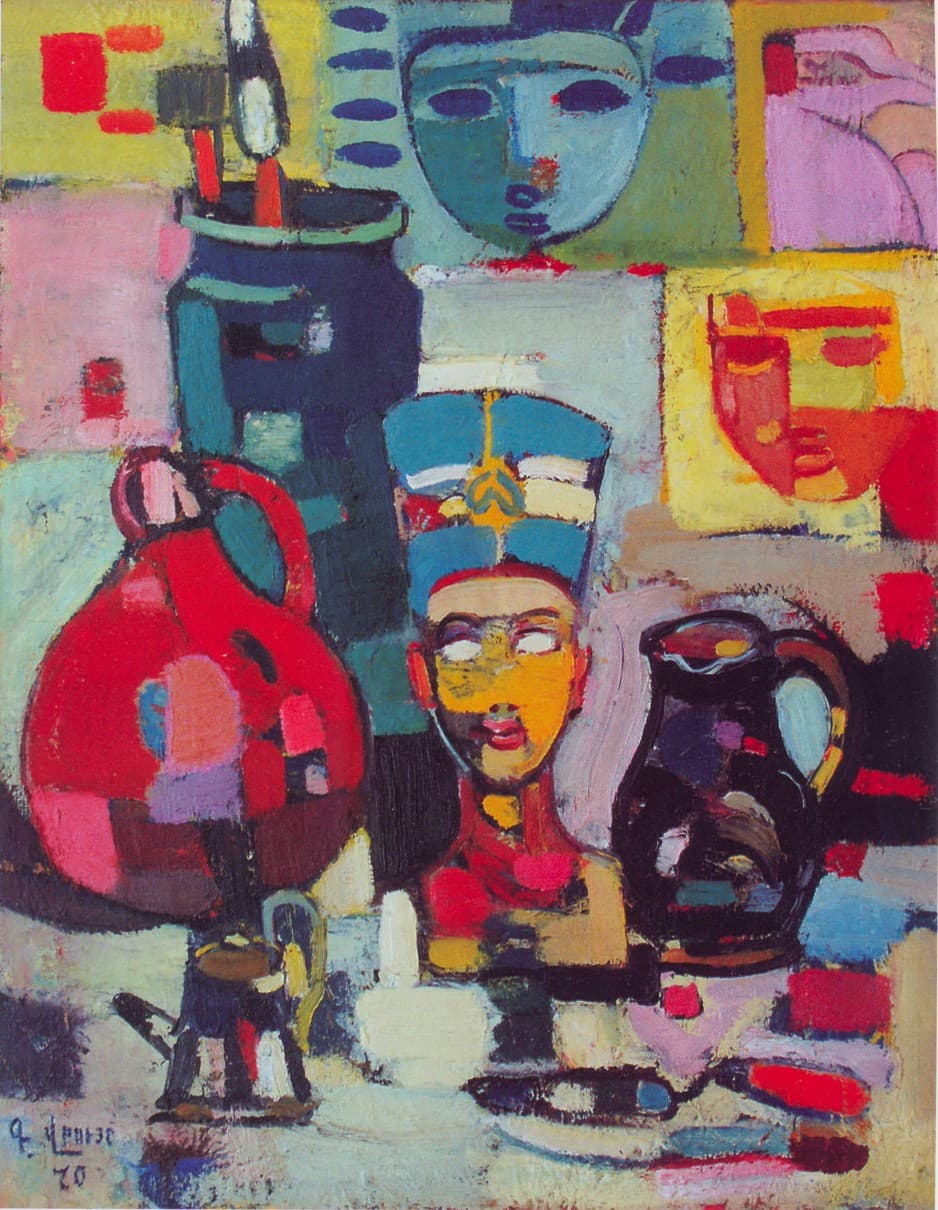
At dusk, in the open courtyard of the North Palace of Akhetaten, the disk of Aten tilts toward the horizon. The Great Royal Wife sets down her sistrum, dismisses her servants, and agrees to answer, in a low voice, while the river already carries the shadows.
—How did you come to build a new city in the middle of the desert?
The ground was virgin, without a temple to any god, without a tomb of any ancestor — Aten alone had chosen it. With Akhenaten, I had the great stelae erected in the cliffs, where the sacred territory of Akhetaten ends. They say that I stand beside the king as the disk itself stands in the sky, and that is the truth carved in limestone. To raise the temples quickly, our artisans cut these small blocks, the talatat, which one man could carry on his shoulder. In one season, what was only sand became the Horizon of Aten. You build a city as you speak a name: it is enough that the god hears it.
You build a city as you speak a name: it is enough that the god hears it.
—What does this solar disk, which you made the sole god, represent for you?
Look at its rays: they do not end in points, but in open hands. And at the ends of these hands, the ankh, the sign of life, which Aten extends toward our nostrils, to Akhenaten and me, as one offers a flower. The old gods hid in the dimness of the sanctuaries of Karnak, behind the clergy of Amun; mine shows itself to everyone, every morning, without intermediary. It has no statue to feed, only the light to receive. I have heard the priests mutter that we extinguished the old fires. We extinguished nothing: we opened the shutters.
The old gods hid in the dimness; mine shows itself to everyone, without intermediary.
—In some reliefs, you are shown striking enemies, a gesture reserved for pharaohs. What should we read into that?
The stonecutters depicted me at Karnak, in the reliefs of the Gempaaten, arm raised, mace held above a kneeling captive. Before me, this gesture belonged only to the king, never to his wife. And on my head, not the wig of queens, but the khépresh, the blue crown worn in battle. I do not claim to have shed blood with my own hands — a queen does not run the battlefields. But the image says what words keep silent: before Aten, I stand beside the king, not a step behind him. Stone, for its part, does not know how to lie.
Stone says what words keep silent: I stand beside the king, not a step behind him.
—This blue crown, why do you hold it so dear?
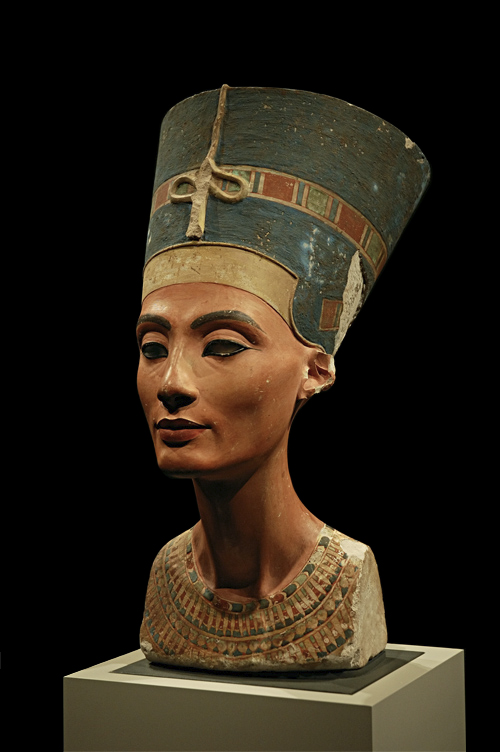
Other queens adorned themselves with vulture headdresses or high plumes. I chose this flat cylindrical headdress, this deep blue circled by a ribbon, that no royal wife had worn before me. My servants adjust it at dawn, after the black kohl on my eyes and the malachite powder on my eyelids, before I appear at ceremonies. It is not an ornament: it is a declaration. The khépresh is the crown of the king who goes to war. By placing it on my forehead, Akhenaten and I tell the world that power here is shared by two heads under a single disk.
—What does a day in your life as Great Royal Wife look like?
I rise before the sun. When Aten crosses the eastern horizon, I must already be there, sistrum in hand, shaking the sacred bronze to greet his first light — for that hour waits for no one. As an ouabet, a pure one, I conduct the morning offerings; no priest interposes himself between the god and me. In the afternoon, we receive ambassadors in the columned hall, oversee the construction sites, read the missives from distant kingdoms. And always, around me, my six daughters, whom I want instructed in the cult as much as in courtly manners. In the evening, the harp and the lute, then the silence of the North Palace.
When Aten crosses the horizon, I must already be there — that hour waits for no one.
—You speak of your six daughters. What place do they hold in your life?
They are seen everywhere on our walls, and that is no accident. In the old art, children remained small, silent silhouettes; with us, they climb onto our laps, hand us the gold necklaces at the window of appearance, share the evening banquet. I wanted them painted like that, alive, unruly, close to us. I raise them in the royal apartments as one raises servants of Aten: that they know how to shake the sistrum and recognize the rays of the disk before even knowing how to rule. A dynasty is not transmitted only through the womb; it is transmitted through what one teaches at dawn.
A dynasty is not transmitted only through the womb; it is transmitted through what one teaches at dawn.
—Imagine that people still speak of you in the very distant future. By what object do you think you will be known?
There is, in the workshop of Thutmose, the king's sculptor, a limestone face in my likeness — one eye finished, the other still bare of its inlay stone. He painted it in vivid colors, adjusted my blue crown, placed the wide ousekh collar on my throat. It is only a workshop model, a study kept to produce other portraits. But if one day, in centuries I will not see, only one thing of me were to be saved, I wager it would be that head. The idea troubles me: that a chip of stone should outlive the city, the cult, and even my name.
That a chip of stone should outlive the city, the cult, and even my name.
—What would you say of beauty, you whose face is reproduced everywhere?
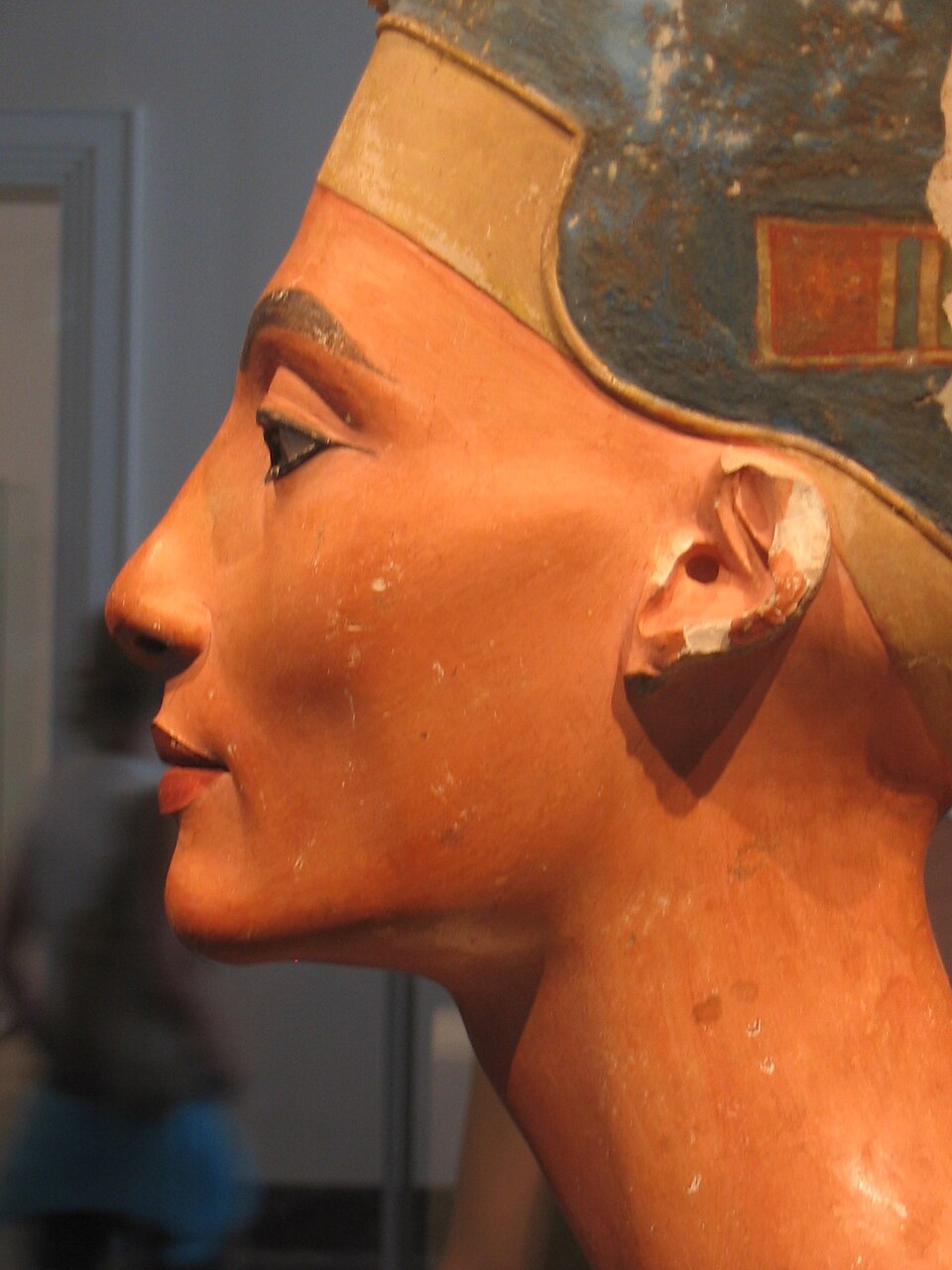
My very name carries it: Nefer-titi, 'the beautiful one has come.' Some conclude from this that I was born far from here, in some northern kingdom; I let tongues wag. What I know is that beauty, in the art of Akhetaten, is not that of the stiff statues of old. Our artists dare the long neck, the full lip, the line that undulates like pleated linen on the skin. Thutmose does not seek to flatter me: he seeks balance, that point where a face ceases to be a face and becomes an offering. True beauty does not belong to the one being looked at. It belongs to the disk that illuminates her.
True beauty does not belong to the one being looked at, but to the disk that illuminates her.
—A day will come when your name is erased from official inscriptions. How do you envision this eclipse?
I am told that, after the twelfth year of the reign, my image becomes rarer on the walls. I do not know what the engravers will do with me when I am no longer there to hold the chisel. Perhaps they will believe me dead. Perhaps something else. For there exists, in Aten's titulary, a name I could assume: Neferneferuaten, 'perfect is the perfection of Aten.' If the throne were to remain vacant, who better than the one who already stands beside the king like the disk in the sky could occupy it for a time? A queen can be erased from a wall. It is harder to erase her from the god's design.
A queen can be erased from a wall; it is harder to erase her from the god's design.
—A woman reigning as pharaoh: do you think she will be accepted after you?
Egypt has known women at the top — the names of those who wore the double crown before me are still whispered. But the clergy of Amun, whom we pushed aside at Karnak, does not forget. When the disk fades, these people will reopen the old sanctuaries and scrape our names from the limestone, mine as well as Akhenaten's, until only a hollow remains in the stone. I sense it without fearing it. What one builds for Aten, one builds for the moment when it shines; the rest belongs to the men who come after, and men forget quickly. I will have held the mace and the sistrum in the same hand: let them try to say that it did not happen.
I will have held the mace and the sistrum in the same hand: let them try to say that it did not happen.
Read further
This imaginary interview was generated by artificial intelligence from sources documented in Nefertiti's profile. It dramatises what the figure might have said based on what we know about them, but does not constitute attested historical testimony. For primary sources and factual documentation, refer to the full profile.