Kids interview Nefertiti
by Charactorium · Nefertiti (1369 av. J.-C. — 1329 av. J.-C.) · Politics · 5 min read
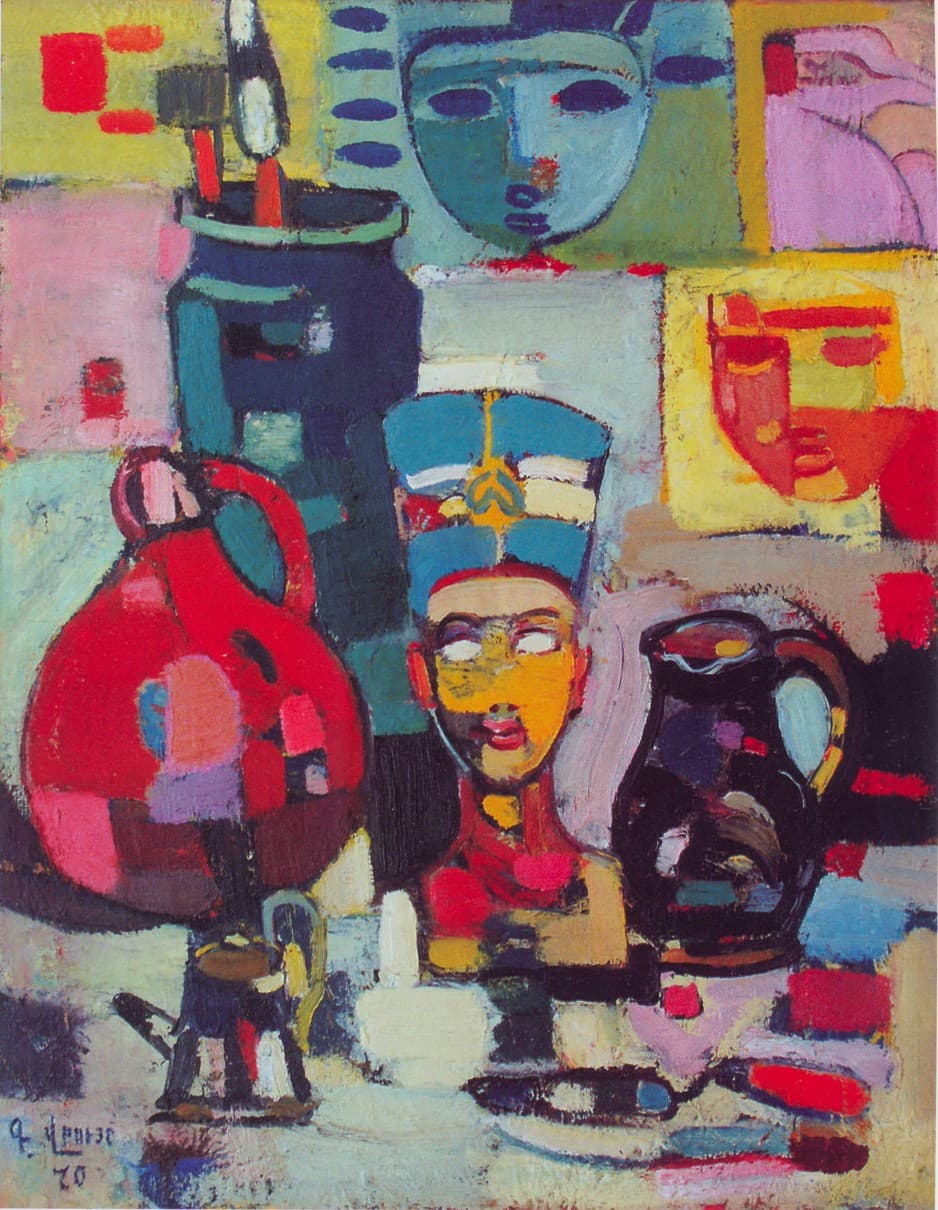
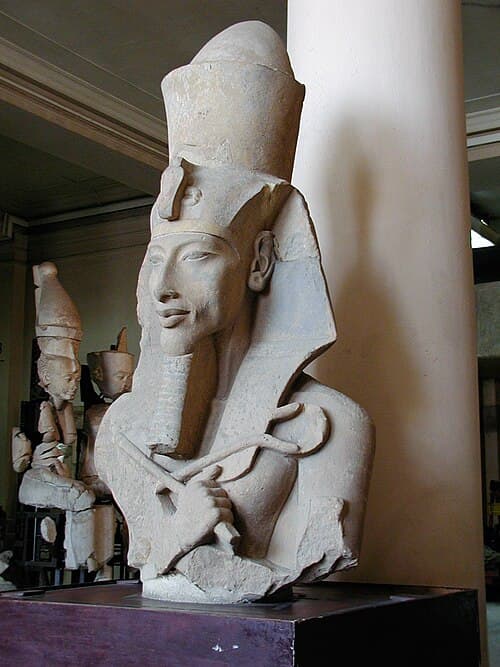
That morning, two students from a discovery class stopped before a large stone face with still-vivid colors. The queen seemed to stare at them, then, softly, she began to speak. Intimidated but curious, the two young visitors opened their notebook of questions.
—What was it like to build a brand new city in the desert?
You know, imagine a vast expanse of sand and cliffs, without a single house. It was there, around 1346 BCE, that we decided to build our city, Akhetaten — meaning 'the Horizon of the Aten,' the sun disk. With my husband, I had great stones carved into the cliffs, what we call stelae, to mark the boundaries of the sacred territory. On these stelae, my name is written beside his, as co-founder. To speed things up, workers carried small light blocks, the talatat, which a single man could lift. In a few years, an entire city rose from the ground. It was a bit like making a flower grow out of stone.
We made an entire city rise from the bare sand.
—What did you do in the morning, just at sunrise?
Ah, morning was the most sacred time, my child. I rose before dawn. My maids helped me put on a very fine white linen dress, and draw black around my eyes with kohl, a dark powder. Then I put on my blue crown. When the sun appeared on the horizon, we welcomed it as a living god: the Aten. I shook sistra, small instruments that jingle when shaken, to accompany the songs. Imagine the silence of the desert, then that first warm ray on your skin. We believed that ray gave us life itself. For us, each morning was a true rebirth.
—Is it true that you wrote a prayer to the sun?
So it is said, my child, though I cannot promise everything. My husband and I sang a long prayer, the Great Hymn to the Aten. It begins: 'You appear beautiful on the horizon of the sky, O living Aten.' Some think I helped compose it. What is certain is that I myself led the rituals, and that, for a woman, was rare. I was sometimes called ouabet, meaning 'the pure one,' a priestly title. On one of our stelae, it is written that I stood 'beside the king like the Aten himself.' Imagine: I was placed almost at the height of the sun.
—Is it true that you were depicted striking enemies?
It is true, and it surprised many! At Karnak, in a temple called the Gempaaton, artists carved me in stone raising my mace over enemies. You know, usually only the pharaoh, the king, had the right to be shown that way. A queen, never. But I was portrayed as a protector of Egypt. It wasn't necessarily that I actually went into battle. It was an image, to say that I had immense power, almost that of a king. Imagine being drawn doing something reserved for the greatest: it is a very rare honor. It showed my place, at the very top, beside my husband.
I was carved as a warrior, an honor reserved for kings.
—Why did you wear that funny flat blue crown?
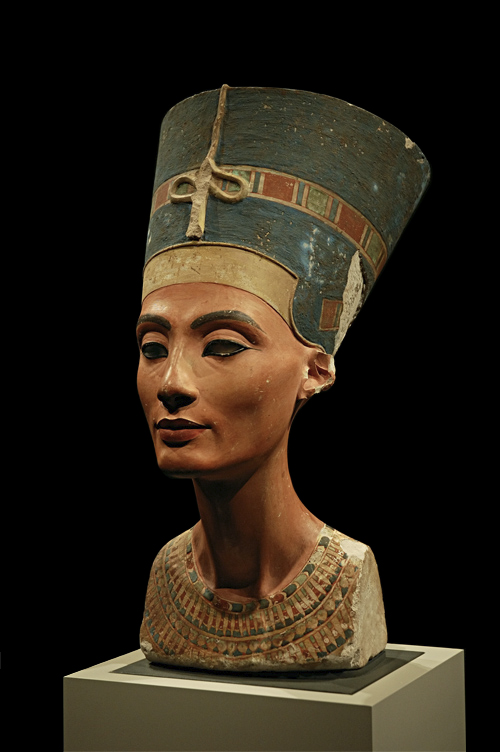
You noticed it! That tall, flat blue crown became somewhat my emblem. It is called the khepresh. Originally, it was a headdress that kings wore, sometimes for war. No queen before me had shown herself that way. By wearing it, I said without speaking: I am no ordinary wife. Blue was a precious color, difficult to make, reserved for the most powerful. With my broad collar of gold and stones, the ousekh collar, I had the look of a sovereign. Imagine a hat that no one else dares to wear, and that immediately says who you are. My crown spoke for me.
—What did you eat in the evening, in your palace?
Oh, we ate well, for we were a royal family! In the evening, in the great palace of Akhetaten, white bread was served, roasted meat like goose or beef, fish from the Nile, and many fruits: figs, dates, grapes. I drank wine from golden cups. During the meal, musicians played the harp and lute, and dancers whirled. Around us, the walls were painted with gardens and birds, so lifelike that you thought you heard the ducks sing. Imagine a large cool hall, columns shaped like papyrus, and the smell of warm dishes. It was a sweet life, I must admit.
—We were shown a bust of you; how was it made?
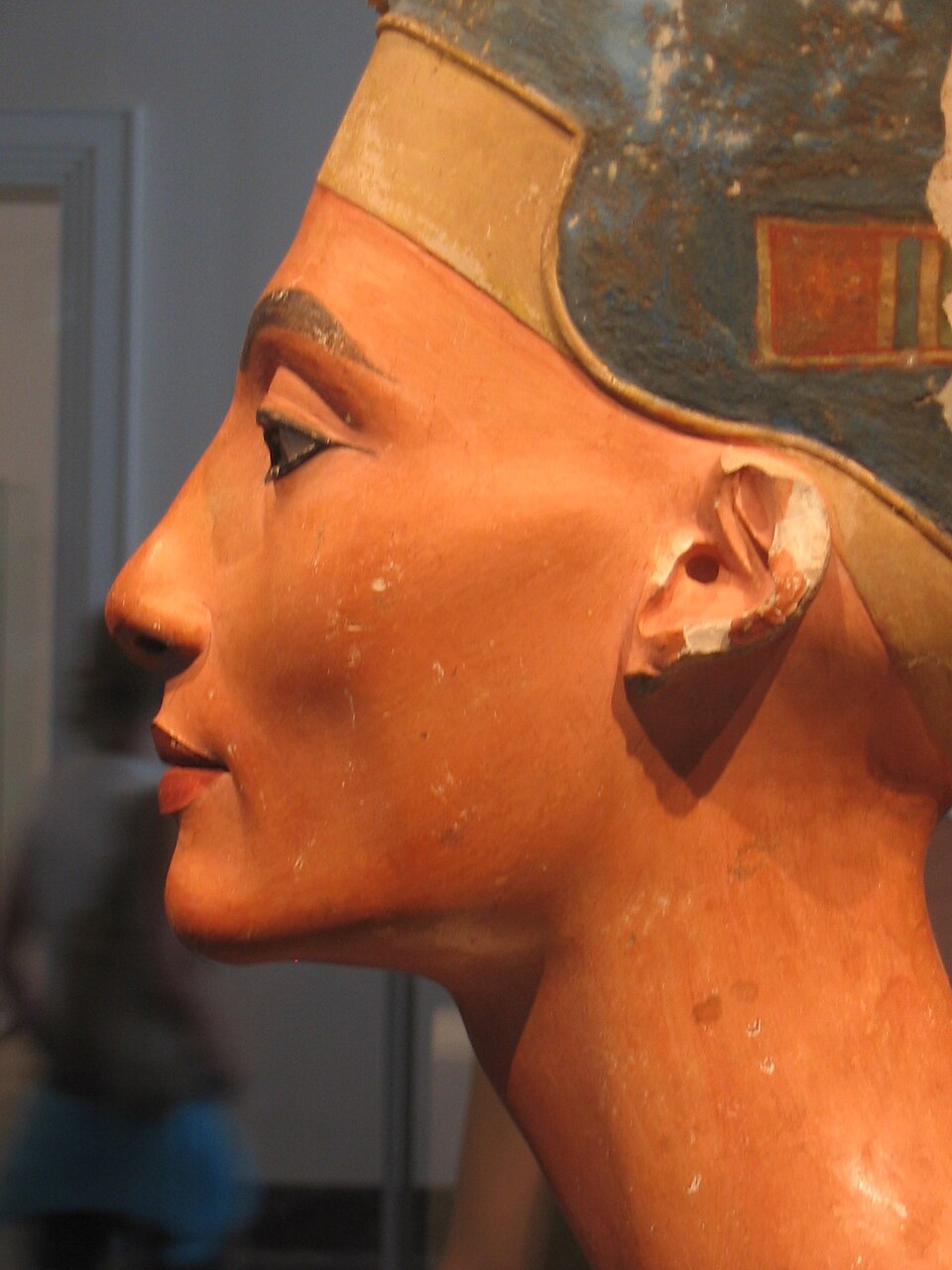
Ah, that stone face! It is the work of a great artist, the sculptor Thutmose. He worked in a workshop in our city, Akhetaten. He took a block of limestone, a soft light stone, then covered it with a plaster that he painted with bright colors: my skin, my lips, the blue of my crown. Sculptors like him observed me at length to capture my features. You know, in my time, making a portrait was not to decorate a house. It was to keep the memory of a person alive, almost forever. Imagine someone freezing your face in stone so that, long after you, people would still know what you looked like.
—They say your face is known all over the world; how does that make you feel?
It is strange and sweet to hear, my child. In my lifetime, I could not know that. We Egyptians hoped for one thing only: that our name would never be forgotten. For us, one truly died the day no one spoke it anymore. So if, long after, children like you look at my face and say 'Nefertiti,' then I am not quite dead. My name means 'the beautiful one has come.' Perhaps it has traveled well. Imagine a small lamp that is lit, and continues to shine long after the one who lit it. That is exactly what I hoped for.
One truly died the day no one spoke your name anymore.
—Why do we know nothing more about you after a while?
That is one of the greatest mysteries, and even you do not have all the answers! After many years reigning beside my husband Akhenaten, my name appears less often on monuments. Times were difficult: our religion of the Aten disturbed many powerful priests, especially those of the old god Amun. Some think my power grew so much that I may have ruled myself. In Egypt, a woman ruling alone was almost unimaginable. Yet I already had the crown, the titles, the authority. Imagine someone climbing a great staircase, step by step: who knows how far they get? What became of me is still debated.
—Could a woman really become a kind of king in your time?
It was very, very rare, my child. In Egypt, supreme power, that of pharaoh, almost always went to a man. A great royal wife like me stood beside the king, but below him. Yet my case was special. I was given images, titles, and a crown that no queen had before. My cartouche, the oval that surrounds royal names, appeared right next to the king's. So some imagine that in the end, I may have ascended the throne as a true pharaoh. Imagine a door usually closed to women, and that, for me, may have cracked open. That is why I am still talked about.
Read further
This imaginary interview was generated by artificial intelligence from sources documented in Nefertiti's profile. It dramatises what the figure might have said based on what we know about them, but does not constitute attested historical testimony. For primary sources and factual documentation, refer to the full profile.