Imaginary dialogue between Ay and Nefertiti
by Charactorium · Nefertiti (1369 av. J.-C. — 1329 av. J.-C.) · Politics · 5 min read
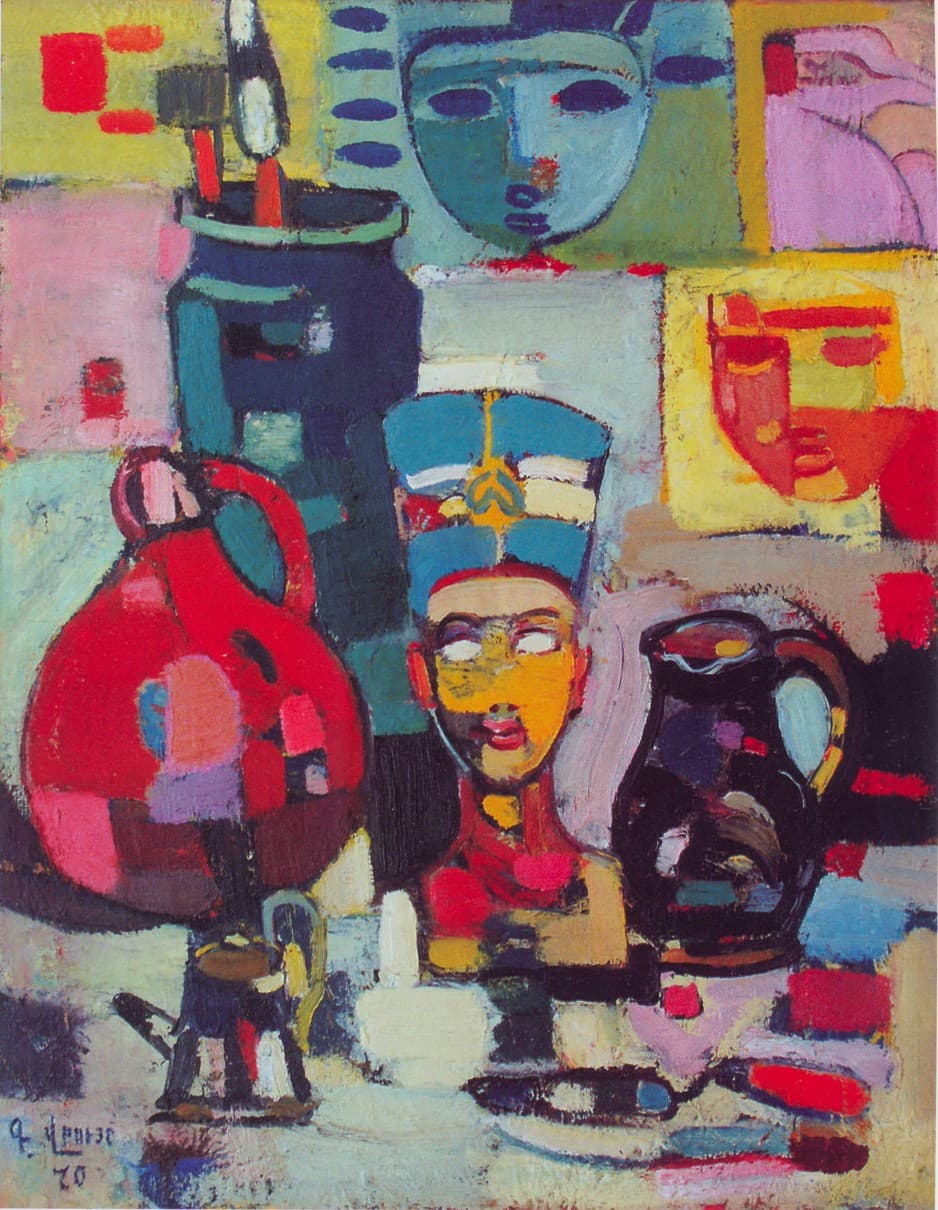
It is beneath the painted columns of the Window of Appearance, in the heart of the Great Palace of Akhetaten, that Ay finds the Great Royal Wife in year 9 of the reign, as the late afternoon sun gilds the floors adorned with painted marshes. The dust from the construction sites of the young capital still floats in the warm air, mingled with the scent of incense of the Aten. Ay has served the royal couple since Thebes; he has seen Nefertiti distribute gold collars to the faithful from that balcony; today, he comes to listen to her, no longer as a servant, but as a confidant curious about the woman behind the blue crown.
—My queen, I was present when you had the first stelae carved in the cliff. Why did you want your name alongside the king's on those sacred markers?
You remember, Ay, that day we climbed the eastern cliff? The king swore before the Aten never to extend the city beyond the stelae, and he wanted me there, beside him, in stone as in life. It was not a favor: the city was born of us both. Akhetaten, "the Horizon of the Aten," is our common work. On the stela, I am named beside the king as the Aten himself stands in the sky—not behind him, but alongside. When you read those markers in twenty years, you will know that the queen did not follow: she founded.
On the stela, I am named beside the king as the Aten stands in the sky—not behind, but alongside.
—You who left Thebes and its powerful clergy, were you never afraid to build a capital in a virgin desert, far from everything?
The desert was not empty, Ay—it was pure. That is what the Aten demanded: a land that no other god had defiled. At Thebes, the clergy of Amun owned the granaries, the lands, the whisper of the temples. Here, nothing interposes between the disk and us. I admit that at first, seeing the Nile without the silhouette of Karnak tightened my heart. But look today at these palaces, these gardens, these artisans' workshops: we have made a city rise from the sand in a few floods. Fear, I left on the other bank. Building for the sole Aten was already a form of prayer.
The desert was not empty—it was pure.
—At Karnak, I saw those reliefs where you are depicted with mace raised, striking the enemy—a pharaoh's gesture. How did you dare such an unprecedented image for a royal wife?
You have a keen eye, Ay: those blocks from the Gempaaten temple set the court gossiping, I know. But understand me: striking the enemy before the Aten is not vanity, it is duty. The king upholds the order of the world against chaos; when I raise the mace at his side, I proclaim that the queen also defends the harmony willed by the disk. I sometimes wear the khepresh, the blue war crown—you who see me every morning know that no queen before me has worn it. They will say I have overstepped my rank. I answer that the Aten has no rank: he has servants, and I am the first.
Striking the enemy before the Aten is not vanity, it is duty.
—That flat blue crown that belongs only to you—what do you want the people to understand when they see it on your head during ceremonies?
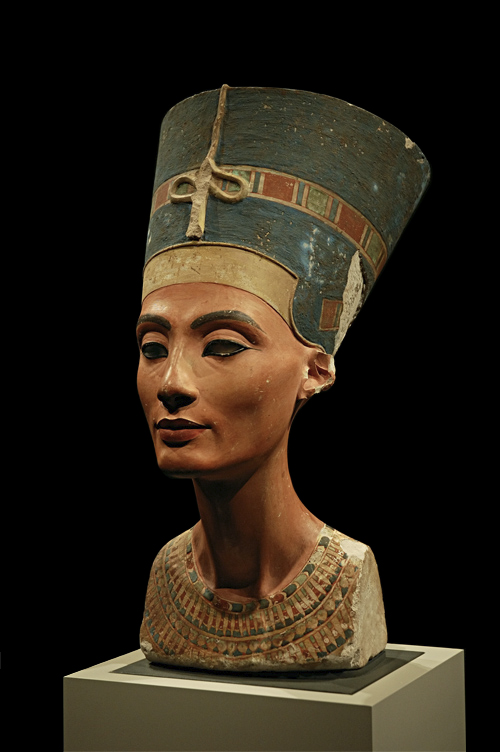
A crown speaks louder than a herald, Ay. When the people lift their eyes to the Window of Appearance and see that unique blue, they see not only Nefertiti: they see a function that no word suffices to tell. I am not a wife among others, tucked behind the throne. The king governs the Two Lands; I, at his side, hold the thread that connects men to the disk. I wanted this headdress to be distinct from the royal nemes and the wigs of ancient queens. It says: here is a new power, born with the Aten. You who distribute gold in my name from that balcony are its daily witness.
A crown speaks louder than a herald.
—Each dawn, before the court even awakens, you climb to the altar. What do you feel, my queen, at the precise moment when the disk crosses the horizon?
It is the truest moment of my day, Ay, truer than all audiences. Before daybreak, my maids dress me in white linen and trace kohl on my eyes; then I climb the open-air altar, sistra in hand. When the first ray touches the offering, I feel the Aten stretch toward my face his hands of light—those rays that end in hands, and that bring the ankh to my nostrils to breathe life into me. Then I shake the sistrum, and the clear sound rises with the sun. In that moment, I am not only queen: I am ouabet, the pure one, she who opens the cult. The king composes the hymns; I, I make them resound at dawn.
When the first ray touches the offering, I feel the Aten stretch toward my face his hands of light.
—At court they say you have a share in the great song addressed to the disk. Is it true that your voice mingles with the king's in those verses?
The hymns were born of long shared vigils, Ay—who could untangle the thread of two voices that have prayed together for so many years? The king has the gift of words; it is he who says the Aten appears beautiful on the horizon of the sky, he who sings the earth plunged into darkness when the disk sets. But these verses, we murmured them side by side, at the altar, before a scribe fixed them. I will not claim my share: that would divide what the Aten has united. Know only that the morning praise, as you hear it rising from the palace, carries as much of my breath as of his.
Who could untangle the thread of two voices that have prayed together for so many years?
—Forgive my frankness, you who have known me so long: your name means "The Beautiful One Has Come." Come from where, my queen? The court whispers that you are from a distant land.
Ah, Ay, this question follows me like my shadow! "The Beautiful One Has Come"—but come from where, no one agrees, and I gladly leave the mystery. Some believe I was born at Thebes, in a great house near the throne; others murmur that I come from Mitanni, that northern kingdom from which kings send their daughters to Pharaoh. You know as well as I that the Amarna letters constantly speak of princesses exchanged between crowns. Whether my blood comes from Naharina or the banks of the Nile, what does it matter? The Aten does not look at birth; he looks at the heart that adores him. I came, and I stayed: that is all my name promises.
The Aten does not look at birth; he looks at the heart that adores him.
—I myself received the messengers of the king of Babylon, who demands a daughter of Pharaoh. How do you view these negotiations where women seal peace between crowns?
Those letters, Ay, I know them as well as you who read them before the king. The sovereign of Babylon calls Pharaoh his brother and begs for one of our daughters, as one exchanges gold and lapis lazuli. I do not take offense: such is the world of kings, where a wife is worth a treaty. But see the difference—those princesses enter the palace and fade into the crowd of secondary women. I reign in broad daylight, my name in a cartouche beside the king's. A daughter sent seals an alliance; a Great Royal Wife governs. I have seen to it that my own daughters know this difference before they can read.
A daughter sent seals an alliance; a Great Royal Wife governs.
—The sculptor Thutmose is working on your likeness in his workshop. What do you think when you see your own face frozen to last longer than your flesh?
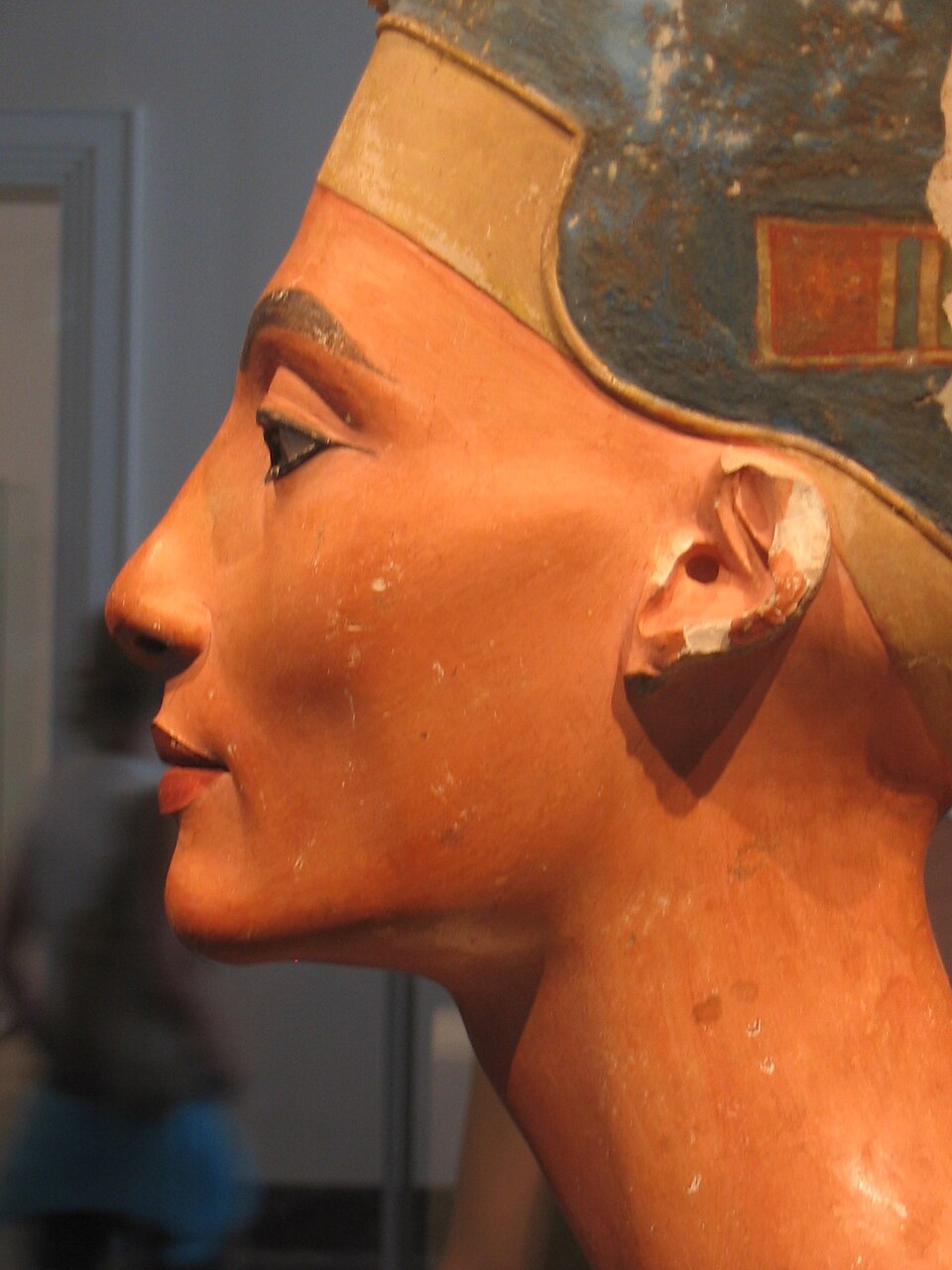
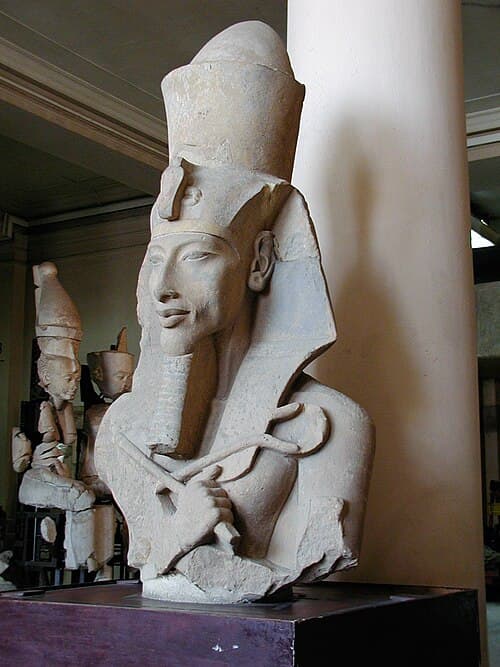
I went to Thutmose's workshop, Ay, and it is troubling to see oneself thus suspended outside time. He captured my face in limestone, then covered it with a painted coating in vivid colors, down to the kohl on my eyes. I told him that beauty is not what matters to me: what I want is that people recognize the servant of the Aten, the blue crown, the bearing that speaks of power. A portrait is not a mirror; it is a message sent to those who will come. May my flesh one day go to the west—the canopic jars already await—this face, however, will still speak. That, I believe, is the true eternity of a name.
A portrait is not a mirror; it is a message sent to those who will come.
—One last question, my queen, and it weighs on me: the king will age, and the future of the Aten is uncertain. If fate demanded it, would you feel able to bear the double crown alone?
You touch where no one dares, Ay—but between us, I will answer. The cult of the Aten is young and fragile: the clergy of Amun has not forgotten; it waits in the shadows of Thebes. If the king were to fail and no son were ready, should we let everything we have built die? I have already struck the enemy on stone, already worn the khepresh, already had my name in a cartouche. The step that remains is not so great for one who serves the disk unceasingly. I do not wish it—I wish to see the king grow old beside me. But if the Aten demanded it, I would not shrink back. Keep this to yourself, my friend: these are words not shouted from the Window of Appearance.
The step that remains is not so great for one who serves the disk unceasingly.
Read further
This imaginary interview was generated by artificial intelligence from sources documented in Nefertiti's profile. It dramatises what the figure might have said based on what we know about them, but does not constitute attested historical testimony. For primary sources and factual documentation, refer to the full profile.