Imaginary dialogue between Sénèque and Nero
by Charactorium · Nero (37 — 68) · Politics · 5 min read
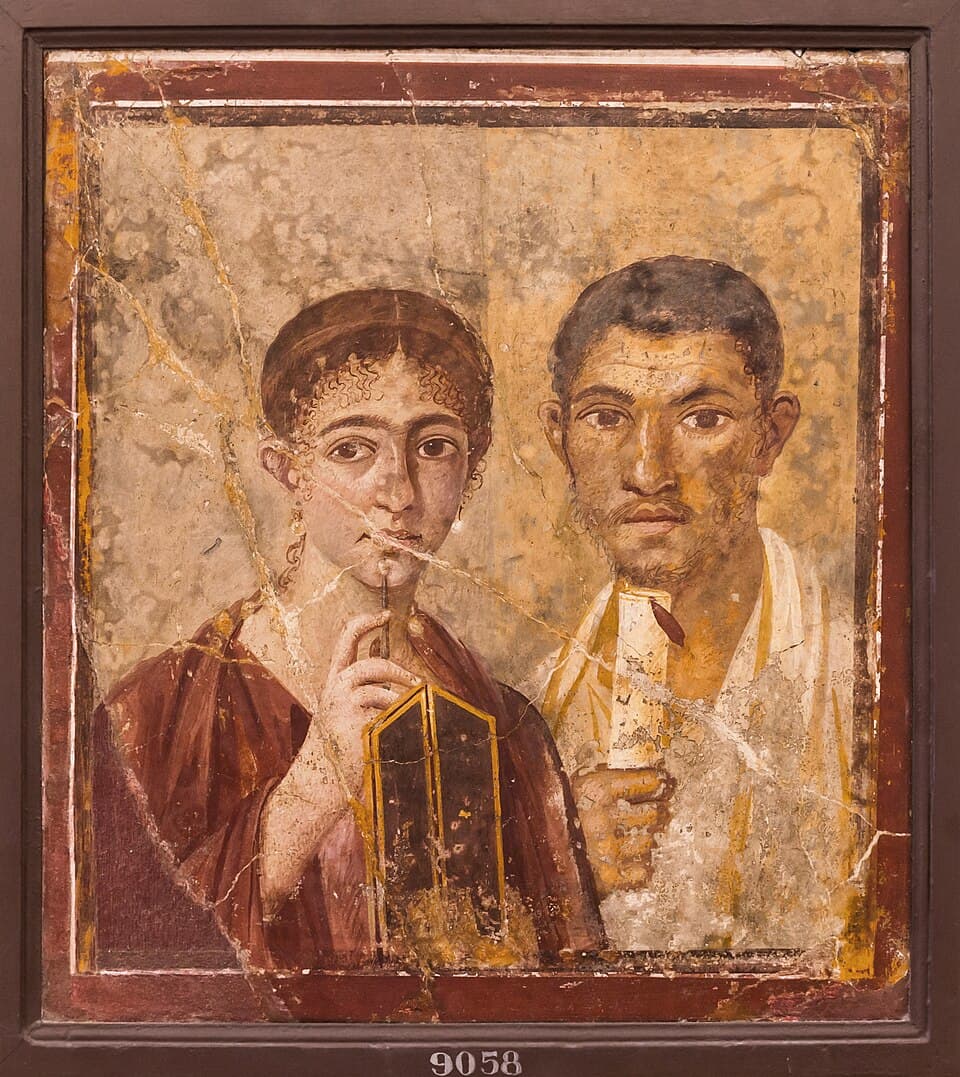
It is in the gardens of the Palatine, in the autumn of 64, that Seneca meets his former pupil, a few weeks after the fire that ravaged ten of Rome's fourteen districts. The acrid smell of ashes still hangs in the air, and in the distance the scaffolding of the Domus Aurea is already rising. The old tutor, retired from court since the death of Burrus, has come as a simple visitor — not to advise, but to understand the man he has shaped since he was twelve. On a marble table, a cithara waits, placed like a confession.
—Nero, the whole city whispers that you sang while Rome burned. I, who taught you to weigh your actions, tell me: where were you that night in July?
At Antium, Seneca, in the villa where I was born, more than fifty miles from here. I learned of the fire by messenger and had my carriage harnessed at once. When I returned, the Palatine itself was threatened. I opened the Campus Martius and my own gardens to the homeless, brought grain from Ostia, lowered its price. And yet rumor credits me with a lyre and a song on the ramparts. You taught me that the crowd needs a culprit more than the truth. I know that now in my own flesh. A prince is not forgiven for loving song: so he is accused of having sung over corpses.
A prince is not forgiven for loving song: so he is accused of having sung over corpses.
—Do you remember, as a child, how you would draw palaces on your tablets? Now you build on still-warm ruins. This Domus Aurea — is it a dream or a challenge?
Both, my teacher. You remember those sketches you used to confiscate to bring me back to my Greek declamations? What I traced then, I am now raising. The central hall will have a dome that rotates like the vault of heaven, gardens, a lake in the very heart of Rome. But I am not rebuilding only for myself. The city will be reborn with wide streets, porticoes, materials that no longer burn — I have seen enough of what wooden alleys do when fire sweeps through them. The senators grumble that I am appropriating a domain fit for an Eastern prince. Let them grumble. A city of marble will always be worth more than a labyrinth of ashes.
A city of marble will always be worth more than a labyrinth of ashes.
—You have often heard me say that money corrupts judgment. Rebuilding costs fortunes — how do you plan to pay for all this without ruining the treasury?
With lucidity, Seneca — the kind you preached without always practicing yourself, forgive me that jab. I have lightened the weight of the aureus and reduced the silver in the denarius. With the same metal, I strike more coin; reconstruction proceeds, the legions are paid, the distributions hold. I am criticized for this measure as a merchant's trick unworthy of a princeps. But an empire does not live on pure virtue: it lives on grain, soldiers, and coin. You, who managed your own estates and lent your gold as far as Britain, know that a treasury that does not circulate is a dead treasury. I prefer a slightly lighter denarius to a Rome still in ashes.
—I taught you Seneca the philosopher, but you chose Terpnos the citharode. What did that man give you that my philosophy could not?
Do not be jealous, old friend. You gave me the words to govern my soul; Terpnos gave me the voice to free it. I listen to him every evening after dinner, sometimes until the dead of night, and I train my own voice like an athlete trains his body: diet, bandages on the chest, lead weights to strengthen the breath. You find this childish — I can see it on your face. But when I hold the kithara, I am no longer the heir of Agrippina, nor the master of thirty legions — I am only a man seeking the right note. Philosophy teaches me to bear power; music teaches me, for the space of a song, to forget it.
Philosophy teaches me to bear power; music teaches me, for the space of a song, to forget it.
—At the first Neronia, in 60, you went on stage before the senators. Had you measured the scandal, you who know their pride?
I had measured it, and I wanted it. Those old patricians think a free man debases himself by going on stage, that a princeps who sings lowers himself to the rank of an actor. But who are they to decide dignity? In Greece, a crowned poet walks equal to kings. I instituted the Neronia on that model: poetry, song, eloquence, racing. Yes, I compete myself, and they award me the prize — spare me your raised eyebrow, Seneca. I know what that prize is worth and what it is not. But I prefer an emperor who exposes himself to the judgment of a crowd to a tyrant who hides behind his guards. Rome will learn to love what it still despises.
—We were both at your side, Burrus and I, at that banquet in 55 when Britannicus collapsed. You said it was epilepsy. Did you lie to me that night?
You ask the question you never dared ask at the time, and you ask it now that Burrus is dead and you have nothing left to lose. Britannicus was the son of Claudius, the legitimate blood; as long as he lived, every malcontent had another emperor at hand. You knew it as well as I did, and you looked away as one looks away from necessity. I will not tell you here what was poured into that cup. I will only tell you that power does not suffer two heirs at the same table, and that you, the wise man, chose to keep me rather than mourn the child. We both bear that silence.
Power does not suffer two heirs at the same table.
—And Agrippina, your mother, in 59? You came to me in the morning, pale. I helped you draft the letter to the Senate. Do you regret it, my child?
You helped me, yes — never forget that when you judge me from the height of your retirement. That woman made me emperor and wanted to be through me. She tried to mount my chariot, to receive ambassadors in my place, to hold me as one holds a child she has borne. I first hoped for a drowning in a shipwreck that might look like an accident from the gods — she swam to shore, more tenacious than the sea. So I cut the knot. You taught me that the wise man does not let himself be governed by pity; that morning, I was your best pupil, and that is what chills me. One does not kill one's mother without killing something in oneself.
One does not kill one's mother without killing something in oneself.
—For the fire, you handed over those christiani to torture. You who read Zeno on clemency to me, what did you have to fear from that obscure sect?
A culprit was needed, Seneca, and you know better than anyone that a prince under accusation must turn the accusation back. These people form a new sect, from Judea, who meet in the shadows, refuse our gods, and await the end of the world. The crowd already hated them; I merely directed its hatred. They were given to the beasts, to the cross, to the flames in my gardens. You speak to me of clemency — clemency is a luxury I afford myself when my throne is firm, not when Rome smokes and rumbles. I do not claim it was just. I say that an emperor who hesitates between his survival and his virtue is no longer emperor.
—You still wear, I see, that Greek tunic without a belt that makes old Romans pale. Where does this love of Greece come from, which so unsettles them?
From you, in part, who put Homer and the tragedians in my hands before I knew how to write my name. This chiton offends the toga-wearers of the Forum, but in Greece a man is not judged by the cut of his clothes; he is judged by his art. There, a prince can sing, compete, be crowned without debasing himself. I dream of going one day to those cities, of presenting myself at the sacred games, of measuring my voice against that of the Hellenes — not as an emperor to be flattered, but as an artist to be heard. Rome made me master of the world; Greece, perhaps, would finally make me a free man. You smile: you know I am only half joking.
Rome made me master of the world; Greece, perhaps, would finally make me a free man.
—One last thing, Nero. When you are old and the marbles of your Domus are blackened, what do you want to be remembered for?
Not the blood, my teacher — there is blood in every Caesar's reign, and only the names are remembered. I would like them to say: under him, Rome rose more beautiful from its ashes, the streets widened, stone replaced wood. I would like them to remember a prince who dared to go on stage, who loved poetry enough to risk ridicule, who reached out to Greece when the rest of Rome turned its back. You taught me that the wise man despises glory; allow your pupil to contradict you one last time. I do not want to be a marble god. I want them to remember that I lived seeking beauty, even clumsily.
I do not want to be a marble god.
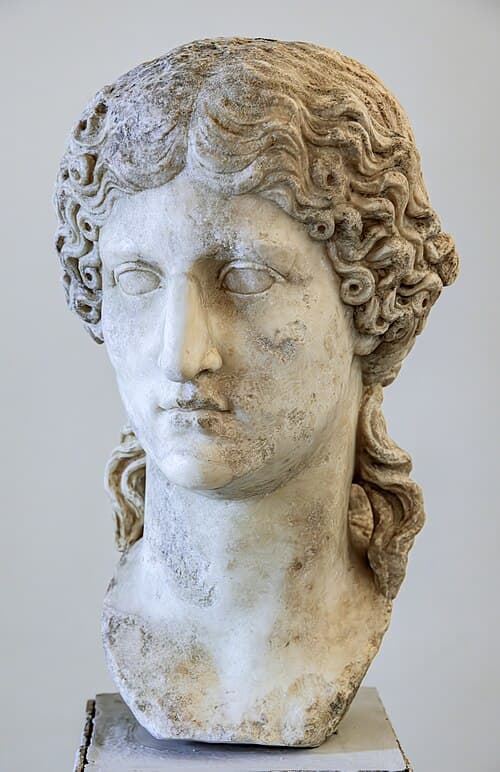
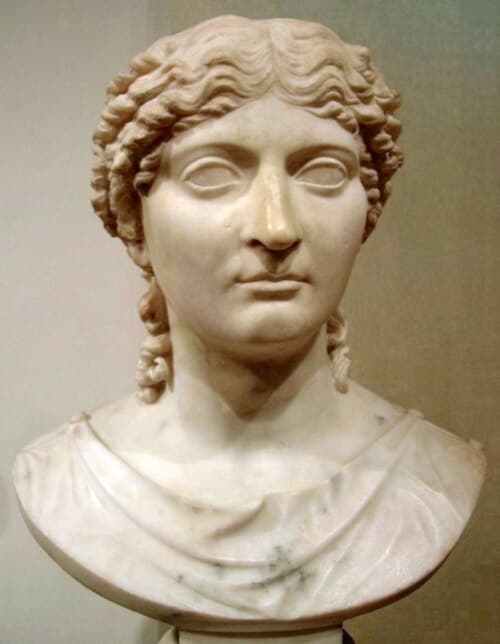
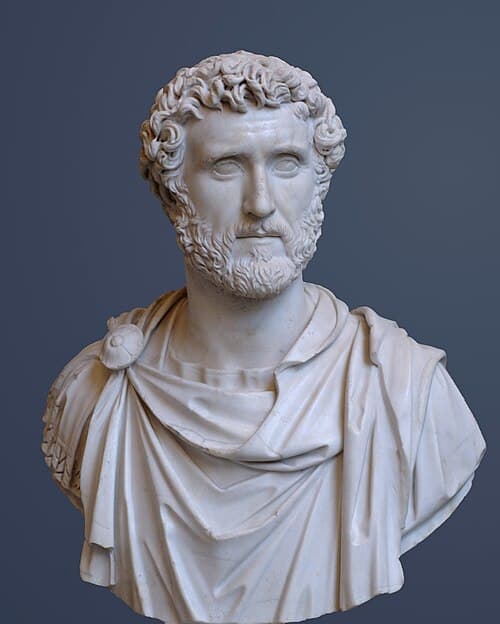
This imaginary interview was generated by artificial intelligence from sources documented in Nero's profile. It dramatises what the figure might have said based on what we know about them, but does not constitute attested historical testimony. For primary sources and factual documentation, refer to the full profile.