Kids interview Nero
by Charactorium · Nero (37 — 68) · Politics · 5 min read
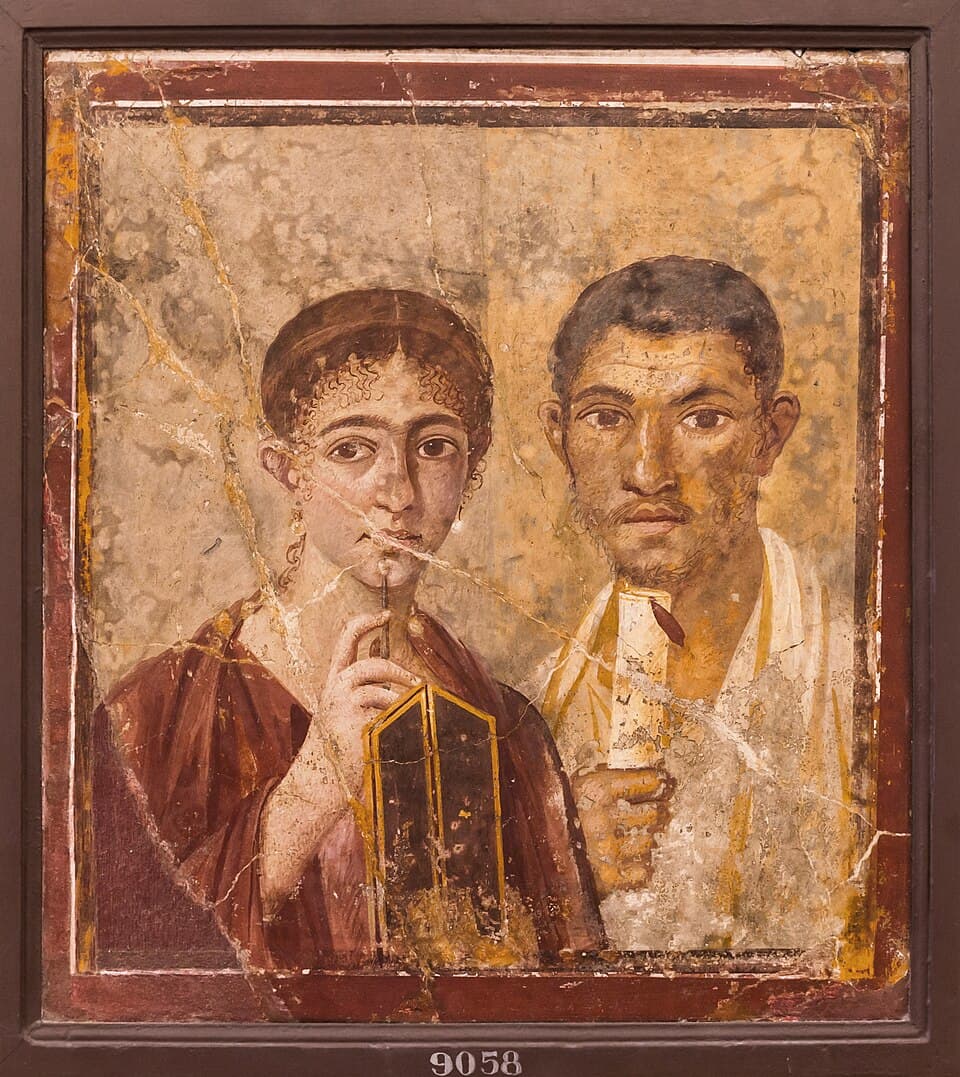
Two twelve-year-old students visit the ruins of a vast Roman palace. Amid the faded frescoes, a man in a purple toga waits for them, almost happy that someone has finally come to listen. His name is Nero, and he has much to tell.
—How old were you when you became emperor?
You know, I was only 17. Imagine: barely older than you, and already master of the greatest empire in the world. My stepfather, Emperor Claudius, had just died in 54 — poisoned, it was said, by my own mother. At first, I wasn't alone. My mother Agrippina wanted to decide everything for me, and my tutor Seneca whispered the right words. It was like wearing a crown too heavy for my head. They even called my first five years the Quinquennium Neronis, my golden years of good government. But growing up, when you're emperor, means pushing away those who hold your hand.
A crown too heavy for the head of a seventeen-year-old boy.
—Is it true you harmed your own mother?
That's the painful question, my child, and I won't lie to you. My mother Agrippina wouldn't let go. The more I grew, the tighter she held. In 59, I thought I found a trick: a rigged boat that would sink beneath her, out at sea. Imagine a small vessel that breaks apart on its own in the night. But she could swim, and she made it back to shore. So I sent men to finish the job at her home. Earlier, I had already let my half-brother Britannicus be poisoned at a banquet. You see, power taught me an ugly lesson: it devours your family first.
Power devours your own family first.
—What made you happiest in life?
Ah, now you touch my true heart! Not battles, not laws. Singing. I played the cithara, a stringed instrument from Greece, and I sang before all of Rome. My master Terpnos, the best player in the world, stayed with me late into the night. Imagine an emperor who goes on stage like a street performer! The nobles were horrified. For them, a free man never performed in public. But I wanted to be loved for my voice, not just for my crown. Maybe that was my mistake: I dreamed of applause when they expected a leader.
I wanted to be loved for my voice, not for my crown.
—Why did important people find it strange that you sang?
Because in my time, my child, everything had its place. A senator commanded, a soldier fought, and an actor — well, an actor was almost a slave. Going on stage, playing a hero behind a mask, sometimes even a woman's role, broke a huge taboo. They called it the ludi scaenici, the theater games. I created my own contests, the Neronia, in 60, with poetry and music, like the Greeks I admired so much. Of course, I always won first prize — who would dare beat the emperor? Deep down, I confused two professions that Rome wanted to keep separate.
I confused two professions that Rome absolutely wanted to keep separate.
—Is it true you played music while Rome burned?
There's the legend that sticks to me forever! In July 64, a terrible fire ravaged Rome — ten of the fourteen districts went up in smoke. Imagine whole streets like a forest in flames, the night reddened, people running. They said I sang with my lyre while watching. But it's false! I was at Antium, my birthplace, several hours away. I galloped back to organize relief. The problem, you see, is that a cruel story travels faster than the truth. And that one is still repeated, almost two thousand years later.
A cruel story always travels faster than the truth.
—And after the fire, what did you do to the Christians?
There, I can't hide behind pretty excuses. After the fire, the people wanted a scapegoat, and so did I. So I pointed at the Christians — the christiani, as the historian Tacitus called them. It was a tiny community, little known, easy to blame. I had them cruelly persecuted in 64. Tradition says that two of their leaders, Peter and Paul, died during those dark days. For rebuilding, though, I did good work: wider streets, porticoes, materials that burn less quickly. But a fine urban plan never erases the blood of the innocent.
A beautiful city plan never erases the blood of the innocent.
—What was your house like? They say it was huge.
Huge is still too small a word! I called it the Domus Aurea, the "Golden House," built after the fire. Imagine a palace of 300 hectares in the heart of the city, with gardens, ponds, and even a large round hall whose ceiling rotated to imitate the sky and stars. At the entrance, a statue of me 30 meters tall, as the Sun God. It was called the Colossus — and it later gave its name to the nearby Colosseum. In the evenings, I held banquets on floating barges. But such excess, you know, always ends up frightening everyone.
Excess always ends up frightening even your friends.
—Wasn't it too expensive to build all that?
You ask the real question, the one my advisors dared not! Yes, it was ruinous. Rebuilding Rome, paying for my palace, my feasts... gold slipped through my fingers. So I did a risky thing in 64: I reduced the precious metal in our coins a little. The gold aureus and the silver denarius became slightly lighter. Imagine taking a coin and discreetly scraping off a piece to make two: that was my trick. It was Rome's first known devaluation. At the time, it worked. But in the long run, I weakened the empire's currency. Spending is easy; keeping accounts, much less so.
Spending is easy; keeping accounts is an art.
—You seemed to love Greece a lot. Why?
Oh yes, Greece was my dream! There, they loved music, poetry, contests — everything the stern Romans despised in me. In 66, I went on a grand journey. I sang, ran, drove chariots in their games, and "won" every prize. Let's be honest: they wouldn't let the emperor lose! I even wore Greek tunics without a belt, which scandalized the old Romans. I also wanted to dig a great canal across the Isthmus of Corinth, to connect two seas. The project was abandoned at my death — it was only finished in 1893. In Greece, at last, I felt truly myself.
In Greece, for the first time, I felt truly myself.
—How did it end for you, in the end?
A sad end, my child, and I brought it on myself a bit. In 68, soldiers in the provinces revolted, in Gaul, in Spain. And above all, my personal guard, the Praetorians, those guards who protected the emperor, abandoned me. Without them, an emperor is nothing. I had to flee Rome on foot, disguised as a slave, to the villa of one of my freedmen named Phaon. There, terrified, alone, I took my own life. They say my last words were: "What an artist dies with me!" With me died my whole family, the dynasty descended from Augustus. You see, you can command the whole world and end up abandoned by all.
You can command the whole world and end up abandoned by all.
—If someone met you today, what would they notice first?
What you'd notice first? Probably my eye pressed against a strange green stone. I wore an emerald cut like a small magnifying glass, and I looked through it at gladiator fights. It might be the very first corrective lens in history! And then you'd see my toga picta, purple and embroidered with gold, heavy with jewels. But above all, you'd hear me: I'd talk about music, poetry, theater, more than war or taxes. I'd want to sing you something, right now. That's my paradox, my child: they remember me as a monster, when deep down I mostly dreamed of applause.
They remember a monster, where I dreamed of applause.
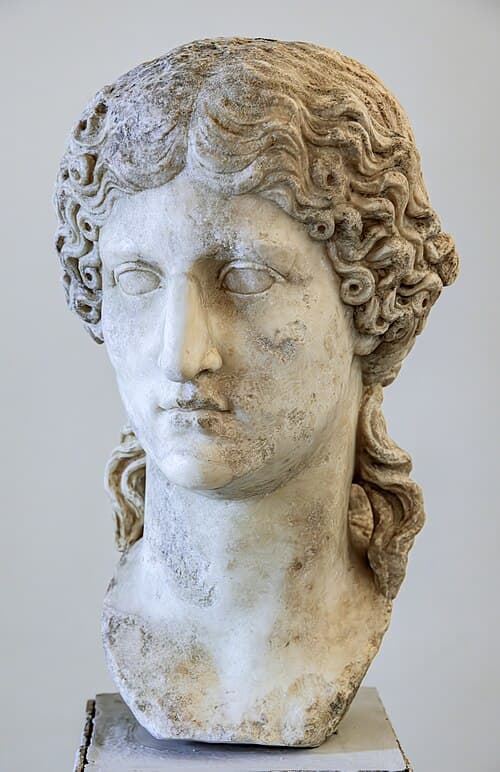
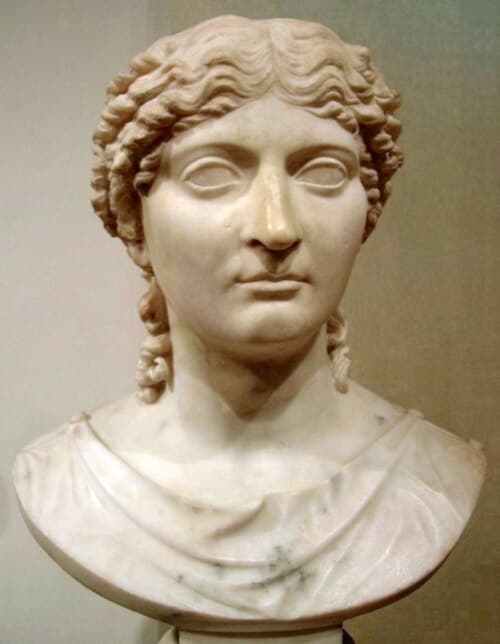
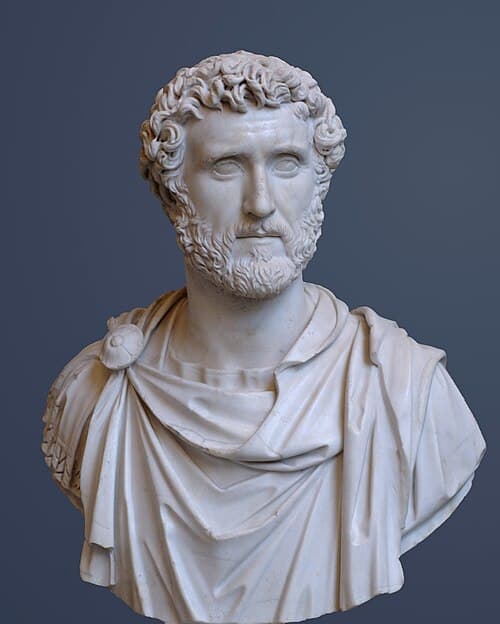
This imaginary interview was generated by artificial intelligence from sources documented in Nero's profile. It dramatises what the figure might have said based on what we know about them, but does not constitute attested historical testimony. For primary sources and factual documentation, refer to the full profile.