Imaginary interview with Nero
by Charactorium · Nero (37 — 68) · Politics · 6 min read
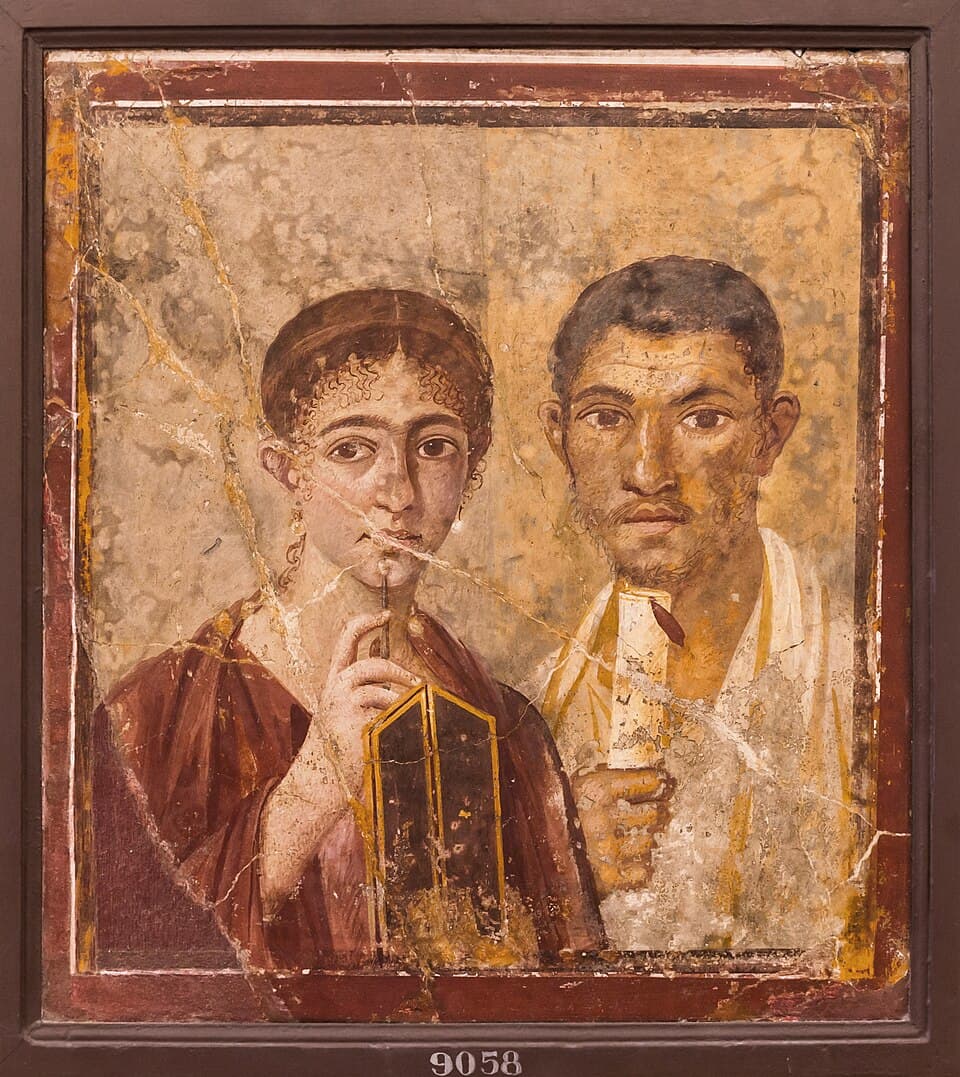
Rome, AD 65. In a room of the Domus Aurea still fresh with plaster, under a dome that turns like the sky, the emperor Nero sets down a cithara and agrees to answer, between two cups, a visitor who has come to question him about his life, his art, and his crimes. Outside, the colossal statue of the Sun watches over; inside, a twenty-eight-year-old man already speaks as if he senses his fall.
—How did you become emperor so young?
They made me the son of Claudius when I was twelve, and they set aside Britannicus, the true blood, to place me before him. My mother Agrippina wanted a throne, and she got it: at seventeen, in 54, the purple mantle fell upon my shoulders. Seneca held my pen, Burrus held my Praetorians, and they say those first years were the sweetest of my reign. But Britannicus was growing up. A banquet, a cup offered, and the child stopped breathing between our dining couches. Poison was murmured; I let them murmur. The career of honors had carried me too quickly, you see: I had not learned to wait for the death of others, so I forestalled it.
—Do you remember the night your mother was supposed to disappear?
She had made me emperor, and now she wanted to rule in my place. A mother who never lets go becomes a chain. I imagined a complicit sea: a rigged ship that would open at sea like a shell and drown her without a hand appearing. But Agrippina swam better than my engineers calculated. She reached the shore, drenched, alive, and I knew there would be no more trickery possible. In 59, I sent men and swords to her chamber. They say she offered them her belly, the one that had carried me. I did not witness that. I only learned that one does not half-kill what one has loved: you must strike twice, and the second time bleeds more than the first.
—Why were you so eager to sing before the people?
Because I felt like an emperor only once I had the cithara in my hands. My master Terpnos, the greatest player of our time, came after every meal and sang until the dead of night; I listened, then I imitated him, until my voice held without trembling. The senators thought it unworthy for a princeps to go on stage — for them, a free man does not put himself on display. But what is a god on earth, if not one whom all come to see? I nurtured my voice like a general nurtures his legions, I lay down with lead weights on my chest to strengthen it. They laughed at my art. I answered them by filling the tiers, and no one had the right to leave his seat before the last note.
What is a god on earth, if not one whom all come to see?
—What did your journey to Greece mean to you?
Greece, at last, knew what an artist was! I had founded the Neronia in Rome as early as 60, modeled on the Hellenic contests — poetry, singing, eloquence — but my Romans saw it as a shameful eccentricity. In 66, I went there, and they crowned me with all the prizes: in the theater, I put on the mask of heroes, sometimes that of a woman in mourning, and my voice made them weep. They will say the judges flattered the master of the world; perhaps. But the echo of a Greek theater does not lie like a senator. I brought back thousands of crowns, and I paraded them through Rome like a triumphator parades his captives. For the old Romans, it was degradation; for me, the only triumph worth weeping for.
—What do you say to those who claim you sang while Rome burned?
Alleyway lie, spread by those who hated me. When the fire broke out in July of 64, I was not even in the city: I was at Antium, my birthplace, on the coast. They rushed to warn me; I returned in haste, and it was I who opened my gardens to the homeless, who brought in grain and lowered its price. The fire devoured ten of our fourteen districts — how could a sane man pluck a lyre before such a disaster? But the people love an image more than a truth, and the image of an emperor singing the fall of Troy on the blazing rooftops was too beautiful to die. I fought it all my life. It will outlive me, I fear, longer than my Greek crowns.
The people love an image more than a truth.
—How did you come to accuse the Christians of the fire?
When Rome had finished burning, in 64, a culprit was needed, because rumor pointed at me. It was whispered that I had set the fire to rebuild the city to my taste. To extinguish this suspicion, I delivered a sect that everyone already despised: the Christiani, those followers of a crucified man from Judea. They were thrown to the beasts, nailed, made into living torches to light my gardens. The crowd, at first delighted by the spectacle, began to pity them — and that pity I had not foreseen. Tradition holds that Peter and Paul perished in this wave of accusations. I did not know them; they were only names among others for me. A prince who is afraid always seeks a pyre to light under someone other than himself.
—After the fire, what did you want to make of Rome?
A city of wood deserves to burn; I wanted a city of stone. I had broad streets laid out, where fire could not leap from roof to roof, porticoes to shelter the people, and I imposed materials that do not burn. The Romans who accused me of burning their city soon lived in safer houses than those of their fathers. Then, on the ashes of Rome's heart, I reserved a domain for myself: the Domus Aurea, my Golden House. Three hundred acres in the heart of the city, gardens, a lake, woods where animals ran. They reproached me for this excess. But when you have seen a city die by fire, you want to build something that fire will never reach again — even if it is a golden palace.
—What was the most extraordinary thing in that Golden House?
At the entrance, I had a bronze statue a hundred feet high erected — myself, as god Sun, dominating the avenue; passersby raised their heads and thought they saw a star. Inside, my architects Severus and Celer had designed a domed hall that rotated slowly, like the vault of heaven above the guests; perfumes fell from the ceiling, petals rained down on the couches. One dined there under the stars without leaving one's bed. I wanted that, upon crossing my threshold, one knew one was entering the home of more than a man. They called me mad to sink so much gold into walls. But the Colossus looks at me every morning with its metal eyes, and sometimes it seems to me that it is the true emperor, and I its fragile fleshly double.
—How did you feel power slipping away from you?
Everything depends on the Praetorian Guard: as long as those swords watch at your door, you are Augustus; the day they look elsewhere, you are no more than a man alone in a great palace. In 68, the legions of Gaul revolted, then those of Spain acclaimed Galba, an old man. I could have marched against them; I hesitated, I wept, I thought of singing to appease them. The Senate, which trembled before me the day before, declared me a public enemy. And my Praetorians, my faithful, my paid men — they did not come. You buy guards, you see; you do not buy their loyalty when the gold runs out. I had emptied the treasury for palaces and crowns. The morning I called them, only the echo of my own voice remained in the corridors.
—And the end, how did you experience it?
At the end, only flight remained. I left Rome at night, on foot, disguised as a slave, face covered, to the villa of a freedman named Phaon, outside the walls. There, cowering like an animal, I already heard the horsemen sent to take me alive and drag me to execution. I could not resign myself to it. I took the blade, my hand trembled, and someone had to help me stab myself in the throat. Before that, they say, I murmured: "What an artist dies with me!" That is what I was, even in the blood: not a tyrant weeping for his throne, but an actor weeping for his audience. The dynasty of Augustus died with me; but what I regretted was not the Empire — it was the stage.
Not a tyrant weeping for his throne, but an actor weeping for his audience.
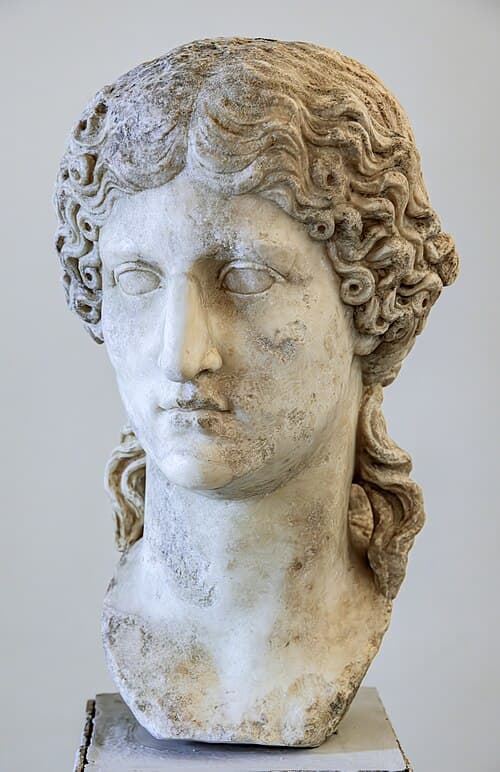
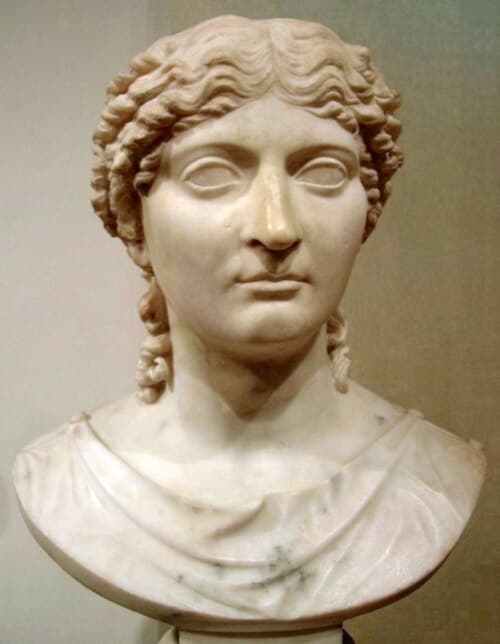
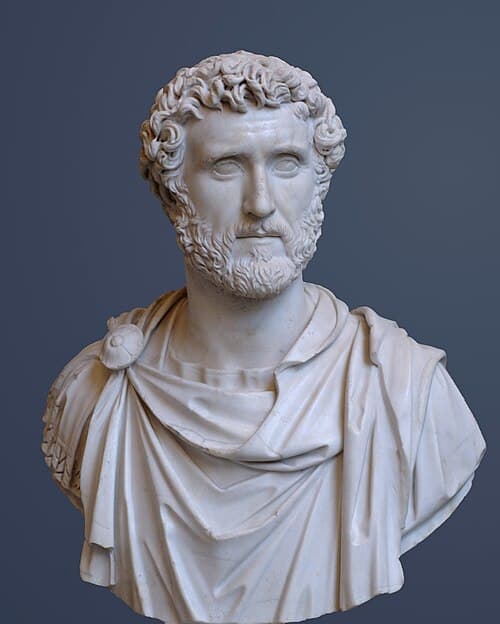
This imaginary interview was generated by artificial intelligence from sources documented in Nero's profile. It dramatises what the figure might have said based on what we know about them, but does not constitute attested historical testimony. For primary sources and factual documentation, refer to the full profile.