Imaginary dialogue between George Westinghouse and Nikola Tesla
by Charactorium · Nikola Tesla (1856 — 1943) · Sciences · 6 min read
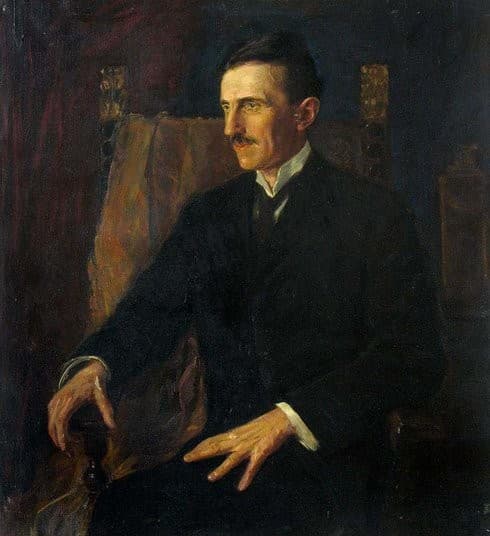
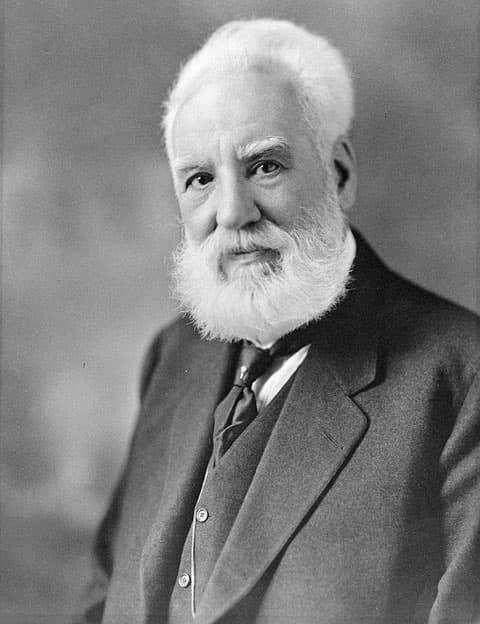
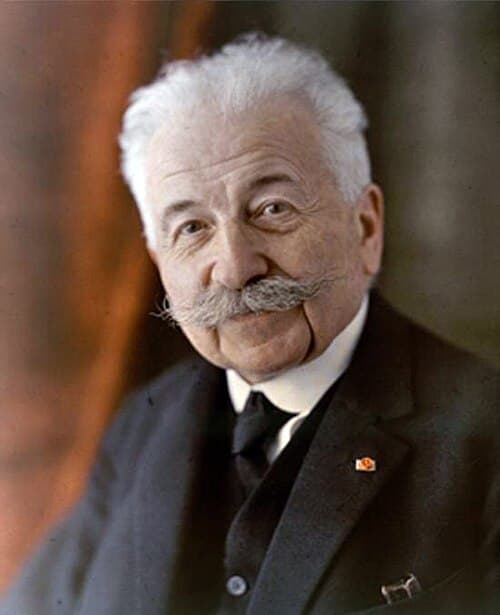
It is in the laboratory on Fifth Avenue, on a winter evening in 1910, that George Westinghouse finds Nikola Tesla among the vacuum tubes still glowing with a blueish light. The air smells of ozone and hot copper. The two men have known each other for over twenty years—since the day the Pittsburgh industrialist bought the patents that would revolutionize the electrical industry. Westinghouse comes without a notebook or witness, only with the desire to make both the friend and the inventor talk.
—Nikola, do you remember 1888, when you sold me your patents on alternating current? Edison called you a dangerous dreamer back then.
How could I forget, George? You came to me when all New York laughed at alternating current. Edison electrocuted dogs in public to frighten the crowds, as if my system were nothing but a killing machine. I saw the opposite: a tamed force, capable of traveling hundreds of leagues where his direct current exhausted itself after a few blocks. When you bet your fortune on my patents, you weren't buying drawings—you were buying a certainty I carried within me. And we had our revenge: in 1893, it was my light that illuminated the Chicago World's Fair before the whole world. That day, the War of Currents was won, not by shouts, but by demonstration.
Edison electrocuted dogs in public; I saw a tamed force, capable of traveling hundreds of leagues.
—Before me, you worked for Edison himself. What broke that alliance, in 1885?
Money, George, and contempt for ideas. I crossed the Atlantic with a few coins and a letter of recommendation, convinced I would find a master in Edison. I improved his dynamos, promised him results, and he promised me a sum he never paid—he laughed, saying I didn't understand American humor. But it wasn't about currency: our minds could not meet. He fumbled, trying a thousand filaments until one worked. I first saw the entire machine in my head, finished, before laying a hand on any tool. When I left him, I dug ditches to live. Then you appeared—and you kept your word.
He fumbled, trying a thousand filaments; I first saw the entire machine in my head, finished.
—Speaking of which, this way of conceiving everything mentally has always amazed me. Tell me honestly: do you really never draw your plans?
Rarely, George, and only for others. Since childhood, I have carried within me a gift—or a burden—that lets me conjure an image with absolute clarity. I build the motor in my mind, I start it, I watch it run for weeks, and I look for the point of wear exactly as if the object sat before me. When I finally build it in metal, it works on the first try, because all errors have already been corrected in the invisible. My greatest discoveries came to me this way, intuitively, sometimes in a state close to daydreaming. Paper only confirms what I have already seen. Your engineers took me for a sorcerer; it was only concentration pushed to the extreme.
I build the motor in my mind, I watch it run for weeks, and I look for the point of wear.
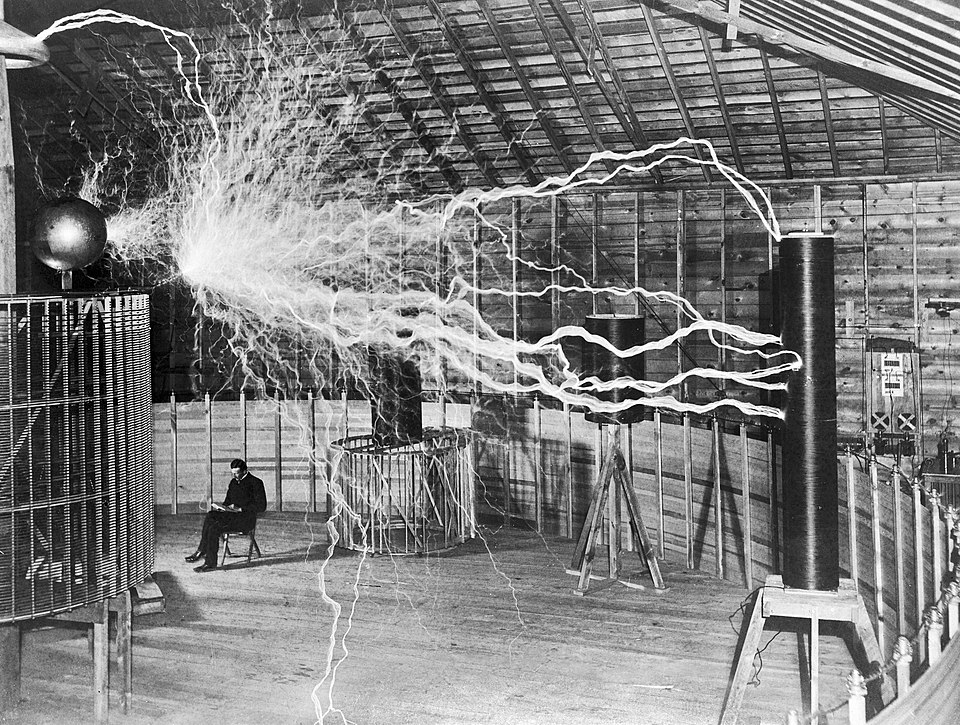
—I have heard extraordinary things about your laboratory in Colorado, in 1899. Were those real lightning bolts you were making?
Real, George, and far more terrifying than those from the sky. At Colorado Springs, I erected my magnifying transmitter, the Magnifying Transmitter, and I produced discharges over thirty meters long, whose thunder was heard twenty-four kilometers away. The locals thought it was the end of the world; I burned out the town's dynamo and plunged the entire district into darkness. But the marvel was not the noise: I lit two hundred lamps forty kilometers away, without a single wire. Do you understand what that means? That the Earth itself can conduct energy, that resonance allows us to send light through the ground like a wave through water. That evening, I held in my hand the proof that cables would one day become useless.
I lit two hundred lamps forty kilometers away, without a single wire.
—You speak of resonance, of ether. These words, I confess, go beyond the industrialist I am. What exactly are you trying to capture?
You understand me better than you say, George, you who knew how to industrialize my rotating field. Resonance is that moment when a system accepts a frequency and returns it amplified, like a swing pushed at the right instant: a tiny effort produces a huge oscillation. My coils, those transformers that raise voltages to dizzying heights, are based on this principle. As for the ether, that invisible medium that scientists assume fills space, I believe I can use it, and even more so the Earth, as a gigantic conductor. Imagine: a man in Paris and another in New York drawing the same energy, without copper stretched between them. That is what I pursue—not one more machine, but the abolition of distance itself.
Not one more machine, but the abolition of distance itself.
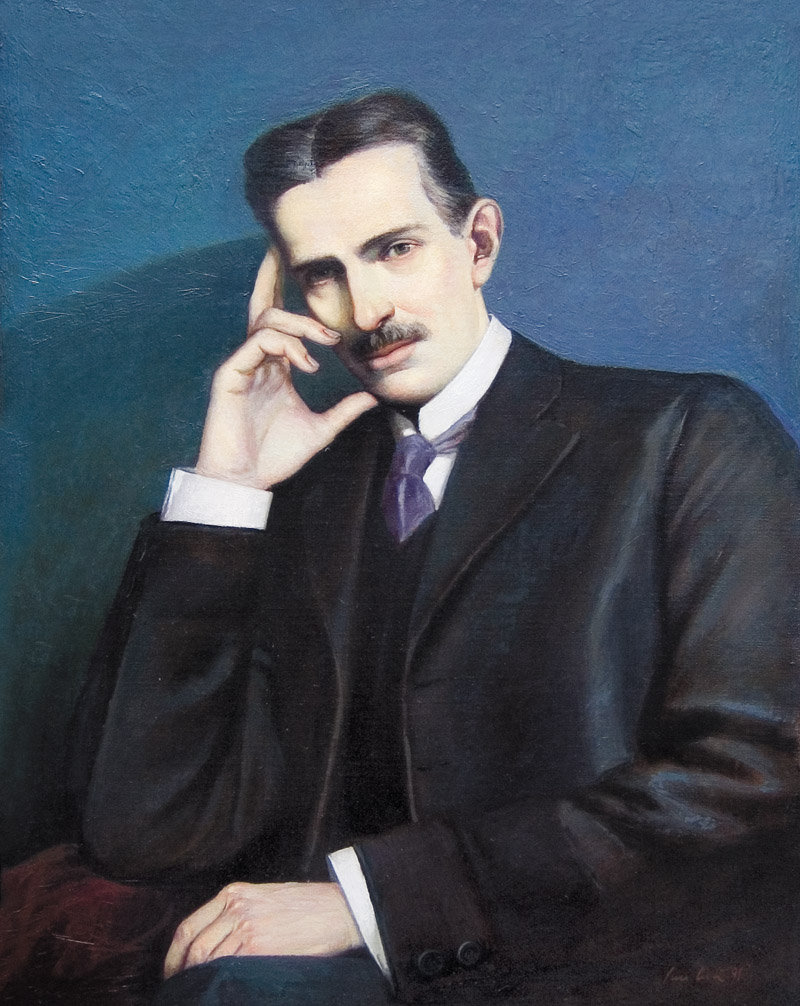
—Our most lasting triumph remains Niagara, no doubt. When did you know, you, that we had truly won?
At Niagara, George, the day our alternators sent the force of the falls to Buffalo, thirty-five kilometers away. As a child, I had already seen in imagination a great wheel driven by those waters; I spoke of it to my father as a dream. And there that dream stood in steel, designed according to my patents, yours and mine united. It was not just a plant: it was the first time humanity took a wild river and sent it to work in a distant city. All doubts about alternating current died that day, more surely than at Chicago. When the first lamp in Buffalo lit up through the grace of Niagara, I knew our struggle had not been a quarrel, but the beginning of a new world.
Humanity took a wild river and sent it to work in a distant city.
—Let's talk about Long Island, my friend. That Wardenclyffe tower you built for Morgan—what did you really expect from it?
Everything, George—perhaps too much. At Shoreham, I raised a fifty-seven-meter tower that was to be the heart of a world system: transmitting voice, image, and above all energy, to any point on the globe without a single wire. I wrote to Morgan that I could light a ship in the middle of the ocean or carry a message from one continent to another. He funded the beginnings, then withdrew when he understood that this energy, precisely, could not be metered or sold by the yard. Without money, the tower remained silent, immense and inert above the sands. It is my greatest ambition and my deepest wound: I had the plan for a connected world, and I lacked not the idea, but the gold to finish it.
I had the plan for a connected world, and I lacked not the idea, but the gold to finish it.
—That failure cost you dearly, I know. Are people still angry at you, the man who gave light to the world?
I am forgotten more than resented, George, and forgetting costs more than hatred. Financiers remember lost money, never the doors one has opened. I filed over three hundred patents across some twenty countries, yet today I live on my calculations more than on my coffers. But you see, I do not regret aiming so high. A prudent man would have built one more lamp; I wanted to change the very condition of humanity. If I am wrong about the timing, I am not wrong about the direction. Time, which crushes fortunes, is fairer than bankers: it will eventually vindicate those who saw far. I work for time, not for my contemporaries.
A prudent man would have built one more lamp; I wanted to change the condition of humanity.
—Allow an old friend a more intimate question. You are said to be strange in your habits—this taste for numbers, this solitary life. Is it true?
True, George, and I do not hide it from you. The number three governs me: I walk around a building three times before entering, I count my steps, I demand that the linen in my room be in multiples of three. A pearl on a lady's neck makes me so ill I cannot speak to her. These laws I impose on myself, I do not fully understand them, but they calm me and free my mind for what matters. I live alone, in a hotel, without wife or home, because a great work demands that one sacrifice everything else. I eat little—milk, honey, vegetables—and I believe this sobriety maintains the clarity of my thought. Men find me odd; I simply feel tuned to a different frequency.
Men find me odd; I simply feel tuned to a different frequency.
—One last, Nikola. When work leaves you in peace, in the evening, what softens the solitude of a man like you?
Very little, George, and that is just as well. I often dine alone at Delmonico's, at my table, always the same one, where they know my quirks and let me think. In the evening, I write, I correspond, I conceive in silence inventions that no one yet expects. And when I walk through the city, it is the pigeons that hold me back: I feed them, I care for them, there are some I recognize among thousands. You may laugh, but these birds ask me for neither patent nor dividend; they accept what I give, simply. An inventor lives in the future, and the future is a country without companions. So I take my friendships where life offers them—with an old loyal partner like you, or on a windowsill, among gray wings.
An inventor lives in the future, and the future is a country without companions.
This imaginary interview was generated by artificial intelligence from sources documented in Nikola Tesla's profile. It dramatises what the figure might have said based on what we know about them, but does not constitute attested historical testimony. For primary sources and factual documentation, refer to the full profile.