Imaginary interview with Odin
by Charactorium · Odin · Mythology · 5 min read
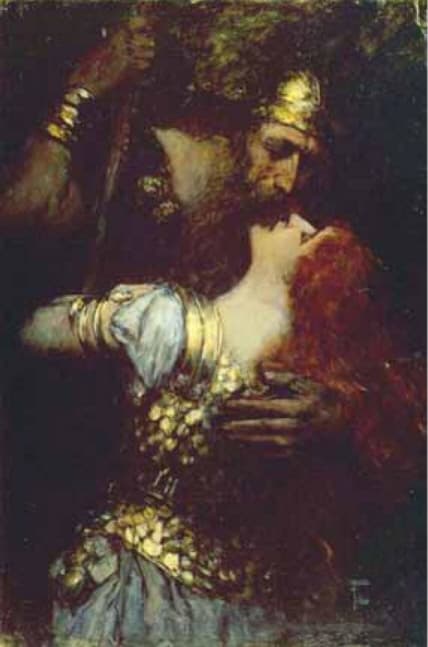
At the foot of the tree Yggdrasil, where nine worlds knot into a single trunk, a traveler found a one-eyed old man, hooded, a dark blue cloak thrown over his shoulder, two ravens dozing near him. He did not say his name — he bears too many — but he agreed to speak, in a low voice, as one confides a costly secret.
—They say you hung yourself from the world tree. What exactly were you seeking up there?
I hung on the wind, nine full nights, on Yggdrasil, wounded by my own blade, offered to myself by myself. No one gave me bread, no one gave me the horn — I stayed there, swaying between worlds, until my eye fell toward the roots and there discerned, screaming, the runes. I seized them, and in seizing them I fell from the tree. Understand well: wisdom is not a gift received asleep. It is paid for in wakefulness, in hunger, in willing pain. What men call seidr, that magic, is nothing other than what I tore from the night by ceasing to fear my own end.
Wisdom is not a gift received asleep. It is paid for in wakefulness, in hunger, in willing pain.
—You have only one eye. How did you lose the other?
I sold it, and I do not regret the bargain. At the foot of the tree murmurs the well of Mimir, and whoever drinks its water sees the entire cosmos with a single glance of the mind. Mimir, the guardian, gives no credit: he wanted a pledge worthy of his water. So I placed my right eye in the spring, and it still rests there, gleaming beneath the dark wave. Since then, I see less of the outer world, but more of the inner — the fates, the taut threads, the end that comes. When men draw my face half-hidden under my broad-brimmed hat, they are not wrong: a god who wants to know everything must accept seeing not everything.
A god who wants to know everything must accept seeing not everything.
—Your two ravens rarely leave you. What role do they play for you?
Each dawn, from my hall Gladsheim, I release them to the wind: Huginn, Thought, and Muninn, Memory. They cross the nine worlds before men have finished their first meal, and at evening they return to perch on my shoulders, beak to my ear, whispering all that the earth has plotted. I confess a fear I speak only here: I tremble for Huginn, that he might not return — but even more for Muninn. For a god to lose thought is grave; to lose memory is to cease to be. From my throne Hlidskjalf I see far, but it is my ravens who bring me what seeing alone cannot understand.
For a god to lose thought is grave; to lose memory is to cease to be.
—How did the first humans come into the world?
My brothers Vili and Vé walked with me on a grey shore, at the beginning, when salt and wood were still all there was. There lay two stranded trunks, without breath, without fate: an ash and an elm. I bent down and gave them breath — the breath of life. Vili poured into them spirit and motion of heart, Vé gave them senses and speech. Thus were born Ask and Embla, and with them all the race that populates Midgard. That is why I never turn my gaze from men for long: they are not my subjects, they are my handiwork. They call me All-Father, and that name I earned on a beach, my hands full of dead wood.
They are not my subjects, they are my handiwork.
—You speak of knowledge that costs. Would you say that knowledge is always worth its price?
Ask my eye, at the bottom of Mimir's well. Everything truly mine, I obtained by yielding something else: an eye to drink the cosmos, nine nights on the gallows for the runes, the mead of the giants for the gift of song I brought to the skalds. The other gods feast and think ruling is enough; I know that one must constantly pay again. For I see Ragnarök coming, where the wolf will swallow me despite all my knowledge — and I accept it. The price of knowledge is not only what one gives to acquire it. It is to know one's own end, and still walk toward it, straight, without turning my one eye aside.
The price of knowledge is to know one's own end, and still walk toward it.
—What happens each evening in the great hall where you welcome the dead?
At dusk, the doors of Valhalla open to a thousand warriors who fell with honor, the Einherjar. My Valkyries chose them on the battlefields and led them to me, for I do not take just anyone — I take the best. By day, they kill each other in the courtyard for the joy of steel; by evening, their wounds close, and we feast on mead and meat that never runs out. Men think I reward them. The truth is harsher: I gather them. I need an army for the last morning, when everything will burn. Every hero I win is one more blade against the coming night.
Men think I reward them. The truth is harsher: I gather them.
—From your throne, you see the nine worlds. Does this omniscience weigh on you?
Sitting on Hlidskjalf, I cast my gaze everywhere at once: the shepherd of Midgard bringing in his cattle, the giants sharpening their grudges in Jötunheim, the quivering of the tree's roots. But you see, seeing all is not knowing all — that is why I send Huginn and Muninn to probe what my eye cannot penetrate. And there is one thing even my throne imposes on me without mercy: I see Ragnarök approaching as one sees a storm rising on the horizon, slowly, surely. Believe me, omniscience does not soothe. It robs the god of the only comfort mortals keep: ignorance of the day of one's death.
Omniscience robs the god of the only comfort mortals keep: ignorance of the day of one's death.
—What use are those runes you brought back from your ordeal?
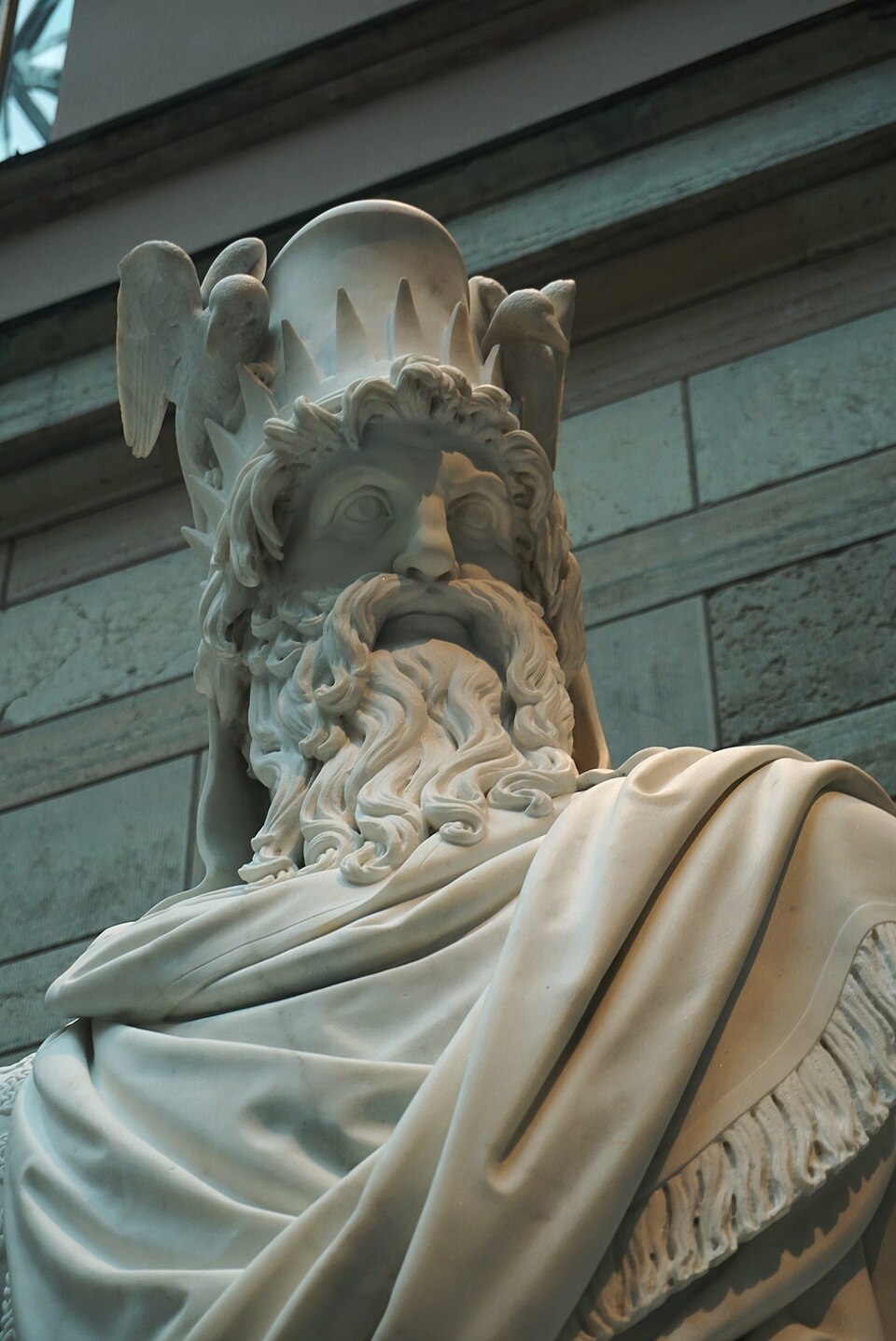
A rune is not a mere mark carved on stone or wood. It is a knot of power. I know some that soothe grief, that blunt an enemy's sword, that give speech to the hanged and stop the blood from a wound. I won them screaming on Yggdrasil, and later I taught them, strand by strand, to men worthy to bear them — for a power kept to oneself rots. The skalds who weave their verses, the völvas who read the future in knucklebones, all draw from the spring I opened that night. Writing, among my people, was never a mere scribe's trade. It is touching the very fabric of fate.
A rune is not a mark on wood. It is a knot of power.
—You say you watch over men. What do you expect from them in return?
Courage, and moderation. I gave breath to Ask and Embla on that grey shore, but I did not promise them an easy life — only a life worth living standing up. I often walk among them, under a broad hat and a traveler's cloak, to test their hospitality: whoever shares his horn with the weary stranger honors the All-Father without knowing it. Goods pass; my ring Draupnir drips endless gold, and yet gold is nothing. What endures, I know better than anyone, is a man's renown after death. Cattle die, kinsmen die — the reputation of a brave man never dies.
Cattle die, kinsmen die; the reputation of a brave man never dies.
—You often speak of this end of the world. Why all this knowledge if you cannot prevent it?
They consult the völvas, they question the dead, they watch for omens — and everything converges on the same morning: Ragnarök. The wolf will break his chains, the serpent will rise from the seas, and the Einherjar I have patiently gathered in Valhalla will march with me toward a battle I will lose. Why know, then? Because to know one's end without turning away from it — that is what it means to rule. I do not gather my warriors to defeat fate — no one defeats it — but to face it in order, spear Gungnir in hand, rather than as a panicked herd. And there is, beyond the fire, a new world that springs from the ashes. Wisdom, in the end, is to prepare what one will not see.
To know one's end without turning away from it — that is what it means to rule.
Read further
This imaginary interview was generated by artificial intelligence from sources documented in Odin's profile. It dramatises what the figure might have said based on what we know about them, but does not constitute attested historical testimony. For primary sources and factual documentation, refer to the full profile.