Imaginary dialogue between Marie-Antoinette and Olympe de Gouges
by Charactorium · Olympe de Gouges (1748 — 1793) · Politics · Literature · 6 min read
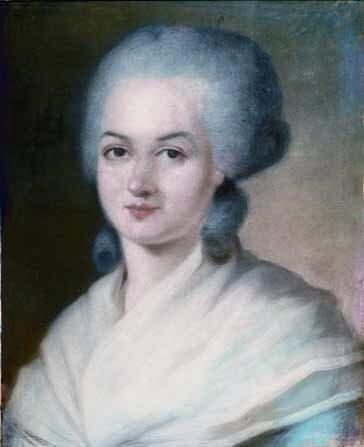
It is in a high room of the Tour du Temple, in this month of December 1792, that Marie Antoinette receives Olympe de Gouges. Outside, Paris judges the king; inside, a candle trembles on the cold stone and the prisoner clutches a shawl around her shoulders. The two women know each other from afar: one dedicated her Declaration of the Rights of Woman to the queen last year, the other did not respond. Today, it is the deposed sovereign who questions the polemicist who has come, it is said, to offer to defend her husband.
—Madame de Gouges, last year you dedicated your Declaration of the Rights of Woman to me. Why me? What did you expect from a queen?
Madame, you remember those pages, then. I wrote to you then without the adulation of courtiers, wanting to speak frankly to you—for I thought that a woman placed so high could hear the cause of all others. You were the first lady of the kingdom; if you championed our right, who would refuse it? I knew the risky gamble. I was reproached for reaching out to an Austrian woman when the people were grumbling. But I do not write for parties, I write for justice. A queen who defends women is better than a queen who is listened to only for her balls. You did not reply, Madame. I bear you no grudge: thrones make one deaf, and prison, perhaps, will sharpen the ear.
I do not write for parties, I write for justice.
—I have been told that you took the men's Declaration of 1789 and rewrote it article by article. Defiance or mockery?
It was both, Madame, but above all a demonstration. The Declaration of the Rights of Man and of the Citizen spoke of universal man—and meant by that only the male. So I took that sacred text and copied it, article after article, putting woman back wherever she had been forgotten. Let no one say I invented: I only restored to the text the half of humanity it had left at the door. The form was a weapon: no one could condemn my articles without condemning theirs. At first they laughed, then they worried. That is because a mirror, Madame, is always more troubling than a pamphlet: it reproaches nothing, it shows.
—Your first article proclaims, it is said, that woman is born free and equal to man. Does that not overturn the entire established order?
You quote correctly, Madame: woman is born free and remains equal to man in rights; social distinctions can only be based on common utility. Overturn the order? I say rather complete it. A Revolution was made in the name of nature and reason, then the door was shut in the face of half the human race. If woman can mount the scaffold, she must be able to mount the rostrum. Equality is not a favor granted, it is a fact recognized. Those who tremble before my first article tremble in truth before their own principle, from which they have not dared to draw all the consequences.
—It is whispered, Olympe, that you claim to be the daughter of a marquis. A queen knows how to recognize blood—where do you really come from?
You have a sharp eye, Madame. I am said to be the daughter of the Marquis Le Franc de Pompignan, and I long let the rumor run. The truth is humbler: I was born Marie Gouze, in Montauban, to a mother who kept a stall at the market. Married too young, widowed too soon, I learned to read and write well after the age when the young ladies of your court are already playing the harpsichord. In your salons, a market-girl's daughter does not enter through the front door; so I invented one. It was not vanity, but strategy: for my ideas to be read, I first had to be admitted into the room. I even changed my name—Olympe, I chose it myself. It was not given to me, I took it.
—Before our misfortunes, you had a play about black slaves performed at the Comédie-Française. What drove you to that?
Before the Bastille, Madame, yes. I had written The Slavery of the Blacks, and it took years for it finally to be performed at the Comédie-Française, in 1789. The actors hesitated, pushed by the colonial lobby, which did not want the suffering of those from whom sugar and gold are extracted to be shown on a great stage. What drove me? I cannot bear that a man be chained because of the color of his skin, any more than a woman be chained because of her sex. It is the same injustice, Madame, under two faces. Whoever claims freedom for himself and refuses it to others does not love freedom: he loves only his privilege.
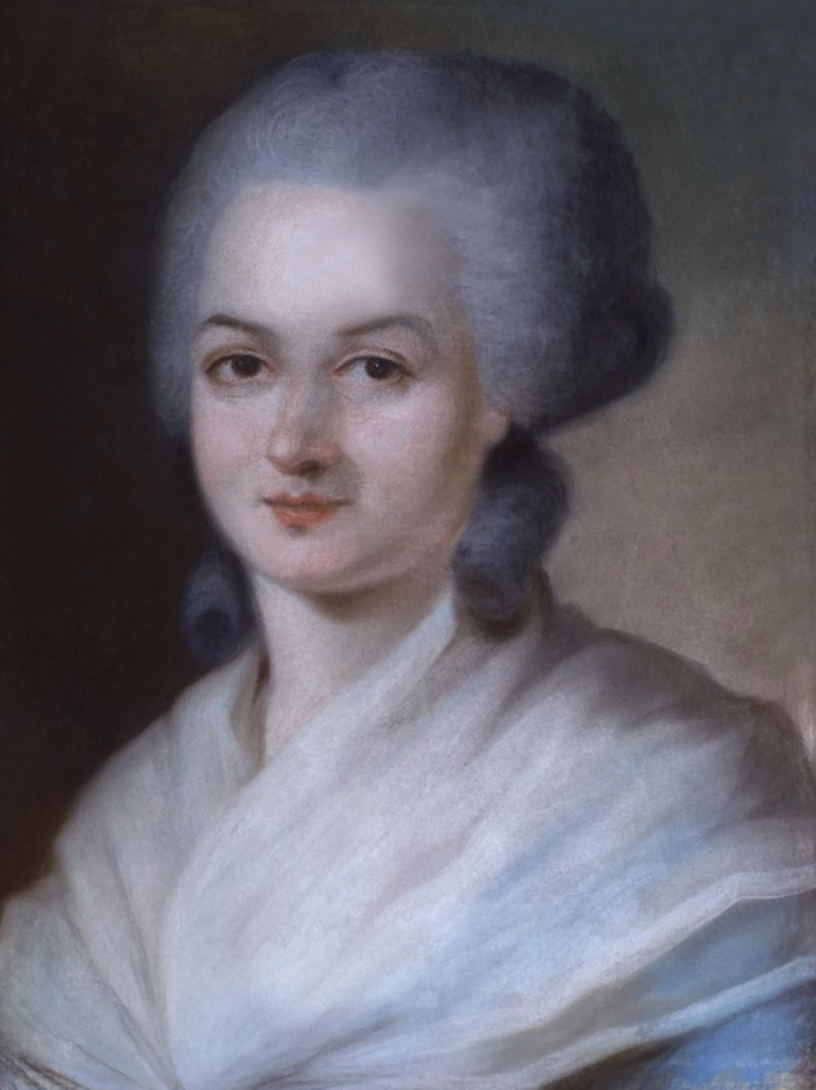
—The colonists, it is said, made you many enemies. Do you truly believe that a trade that enriches the kingdom can be abolished?
My enemies are rich, Madame, and numerous. I had published as early as 1788, even before the Revolution, my Reflections on Black Men, and the colonists never forgave me. I am told the trade enriches the kingdom—true, as theft enriches the thief. A wealth built on chains is not prosperity, it is a debt that nations will one day pay. I know well that a trade two centuries old is not undone by a single edict. But to begin is already to cover half the journey. The colonies will cry ruin; they were already crying when I wrote. I answer them that no profit is worth selling children in the marketplace.
—Olympe, I learn that you offer to defend the king before his judges. You, a republican—why this peril for my husband?
Madame, I can guess how surprising this news must have been to you. Yes, I offered to defend the king, and I would do so before any tribunal. I am thought your enemy because I am for the Republic; they are mistaken. I hate the scaffold as much as I hate tyranny. To condemn a man without defense, even if he be king, is not to do justice, it is to do vengeance—and a nation that begins with vengeance will not end in freedom. I do not love the crown, Madame, but I do not want a man killed in the name of the people when he is not dared to be judged in the name of the laws. I will pay for it, I know. So be it: I prefer a peril that honors me to a prudence that would make me blush.
A nation that begins with vengeance will not end in freedom.
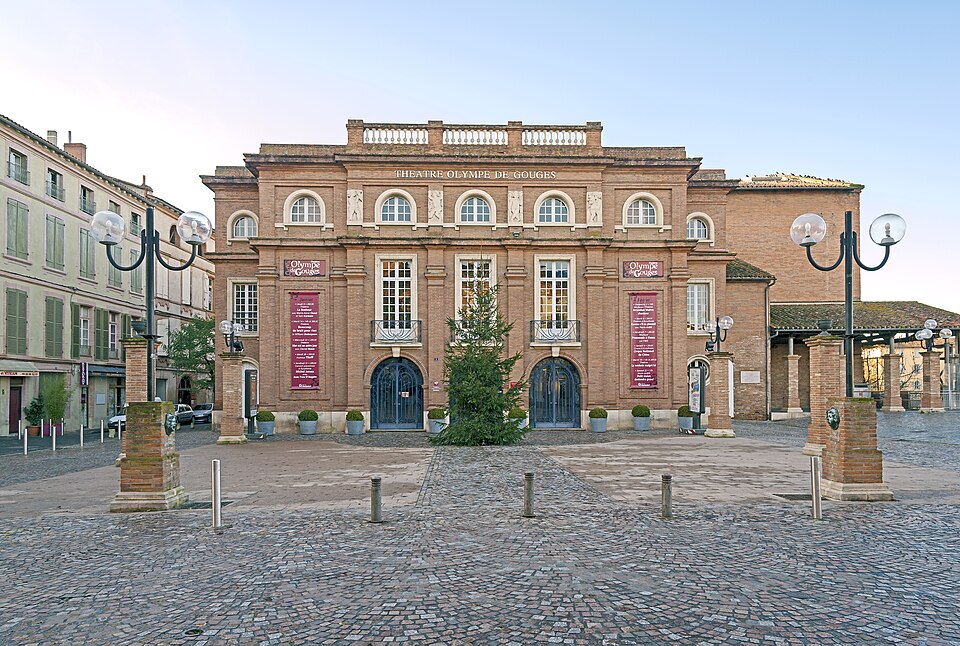
—You are seen posting your writings on the walls of Paris. Are you not afraid that these Montagnards, who hate me, will turn against you?
I post them, yes, Madame. The poster is my rostrum, since women are denied that of the Assembly. I paste my thoughts on the walls of Paris so that passersby may read them, and too bad if they disturb. These Montagnards you name have seized the Revolution as one seizes booty; they tolerate neither contradiction, nor especially a woman opposing them. Robespierre and his followers want a Republic of a single voice—theirs. I answer them with a thousand posters. Afraid? I would be very foolish not to be afraid. But silence also has its price, and a higher one: it is paid with shame. I would rather risk my head than keep it empty and bowed.
—We both know, Olympe, where courage leads in these cruel times. Are you not afraid of the blade?
Afraid? I would be lying to say no. The blade spares no one, neither queens nor market women from Montauban. But see, Madame: one is born once and dies once; between the two, one must choose what one serves. I have written too much to back down now. If I am taken, let them at least know why: for wanting women to be citizens, Blacks to be men, and that no one be killed in the name of liberty. These are crimes for which I will never ask forgiveness. A thought put down on paper cannot be guillotined. They can cut off the hand that writes; they cannot cut off what is already read.
They can cut off the hand that writes; they cannot cut off what is already read.
—When this storm has passed, what do you think will remain of your struggles for women?
What will remain? I do not know, Madame, the future cannot be commanded. But I have sown. In my The Philosopher Prince, I dared to write that laws have been made by men alone, and that they have always sought to enslave women, as if women had not been created to share their virtues and their glory. One day, these lines will seem simple common sense, and people will marvel that they had to be defended. The women who come after will perhaps read my Declaration and wonder why it was considered scandalous. I will not see that day. But a seed does not ask to see the tree; it is content to sprout. I have done my part; let them do theirs.
Read further
This imaginary interview was generated by artificial intelligence from sources documented in Olympe de Gouges's profile. It dramatises what the figure might have said based on what we know about them, but does not constitute attested historical testimony. For primary sources and factual documentation, refer to the full profile.