Imaginary interview with Olympe de Gouges
by Charactorium · Olympe de Gouges (1748 — 1793) · Politics · Literature · 6 min read
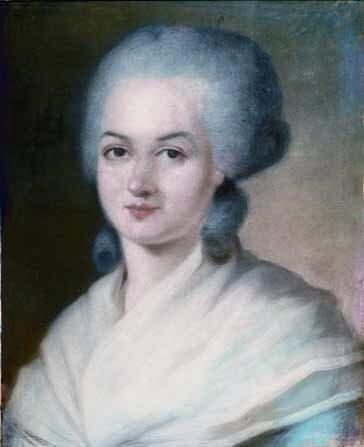
Paris, autumn 1791. In a Right Bank apartment cluttered with sheets and printer's proofs, a candle is burning down on a writing desk. Olympe de Gouges has just had her latest Declaration posted; she receives us with ink still on her pen, her gaze sharp as one who knows that words sometimes lead to the scaffold.
—Before Paris, there was Montauban. How did a child of that southwestern town become the woman of letters we know?
I was born Marie Gouze, in 1748, in a house in Montauban where every penny was counted before it was spent. My mother sold at the market; no one expected Latin or fine letters from me, only a good marriage and silence. I learned to read and write very late, almost in secret, like stealing fire. So when I arrived in Paris a young widow, I forged another birth: I called myself the natural daughter of the Marquis Le Franc de Pompignan. I was reproached for this lie; I claim it. The door of a salon does not open to a shopkeeper's daughter, but it cracks ajar for a well-born bastard. I took that name like one takes an oar to keep from drowning.
I took that name like one takes an oar to keep from drowning.
—You insistently claim the word citoyenne. Why does it matter so much?
Because a word is a frontier. They say Madame, they say Mademoiselle, and you are sent back to the hearth, the needle, the silence of housekeeping. But citoyenne—that is a word that brings you into the nation through the front door. In 1791, the Assembly invented the active citizen, the one who pays, who votes, who counts; and from this new man they carefully erased half of the species. When I sign citoyenne, I do not describe a status, I claim a right. I place this title before my name like one plants a flag on land one intends to occupy. As long as a single man calls himself citizen and forbids me to be one, this word will remain my sweetest insolence.
When I sign citoyenne, I do not describe a status, I claim a right.
—Let us speak of your most famous text. How did you get the idea to rewrite the Declaration of the Rights of Man?
The text of 1789 lay on my table, that Declaration of the Rights of Man and of the Citizen that all Paris was going on about. I read it one evening, article after article, and each line seemed a magnificent palace whose women's door had been walled up. So I did the simplest and most scandalous thing: I copied it, slipping my sex into every article. Where they said man, I wrote woman. My first article hits straight: "Woman is born free and remains equal to man in rights." It was not a commentary, it was a break-in. I took their monument and added the staircase they had forgotten—the one by which we would all climb.
I took their monument and added the staircase they had forgotten.
—You dedicated this Declaration to Queen Marie Antoinette. Was that not a risky gamble?
A gamble, yes, and I knew it was probably lost in advance. But see my logic: if a woman reigned over France, then at least one woman should defend the cause of women! I wrote to her without flattery—I told her straight out that I would not use "the adulation of courtiers" and that my goal was to speak to her frankly. I expected her to use her influence for our oppressed half. She did nothing, naturally; thrones hear only their own preservation. I was later reproached for this dedication as royalist treason, when it was nothing but a summons disguised as homage. I reached out a hand to a queen; I should have known that a crown never bends downward.
—Long before the Revolution, you were already writing against slavery. Where did that indignation come from?
It came from an obvious truth that no one wanted to see. As early as 1788, in my Réflexions sur les hommes nègres, I wrote that the color of skin gives no right to own it. Then I brought slavery where it disturbs most: onto the stage. My play L'Esclavage des Noirs showed men in chains in our colonies, and the colonial lobby delayed it for years, terrified that people would weep in the theater for those they whipped in the islands. It was finally performed at the Comédie-Française in 1789. The slave trade fattened all of France; to call it a crime was to make enemies in every port. I gladly made them. You do not wake sleeping consciences without making some fortunes creak.
You do not wake sleeping consciences without making some fortunes creak.
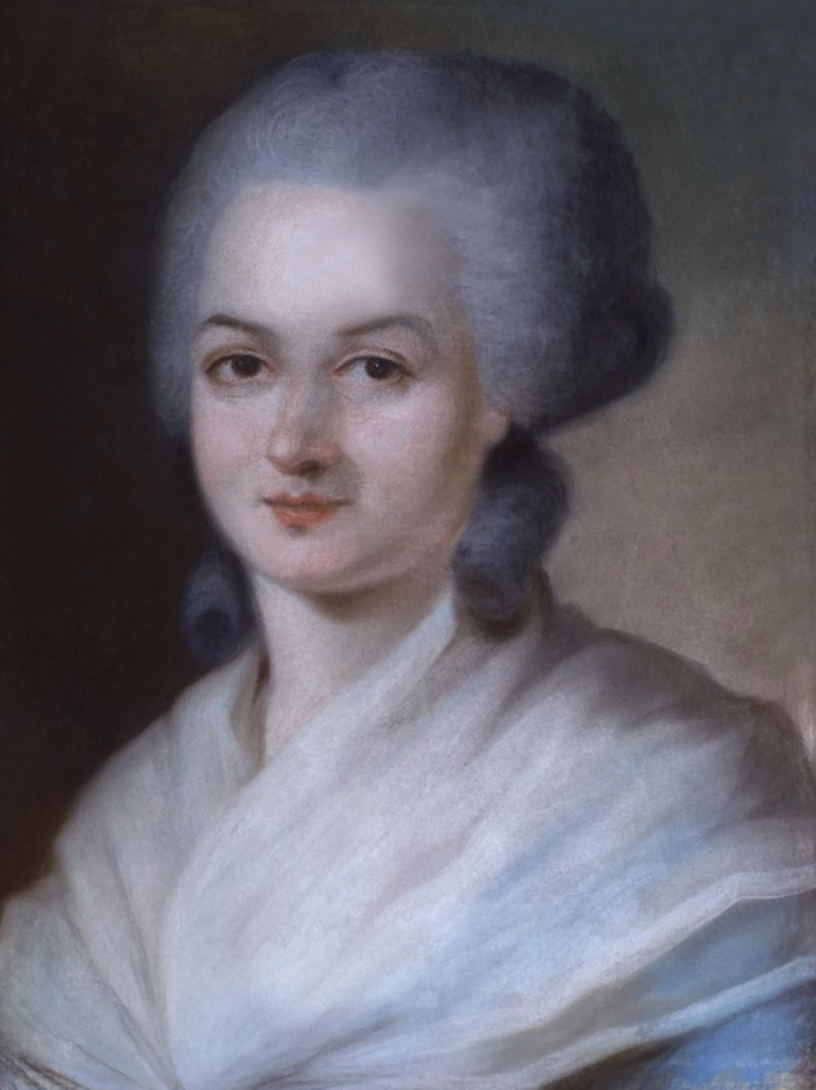
—To have such a play performed on the kingdom's foremost stage—was that not as much a provocation as a work?
The two are hardly distinct in my case. A national stage is a platform where the people see what they are forbidden to think. The actors balked, urged on by colonial men who feared for their sugar profits; I was told a woman had no business bringing such a subject before the public. But abolition will not be won in philosophers' studies alone—it will be won when an ordinary spectator, moved to tears, can no longer lie to himself. I wanted the slave to have a face, a voice, a pain heard from the pit to the boxes. Theater was my poster before the poster, my pamphlet played aloud. To make people cry, sometimes, is already to begin to liberate.
—A committed revolutionary, you nevertheless opposed the execution of Louis XVI. How do you explain that?
Because justice is not vengeance, and a Republic that opens its reign with a scaffold seems ill-born to me. When the king was tried, in 1793, I offered to defend him myself before the tribunal—I who had never loved kings! They thought I was betraying. I was abandoning only one thing: the illusion that you make peoples free by spilling blood in floods. This stance earned me the hatred of the Montagnards, those men on the high benches who believed they alone owned the Revolution. I saw that the Terror was advancing, that they would govern by fear what they claimed to found on reason. I preferred to save a condemned man rather than howl with the pack.
A Republic that opens its reign with a scaffold seems ill-born to me.
—You knew that defying the Montagnards could cost you dearly. What kept you from staying silent?
Nothing kept me, that is my misfortune and my pride. Robespierre and Marat had turned virtue into a guillotine and suspicion into law; whoever doubted them became an enemy of the people. I saw women's clubs being born and they were already preparing to ban them; I saw the freedom I had been promised shrink a notch every day. To be silent would have been to consent. But I never knew how to keep my pen in its sheath when injustice paraded about. My goose quill and inkwell served as my sword, and one does not reproach a soldier for dying with weapon in hand. I wrote against them knowing they held the blade; but a prudent courage is no longer quite courage.
A prudent courage is no longer quite courage.
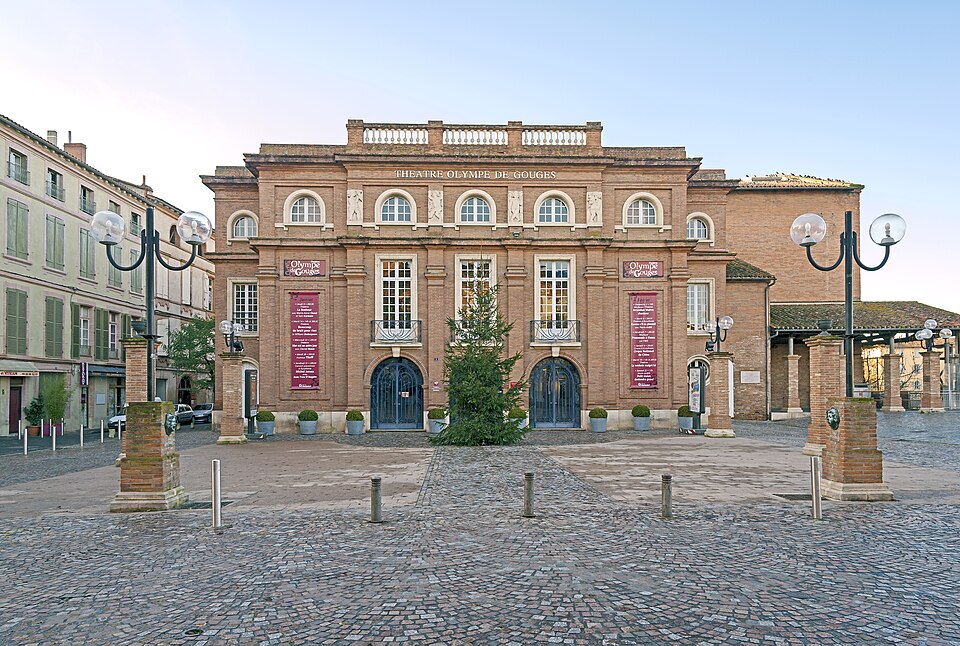
—It is said that a simple poster precipitated your fall. What did it say?
A poster, yes—that is how it all ends for me. In the summer of 1793, I had posted in Paris a Les Trois Urnes, in which I proposed that the people themselves choose by vote the form of their government: monarchy, republic, federation. To ask the people's opinion—that was a crime in the eyes of those who claimed to embody them! The printed poster was my way of always making the street my platform, when the Assembly was closed to me. I was arrested for that paper glued to a wall. Consider the irony: I was reproached for wanting to consult that sovereign people in whose name so many heads were being cut off. My last public act was a question put to the citizens—and I was sent to die for having dared to ask it.
My last public act was a question put to the citizens.
—Facing condemnation, you tried a last resort. Do you remember those final weeks?
I remember them as one remembers a too-clear dream. Imprisoned, condemned, I pleaded pregnancy—a stratagem that the law recognized to suspend the blade. The court's doctors concluded that I was lying; I was probably lying, for there is no shame in wanting to live a little longer to write a little more. Then I set down my last lines, what I called my Testament politique. I wrote that I died "victim of my passion for the fatherland and for the people," and that its enemies, under a hypocritical mask, had led me to the tomb. On November 3, 1793, I was taken to the Place de la Révolution, the very place where the king I had wanted to defend had lost his head. I mounted without trembling: my pen had said all that my voice would no longer have time to say.
I set down my last lines knowing that my pen would outlive me.
—If you could imagine being read a century or two from now, what would you like to remain of you?
What a strange sweetness that thought is. I do not know if the future will be fairer than my present; men forget quickly and willingly repeat their mistakes. But if I am still read, let it be that single sentence, the first of my Declaration: "Woman is born free and remains equal to man in rights." Everything else—my plays, my pamphlets, my posters plastered at night—is only the commentary on that line. I wrote in a century that proclaimed the natural rights of man while leaving woman at the door. If in a hundred years a young girl from Montauban learned to read and came across these words, and they finally seemed obvious to her, then I will not have mounted the scaffold for nothing.
Everything else is only the commentary on that line.
Read further
This imaginary interview was generated by artificial intelligence from sources documented in Olympe de Gouges's profile. It dramatises what the figure might have said based on what we know about them, but does not constitute attested historical testimony. For primary sources and factual documentation, refer to the full profile.