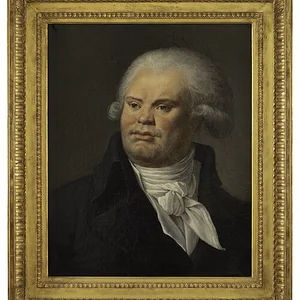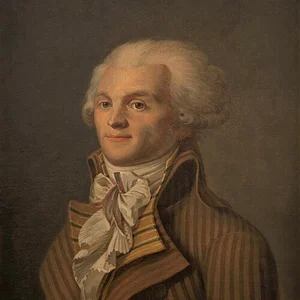

French lawyer and politician (1758–1794), Robespierre was a central figure of the French Revolution. Leader of the Montagnards, he dominated the Committee of Public Safety and became the embodiment of the Reign of Terror before being executed in 1794.
Robespierre(1758 — 1794)
Maximilien de Robespierre
France
8 min read
Frequently asked questions
Famous Quotes
« Virtue without which terror is destructive; terror without which virtue is powerless.»
« The secret of freedom lies in educating people.»
Key Facts
- 1789: Elected as a deputy to the Estates-General, champions republican ideals
- 1791–1792: Influential member of the Jacobin Club and the Legislative Assembly
- 1793–1794: Dominates the Committee of Public Safety and directs the Reign of Terror (approximately 16,000 executions)
- 1794: Eliminates political rivals (Hébert, Danton) to consolidate his power
- July 28, 1794: Arrested and guillotined during the Thermidorian Reaction
Works & Achievements
A speech to the Constituent Assembly arguing for the abolition of the death penalty — a courageous stance at the time. Tragic irony: Robespierre would go on to become one of the chief architects of the executions of the Terror.
A foundational text in which Robespierre theorizes the link between virtue and terror as twin pillars of revolutionary government. This speech remains the most cited document for understanding his political vision.
A newspaper founded and written by Robespierre to promote his republican ideas and attack the Girondins. It helped him consolidate his ideological influence within the revolutionary movement.
A speech in which Robespierre stood virtually alone in opposing the declaration of war, anticipating the dangers an offensive war would pose to the Revolution. It demonstrated a remarkable degree of strategic foresight.
A report that led to the arrest and execution of Danton and his allies. It illustrates the ruthless logic of the Terror and the growing paranoia of the Committee of Public Safety.
In this speech, Robespierre officially established the Cult of the Supreme Being, a civic religion intended to replace both Christianity and atheism. This theocratic initiative contributed to his growing isolation within the Convention.
Anecdotes
As a young lawyer in Arras, Robespierre defended a client against the Compagnie des mines d'Anzin in 1782, arguing on behalf of the humble against the powerful. This reputation as a champion of the poor earned him the nickname 'Lawyer of the Poor' long before the Revolution.
Elected to the Estates-General in 1789, Robespierre was so little known that a contemporary described him as wearing threadbare clothes and looking around anxiously. A few years later, he would be the most powerful man in France.
Robespierre was famous for his extreme care over his appearance: he always wore a neat coat, a powdered wig, and a touch of rouge, even during the darkest hours of the Terror. His contemporaries noted that he always looked impeccable, as though he wished to embody the republican ideal of virtue himself.
On 8 Thermidor Year II (July 26, 1794), Robespierre addressed the Convention, announcing that he held a list of traitors — without naming them. This ambiguity so terrified his colleagues that they united against him the very next day: his own lack of specificity hastened his downfall.
At the Festival of the Supreme Being on June 8, 1794, Robespierre presided over the ceremony dressed in a sky-blue coat, holding a bouquet of flowers. He set fire to a statue representing Atheism, from which a statue of Wisdom was meant to emerge — but smoke blackened it, which his enemies took as an ill omen.
Primary Sources
I come to implore, not the Gods, but men, not tyrants, but my fellow citizens, to halt the course of these disastrous errors. I intend to prove that the death penalty is essentially unjust.
The driving force of popular government in times of revolution is both virtue and terror: virtue, without which terror is ruinous; terror, without which virtue is powerless.
What is the nature of the government that can bring about such wonders? Democratic or republican government. These two words are synonymous, despite the abuses of common language.
I am your defender and your friend; I have no ambition other than to serve the cause of the people and of liberty.
Key Places
Robespierre's birthplace, where he was born in 1758 and practiced as a lawyer. It was here that he built his reputation as a defender of the common people before being elected to the Estates-General.
Housed in the former Dominican convent on Rue Saint-Honoré, this club was the main hotbed of revolutionary radicalism. Robespierre became its undisputed leader and delivered many pivotal speeches there.
The revolutionary assembly that governed France from 1792 to 1795, where Robespierre sat among the high benches of the Mountain faction. It was here that he was arrested on 9 Thermidor Year II (July 27, 1794).
Robespierre lodged with the carpenter Maurice Duplay from 1791 until his arrest. This modest home, a symbol of his outward simplicity, served as a gathering place for revolutionary activists.
The site of Louis XVI's execution in January 1793, and of Robespierre's own on July 28, 1794. This square stands as a tragic symbol of where the Reign of Terror ultimately led.
Typical Objects

Robespierre tirelessly drafted speeches, reports, and correspondence with a quill pen. His careful handwriting and meticulously prepared texts reflected the intellectual rigor of a man shaped by Enlightenment education.

Robespierre frequently wore a sky-blue or sea-green coat, a mark of his studied elegance. Unlike many revolutionaries who affected a disheveled appearance, he maintained a polished and deliberate style of dress.

The execution device adopted by the French Revolution for its supposedly 'egalitarian' nature, the guillotine is inseparable from the Reign of Terror that Robespierre embodied. In a twist of fate, he ultimately fell victim to it himself.

Robespierre founded and wrote this newspaper in 1792 to spread his political ideas to a wider audience. In its pages, he championed popular sovereignty and attacked the enemies of the Republic.

The ultimate symbol of the Revolution, this red cap embodied republican liberty. Although Robespierre personally kept his distance from the radicalism of the sans-culottes, he presided over assemblies where this symbol was everywhere.

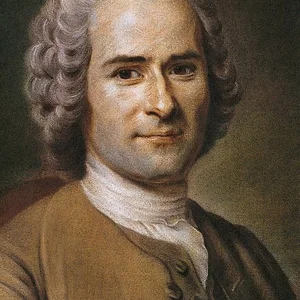
Robespierre considered himself a disciple of Jean-Jacques Rousseau and had met the philosopher in his youth. Rousseau's ideas on the general will and civic virtue permeated every aspect of his political action.
School Curriculum
Vocabulary & Tags
Key Vocabulary
Tags
Concept
Daily Life
Morning
Robespierre rose early and began his day with a careful grooming routine: he paid great attention to his appearance, powdering his wig and adjusting his outfit with precision. He would then read the revolutionary newspapers and correspondence received from the provinces before preparing his speeches.
Afternoon
His afternoons were dominated by sessions of the Committee of Public Safety and the National Convention, which could stretch on for many hours. He frequently took to the floor to defend his positions, and met with delegations of citizens or Jacobin activists.
Evening
Evenings were often devoted to drafting speeches and political reports in the Duplay household. He sometimes received close associates such as Saint-Just or members of the Jacobin Club for intimate political discussions, drinking sparingly and eating frugally.
Food
Robespierre led a sober and frugal life, in keeping with his image of republican virtue. He ate simply at the Duplays', enjoying the meals of the artisan family that housed him. He had little inclination for the excesses at the table that characterized some of his contemporaries.
Clothing
Unlike many revolutionaries who adopted a slovenly appearance to seem closer to the common people, Robespierre always wore a neat outfit — often sky blue or grey-green — with white stockings and a powdered wig. This studied elegance was part of his image as a virtuous and irreproachable man.
Housing
From 1791 onward, Robespierre lodged in the home of the carpenter Maurice Duplay on the Rue Saint-Honoré, near the Jacobin Club and the Convention. His room was simple, reflecting the republican frugality he preached; his hosts, who deeply admired him, treated him as a member of the family.
Historical Timeline
Period Vocabulary
Visual Style
Style néoclassique inspiré de Jacques-Louis David : compositions austères et dramatiques, contrastes forts, palette sobre de bleus profonds, blancs républicains et rouges révolutionnaires, évoquant la gravité morale de la Révolution française.
Sound Ambience
L'ambiance sonore de la Paris révolutionnaire des années 1790 : foules politisées, débats enflammés à la tribune, bruits de rues pavées et presses à imprimer diffusant les idées nouvelles.
Liens externes & ressources
Références
Œuvres
Discours sur la peine de mort
1791
Rapport sur les principes de morale politique
5 février 1794
Le Défenseur de la Constitution (journal)
1792
Discours sur la guerre (opposition à la guerre contre l'Autriche)
Janvier 1792
Rapport sur les factions de l'étranger et la conjuration de Danton
Mars-avril 1794
Discours sur l'Être suprême
7 mai 1794