Kids interview Pablo Neruda
by Charactorium · Pablo Neruda (1904 — 1973) · Literature · 5 min read
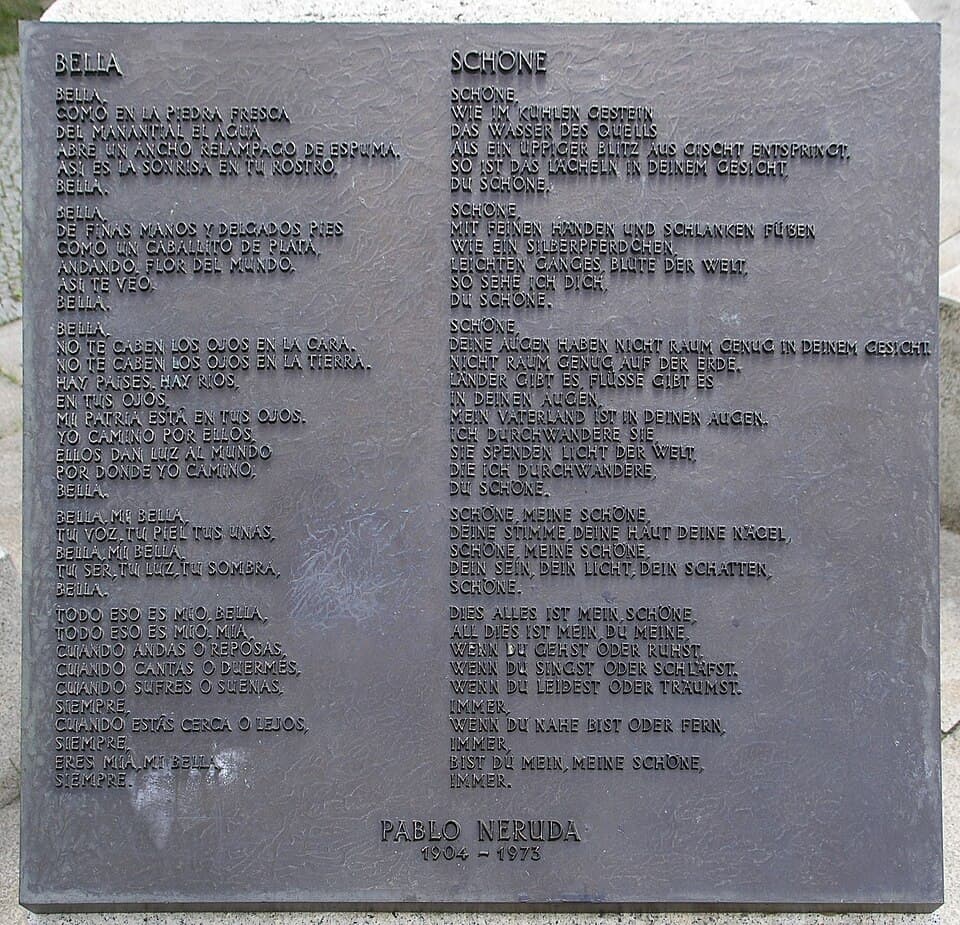
That morning, two middle-school students on a field trip push open the gate of a house facing the Pacific. An old poet in a felt hat greets them with a smile. His name is Pablo Neruda, and he has so many stories to tell.
—Is it true you wrote with ink of a funny color?
Yes, my child! I wrote by hand, with green ink. For me, green was the color of hope, the color of leaves and young shoots. Imagine: I got up very early, before any friends arrived. I sat at my window in Isla Negra, and watched the sea move. Then my hand traced verses, slowly, like planting seeds. I never typed my poems: I caressed them onto the paper. A day that begins with a poem, you see, is a day that can't be all bad.
I wrote in green, because green is the color of hope.
—What was your house like? Were there lots of weird things?
Oh, you can't imagine the joyful clutter! My house in Isla Negra was filled from floor to ceiling. Thousands of seashells, corals, carved wooden ship prows, large female figures gazing at the ocean. On the beaches, I collected everything the sea gave me. I even had miniature locomotives, because my father was a railroad worker and I've loved trains since I was little. My house was a museum that I lived in. And all those humble objects—the onion, the artichoke, a simple pair of socks—I sang about them in my Odas elementales. Because poetry can live in the most ordinary things.
My house was a museum that I lived in.
—You had a best friend who was a poet, right? Who was it?
Yes. His name was Federico García Lorca. When I was consul in Madrid in the thirties, we spent whole evenings laughing and reciting verses. Federico had a joy that lit up an entire room, like a living lamp. There, I hung out with a whole group of young Spanish poets called the Generación del 27. They were my brothers. Having a friend like Federico, my child, is like having a sun beside you: you warm yourself without even thinking. I didn't know yet that this sun would go out suddenly, and that everything inside me would be shaken.
—And what happened after? Why did you become so politically engaged?
A terrible thing happened. In 1936, the Civil War broke out in Spain. And armed men shot my friend Federico, just because he was a poet and free. You know, that day, something broke inside me, then hardened like iron. I could no longer write only about love and the sea. I took the side of the suffering Spanish people, and I wrote a collection, España en el corazón, 'Spain in the heart'. It was even printed at the front, in the midst of battle. That's when my poetry stepped into the street, never to leave it again.
That day, something broke inside me, then hardened like iron.
—They say your greatest book tells the story of all of America. Is that true?
It's true! I called it Canto General, the 'general song'. A canto, my child, is a song, a long poem that celebrates an entire people. Imagine a book that goes back in time, from the first forests and rivers to today's miners and peasants. More than three hundred poems! I wanted to tell the story of my whole continent, its mountains, its sorrows, and its hopes. For years, I carried it inside me like a river. When it came out in 1950, it was translated all over the world. It's the work I'm most proud of, because it doesn't belong to me: it belongs to everyone.
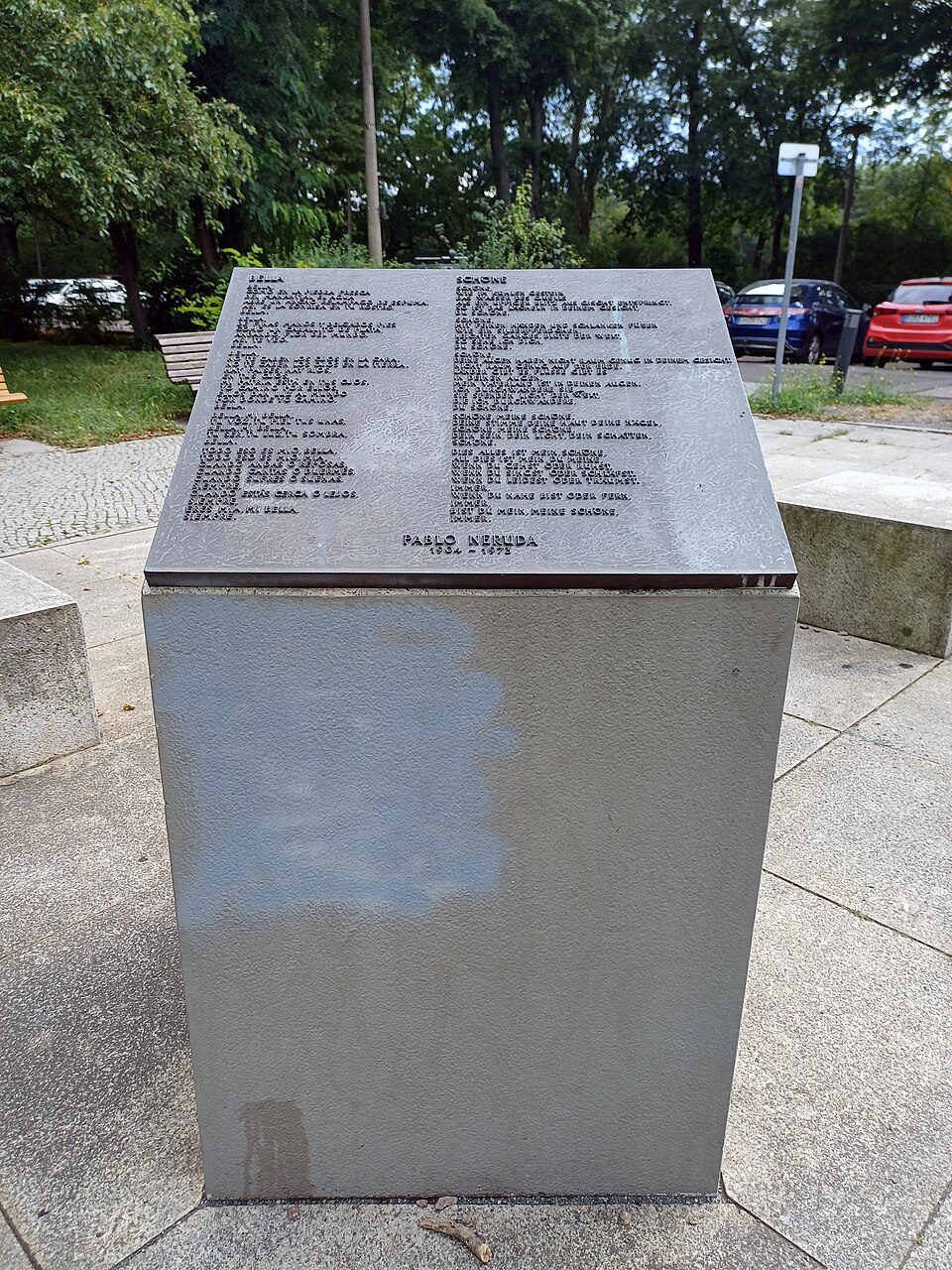
—You wrote about a lost city in the mountains? How did it feel to see it?
Ah, Machu Picchu! I climbed up there, in the Andes, to that ancient stone city suspended in the clouds. Imagine immense walls, perched at the top of the world, and a silence so great you can hear your own heart. I thought of all the unknown men who had carved those stones and whom no one remembered. So I reached out to them across the centuries. In my poem, I call a forgotten brother: 'Sube a nacer conmigo, hermano', 'Climb up to be born with me, brother'. Because the pyramids, the temples—it's never the kings who build them: it's the poor, with their hands.
It's never the kings who build the temples: it's the poor, with their hands.
—Is it true you accused the president in front of everyone?
Yes, and my heart was beating fast! I had become a senator, and I had supported President González Videla. But once in power, he betrayed the workers who had brought him there and began persecuting them. So in January 1948, I stood up in the Senate and gave a great speech called 'Yo acuso', 'I accuse'. Before everyone, I denounced him. Imagine the room going silent, and one man speaking the truth aloud. I knew it would cost me dearly. But a poet who stays silent when his people are crushed, my child, is no longer a poet at all.
A poet who stays silent when his people are crushed is no longer a poet.
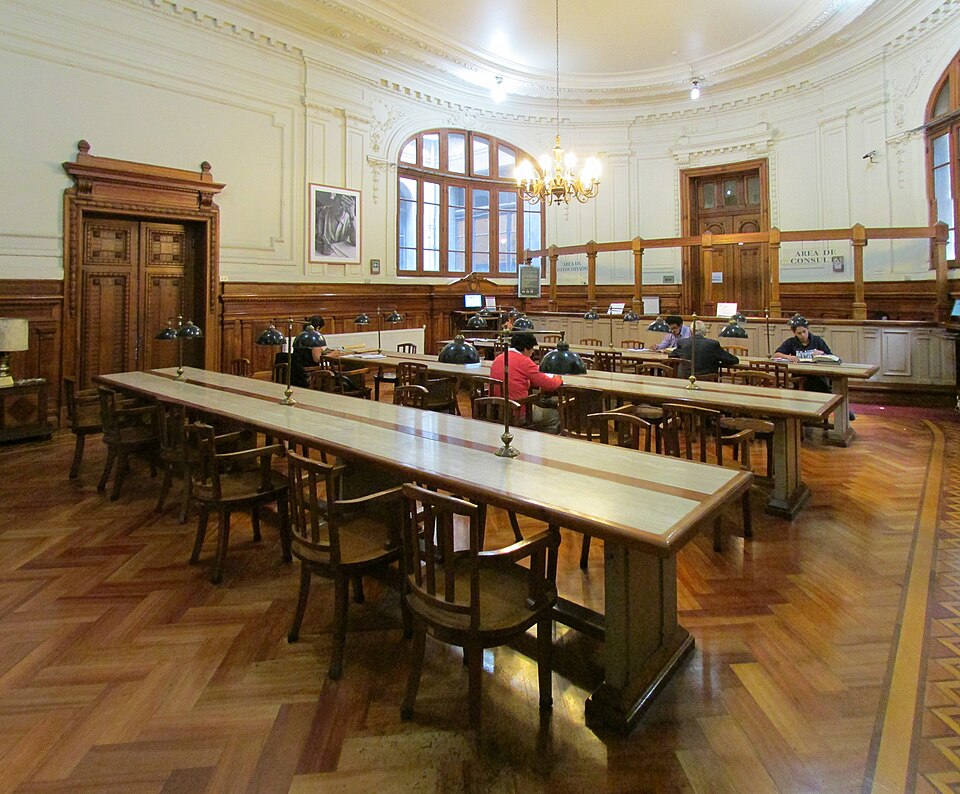
—And after that, you had to flee? How did you do it?
They tried to arrest me. So I had to hide, then flee my own country. And the only route was over the Andes, those giant mountains, on horseback, in the dead of winter. Imagine the biting cold, snow up to your knees, trails where a horse could slip into the void. Friends guided me in secret. They called it exilio, exile: being forced to leave your land because you think differently from those in power. I was afraid, yes. But looking at those immense peaks, I told myself: a country with such beautiful mountains cannot belong forever to liars. And I crossed the border, alive.
—Were you happy when you won the big prize, the Nobel Prize?
Happy, yes… but it was bittersweet. I received the Nobel Prize for Literature in 1971, in Stockholm, under the northern snow. A lifelong dream! Except, you see, I was already very ill, consumed by cancer. My body knew that time was running out. In my speech, I said something simple: 'the poet is not a little god.' I am not above other men; I am a baker who kneads words instead of bread. You know, receiving such a great light just before evening makes that light even more precious. You look at each thing as if seeing it for the last time.
I am not a little god: I am a baker who kneads words.
—If we could keep just one thing from you, what would it be?
What a beautiful question to end with, my child. My last days were terrible: twelve days before my death, in September 1973, soldiers seized power by force, a golpe, a coup. My friend President Allende fell. They even ransacked my house in Santiago, La Chascona. Everything seemed broken. And yet, what I want to leave you is not that sadness. It is this: poetry is an act of peace, it builds as much as war destroys. Keep your eyes open on the sea, pick up seashells, write what you love. As long as a child reads a poem aloud, no soldier can truly win.
As long as a child reads a poem aloud, no soldier can truly win.
This imaginary interview was generated by artificial intelligence from sources documented in Pablo Neruda's profile. It dramatises what the figure might have said based on what we know about them, but does not constitute attested historical testimony. For primary sources and factual documentation, refer to the full profile.