Imaginary interview with Paul Verlaine
by Charactorium · Paul Verlaine (1844 — 1896) · Literature · 6 min read
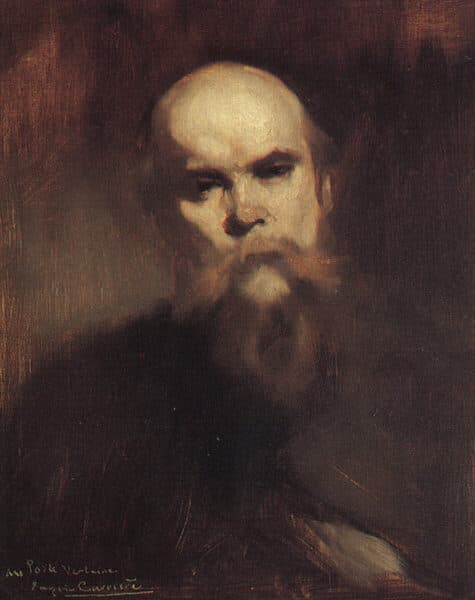
Winter 1895, a smoky café in the Latin Quarter, at the hour when gas lamps yellow the smoke. Before a half-empty glass of absinthe, a balding man with the weary look of a faun agrees to speak — his voice hoarse, broken by coughing fits, but his eye still bright. Here is Paul Verlaine, Prince of Poets and king of the poor, as he tells his story.
—You began in the Parnassian circles. How did poetry enter your life as a young man in Paris?
I was twenty, or thereabouts, and Paris was swallowing me whole. I dragged my youth from the Left Bank to the tables of the Parnasse contemporain, that journal which published my first verses in 1866, the year of Poèmes saturniens. They thought me impassive, a sculptor of cold marble as Leconte de Lisle demanded; but already, beneath the Parnassian varnish, a languor was eating at me. The Chanson d'automne was born there, in that first collection — 'Les sanglots longs / Des violons / De l'automne' — while the others polished their sonnets like medals. I wanted the verse to weep softly, to tremble. The café was already my true workshop: a paper tablecloth, a pencil, and that buzz of voices around which was worth all the libraries.
—What did you mean by that famous phrase, 'Music before all else'?
That's everything, in that line I threw out like a cry: 'De la musique avant toute chose, / Et pour cela préfère l'Impair / Plus vague et plus soluble dans l'air, / Sans rien en lui qui pèse ou qui pose.' You see, I distrust words too sure of themselves, alexandrines that clatter like boots on cobblestones. I prefer the odd-numbered line, seven or nine syllables, something that limps a little and sings better. Poetry is not a demonstration, it is a mist; it must suggest, brush against, never grasp with both hands. I collected these principles in Jadis et Naguère, in 1885, but I had carried them inside me for a long time, like a tune you hum before knowing the words.
Poetry is not a demonstration, it is a mist.
—Do you remember Arthur Rimbaud's arrival in your life?
September 1871. A letter, poems, signed by an unknown seventeen-year-old from Charleville. I had never read anything like it — a thunderbolt. I wrote him to come, and I believe I said: 'Come, dear great soul, we call you, we await you. Here life is better for our common work.' I had been married only a short while, La Bonne Chanson had just sung my happiness with Mathilde, and then that brilliant, brutal kid entered my house like one enters a fire. Everything burned: my household, my peace, my reason sometimes. But from that devastation emerged something — those Romances sans paroles written on the roads of England and Belgium, where meaning finally dissolves into pure sensation.
—What really happened in Brussels, in July 1873?
July 1873, the hotel on Rue des Brasseurs. We had been tearing each other apart for months, he and I, like two beasts chained together. He wanted to leave, again. I had drunk, a lot. I took that double-barreled pistol and fired — twice. One bullet went through his wrist. A scratch, really, but it was enough to make me a criminal. I was sentenced to two years, which I served in Mons prison. I seek no excuse: I was drunk on him as much as on absinthe, and love, for me, never knew how to do without violence. That gunshot broke our story cleanly, like breaking a glass — and it, paradoxically, saved me from myself.
I was drunk on him as much as on absinthe, and love, for me, never knew how to do without violence.
—How did that prison cell lead you to God?
The cell in Mons was bare, and I even more so. I later wrote, in Mes Prisons: 'I had lost everything — wife, family, friends, health — and I found myself alone in that cell, facing God and my poetry.' That is exactly it. When you have nothing left, there remains the sky through a high, barred window. A chaplain lent me a catechism; I asked for a Bible and a rosary. It was not a thunderclap, but a slow ascent, like a drowning man regaining the surface. I had not become wise — that word would be far too big for the drunkard I remained — but I had found a direction, a fixed point toward which to turn my distress.
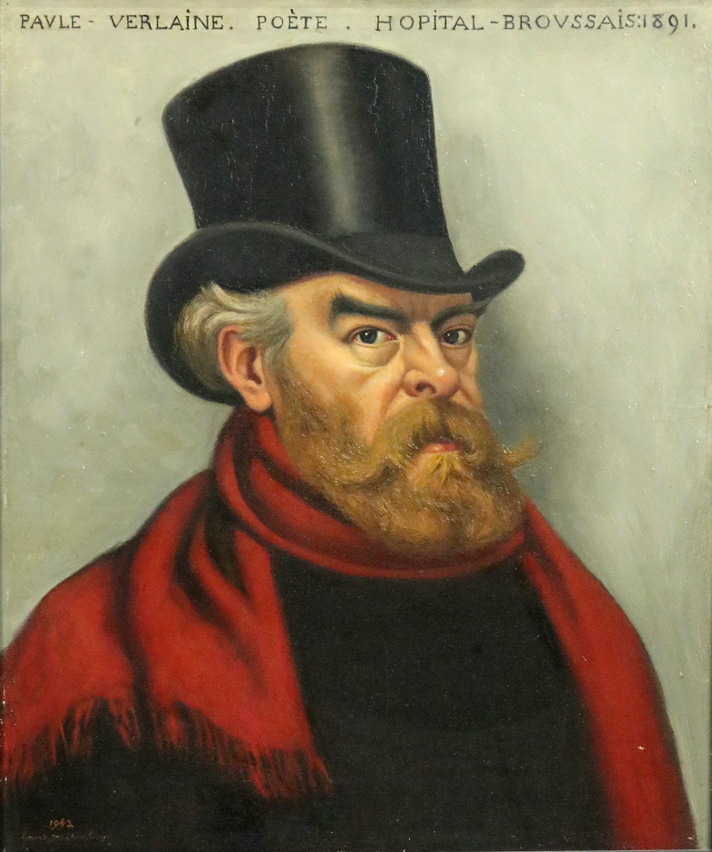
—Sagesse was born from this ordeal. What does this collection represent for you?
Sagesse, published in 1881, is my book of the converted prisoner, the one where I think I touched the truest note. You hear a man on his knees, no longer playing clever. After the fevers of Romances sans paroles, after all that noise, I wanted a poetry of the interior, of repentance, almost a church murmur. Many are surprised that a man like me — drinker, violent, fallen — could write those verses of faith. But it is precisely because I had fallen so low that the sky seemed so high and so desirable. I never stopped falling again, alas, absinthe always reclaimed me; but Sagesse remains the proof that there was, in me, a moment of true light.
It is precisely because I had fallen so low that the sky seemed so high and so desirable.
—You are called the father of Symbolism. Do you recognize yourself in that movement?
Labels, you see, I leave to the manifesto-makers. When young Moréas proclaimed his Symbolism in Le Figaro, in 1886, I was suddenly designated as an ancestor, I who had only followed my ear. Decadent, Symbolist — they stuck all those words on me. What I know is that I wanted to restore fluidity to verse, to free it from the too-rich, too-ringing rhyme, to prefer nuance, the odd-numbered line, the almost-nothing that says much. And if the younger ones saw a path to follow, so much the better. I also reached out to the forgotten: in Les Poètes maudits, in 1884, I pulled from the shadows Rimbaud, Mallarmé, Corbière — those geniuses their century refused to read.
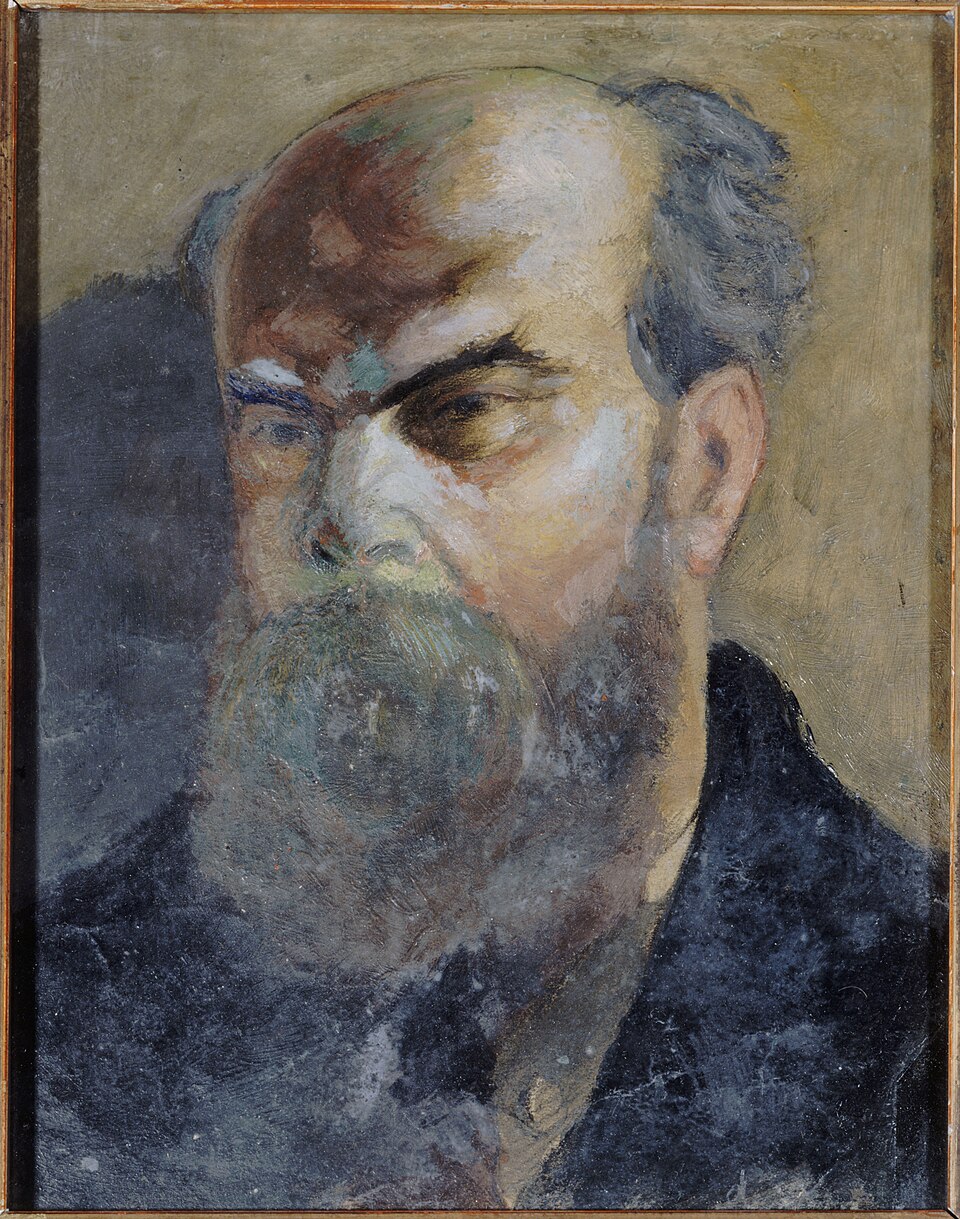
—Absinthe played a large role in your life. What did it represent for you?
'The green fairy,' as we called it. It had the color of meadows and the taste of oblivion. I spent entire days at the Café François Ier or the Procope, before that cloudy glass where water drips drop by drop onto the sugar, and I scribbled verses on paper tablecloths, between sips. I won't lie to you by dressing it in virtues: it took my health, my money, part of my reason. But in those smoky estaminets of the Latin Quarter, among the voices and the smoke, I felt less alone than elsewhere. The café was my home when I had none, my academy when I had no honors. Poetry came there, dirty and true, never in the silence of libraries.
—In 1894, your peers elected you 'Prince of Poets.' How did that affect you?
1894. They crowned me 'Prince of Poets,' a magnificent title for a man who slept in cheap lodgings and ended his nights in the hospital. What irony! While the young carried me in triumph in the journals, I returned to a furnished room for two cents, near the Faubourg Saint-Jacques, empty-bellied and in a threadbare frock coat. Glory came to me like a prince's cloak thrown over a beggar's shoulders. I don't spit on it — it was sweet, after so much contempt, to be finally recognized. But it came too late to warm the man; it consoled only the poet. And I knew well, already, that I had but few seasons left to watch the leaves fall.
Glory came to me like a prince's cloak thrown over a beggar's shoulders.
—What would you say to those who might read you in a century?
In a century? What a strange idea to offer a man who doesn't know if he'll have enough to eat tonight. If I could imagine being read still, over there, far from my miserable Paris, I would want this to be remembered: not the drunkard, not the convict of Mons, not the scandal, but the music. Let there remain from the Chanson d'automne that monotonous languor that wounds the heart so gently. I wrote, of the accursed poets, that their work 'will end up imposing itself on posterity despite everything'; I dared not hope it for myself. If my low plaint crosses the years and still troubles a young soul, one autumn evening, then I will have been right to suffer so much — and the green fairy will not have quite stolen everything from me.
Let them remember not the drunkard, not the convict, not the scandal, but the music.
This imaginary interview was generated by artificial intelligence from sources documented in Paul Verlaine's profile. It dramatises what the figure might have said based on what we know about them, but does not constitute attested historical testimony. For primary sources and factual documentation, refer to the full profile.