Imaginary dialogue between Arthur Rimbaud and Paul Verlaine
by Charactorium · Paul Verlaine (1844 — 1896) · Literature · 5 min read
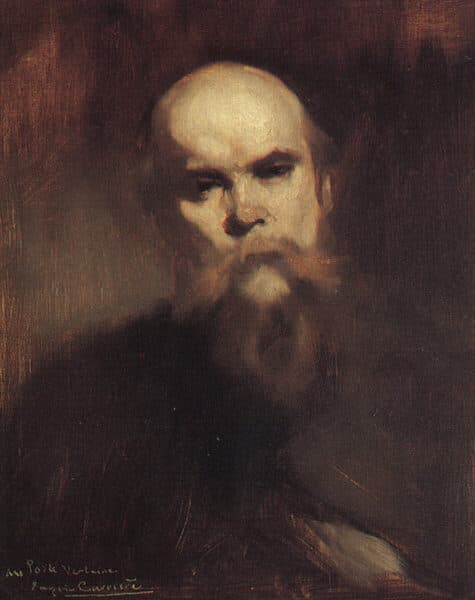
It's in a smoky back room of a bistro in the Latin Quarter, on a gray winter evening in 1875, that I meet Verlaine again. The green fairy already clouds the bottom of his glass, and the oil lamp casts a weary light on his forehead. We have known each other since that letter of September 1871 that brought me up to Paris, and so many roads traveled together from London to Brussels. Tonight, I come to push him to reveal the man behind the verses — I who know what he keeps from the world.
—Paul, do you remember that letter you wrote me to come? What did you read in those pages from a seventeen-year-old kid?
How could I forget? In September 1871, I received a few poems signed by an unknown from Charleville, and I immediately felt that a new voice was tearing through all the conventional poetry of my time. I wrote to you to come, that you were called, that you were awaited, that life here would be better for our common work. You, who were well placed to know, I wasn't inviting you out of salon charity: I wanted that electricity you carried. Our subsequent wanderings in London, in the fog of Soho, gave me Romances sans paroles, where I pushed music to the point of dissolving meaning into pure sensation. You taught me to dare disorder.
I wasn't inviting you out of salon charity: I wanted that electricity you carried.
—You're still filling your glass with that absinthe we used to drink together. Tell me frankly: does it help you write, or does it destroy you?
Both at once, and that's the trap. You saw me spend entire days at the François Ier café or at Le Procope, scribbling verses on paper tablecloths between two glasses of that green fairy. Absinthe opens a door to floating sensations, colors, a languor where the verse comes on its own — but it closes that door on my health and my little money. I eat a crust of bread when I drink three glasses. My afternoons drag from café to café, my evenings end in the drunkenness of bistros. It's a cruel muse that takes much more than it gives, and I know it as I drink it.
It's a cruel muse that takes much more than it gives, and I know it as I drink it.
—And that morning in July 1873, in Brussels, Rue des Brasseurs, when you raised the pistol at me — do you still think about it, here in this café?
Every day, Arthur. That gunshot, I fired it at myself as much as at your wrist. They sentenced me to two years, and it's in my cell at the prison of Mons that everything shifted. There, alone, having lost everything — wife, family, friends, health — I found myself face to face with God and my poetry. I wrote part of Sagesse there, that collection of repentance and inner quest that will remain, I believe, one of my best. The Bible and the rosary were my companions. One does not come out innocent from having made your blood flow, but one perhaps comes out less of a liar.
That gunshot, I fired it at myself as much as at your wrist.
—That Catholic conversion in your cell — you who cursed bourgeois morality so much — was it sincere, or just the refuge of a broken man?
You have the right to doubt, you more than anyone. But it wasn't the calculation of a prisoner trying to win over the chaplain. When you have nothing left but four walls and silence, something inside you begins to speak differently. Sagesse is not a bigot's book: it's the poetry of a wounded interiority, of a man seeking repentance without denying the flesh that ruined him. I remained weak, a drinker, miserable after as before — grace didn't make me a saint. But it gave me a new register, graver, more stripped down. Faith, for me, is one more music.
Faith, for me, is one more music.
—You wrote your Art poétique in your cell, that "Music before anything else." Why this relentless attack on the beautiful alexandrine of our masters?
Because the alexandrine, too square, too sure of itself, weighs and poses, when I want the verse to float. I championed the Odd — seven, nine, eleven syllables — more vague and more soluble in the air, a sonority that never quite closes. Music before anything else: that's my credo. Not music as ornament, but as the very substance of the poem, where nuance trumps color and suggestion trumps assertion. You know how much we argued about this in our London rooms. This text, which I'll publish later in Jadis et Naguère, is not a cold theory: it's the confession of what I've been seeking since Chanson d'automne, those violins that wound the heart with a monotonous languor.
The alexandrine weighs and poses, when I want the verse to float.
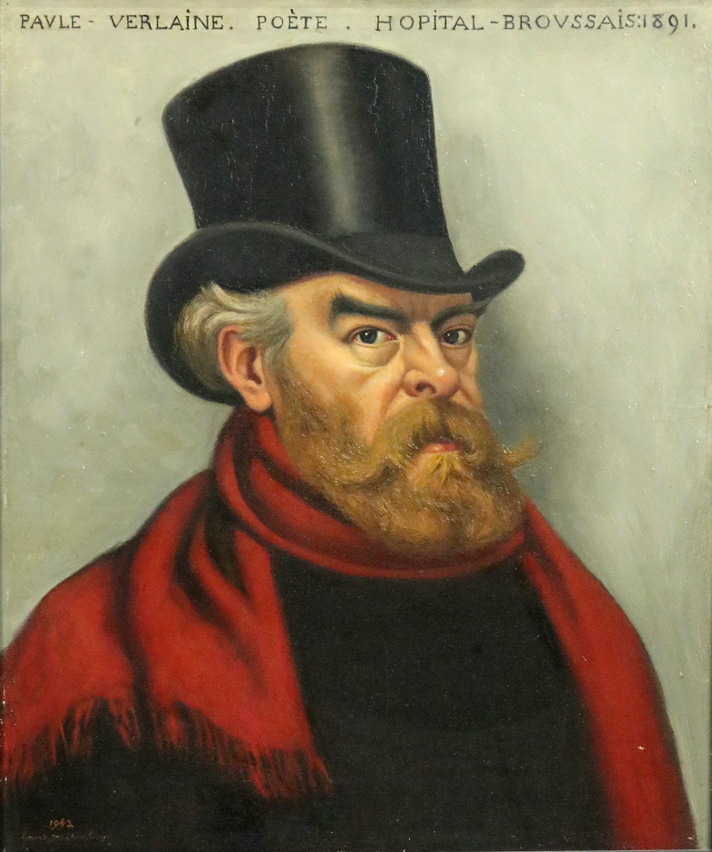
—You speak of nuance, deliberate imprecision. Isn't it dangerous to build an art on vagueness, where others demand rigor?
Dangerous, yes, and that's why one must be a patient craftsman of the vague. People think writing vaguely is easy: it's the opposite. I cross out, I rework, I weigh every syllable on my notebooks and tablecloths to achieve that imprecision that is not chance but exact music. The Parnassians, with whom I began with Poèmes saturniens, carved cold marble; I seek running water. Meaning must not be abolished, but veiled, suggested, like a silhouette behind a curtain. That's the whole art that we will soon call Symbolist: to speak the soul through allusions rather than descriptions. Controlled vagueness is the highest precision.
People think writing vaguely is easy: it's the opposite — it's exact music.
—From our English escapades, those fogs of Soho and Camden, what remains in your Romances sans paroles that the reader doesn't suspect?
Everything, and nothing named. Romances sans paroles was born from our wandering life, those foreign cities where we were two exiles among the refugee Communards. The rain on the cobblestones of London, the whistle of trains, the melancholy of a heart that weeps without reason — I wanted that to pass into pure music, without anecdote, without narrative. The title itself says it: romances without words, tunes without plot. The reader hears a languor; they don't know it has a name and a face. I dissolved our story into sensation so that only the shiver remains. That's my way of saying everything without confessing anything.
I dissolved our story into sensation so that only the shiver remains.
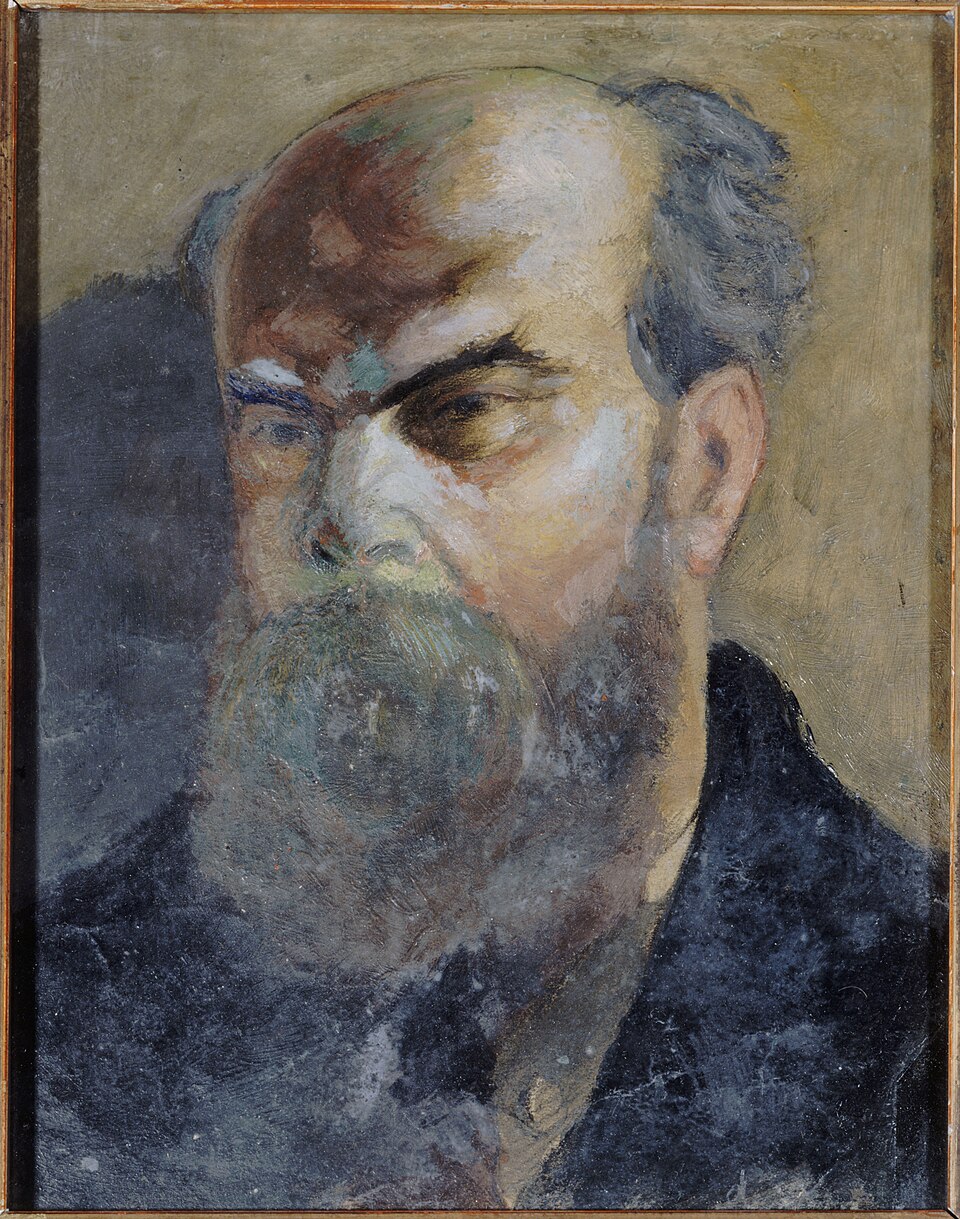
—They say you live from one furnished room to another, from hospital to cheap lodging. How do you bear this misery, you who should be crowned?
I bear it poorly, but I don't flee it. I go from a squalid lodging in the Saint-Jacques suburb to a hospital bed when my legs give out, then back to the café. My frock coats are threadbare, my hat battered — far from the Parnassian elegance of my beginnings. Glory, you see, doesn't pay the rent. The young read me, quote me, come to my table as to a master, and I go home at night to a room where the stove is cold. But I don't renounce this decline: it's the true underside of my verses. A poet who had succeeded in everything in the world would have, I think, nothing essential to say.
Glory doesn't pay the rent; it's the true underside of my verses.
—Your peers will soon call you 'Prince of Poets.' Does that title, in your condition, console you or mock you?
Both things contend within me. To be recognized among my own, after so many years of scandal and oblivion, touches me deeply — it's the acknowledgment that my music has carried. But what a strange prince is he who has neither palace nor coins, who dines on cheese and a glass, and sleeps where he can! The title shines above a life in rags. I accept it without illusion: it honors the work, not the man, and that's just, for the man isn't worth much. You, who knew me mad and ardent, know that I never chased after crowns. If this one comes, I'll place it on my poems, not on my brow.
What a strange prince is he who dines on cheese and sleeps where he can!
—One last thing, Paul. When you're alone tonight, your glass empty and the lamp out, what will remain of all this within you?
A music, Arthur, nothing but a music. When the café closes and I go back up to my lodging, the green fairy dissipated, there will remain what I've always sought: those long sobs of autumn violins that wound the heart with a monotonous languor. All the rest — the prison, the pistol, the misery, even you — eventually melts into the poem like a scent in the air. I burned my life for a few verses that sing true. It's little, and it's everything. Men may forget me; but if just one of my songs continues to whisper in the ear of a stranger, then I won't have drunk in vain.
I burned my life for a few verses that sing true. It's little, and it's everything.
This imaginary interview was generated by artificial intelligence from sources documented in Paul Verlaine's profile. It dramatises what the figure might have said based on what we know about them, but does not constitute attested historical testimony. For primary sources and factual documentation, refer to the full profile.