Kids interview Paul Verlaine
by Charactorium · Paul Verlaine (1844 — 1896) · Literature · 5 min read
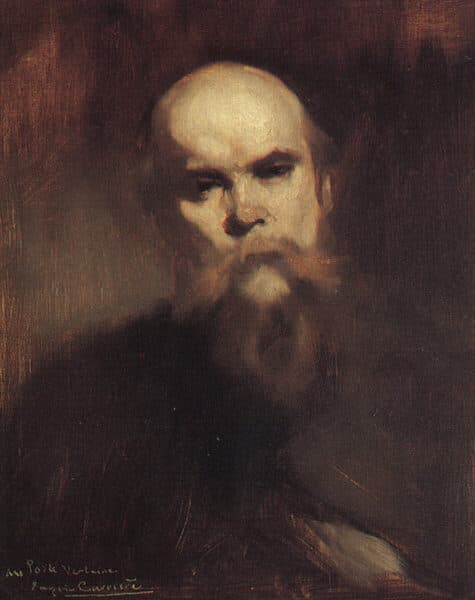
That morning, two middle-school students on a field trip push open the door of a small hotel room in the Latin Quarter. A tired old gentleman waits for them, pipe in hand. It's Paul Verlaine, and he has agreed to answer all their questions.
—What was it like the day you received Rimbaud's first letter?
You know, my child, it was autumn 1871. I receive a letter from a boy in Charleville I don't know. Inside, poems. And there, my heart stops. Imagine opening a school notebook and finding the most beautiful text in the world. That boy was seventeen years old. Seventeen! I was twenty-seven, and I felt small next to him. I wrote back immediately. I told him to come, that we were waiting for him, that we would work together. I didn't yet know that this boy, Arthur Rimbaud, would turn my whole life upside down. Genius, you see, doesn't give any warning.
Genius doesn't give any warning.
—Were you really friends with him? Did things go well between you?
Friend is a small word for what we lived through. We walked together in London, in the fog, penniless. We watched the streets, the workers, the river. Everything became poetry. But imagine two fires too close: they warm each other, then they burn each other. We argued, made up, set off again. It was beautiful and exhausting. From those wanderings in England and Belgium came my collection Romances sans paroles. You see, sometimes the most beautiful things are born from the hardest moments. We wrote our finest music while hurting each other deeply. I wouldn't wish it on anyone, and yet I don't entirely regret it.
—Is it true you shot at him with a pistol?
Yes. And it's the thing I'm most ashamed of. It was in Brussels, in July 1873, at a hotel on Rue des Brasseurs. We had argued again. Rimbaud wanted to leave, to abandon me. I had been drinking, I was desperate, and I did a terrible thing: I fired, twice. I wounded him in the wrist. Imagine your greatest anger, the one that makes your hands shake. Now imagine that instead of slamming a door, you do something irreparable. That's it. The police arrested me. I was sentenced to two years in prison. In one second, a gunshot, I had destroyed the most precious friendship of my life.
In one second, I had destroyed the most precious friendship of my life.
—And in prison, how was it? Were you scared?
The prison of Mons, in Belgium, was a small, cold, gray cell. At first, yes, I was scared. I was alone, I had lost everything: my wife Mathilde, my friend, my freedom. But you know, sometimes it's in the dark that you see best. In that cell, I began to pray again. I converted, I became a Christian once more. And I wrote. From that silence was born a collection I deeply love, Sagesse. Imagine a plant growing in the crack of a stone wall. That's a bit what happened to me. Prison took almost everything from me, but it gave me back to myself and to my poetry.
Sometimes it's in the dark that you see best.
—You used to say that a poem is like music. What does that mean?
Ah, that's my big idea! Listen closely. For me, a poem must first sing to the ear, before even trying to say anything. I wrote that in my Art poétique: 'Music before all else.' That's my favorite rule. Do you know a song whose tune you love, even without understanding all the words? Well, a poem is the same. I also loved odd-numbered lines, those with five, seven, or nine syllables — count on your fingers! They sound more floating, less square than ordinary lines. Meaning matters, of course. But first, close your eyes, and listen to the melody of the words.
A poem must sing before it tries to say anything.
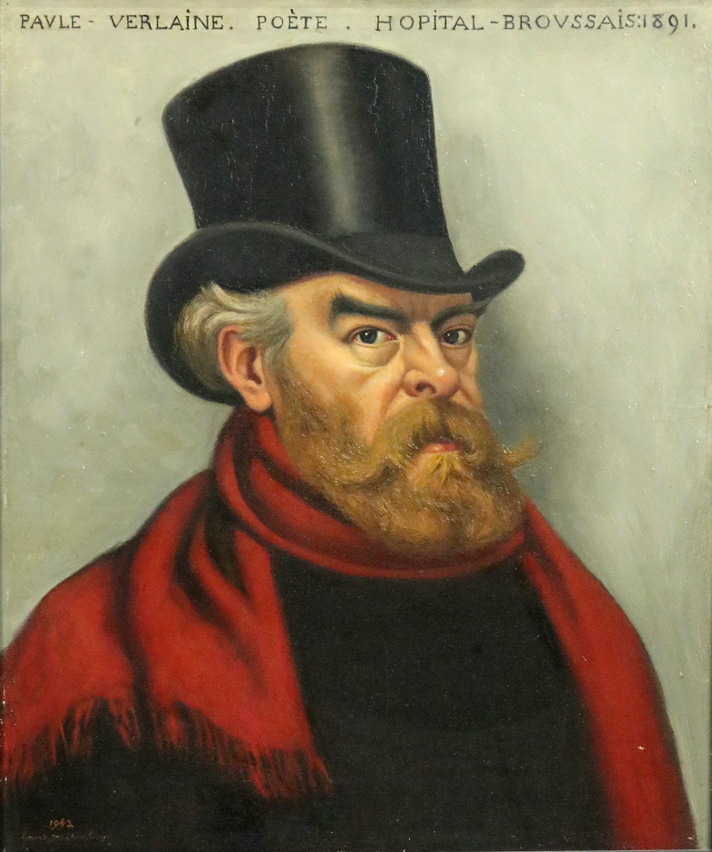
—Can you recite one of your poems from memory?
With pleasure, my child. Here's one that many people know, from my very first Poèmes saturniens. Close your eyes and listen: 'Les sanglots longs / Des violons / De l'automne / Blessent mon cœur / D'une langueur / Monotone.' Do you hear? The lines are short, the sounds return like raindrops. I'm not really describing autumn. I'm making you feel the gentle sadness of the ending season. That's my poetry: not a photograph, but an emotion that glides through the air. Recite it softly tonight, and you'll see: melancholy becomes almost beautiful.
I don't describe autumn, I make you feel its sadness.
—What is an 'accursed poet'? Why did you invent that word?
Good question! An 'accursed poet' is a great poet whom no one recognizes in their lifetime. People pass by them without seeing them, like walking past a buried treasure. In 1884, I wrote a little book, Les Poètes maudits, to talk about six of them. There was my dear Rimbaud, and also Mallarmé. I wanted to shout to the world: 'Look! These people are geniuses!' Imagine you were the only one in your class to know that a shy classmate draws wonders. You'd want to show everyone, right? Well, that's exactly what I did for them.
An accursed poet is a buried treasure that no one sees.
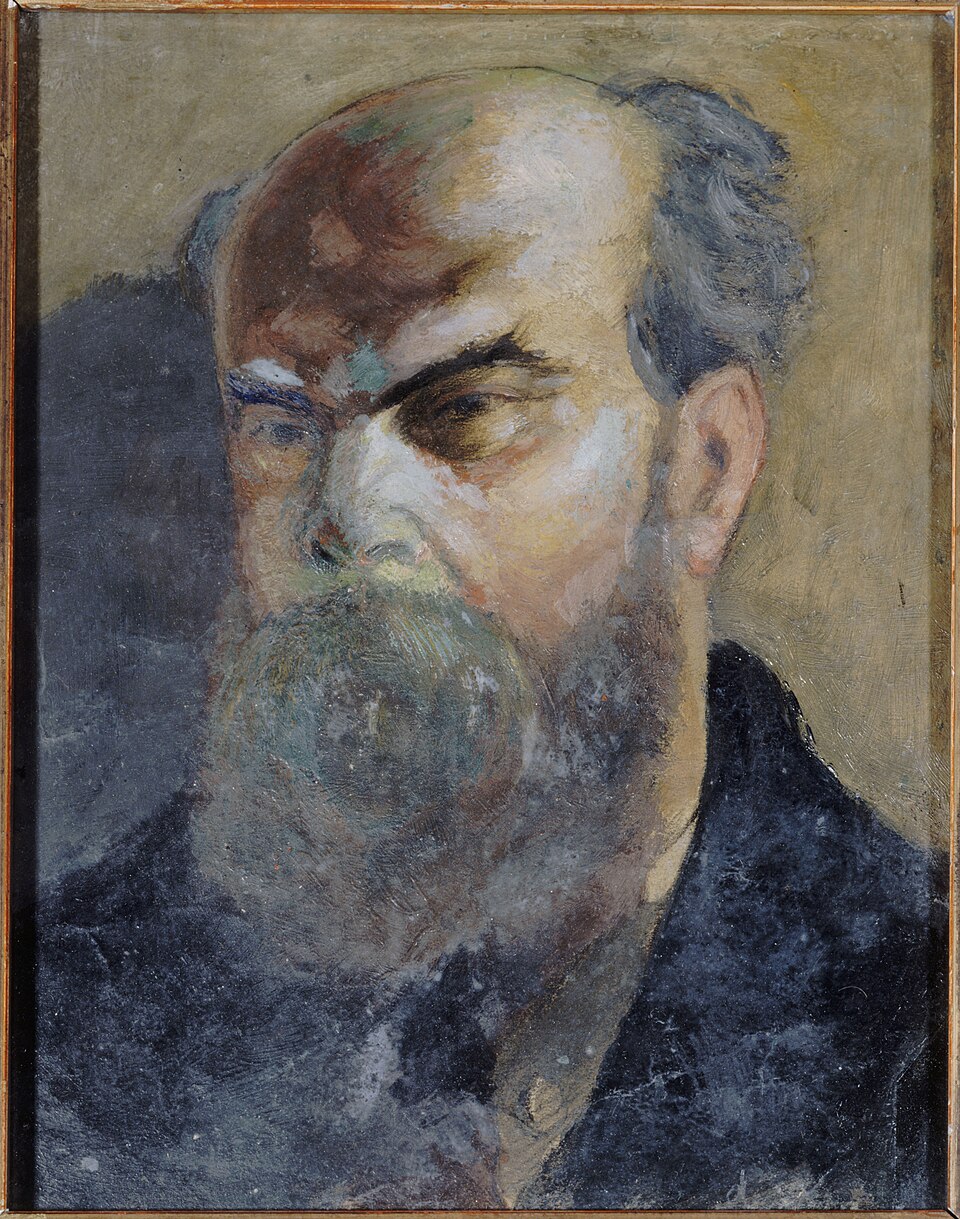
—They say you drank a strange green drink. What was it?
Ah, you mean absinthe. They called it 'the green fairy.' It was a very alcoholic drink, pale green, drunk in Parisian cafés. I spent entire days at a table, scribbling verses on scraps of paper between glasses. But I'll be honest with you, because you deserve the truth: that fairy wasn't a good friend. She ruined my health and my mind. Imagine a fire that warms at first, then burns down the whole house. That's what absinthe was for me. If you remember one thing from my mouth today: beware of things that comfort too quickly.
Beware of things that comfort too quickly.
—You were called 'Prince of Poets.' Were you rich and happy then?
What a strange story, my child. In 1894, the poets of Paris elected me 'Prince of Poets.' A magnificent title, wasn't it? You'd think I was a king. But do you know where that prince lived? In miserable hotel rooms, in furnished lodgings as they called them, rented by the week when you have almost nothing. I often ended up in the hospital, sick and penniless. Imagine a beggar with a cardboard crown placed on his head. That's what I was. Glory doesn't fill the plate. I was famous and poor at the same time. Life, you see, has a strange sense of humor.
Glory doesn't fill the plate.
—If people still read you today, how would that make you feel?
Oh, it would move me deeply, my child. You know, I spent my last years in cold and solitude, thinking that perhaps all of this was for nothing. And here are two young people like you, much later, still reading my verses and learning my Chanson d'automne. It's the most beautiful gift. I defended Rimbaud and Mallarmé because I believed that a true poem always finds its reader, even long after death. You prove to me today that I was right. So keep reading poems aloud. As long as a mouth sings them, you see, the poet is never quite dead.
As long as a mouth sings them, the poet is never quite dead.
This imaginary interview was generated by artificial intelligence from sources documented in Paul Verlaine's profile. It dramatises what the figure might have said based on what we know about them, but does not constitute attested historical testimony. For primary sources and factual documentation, refer to the full profile.