Imaginary interview with Pierre de Fermat
by Charactorium · Pierre de Fermat (1607 — 1665) · Sciences · 6 min read
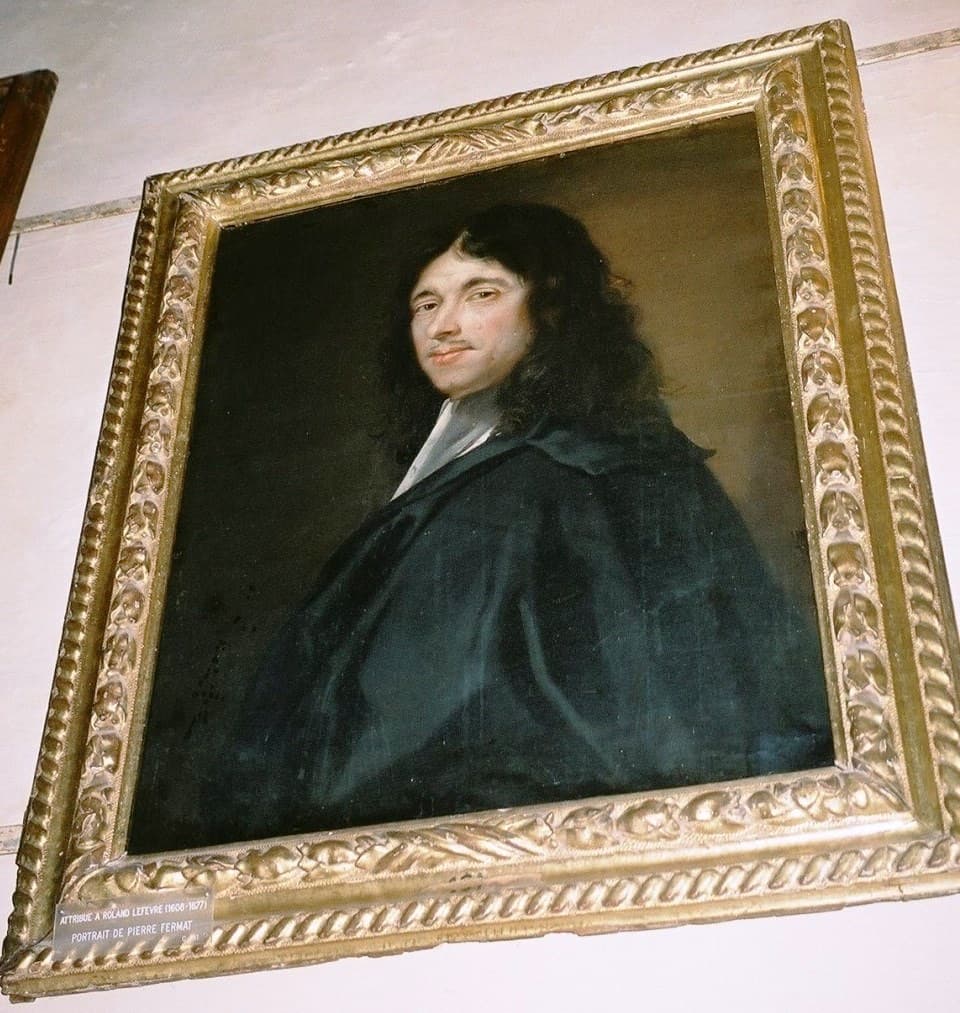
Toulouse, a winter evening in 1662. In the study of a private mansion, behind the black robe folded on an armchair, a councilor to the Parliament closes a judicial file and opens an old annotated Diophantus. By the light of a tallow candle, Pierre de Fermat agrees to speak to us about his 'leisure' — those that will occupy, without his knowing, three and a half centuries of mathematicians.
—How does one divide a day between the courtroom and numbers?
The morning belongs to the files: I am expected at the palace, and I must have read the cases before the court sits. In the afternoon, I deliberate with my fellow councilors, civil or criminal, and I sign rulings that decide people's fates — that takes all the mind one has. It is only when the house falls silent, my robe laid aside and my square cap put away, that I become free again. The candle lit, I pull out a book, I take my quill, and there I answer to no one. People think me a magistrate; I am one. But these hours stolen from the night, that is where I truly live. I bought my office, I have my rank in Toulouse — and I keep mathematics for myself, like a secret garden not shown to intruders.
People think me a magistrate; I am one. But these hours stolen from the night, that is where I truly live.
—Why not publish these works, as so many scholars do?
Printing a book means exposing oneself to quarrels, to jealous men, to corrections from pedants — and I have neither the time nor the taste for that. My office supports me; I seek neither glory nor position. What I find, I entrust to letters, especially to good Father Mersenne, in his cell at the Minims in Paris, who circulates them throughout Europe like a scholars' letterbox. I send a proposition, sometimes a challenge, and I wait for a reply. My proofs I often keep to myself, in the margin of a book or in my head. This vexes people, I know. But I prefer a well-posed problem to a well-bound volume. Let others print; I write by candlelight for the sole pleasure of having understood.
—Tell us about that note scribbled in the margin of your Diophantus.
It was in my copy of the Arithmetica, Bachet's Latin edition, a book I have annotated for years like a diary. Diophantus dealt with squares; I wondered if one could do the same beyond, with cubes, higher powers. And I saw that no: for any exponent beyond the square, no solution in whole numbers is possible. I found a proof that I consider marvelous — cuius rei demonstrationem mirabilem sane detexi. Only the margin was too narrow: hanc marginis exiguitas non caperet. So I put down my pen without recording anything else. I will be blamed for this silence, I imagine. But I tell you: the truth of the matter does not depend on the space left at the bottom of a page.
The margin was too narrow; but the truth of a thing does not depend on the space left at the bottom of a page.
—How would you feel if you were told that this problem might resist a century, or even longer?
That would make me smile, and tremble a little too, I confess. A century! If I could imagine being read still a hundred years from now, I would be flattered that a simple marginal note gives so much trouble. I have faith in my method of infinite descent — suppose a solution, deduce a smaller one, and ever smaller, until absurdity: that is how I hunt the impossible. But I am honest: a proof exists fully only when another can replicate it. If mine were to die with me, then the problem would remain open, and too bad for my pride. I would like to believe that some patient mind, in a future I will not see, will eventually fill what my margin could not contain. That would be my strangest posterity.
—How did you enter into correspondence with Blaise Pascal on games of chance?
It was in 1654. We were posed that old puzzle called the problem of points: two players interrupt their game before the end, how to divide the stake fairly, according to each's chances of winning? Pascal wrote to me, I replied, and there we were both turning the question over in letters. I recall a specific case: the first player lacking two games, the second three — I calculated that the first should have 11/16 of all the money. What delighted me was that one could submit chance itself to calculation, impose a rule, a measure. The throw of dice, it was thought, escaped reason. We showed that it obeys it like everything else.
The throw of dice, it was thought, escaped reason. We showed that it obeys it like everything else.
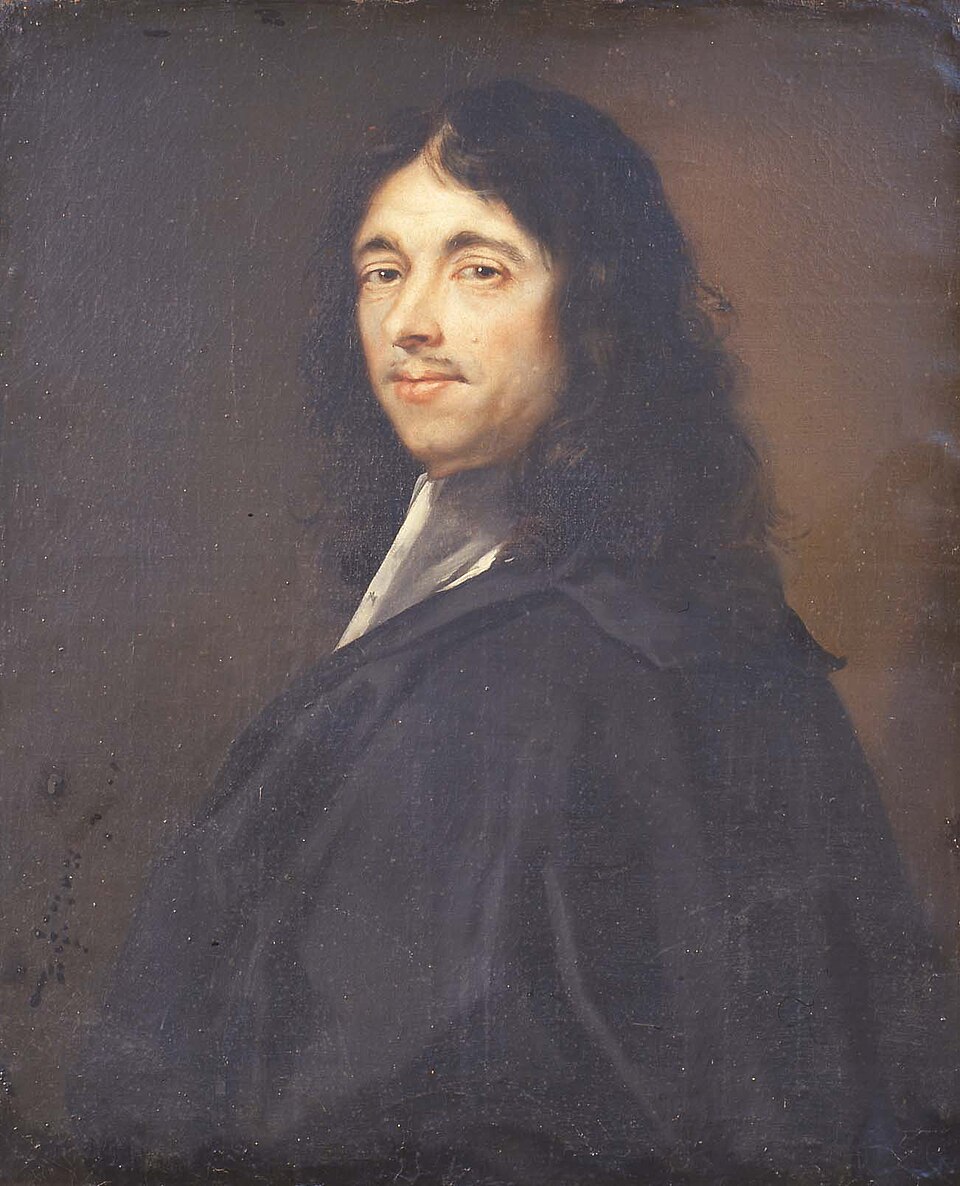
—What is so new about measuring what has not yet happened?
Everything, precisely. Until now, one dealt with what is: a length, an area, a given number. With Pascal, we dared to quantify what could be — the expectation of a gain, the share due to a chance not yet run. Calculating not the event, but its probability. Consider: a player who withdraws before the end takes away a sum that corresponds exactly to his right, to what he was entitled to expect. This is no longer arithmetic on things, it is arithmetic on possibilities. I did not measure the past or the present, but the future as it distributes among several outcomes. In Toulouse, in the evening, it amused me immensely to reduce Fortune — that blind one they call capricious — to a few well-behaved fractions.
—Your name is often associated with a rivalry with Monsieur Descartes. What happened between you?
Each of us had, on his own, found the means to represent curves by equations — those geometric loci that algebra illuminates. My Introduction to Plane and Solid Loci was circulating through Mersenne when his own Geometry appeared in 1637. Descartes took offense. He sought faults in my method of tangents, tried to show I was wrong — that was his way, lively and cutting. Our dispute went through letters, mediated by that good Mersenne, and all of learned Europe listened as to a tournament. I do not like these quarrels of precedence; who found it first matters less than what is found. But I never yielded on the substance, for I knew my method was correct. One can concede politeness; one does not concede truth.
One can concede politeness; one does not concede truth.
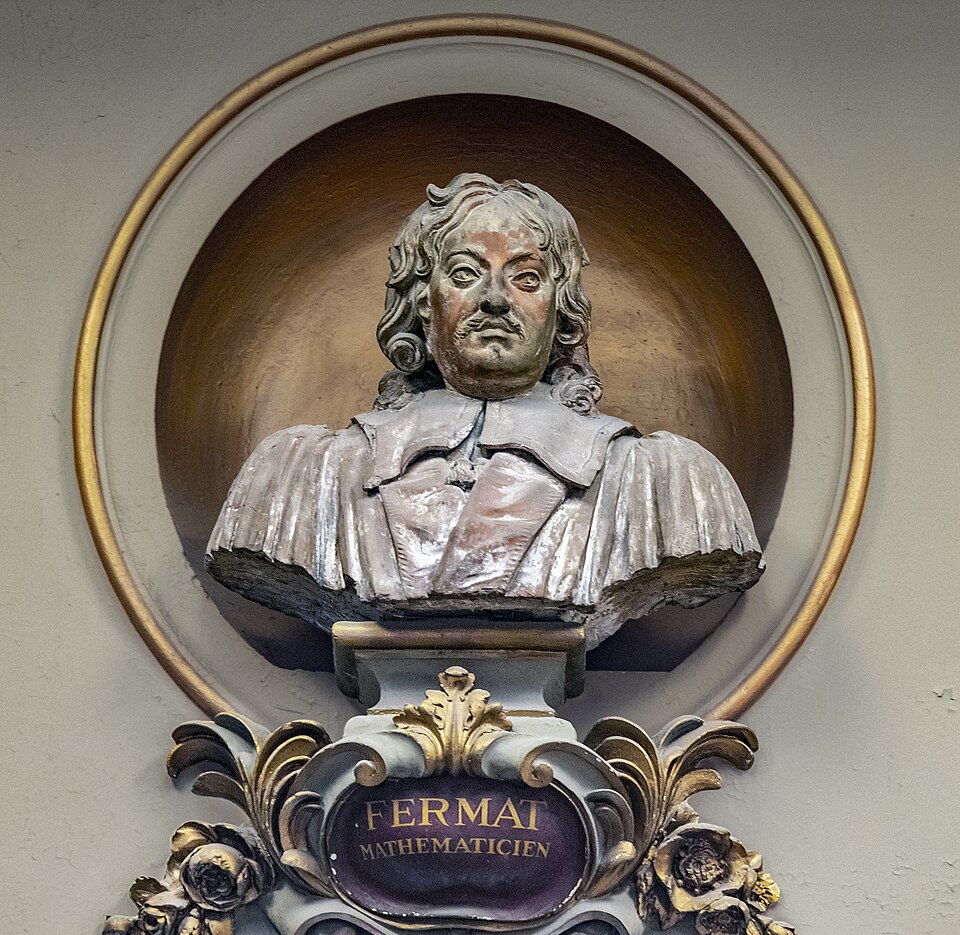
—What separated you most deeply from Descartes?
Temperament, first. He wanted a system, a sovereign method that ordered all knowledge under one principle; he published, he dominated, he built. I go from problem to problem like a hunter without a fixed domain, and I print almost nothing. Where he deduced from the general to the particular, I liked to start from a number, a stubborn case, and press it until it yielded its secret. On tangents, my way of substituting a small quantity and then letting it vanish offended him — he saw groping, I saw a sure path. At bottom, two humors: the architect and the poacher. Father Mersenne kept us in check, and that is good, for our pens were like swords. But I believe we were advancing, without saying it, toward the same territory.
—It is said that you attribute a kind of intention to light. What do you mean by that?
Do not think I give a soul to rays. But I observe this, and I stated it around 1662: between two points, light does not follow the shortest path, as was repeated, but the one it travels in the briefest time. Whether it passes from air into water, it bends precisely in the way that saves it the most time. Nature, one might say, is thrifty: it does not waste an instant. This explains at once reflection and refraction, those laws that were observed without being understood. To prove it, I used my method of minima — finding where a quantity reaches its lowest. Light calculates, in a way, better and faster than I.
Nature, one might say, is thrifty: it does not waste an instant.
—How did your method for finding smallest quantities lead you to optics?
It all started from a question in algebra, in my Methodus ad disquirendam maximam et minimam. To find where a quantity is at its peak or its lowest, I replace the unknown by itself increased by a small quantity, equate the two expressions, then let that quantity vanish as if it had never been. That is my method of tangents: grasping the instant when a curve no longer rises and does not yet fall. Now what is the fastest path of light, if not a minimum, a trough in time? So I applied to optics the tool I had forged for geometry. Mr. Newton, perhaps, or someone else after me will see a mine to exploit. For my part, I rejoice that the same calculation governs a curve drawn with a pen and a ray crossing water.
Read further
This imaginary interview was generated by artificial intelligence from sources documented in Pierre de Fermat's profile. It dramatises what the figure might have said based on what we know about them, but does not constitute attested historical testimony. For primary sources and factual documentation, refer to the full profile.