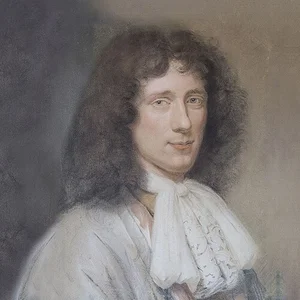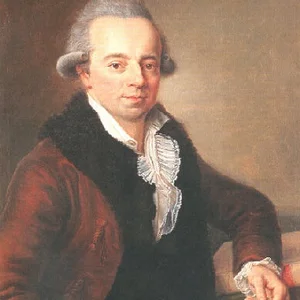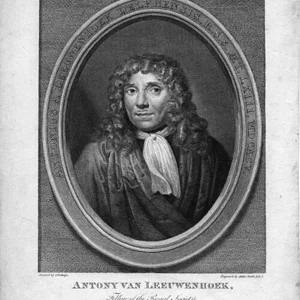

A self-taught Dutch draper and scholar, Antoni van Leeuwenhoek (1632-1723) perfected the microscope and was the first to observe micro-organisms. His observations laid the foundations of microbiology.
Antoni van Leeuwenhoek
Antoni van Leeuwenhoek
5 min read
Frequently asked questions
Key Facts
- Born in 1632 in Delft, in the United Provinces (Netherlands).
- From 1673 onwards, he described his observations in letters addressed to the Royal Society of London.
- In 1674-1676, he observed micro-organisms in water that he named “animalcules”.
- He perfected single-lens microscopes reaching magnifications of several hundred times.
- He died in 1723 in Delft and is considered the father of microbiology.
Works & Achievements
First observation and description of living beings invisible to the naked eye. The founding act of microbiology.
Description and drawings of bacteria taken from dental tartar: it would be two centuries before anyone saw them again.
First observation of the male reproductive cells, opening a major debate on the generation of living things.
Description of blood cells and their circulation through the capillaries, confirming ideas about blood circulation.
Nearly 200 letters describing his observations, the main channel through which his discoveries reached European scholars.
A Latin collection gathering his microscopic observations, which spread his work throughout learned Europe.
Observation of animalcules able to revive after drying out, the first description of the phenomenon of cryptobiosis.
Anecdotes
Antoni van Leeuwenhoek was not a professional scholar: he ran a fabric shop in Delft. It was probably while using magnifying glasses to count the threads of cloth that he developed a taste for magnifying lenses, which he then learned to grind himself with unmatched precision.
In 1674, while observing a drop of water from a lake, Leeuwenhoek discovered a host of tiny living creatures that he called “animalcules.” No one before him had seen these beings invisible to the naked eye: he had just discovered micro-organisms.
Leeuwenhoek jealously guarded the secret of how he made his microscopes. He produced more than 500 lenses over the course of his life, some of which magnified nearly 270 times, far beyond the instruments of his contemporaries, and he never revealed how he polished them.
In 1677, he became the first to observe human and animal sperm cells under the microscope, as well as the red cells of the blood and the bacteria present in the tartar of his own teeth. His letters describing these discoveries astonished all of learned Europe.
Although he spoke only Dutch and had no university education, Leeuwenhoek was elected a member of the prestigious Royal Society of London in 1680. Tsar Peter the Great and the Queen of England paid him visits to look through his microscopes.
Primary Sources
I saw with great wonder an innumerable multitude of very small living animals in this water, moving about among one another; the smallest of them was to me a thousand times smaller than a grain of sand.
There were in the matter taken from between my teeth so great a number of small living animals, moving most gracefully, that it surpassed all belief.
A Latin collection of his microscopic observations on fibres, blood, muscles, insects and infusoria, addressed to the Royal Society.
Key Places
Leeuwenhoek's birthplace in the United Provinces, where he lived, ran his cloth shop and carried out all his microscopic observations.
Great merchant city where the young Leeuwenhoek was apprenticed to a draper and learned the trade of dealing in cloth.
English learned society to which Leeuwenhoek sent his letters of discoveries for fifty years, and which elected him a fellow in 1680.
Old church in Delft where Antoni van Leeuwenhoek was buried upon his death in 1723.