Imaginary interview with Rachel Carson
by Charactorium · Rachel Carson (1907 — 1964) · Sciences · 5 min read
Summer 1963. On the porch of her summer house on Southport Island, Maine, Rachel Carson watches the tide recede over the rocks. Weakened by illness but sharp-eyed, she agrees to look back on a life spent between the sea, the typewriter, and a battle that shook America.
—Do you remember the first time you saw the ocean?
1929, at Woods Hole, Massachusetts. I had grown up on a farm in Pennsylvania, in Springdale, where my mother taught me to name birds and flowers, but I had never breathed salt air. When I arrived at the marine biology laboratory, I stepped for the first time into a tide pool, and I saw an entire world teeming under my fingers: starfish, anemones, tiny things that most people crush without seeing. I had read about the sea before I touched it; that day I touched it, and I think I never got over it. Everything I wrote afterward came out of that first tide pool.
I had read about the sea before I touched it; that day I touched it, and I never got over it.
—How did a government biologist become a national celebrity?
Almost by accident. I was writing bulletins for the U.S. Fish and Wildlife Service, dry stuff about fish, when I wanted to tell the sea differently—not through human eyes, but through those of a mackerel or an eel. That became Under the Sea-Wind, which no one read in 1941. Then The Sea Around Us, in 1951, and the inexplicable: the book stayed on the bestseller list for eighty-six weeks, translated into thirty-two languages. I received the National Book Award in 1952. A woman who talked about ocean currents suddenly became someone invited to dinner. Above all, it gave me one precious thing: the freedom to leave my desk and write only what I wanted.
A woman who talked about ocean currents suddenly became someone invited to dinner.
—What were your days like when you were both a civil servant and a writer?
Split in two. My best hours, I stole them at dawn. I would get up before daylight, make coffee, and sit down at my Underwood typewriter, in silence, before obligations claimed their due. Afternoons belonged to the Service: reports, meetings, bulletins to edit. Evenings, I took care of my mother, who lived with me in Silver Spring, and later of little Roger. I wrote slowly, terribly slowly; a single sentence could cost me a night. My field notebooks saved me: I mixed precise data with freer notes, and it was in that friction between rigor and wonder that my books were finally born. Writing was never easy for me, never.
My best hours, I stole them at dawn, at my Underwood typewriter, before the day claimed its due.
—What drove you to write such a dark book about pesticides?
A letter. In 1958, my friend Olga Owens Huckins wrote to me about the awful silence in her bird sanctuary after an aerial spray of DDT: dead robins, beaks open, curled in the grass. I had already been gathering evidence since the Long Island trial in 1957, but that letter brought everything to a head. I realized you cannot pour such a rain of poisons over the face of the earth without making it unfit for all life. I refused to call these products insecticides: they don't just kill insects, they kill the whole web of life. A truer, more honest word was needed. I wrote Silent Spring.
Dead robins, beaks open, curled in the grass: that silence brought everything to a head.
—Why did you choose the harsh word 'biocide' instead of 'insecticide'?
Because words lie when they are convenient. We say insecticide to reassure, as if the poison politely stopped at the insect's border. But it stops nowhere. DDT does not disappear: it clings to tissues, moves up the food chain, concentrates from one link to the next—what we are beginning to call bioaccumulation. The worm carries it, the robin eats the worm, and dies. Tomorrow, perhaps, humans will eat what they have poisoned. So I wrote that they should not be called insecticides, but biocides. It's a brutal word, I know. But when faced with a spring where no bird sings, delicacy of vocabulary becomes a form of lying.
We say insecticide to reassure, as if the poison politely stopped at the insect's border.
—How did you experience the campaign waged against you by the chemical industry?
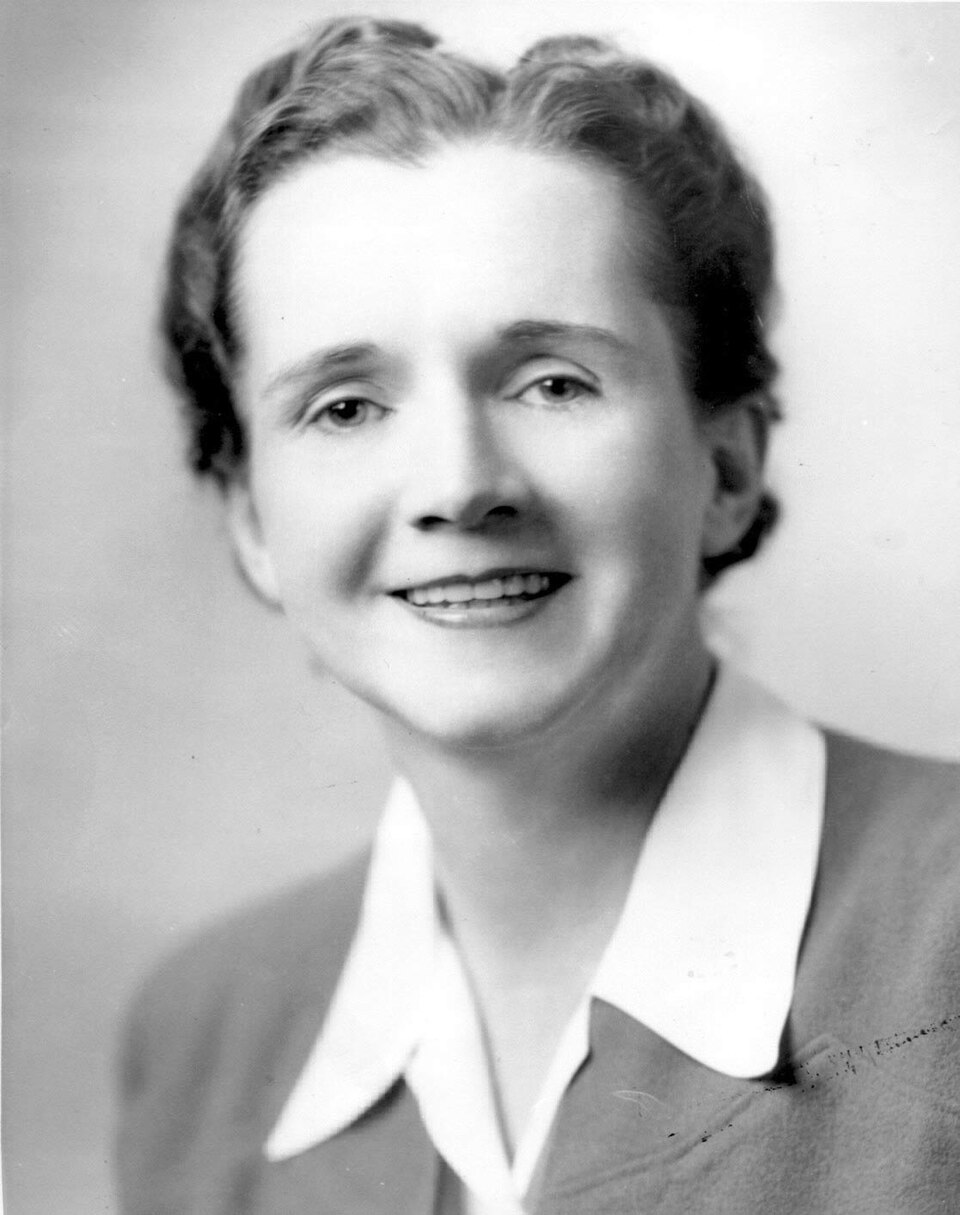
With weariness, mostly. As soon as Silent Spring was published in 1962, I was called a 'nature fanatic,' it was hinted that a woman, hysterical of course, could understand nothing of chemistry. Men were paid to contradict me in the newspapers. The cruelest part was that they thought me fragile, and they were right without knowing it: I was already carrying my breast cancer, hiding it carefully, because any revealed weakness would have been used against the book. So I did not answer insults. I answered with my hundreds of annotated toxicology reports, page after page. Rigor was my only armor, and the strongest.
I did not answer insults. I answered with my hundreds of annotated reports, page after page.
—What would you say about that day you testified before the U.S. senators?
June 1963. I was exhausted, my body at war with itself, but I insisted on coming before the Senate Committee myself. I was not going to serve them indignation: I brought them facts, calmly, one by one. I told them what I deeply believe—that we still speak in terms of conquest, that we have not yet reached the maturity to think of ourselves as a tiny part of an immense universe. Our attitude toward nature has become critical precisely because we have acquired the frightening power to alter and destroy it. A few months earlier, President Kennedy's science committee had confirmed my findings. For once, facts had spoken louder than money.
We still speak in terms of conquest, without the maturity to think of ourselves as a tiny part of the universe.
—Many know you for pesticides; but what is so fascinating about the intertidal zone to you?
It is a frontier that changes twice a day. At low tide, I would go down to the rocks of Southport Island, hand lens in hand, high boots on my feet, and I would bend over what the sea had left: periwinkles, algae, translucent creatures clinging to the stone. It is this in-between that I wanted to tell in The Edge of the Sea, in 1955. Nothing is stable there; everything struggles to hold on between two worlds, water and air. I saw a lesson there: life is fragile and stubborn at once, it clings. The sea, from which life arose, is now threatened by one of its own forms—but the sea, at least, will go on existing.
Nothing is stable there: everything struggles to hold on between two worlds, water and air.
—You took in your great-nephew Roger. What did you learn from him?
To see anew. When you explore a beach in Maine with a child, you stop classifying and naming; you marvel. Roger would take my hand toward a tide pool, toward a shell, toward the crash of a wave in the night, and I rediscovered with him the joy, the mystery of the world that habit steals from us. I drew a small text from it, The Sense of Wonder, because I am convinced of one thing: for a child to keep alive his innate sense of wonder, he needs the companionship of at least one adult who can share it. It is not knowledge that we transmit, but a way of looking. And that way, believe me, saves more of nature than all the reports in the world.
It is not knowledge that we transmit to a child, but a way of looking.
—If you could imagine being read a century from now, what would you want to be remembered?
I don't know if I will be read; books have their own destiny. But if one voice were to cross time, I would want it not to be the word DDT or even biocide—these are battles of my era, they will die with their poisons. I would rather have remembered that wonder I spoke of with Roger, and that stubborn idea that man is but one thread in an immense web. My whole life came down to two gestures: the typewriter before dawn and the tide pool at Woods Hole. If I am remembered for the desire to truly look at the living before destroying it, then the rest matters little to me.
These are battles of my era; they will die with their poisons. The wonder, it must survive.
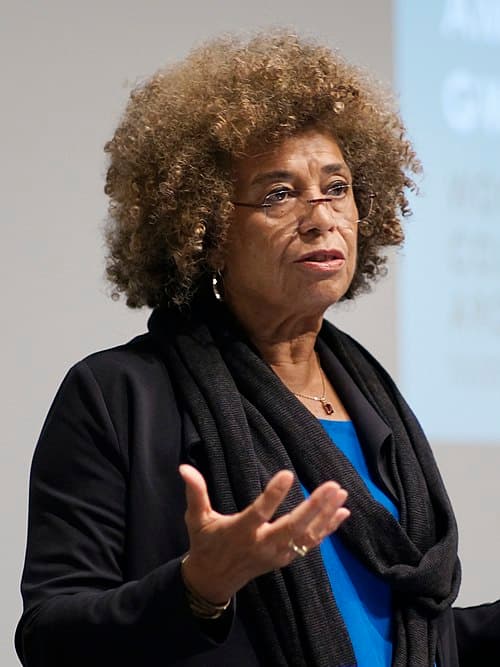

This imaginary interview was generated by artificial intelligence from sources documented in Rachel Carson's profile. It dramatises what the figure might have said based on what we know about them, but does not constitute attested historical testimony. For primary sources and factual documentation, refer to the full profile.