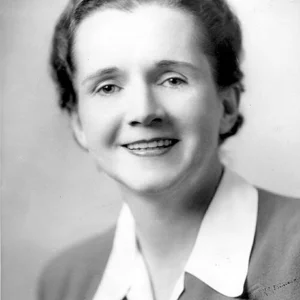

Evelyn Boyd Granville was an American mathematician, one of the first African American women to earn a doctorate in mathematics in the United States (Yale, 1949). She contributed to the American space programs by developing trajectory analyses for the Vanguard, Mercury, and Apollo missions.
Evelyn Boyd Granville(1924 — 2023)
Evelyn Boyd Granville
États-Unis
6 min read
Frequently asked questions
Key Facts
- Born on May 1, 1924, in Washington, D.C.
- In 1949, she earned a doctorate in mathematics from Yale University, becoming one of the first African American women to hold a PhD in math in the United States
- In the 1950s and 1960s, she worked for IBM and NASA's space programs (Vanguard, Mercury, Apollo) on trajectory analysis
- She later taught mathematics at the university level (notably California State University, Los Angeles)
- Died on June 27, 2023
Works & Achievements
A work of mathematical analysis defended at Yale that made her one of the first African American women to earn a doctorate in mathematics.
Trajectory analyses contributing to the first American efforts to put satellites into orbit.
Contribution to the calculations for the crewed flights of the first American space program to send humans into space.
Participation, at aerospace subcontractors, in the calculations related to the program that would take humans to the Moon.
A co-written work intended for the training of mathematics teachers, reflecting her commitment to teaching.
Anecdotes
Evelyn Boyd grew up in Washington in segregation-era America and studied at Dunbar High School, an institution reserved for Black students but renowned for its excellence. She graduated at the top of her class in 1941, determined to pursue higher education at a time when few young African American women had access to it.
In 1949, she earned a doctorate in mathematics from **Yale University**, becoming one of the first two African American women in United States history to reach this level, the same year as **Marjorie Lee Browne**. Her thesis dealt with a highly abstract field of mathematical analysis.
After becoming a teacher at **Fisk University** in the early 1950s, she made such an impression on two of her female students that they too would go on to earn doctorates in mathematics. Granville liked to recall that teaching and passing on knowledge mattered as much to her as her calculations for space.
Recruited by **IBM** in 1956, she put her mathematics to work in the conquest of space: she computed spacecraft trajectories for the **Vanguard**, **Mercury** and then **Apollo** programs, at a time when computers filled entire rooms and programming was done with punch cards.
Faced with the widespread notion that women were supposedly less gifted in mathematics, Evelyn Boyd Granville would respond with a smile by recounting her own career. She continued teaching mathematics long after her retirement, convinced that one could learn at any age.
Primary Sources
In this piece, Granville looks back on her career and states that she always smiled whenever she heard that women could not excel at mathematics, her own life being the refutation of that claim.
An academic document attesting to Evelyn Boyd's Ph.D. in mathematics from Yale, under the supervision of Einar Hille, in the field of functional analysis.
In these interviews, Granville describes her recruitment by IBM and her work computing orbital trajectories for the American space programs, using the first large computers.
Key Places
Capital of the United States, where Evelyn Boyd was born and raised, and where she studied at Dunbar High School during the era of segregation.
Women's college where she earned her bachelor's degree in mathematics and physics in 1945, with honors.
University where she earned her doctorate in mathematics in 1949, under the supervision of Einar Hille.
Historically Black university where she taught in the early 1950s and trained future women doctorates in mathematics.
University where she taught mathematics for many years starting in 1967, after her career in the space industry.
Typical Objects
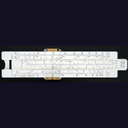
Sliding instrument graduated on logarithmic scales, allowing fast multiplication, division and calculation before the arrival of electronic calculators. An everyday tool for mathematicians and engineers in the mid-20th century.
📷 CC BY-SA 3.0 · Wikimedia Commons ↗
A large 1950s computer filling an entire room, used for heavy scientific calculations. Granville used it to process orbital trajectories.

A cardboard card on which instructions and data were encoded as holes, the programming medium of the earliest computers. Whole stacks were needed to run a single program.
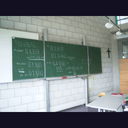
A large dark panel written on with chalk, central to teaching and research in mathematics. Granville used it to prove theorems and work through calculations in front of his students.
📷 CC BY-SA 3.0 · Wikimedia Commons ↗
Collections of figures describing the position and speed of a spacecraft at every moment of its flight. They made it possible to check that a rocket would indeed follow the calculated path.
A teaching book co-written by Granville to train future mathematics teachers. It reflects his lasting commitment to passing on knowledge.
School Curriculum
Vocabulary & Tags
Key Vocabulary
Tags
Daily Life
Morning
As an academic and researcher, her morning begins early: reading articles, preparing lectures, or setting in motion the day's long calculations. During her IBM years, she heads to a computing center where the programs to run on the machine are prepared.
Afternoon
The afternoon is devoted to the mathematical work itself: checking trajectories, correcting calculation errors, or teaching at the blackboard. At the university, she also meets with her students to guide them through their reasoning.
Evening
The evening is spent grading papers, reviewing her notes, or continuing proofs begun during the day. Granville placed great importance on reading and personal study.
Food
Her diet is that of a middle-class urban American woman of the 20th century: meals taken at home or in the campus cafeteria, blending home cooking with simple everyday dishes.
Clothing
At work, she wears the understated, neat attire expected of a teacher and engineer of the era: dresses, suits, and fitted blouses, in keeping with the professional decorum of the 1950s-1970s.
Housing
She lives in urban dwellings, first on the East Coast and then in Los Angeles after her marriage, in neighborhoods close to her academic or industrial workplaces.
Historical Timeline
Period Vocabulary
Liens externes & ressources
Références
Œuvres
Thèse de doctorat « On Laguerre Series in the Complex Domain »
1949
Calculs orbitaux pour le programme Vanguard (IBM)
vers 1956-1958
Analyses de trajectoires pour le programme Mercury
vers 1956-1960
Travaux pour le programme Apollo
années 1960
Manuel « Theory and Application of Mathematics for Teachers »
1975