Kids interview Renart
by Charactorium · Renart · Mythology · 5 min read
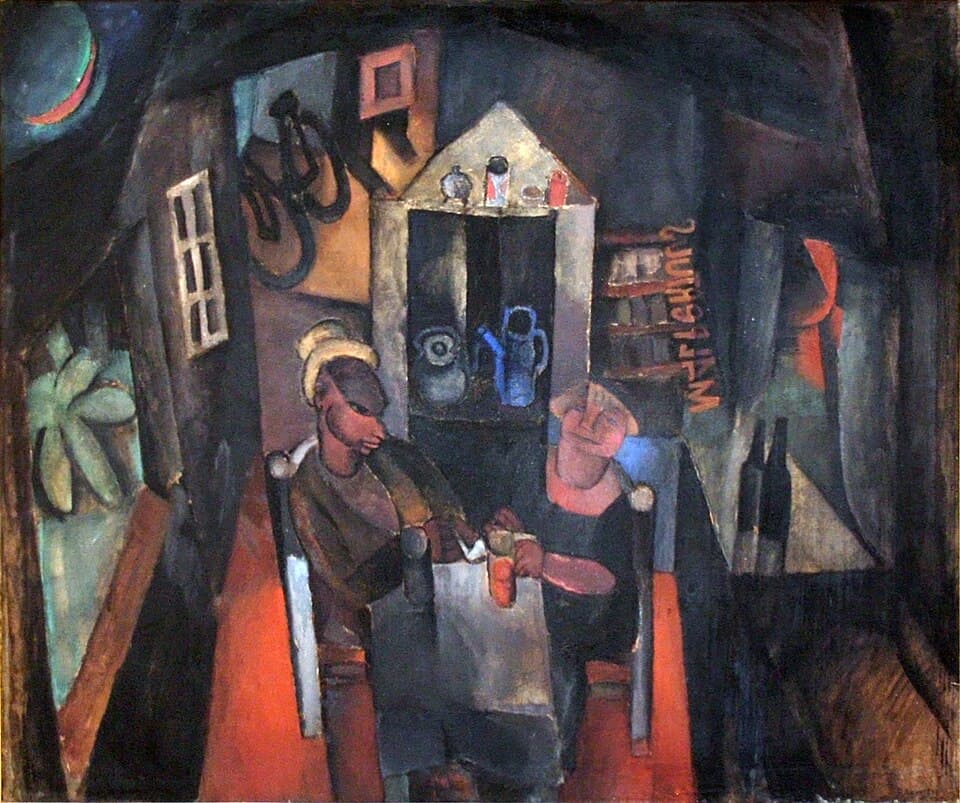
Two twelve-year-old students visit an old forest with their class. Under a large oak tree, they discover a red fox sitting like a lord. It is Renart, and he agrees to answer all their questions.
—Is it true you made Isengrin fish with his tail in the ice?
Ah, my child, that is my finest trick! Imagine a winter night, a frozen pond, and a hole in the ice. I told Isengrin the wolf: “Dip your tail in there, the fish will cling to it all by themselves.” He believed me! He waited and waited, and the cold froze the ice around his tail. The poor thing remained trapped until morning. That is what they tell in The Tail-Fishing. You see, I am not the strongest. Isengrin is much bigger than me. But a clever little fox can always beat a big stupid wolf.
A clever little fox always beats a big stupid wolf.
—Why are you always mean to Isengrin the wolf?
You know, the wolf and I are enemies for life. In the branch that the clerics call the fourth one, I dig him a pit, a deep hole, and I trick him into falling into it. Mean? Perhaps a little. But Isengrin is greedy and proud. He thinks his strength is enough for everything. So I show him it is not. Imagine a big bully in the schoolyard who makes fun of the little ones. And a little one who, through mischief, trips him in front of everyone. That is my war with the wolf. I never win by muscle, always by brains.
I never win by muscle, always by brains.
—Were you scared when you stood trial before the king?
Scared? A little, I admit! King Noble, the lion, was there, and all my enemies had come to accuse me. Isengrin shouted that I was a traitor. But you know what I did? I spoke. Beautiful words, sweet as honey. At the Court of King Noble, I defended myself against all my crimes by telling pretty stories. Imagine a child caught with his hand in the jam jar, inventing an excuse so clever that the parents end up smiling. That was me, before the lion. I scoffed at the justice of the mighty with words.
Before the king, my finest words were worth more than an army.
—What was a trial like in your world?
Imagine a great hall full of animals: the lion on his throne, the wolf, the bear, the cat, all come to listen. It was both serious and noisy. Each one told of my misdeeds, and I had to answer. In my time, lords judged like that, by gathering their court. The Roman de Renart enjoys copying these real human trials, but with beasts. And you know what? People laughed at the judges as much as at the accused. Because often, in these stories, justice was not so just. The powerful were wrong, and the clever little one I was always got away.
People laughed at the judges as much as at the accused.
—Is it true you disguised yourself to trick people?
Oh yes, that was my great specialty! One day I become a pilgrim, with a staff and a long cloak, looking all pious. Another time, I become a dyer: I plunge into a vat of color and come out so strange that no one recognizes me! Imagine putting on a carnival costume so perfect that even your parents no longer see you. That is it. With a colorful juggler's costume or a fake parchment under my arm, I tricked merchants, nobles, even churchmen. My face changed, but my cunning always stayed the same.
My face changed, but my cunning always stayed the same.
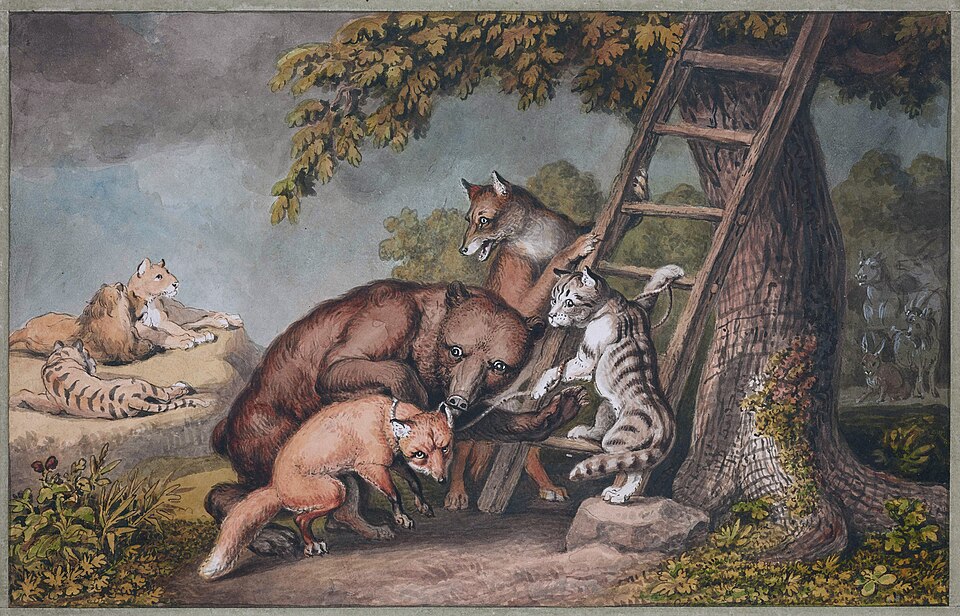
—What was a forged parchment, like the ones you made?
Good question, my child! A parchment is a sheepskin well scraped and dried, on which people wrote in my time. No paper like yours, no, animal skin! Real important letters bore a lord's seal. I, the trickster, made fake documents to make people believe lies. Imagine a false letter of permission, written with fine phrases, that opens all doors. The clerics — those learned men who could read and write — were the only ones to decipher these texts. So a well-crafted fake parchment could fool even the most learned.
A well-crafted fake parchment fooled even the most learned.
—Is it true that foxes were called 'goupil' before you?
Yes indeed, and that is my greatest pride! In my time, people did not say 'fox'. They said goupil. The fox was the goupil, period. And I was called Renart, it was my very own first name. But my stories were so successful that people ended up calling all goupils... 'foxes'! Imagine a character so famous that his name replaces an entire word in the language. That is what happened to me. Today, every time you say 'a fox', you pronounce a little piece of my name. The goupil has disappeared, and I have remained.
The goupil has disappeared, and I have remained in the language.

—Were your stories known far from your home?
Very far, my child! My adventures were born in France, in Old French, told by jongleurs — those traveling artists who went from castle to castle singing stories. But I was quickly translated into German, Dutch, English, Italian. Imagine a story that passes from mouth to mouth, crosses rivers and mountains, and makes children laugh in countries you have never seen. Why this success? Because everywhere, people love to see a clever little one mock the powerful. Cunning pleases in every kingdom.
Everywhere, people love to see a clever little one mock the powerful.
—What was your home like, where you prepared your tricks?
My home is Maupertuis! A well-fortified castle of my own, hidden in Flanders, up north. Imagine a fortress with secret passages and underground galleries, like a den but bigger. When my enemies came to catch me, I would dash into my tunnels and no one could find me. It was my refuge, my den of mischief. I would bring back my loot in the evening — chickens, leftovers stolen from farms — and I would already be planning my next day's tricks. The great lords had their high towers. I, the little fox, had my clever holes.
Lords had their towers, I had my clever holes.
—What did you eat, and what did it smell like in the morning at your home?
Ah, the morning at Maupertuis! It smelled of damp earth, moss, and chicken feathers. For upon waking, I was already thinking about my stomach. I eat meat, I do: poultry I steal from farmers, game, eggs, sometimes a few fruits. But beware, almost never by honest hunting. Always by cunning! Imagine waking up each morning wondering: “What good trick will I play for my breakfast?” I would watch the farms in the distance, I would spot my prey. And in the evening, content, I would enjoy my loot in my den. That is my day as a hungry and clever fox.
What good trick will I play today for my breakfast?
Read further

This imaginary interview was generated by artificial intelligence from sources documented in Renart's profile. It dramatises what the figure might have said based on what we know about them, but does not constitute attested historical testimony. For primary sources and factual documentation, refer to the full profile.