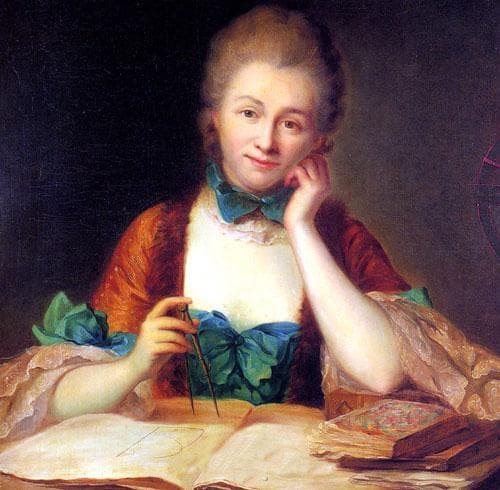
Imaginary dialogue between Élisabeth de Bohême and René Descartes
by Charactorium · René Descartes (1596 — 1650) · Philosophy · Sciences · 5 min read
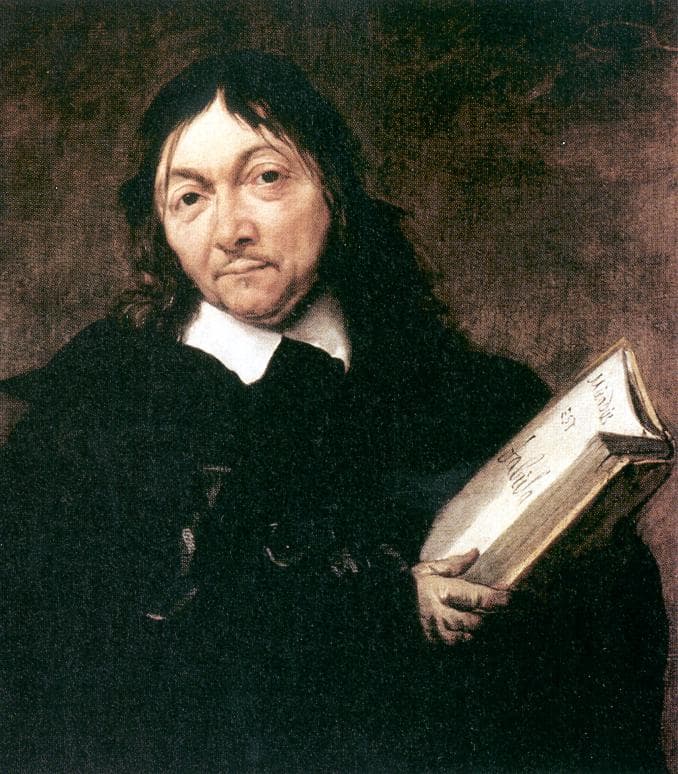
It is in a quiet house in the United Provinces, in the winter of 1643, that Elisabeth of Bohemia meets René Descartes by a softly humming tiled stove. The pale northern light falls on a table cluttered with letters — mostly theirs, exchanged over the past few months on the soul and the body. She knows him through this correspondence before knowing him in person, and she comes that day with her usual questions, those that push him to his limits. He, wrapped in his dark wool coat, welcomes her as the only interlocutor who dares to contradict him.
—My friend, you often speak to me of method, but where did that first certainty come from? Was there a beginning?
There was a night, Madame, that I rarely mention because I would be taken for a visionary. It was in 1619, in Ulm; I was a soldier and the Bavarian winter kept me confined near a stove. That night, three dreams came to me one after the other, so vivid that I wrote them down upon waking as one records an order received. I read in them the mission to unify all the sciences through a single method, that of reason. You may find me superstitious for taking dreams as a sign, I who want to believe only what presents itself clearly to the mind. But it was not the dream that convinced me — it was the twenty years of work that followed and confirmed its promise.
Three dreams came to me so vivid that I wrote them down upon waking as one records an order received.
—You claim to doubt everything. But in our letters, you admitted seeking certainty: how can one doubt without sinking into despair?
You touch the mark, Elisabeth, for the doubt I speak of is not that of the sceptics who revel in it. Mine is an instrument, not a dwelling. I provisionally reject everything that can be shaken — my senses that deceive me, my memories perhaps false — in order to see if anything remains that no force can overthrow. And this remains: that I doubt, therefore I think, therefore I am. I found this truth so firm that all the extravagances of the sceptics could not shake it. You see, I only demolish in order to rebuild on rock, never on sand. Doubt is only a door; I never wanted it as a home.
Doubt is only a door; I never wanted it as a home.
—They call you a philosopher, but you were first a geometer. What did you want to do to the geometry that the Ancients left us?
I wanted, Madame, to restore the clarity it had lost under tangled figures. The Ancients reasoned on drawn lines, and the mind tired itself following countless constructions. I thought that one could name each line with a letter, and translate figures into equations, so that algebra would solve what the compass struggled to show. Thus a curve becomes a formula, and a formula is calculated. Wanting to solve a problem, one first considers it as already done, then gives names to all necessary lines. This seems dry, but it is a liberation: the mind is no longer prisoner of the drawing. The same method that unties my doubts in philosophy unties my curves in geometry.
A curve becomes a formula, and a formula is calculated.
—Why do you live here, in Holland, constantly changing address? Sometimes you even hide the name of your city from me.
Because here, Elisabeth, I am left to think. In this Republic, a man can write without being spied on, and the anonymity of great trading cities serves me better than any prince's protection. If I move often, it is to flee the importunate more than the inquisitors — though I do not forget the other peril. I had finished a treatise, Le Monde, in which I explained the movement of the Earth in the manner of Galileo. When I learned in 1633 of his condemnation by the Church, I withdrew my book from the fire of publication and kept it in my chests. They will reproach me for this prudence; I call it wisdom. A dead man demonstrates nothing more, and I have too much to do to end up at the stake.
They will reproach me for this prudence; I call it wisdom. A dead man demonstrates nothing more.
—You distinguish the soul that thinks and the body that extends. But tell me, how can these two contrary substances act on each other?
That is the question that you alone dare to ask me relentlessly, Madame, and it embarrasses me more than any other. I hold it certain that the soul thinks and the body extends, and that these are two distinct natures. But I also know, from the most common experience, that being united with the body, the soul can act and suffer with it — that sadness tightens the chest, that a wound afflicts the mind. This union, I feel it without conceiving it clearly, and perhaps it must be experienced rather than demonstrated. You press me to explain it by pure reason; I answer that everyday life teaches it better than metaphysics. This is one of the rare places where I concede to you that feeling precedes understanding.
This union, I feel it without conceiving it clearly; it must be experienced rather than demonstrated.
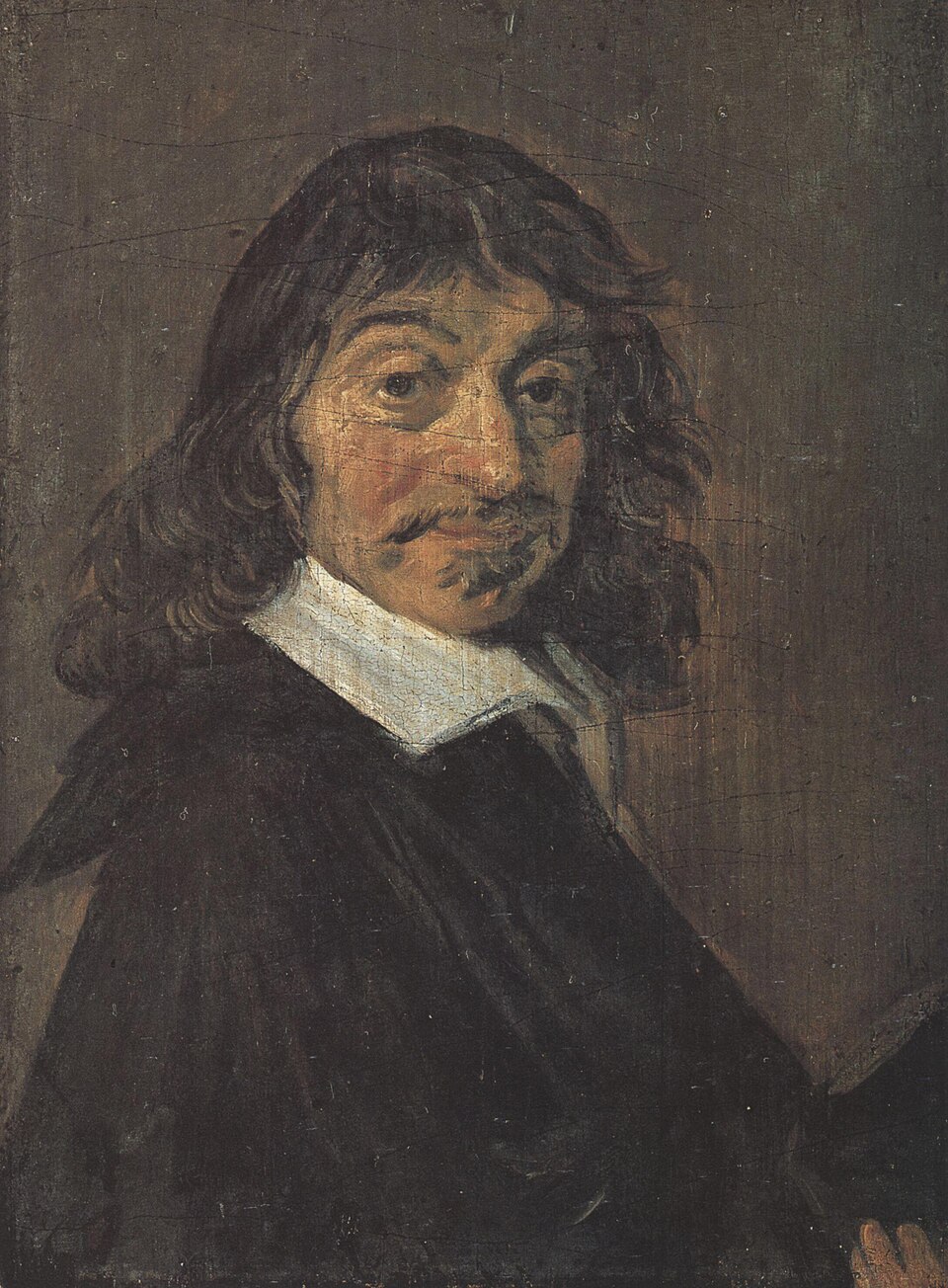
—Our letters always revolve around the passions. Why do you, the man of cold reason, dwell so much on the emotions of the soul?
Precisely because I am thought to be cold, Elisabeth, and I am not. It was your questions that led me there: you wanted to know how the soul can govern its disturbances, and I had to reflect on it to answer you. The passions are not enemies to be stifled, but perceptions that come to us from the body — wonder, love, desire, joy, sadness, hatred. I count six principal ones from which all others arise. Wonder is the first: a sudden surprise of the soul that brings it to consider what seems rare. Well regulated, they serve life; badly guided, they lead it astray. Reason does not suppress them, it tames them. I owe it to you, truly, to have thought all this.
The passions are not enemies to be stifled, but perceptions that come to us from the body.
—It is said that you stay in bed until noon. Is it laziness, as your detractors murmur, or something else?
Let them murmur, Madame; they confuse rest of the body with rest of the mind. Since childhood, my fragile health earned me permission to stay in bed in the morning, and I acquired the most fruitful habit of my life. It is in that still warmth, before the day assails me with its demands, that my thoughts order themselves best. There, without pen or book, I meditate, I untangle, I see clearly. My best insights, in philosophy as in geometry, came to me thus, lying down with half-closed eyes. The world calls it idleness; I see it as the only true labor. Take away my mornings, and you take away my very method.
The world calls it idleness; I see it as the only true labor.
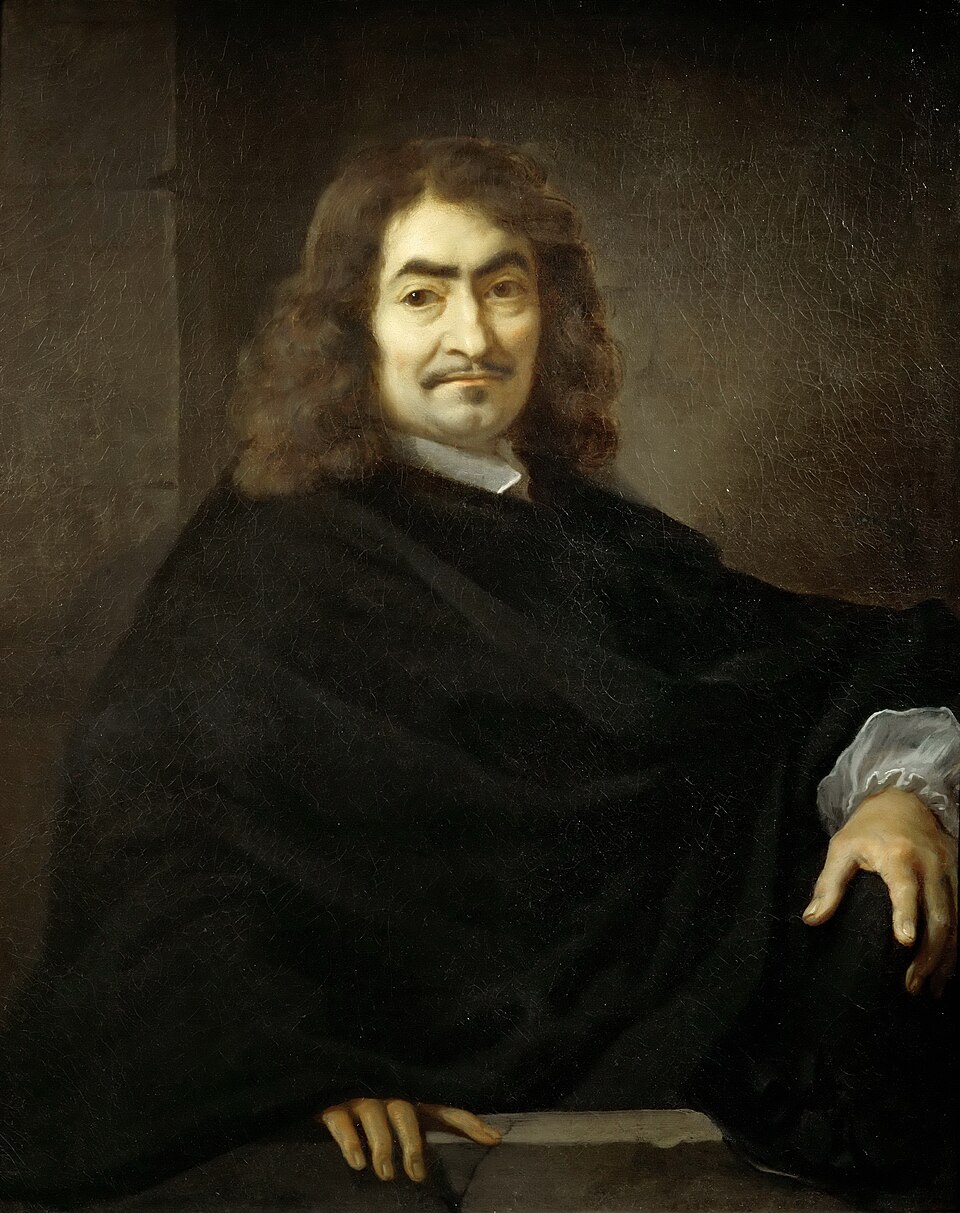
—I hear that Queen Christina is calling you to Stockholm. You, who are cold-natured above all, will you really go deliver yourself to the Swedish winter?
I confess, Elisabeth, the idea weighs on me as much as it flatters me. A queen who wishes to learn philosophy is not easily refused, and I am told she has a sharp mind and a firm will. But I am warned that she demands her lessons at five in the morning, in a palace where the cold bites to the bone. You know better than anyone what my mornings mean to me — tearing them away from the icy dawn is to deprive me of what keeps me alive. I fear this northern climate more than the disputes of theologians. I would like to live long, through a reasoned hygiene of the body; but a royal will bends with difficulty. If I go, it will be with a divided heart.
I fear this northern climate more than the disputes of theologians.
—You also studied light and lenses in your Dioptrique. What do you hope, exactly, from all these optical devices?
I hope, Madame, to extend the range of our eyes as geometry extends that of our mind. Light obeys laws, and whoever knows those laws can grind lenses that bring the stars closer or magnify the infinitely small. In my Dioptrique, I sought how refraction bends rays, so that one could shape lenses more perfect than those of chance. All this stems from my principle: nature is a mechanism, and light a measurable thing, not a mystery. I never separate the scientist from the philosopher — it is the same reason that doubts in metaphysics and calculates the angle of a ray. Understanding vision is still understanding how the soul receives the world.
It is the same reason that doubts in metaphysics and calculates the angle of a ray.
—Deep down, my friend, do you never regret having kept so many thoughts in your chests, for fear of the powers of this world?
Regret sometimes visits me, Elisabeth, I will not deny it before you. To think that Le Monde sleeps in my papers, that so many demonstrations await a more clement time, grieves the heart of a man who writes only for truth. But I console myself by thinking that a truth suppressed is not a truth lost: it waits. I preferred to publish what I could defend without perishing — the Discours, the Méditations — and keep silent the rest until the hour. Better a living philosopher who advances step by step than a martyr whose books are burned with the body. You will say that this is lacking courage; I will answer that patience is also a virtue of the mind.
A truth suppressed is not a truth lost: it waits.
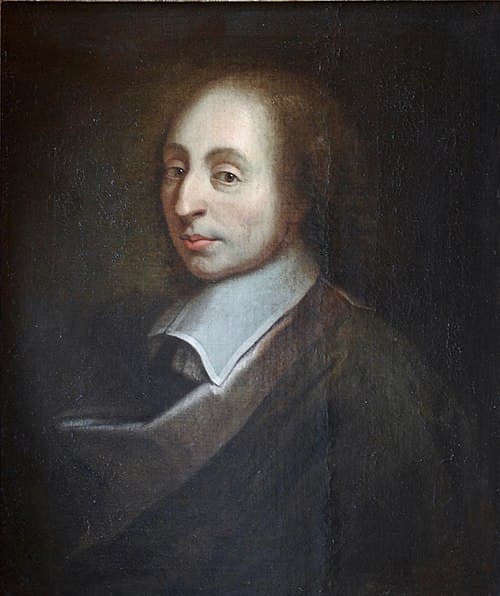
This imaginary interview was generated by artificial intelligence from sources documented in René Descartes's profile. It dramatises what the figure might have said based on what we know about them, but does not constitute attested historical testimony. For primary sources and factual documentation, refer to the full profile.