Imaginary interview with René Descartes
by Charactorium · René Descartes (1596 — 1650) · Philosophy · Sciences · 6 min read
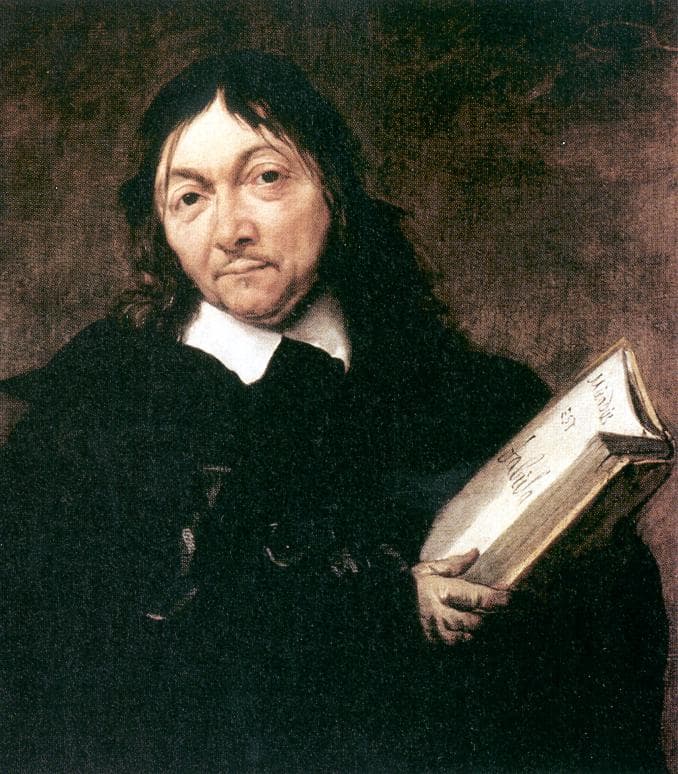
Holland, a morning in the winter of 1643. In a brick house rented under a false name, near a snoring tiled stove, a man in a dark doublet reluctantly receives us — he has barely left his covers, and it is past noon. René Descartes agrees to answer, on condition that the address is not revealed.
—They call you lazy: you stay in bed until noon. What do you say to those who take offense?
Lazy? Let my accusers show me a single book they have conceived between warm sheets! Since the Jesuit college of La Flèche, where I was excused from early rising due to my fragile health, I have understood that the mind never unfolds better than in warmth and silence. In the morning, the senses quiet down, the body stops demanding, and reason remains the sole master of the room. It is there, under my covers, that I turn over a geometric figure or a metaphysical difficulty until it yields. Austere people believe that one works by sweating; I work by meditating, motionless. My pen, in the afternoon, merely copies what the morning conceived.
Austere people believe that one works by sweating; I work by meditating, motionless.
—You left France and changed town more than twenty times. Why so many precautions?
Because tranquility is my primary tool, before the pen and inkwell. In France, visitors, Sorbonne quarrels, and the Church's suspicions would have devoured my time and perhaps more. Here, in the Netherlands, among the merchants of Amsterdam who mind only their accounts, I am left to think in peace. I move often and give my address only to a few select correspondents, for a man too easily found is no longer master of his hours. I love this solitude in the midst of a busy crowd: I can walk there unknown, as in a desert. Twenty moves are a small price for an uninterrupted thought.
A man too easily found is no longer master of his hours.
—How did you come to doubt everything, even your own eyes?
By method, never by whim. I wanted once in my life to overturn all my received opinions to see if any would remain standing. In my Meditations on First Philosophy, I take suspicion to the extreme: “I will suppose then that everything I see is false; I will persuade myself that nothing has ever existed of all that my memory, filled with lies, represents to me.” My senses have deceived me? I set them aside. A dream would make me believe in an absent world? I admit it. But this methodological doubt is not the skepticism of idlers who doubt to do nothing: it is a voluntary demolition, to rebuild on rock. One only digs deep foundations where one wants to raise a lasting edifice.
This is not the skepticism of idlers: it is a voluntary demolition, to rebuild on rock.
—And what remains standing, when everything has been thrown to the ground?
One thing only, but it is worth a world. At the height of doubt, when I supposed that everything deceived me, I realized that I, who thought this, must be something. “I think, therefore I am. This truth was so firm and so assured that all the most extravagant suppositions of the skeptics were incapable of shaking it.” There is the fixed point I sought, like Archimedes who asked only for a fulcrum to lift the earth. From this cogito, I laid my first rule: never to accept anything as true that I do not conceive so clearly and distinctly that I have no occasion to doubt it. Evidence first; everything else is deduced. This is the program of my Discourse on the Method, published in 1637.
I, who thought that everything deceived me, must be something.
—You also revolutionized mathematics. What did you do that no one had dared before?
I married algebra and geometry, two sciences that were kept jealously separate. In The Geometry, which I appended to my Discourse, I show that a curve is not just a line drawn with a compass: it is an equation that can be written, calculated, solved. My method boils down to a simple rule: “To solve any problem, one must first consider it as already done, and give names to all the lines that seem necessary to construct it.” Name the lines with letters, put them into an equation, and reasoning proceeds on its own, like a chain of deductions. Where the Ancients laboriously drew, I write. My successors, they say, now call these coordinates “Cartesian”: let them keep the name, I am content to have opened the way.
A curve is not just a line drawn with a compass: it is an equation that can be written.
—You speak of your method as a guiding thread. Where did you get the certainty that there was a single path to truth?
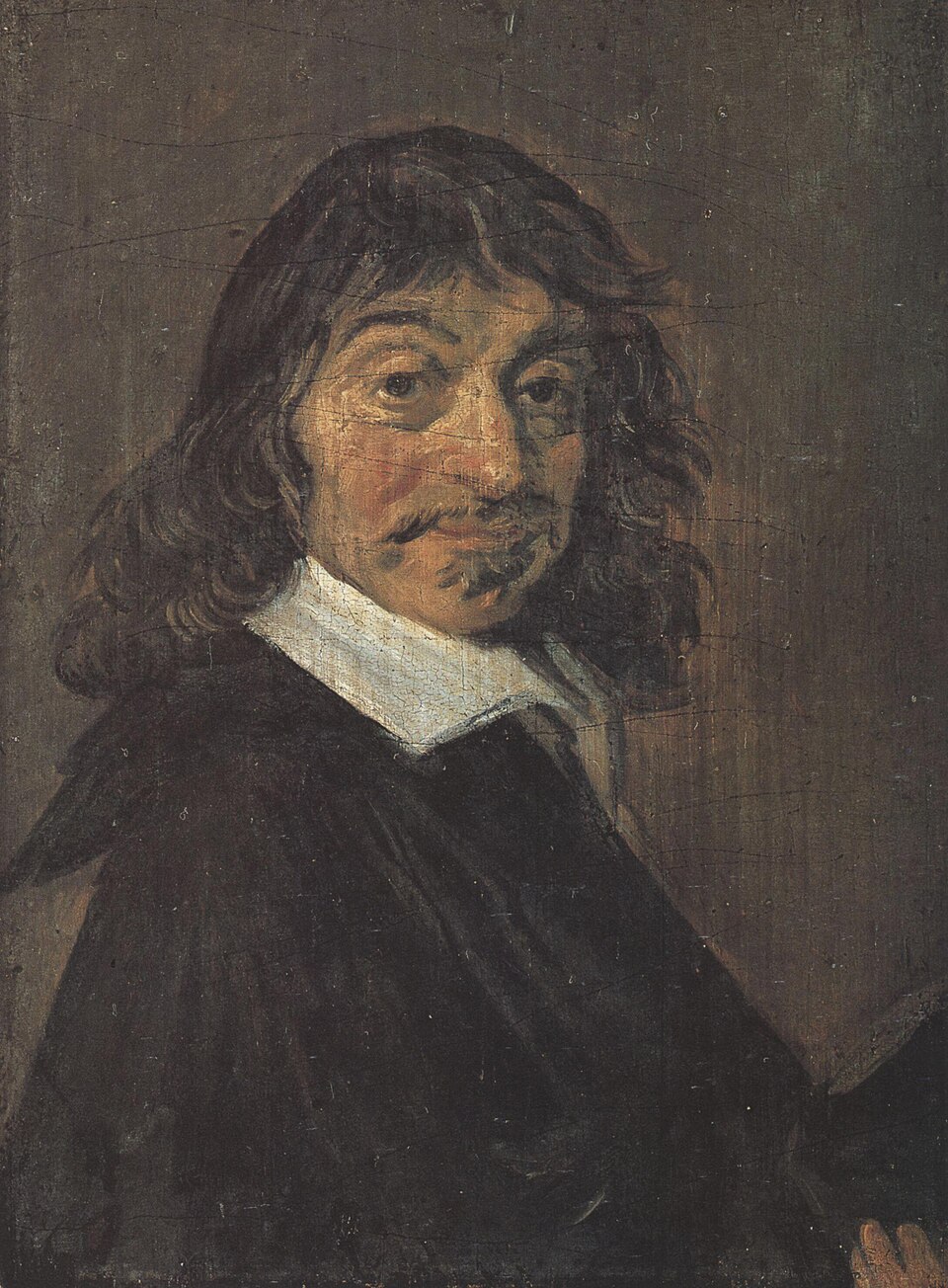
From one night, and three dreams. On November 10, 1619, I was a soldier in the armies of Germany, held near Ulm by winter, locked alone in a well-heated room by the stove. There, without distractions, I glimpsed that all sciences form a single body, linked by the same chains of reasons, and that one method could traverse them all. When night came, three consecutive dreams seemed to seal this intuition; I thought I saw a sign, almost an order. Since then, I have never ceased to pursue this design: to apply to problems of nature the rigor that geometers reserve for their figures. The same clarity that solves a triangle should be able to illuminate the soul, the body, the stars.
All sciences form a single body, linked by the same chains of reasons.
—They say you keep a treatise in a drawer, unpublished. What do you fear?
The fate of Galileo, quite simply. I had almost finished my treatise The World, in which I set forth an entirely mechanical physics, the universe as a play of matter in motion and the Earth carried in its vortices. And then in 1633 news reached me: Galileo, condemned by the Roman Inquisition for supporting the motion of the Earth. I immediately put away my manuscript. Not out of cowardice, but because I love nothing more than my peace, and no physical truth is worth getting burned for. I prefer to keep quiet and live, and let time ripen what must be. My friends are dismayed; I, however, slip my ideas elsewhere, cautiously, into works that the Church cannot bite so easily.
No physical truth is worth getting burned for.
—Does this caution not weigh on you, you who advocate freedom of judgment?
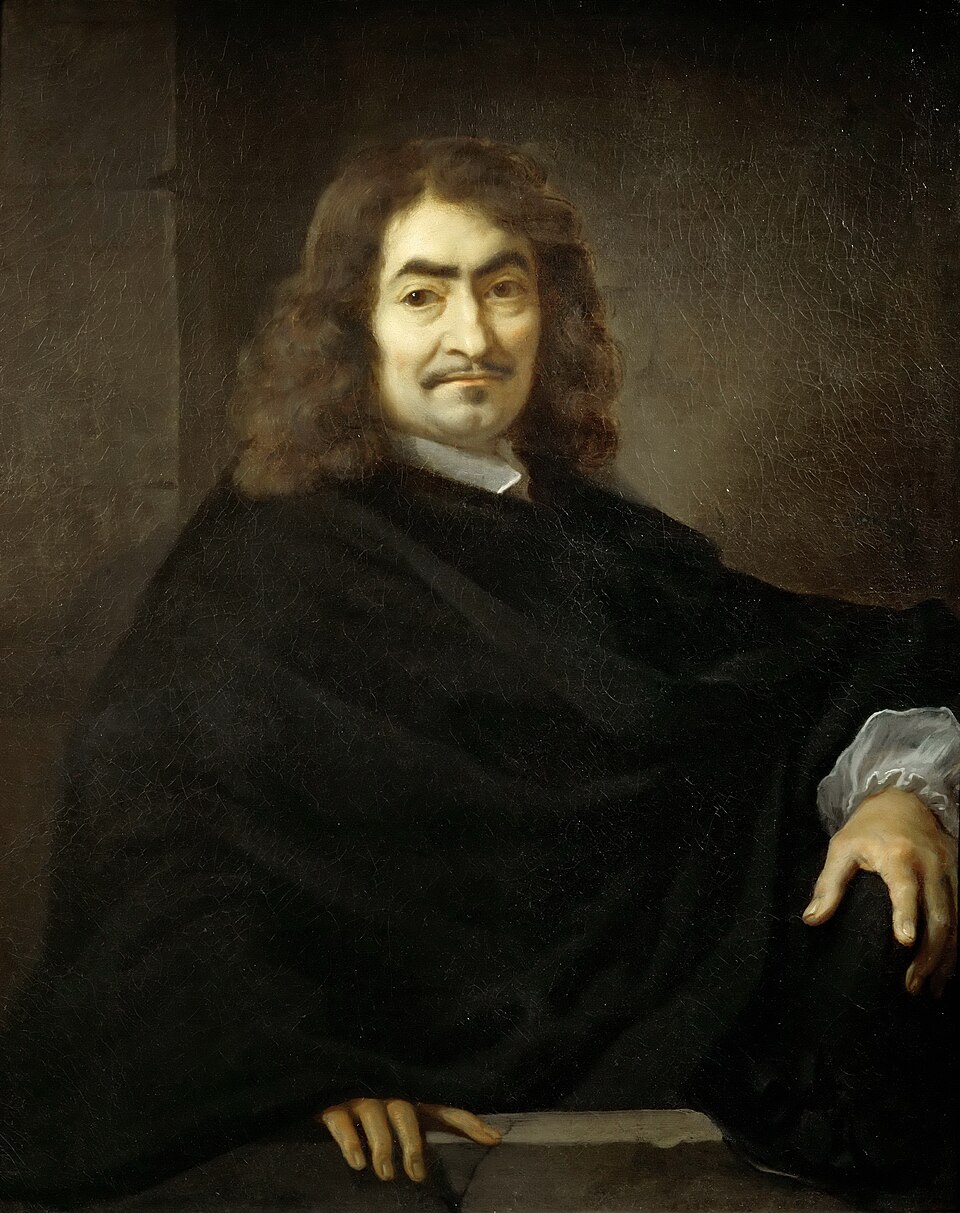
It weighs on me, certainly, but I distinguish two orders of things. Regarding physics and the arrangement of the stars, I can wait, scheme, choose my moment — a vortex of subtle matter does not grow impatient. But regarding the method itself, the way to conduct one's reason, there I yield nothing, for no tribunal can condemn a man who merely doubts in an orderly fashion. That is why I publish my Discourse and keep my World in a drawer. If I lived in France, under the eye of the doctors, this caution would be a chain; here, in free Holland, it is only a calculation. Consider that my treatise may not appear until after my death: what does it matter, truths have no age, and they will know how to wait for me.
No tribunal can condemn a man who merely doubts in an orderly fashion.
—You correspond with Princess Elisabeth of Bohemia. What does this exchange bring you?
A difficulty that none of my demonstrations had been able to resolve, and which a woman of rare intellect forced me to confront. Princess Elisabeth asked me the most formidable question: if the soul is pure thought and the body pure extension — my res cogitans and my res extensa, two substances that everything separates — how the devil can one move the other, how can a will lift an arm? I replied that one must hold together two truths that reason alone struggles to reconcile: “I distinguish two things in the human soul: one is that it thinks, the other is that, being united to the body, it can act and suffer with it.” Our letters are among the most demanding I have written; she pushed me where my systems cracked.
How can a will lift an arm? That is the question a princess forced me to confront.
—These exchanges led you to write about emotions. How does a philosopher of reason come to speak of passions?
Because one governs well only what one has first understood. It was for Elisabeth, who suffered in body as much as in soul, that I undertook The Passions of the Soul. There I treat love, hate, desire, joy, sadness — and wonder, which I place first, for it is the first of all: “Wonder is a sudden surprise of the soul that makes it tend to consider with attention objects that seem rare and extraordinary to it.” These movements arise neither in pure thought nor in pure mechanism, but at their junction, where the body stirs the mind. I examine them as a physicist examines a machine: not to condemn them, but to learn to master them. Reason, you see, is not the enemy of the passions; it is their pilot.
Reason is not the enemy of the passions; it is their pilot.
This imaginary interview was generated by artificial intelligence from sources documented in René Descartes's profile. It dramatises what the figure might have said based on what we know about them, but does not constitute attested historical testimony. For primary sources and factual documentation, refer to the full profile.