Imaginary interview with Rosa Luxemburg
by Charactorium · Rosa Luxemburg (1871 — 1919) · Philosophy · Politics · 6 min read
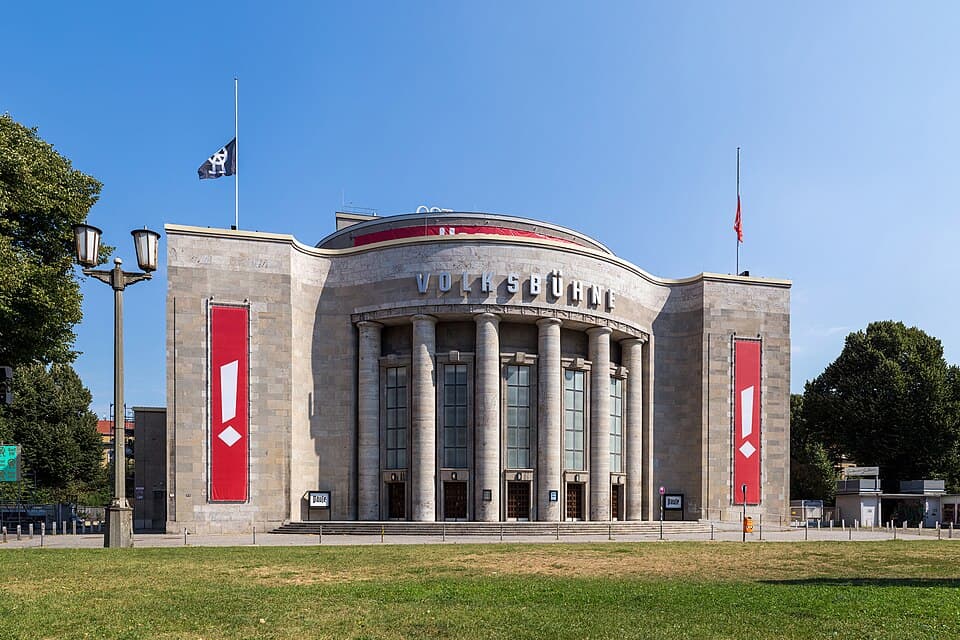
Berlin, December 1918. Barely out of the dungeons where the war had kept her locked away, Rosa Luxemburg receives visitors in a modest apartment cluttered with newspapers and leaflets, while revolution rumbles in the streets. Her voice is calm, her eye sharp; outside already echo the first clashes of the insurrection that, in a few weeks, will cost her her life.
—You were born a subject of the Russian Empire, in a Polish town. How does one become a German citizen when one is stateless and already a revolutionary?
I was born in Zamość in 1871, in the Polish part that the tsar held under his boot. As a child, a bone disease left me with an uneven leg — you learn quickly to walk straight when your body limps. I learned Polish, Russian, German, French, Latin, because a girl without a homeland has only languages for baggage. To study freely, I had to be cunning: in 1898, a sham marriage with Gustav Lübeck procured me the German passport the police refused me. Does that shock you? Bourgeois law is a ticket window; I took the ticket I needed. In Zurich, I earned my doctorate in political economy while so many other women were still waiting for the door to be opened to them. Freedom, you see, is not received as a gift.
A girl without a homeland has only languages for baggage.
—Between the Poland of your birth and the Germany of your struggle, where did you feel at home?
I am always reproached for having one foot in Warsaw and the other in Berlin, as if a revolutionary had to choose a national flag before a red one. I returned to Poland when tsarism was crushing the workers there, at the risk of prison, because the border that separates a Polish proletarian from a German proletarian is drawn by the masters, never by the oppressed. Internationalism is not a beautiful congress idea: it is the only homeland left to me. Nationalists wave their cockades; I have only this stubborn conviction that a Silesian miner and a Hamburg docker resemble each other more than they do their respective bourgeois. My home? It is everywhere people lift their heads.
The border that separates two proletarians is drawn by the masters, never by the oppressed.
—What did the 1905 Russian Revolution teach you, to the point of drawing an entire pamphlet from it?
In 1905, I left for Russian Poland just as the factories were stopping on their own, without any committee having ordered it. There I saw with my own eyes what armchair theorists refused to believe: the mass strike is not a tap that a general staff opens and closes at will. It springs from the depths, it overflows, it teaches the masses their own strength better than a thousand speeches. They threw me in prison for that, and I came out with a book in my head. The Mass Strike, the Political Party and the Trade Unions, published in 1906, is merely the minutes of what the street had taught me. The trade-union bureaucrats wanted to discipline the movement; I had understood that you do not discipline a river, you follow it.
You do not discipline a river, you follow it.
—You place a trust in the masses that many comrades consider imprudent. Why?
Because I have learned more from a spontaneous strike than from all the committees combined. The proletariat is not a herd led to revolution with a whip; it is the only subject capable of liberating itself, and its living errors are worth more than the sterile wisdom of a central bureau. My detractors fear the disorder of crowds; I fear more the order of leaders who confiscate workers' thought in the name of efficiency. Consciousness is not decreed from above; it is forged in movement, in trial, sometimes in defeat. A party that forbids its base to err also forbids it to learn. That is why I hold the red flag with a hand that trembles less before the audacity of the masses than before the caution of the apparatuses.
I fear the order of leaders more than the disorder of crowds.
—In 1899, you directly attacked Eduard Bernstein. What seemed so dangerous to you in his theses?
Bernstein, you see, did not renounce socialism — he postponed it forever. He claimed that by accumulating reforms, trade unions and cooperatives, we would slide smoothly into a new society. Sweet illusion! Reformism mistakes the means for the end and ends up loving the ladder more than the summit. In Reform or Revolution, in 1899, I wanted to draw a sharp line: 'The question is whether we march gradually toward socialism by stages or whether it is through a radical upheaval that we get there.' I do not despise reforms — I wrest them every day for the workers. But to believe that they will lead us to the goal by themselves is to confuse the hammer that chips the wall with the door that knocks it down.
Reformism mistakes the means for the end and ends up loving the ladder more than the summit.
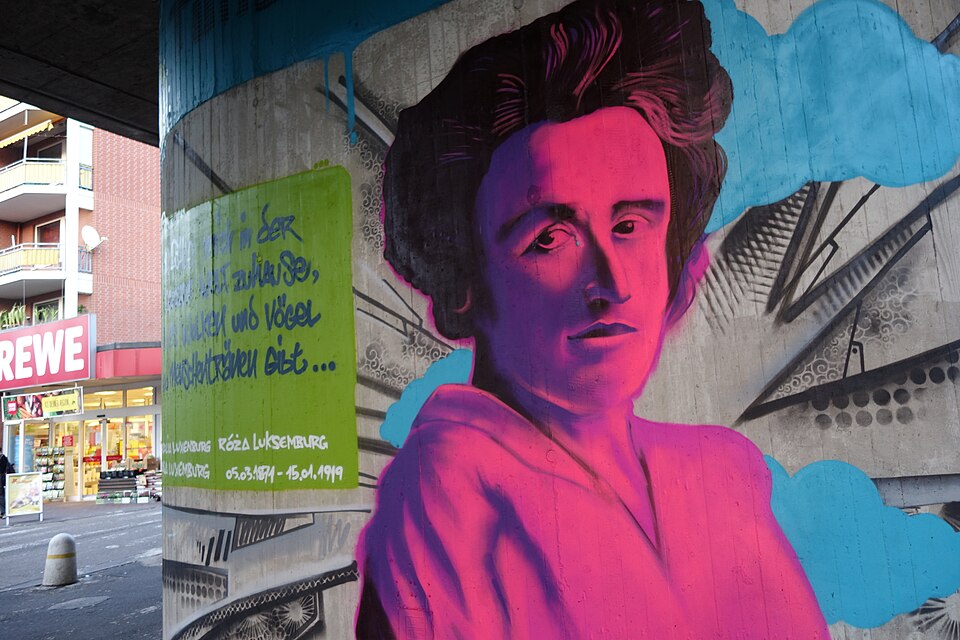
—You spend your days wresting reforms while preaching revolution. Isn't that a contradiction?
Not in the least. My afternoons are spent in meetings with comrades, my evenings in assemblies, and my nights covering leaflets and articles in ink — I have never stopped this ant's work for the smallest wage increase or the slightest hour gained. But I know what this fight is for: not to lull the worker into the comfort of small victories, but to harden him, to teach him in daily struggle that he carries a force. Reform is the school of revolution, never its replacement. He who stops at the first concession wrested is like the traveler who mistakes the inn for the destination. My newspapers, my pamphlets, my pen worn down to the inkwell — all of it aims only to keep alive, under the ashes of compromise, the ember of revolutionary socialism.
Reform is the school of revolution, never its replacement.
—At the Stuttgart Congress in 1907, you and Lenin introduced a famous amendment. What was it about?
At Stuttgart, in 1907, before delegates from across Europe, I defended with Lenin an amendment that said the essential: if the powers unleashed their war, the duty of socialists would be to turn that war against those who had willed it, to change it into revolution. Imperialism is not an accident of diplomacy — it is capitalism arrived at the age of cannons, which needs markets and colonies as fire needs wood. Fine speeches about the fatherland are only the varnish laid over this appetite. I saw faces close up in the hall: many already sensed that when the day came, they would raise their hands for war credits. Antimilitarism, for me, was never a salon pacifism — it was a weapon, the only one that truly disarms.
Imperialism is capitalism arrived at the age of cannons.
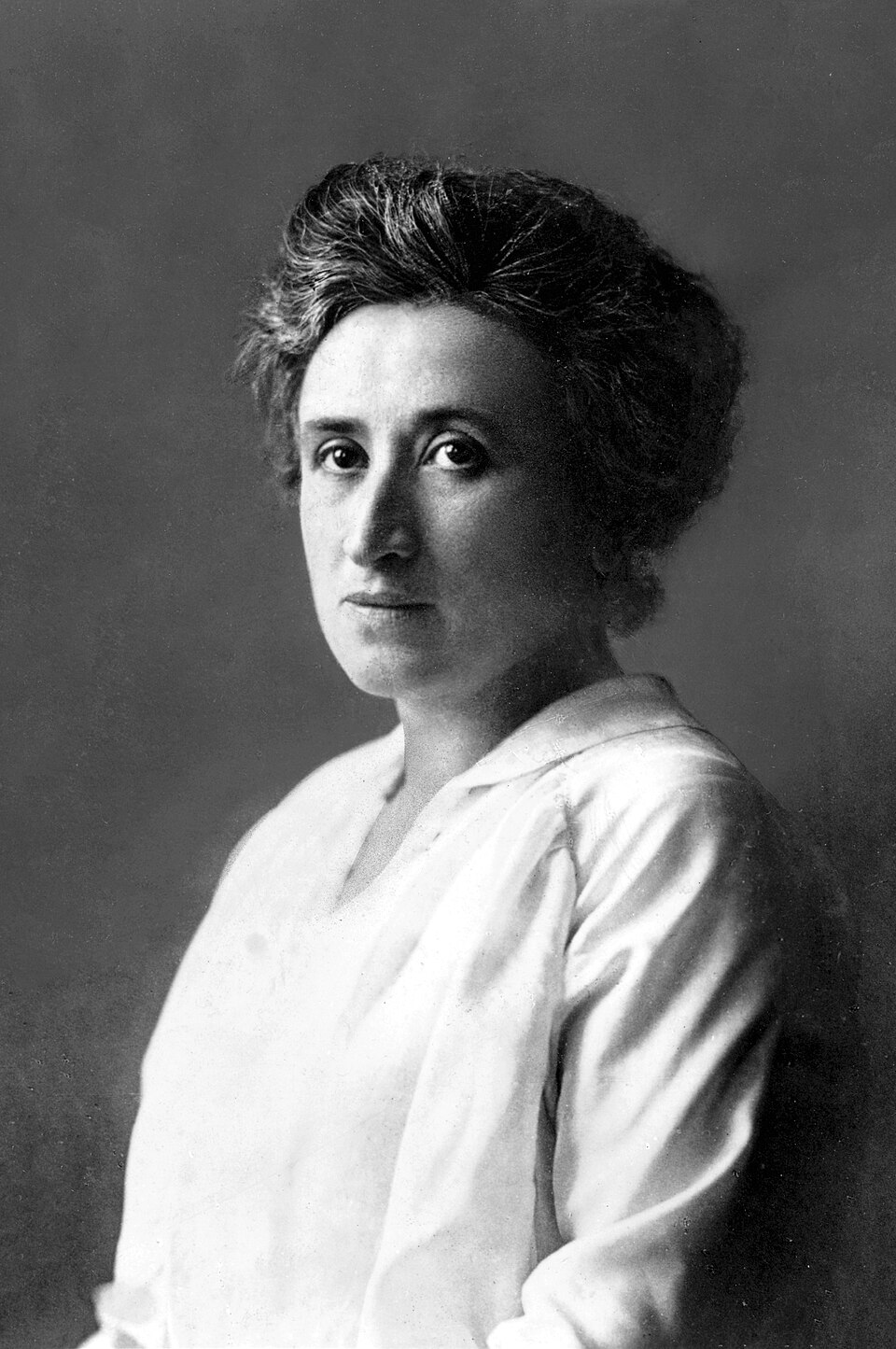
—When Germany entered the war in 1914 and your own party voted for military credits, how did you react?
August 4, 1914 remains for me the darkest day. My party, the great SPD of which I had been the pride and the thorn, raised its hand to vote for war credits — it sent workers to kill each other in the name of the nation, betraying in a single gesture twenty years of internationalist vows. I thought I would die of shame. Rather than keep silent, I founded in 1916, with Karl Liebknecht, the Spartacist League, in secret, under the eye of censorship. We printed our letters and pamphlets under assumed names, hunted, to recall a simple truth: the enemy of the German worker is not the French worker, but the master who sends them both to the slaughterhouse. I paid dearly for this stubbornness — prison awaited me.
The enemy of the German worker is not the French worker, but the master who sends them to the slaughterhouse.
—In prison in Breslau, you wrote letters full of birds and changing skies. How do you reconcile this gentleness with the hardness of your struggle?
People are always surprised that a woman said to be of iron softens over a titmouse. In Breslau, behind bars, I noted the return of the birds, the color of the sky at dawn, the lost bumblebee bumping against my window — and these letters to my friends were my way of staying alive when they wanted to bury me alive. Do you think one can fight for the proletariat if one is incapable of marveling at a cloud? The revolution I want is not a gray barracks; it is made so that every worker too may have the leisure to watch the swallows pass by. My chains never took that from me. The dungeon took my freedom of movement, never my freedom of gaze — and that is perhaps the last thing a jailer does not know how to lock away.
The dungeon took my freedom of movement, never my freedom of gaze.
—You wrote to Mathilde Jacob that true freedom begins with doubt. What did you mean by that?
I wrote to Mathilde Jacob, from my cell, these words that I hold as the heart of everything: 'Freedom exists only for those who believe in it. It is not given, it must be conquered.' What I meant? That a freedom received as alms is only a gilded collar. True freedom begins the day one stops obeying out of habit, when one dares to ask why the world is made this way and not otherwise. This holds for the worker facing his boss as for the militant facing his own party: he who no longer doubts has already given up thinking. I have often been reproached for this grain of doubt even within our ranks. But a revolution that forbids questioning will only give birth to a new prison, better painted than the old one.
A freedom received as alms is only a gilded collar.
Read further
This imaginary interview was generated by artificial intelligence from sources documented in Rosa Luxemburg's profile. It dramatises what the figure might have said based on what we know about them, but does not constitute attested historical testimony. For primary sources and factual documentation, refer to the full profile.