Imaginary dialogue between Mathilde Jacob and Rosa Luxemburg
by Charactorium · Rosa Luxemburg (1871 — 1919) · Philosophy · Politics · 6 min read
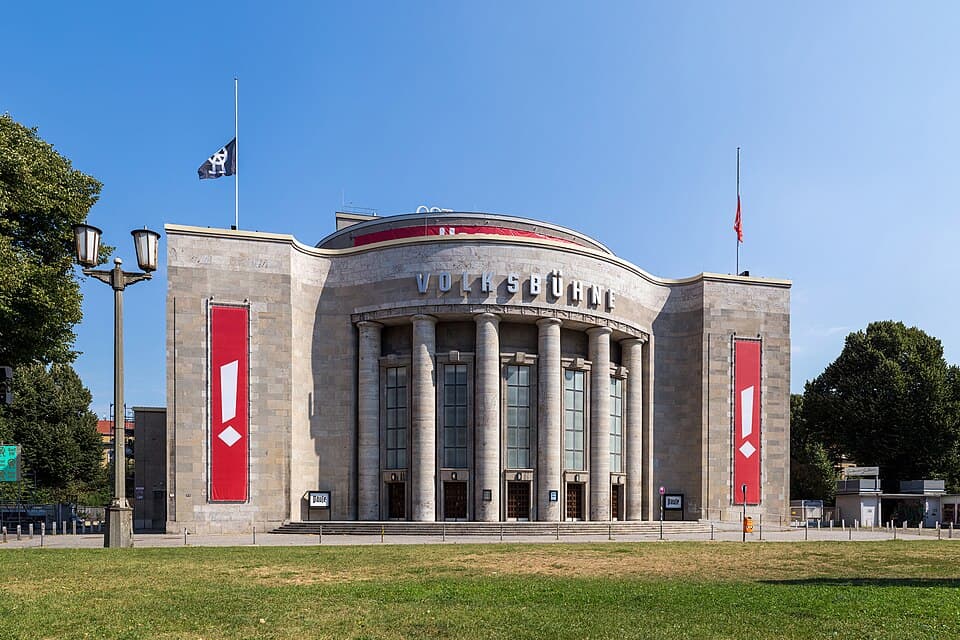
It is in the gray visiting room of Breslau prison, in this winter of 1917, that Mathilde Jacob meets her friend. Light falls from a high window onto the table where the pages that the secretary smuggles out are piled. They have known each other for years — Mathilde copies her letters, brings her dried flowers and books — and today they come to speak not of the activist, but of the woman who watches the tits from her cell. On the sill, a piece of bread for the birds.
—Rosa, you've told me so much about your childhood in Zamość — how did that sickly little girl become this iron woman?
You know, Mathilde, that the bone disease kept me bedridden for months in Zamość, in that Poland under the tsar's boot. They thought I would be crippled forever. But it was there, motionless, that I devoured books — Polish, Russian, German, French, even Latin. My body limped, my mind raced. I think that limp taught me very early to owe nothing to anyone, to conquer everything. When I was denied university because I was Jewish, a woman, and a rebel, I understood that nothing would be given to me. That bedridden child forged her will against injustice before she even knew the word socialism.
My body limped, my mind raced.
—You once confided in me about that marriage to Gustav Lübeck. Why this ruse, you who are so wholehearted in everything?
Ah, that sham marriage! You still smile about it, Mathilde. In 1898, the tsarist regime was pursuing me, and only Germany offered me ground to breathe and act. Marrying Gustav Lübeck was merely a formality on paper — a few signatures, and I obtained the nationality that opened Berlin and the great German workers' movement to me. I never spent an hour under his roof. You see, I have no shame about this ruse: before a state that forbids me to exist, legality is just an obstacle to be circumvented. Before that, it was in Zurich that I had earned my doctorate in economics, in that city of exiles where we remade the world at night. The marriage was a door, nothing more; the struggle, however, was sincere.
I never spent an hour under his roof.
—Before I knew you, you had already broken with Bernstein. What so revolted you about his ideas?
Bernstein wanted to lull us to sleep, Mathilde. In 1899, in Reform or Revolution, I said plainly what I thought: you don't slide gently into socialism through an accumulation of small laws. Reform and revolution are not two paths leading to the same place, one shorter, the other longer. Social reform improves the worker's condition within the framework of capital; revolution changes the framework itself. To confuse the two is to abandon the goal while keeping the words. Bernstein believed he could reform property and the state until they became socialist — the comfortable illusion of minds that fear the break. I reject that tepid reformism. The proletariat does not ask to have its prison renovated; it wants to tear down the walls.
Bernstein wanted to lull us to sleep.
—You often come back to the Russia of 1905. What did you see there that changed your thinking about struggle?
I saw the people rise up without any committee ordering them to, Mathilde. In 1905, I crossed the border to reach a Poland in flames, and I was imprisoned there — but what weeks! The mass strike was not a decision from an office; it was a river overflowing, from workshops to streets, from wages to freedom. Upon my return, I wrote in 1906 The Mass Strike, the Political Party and the Trade Unions to tell our German comrades, so disciplined, so cautious: revolution is not decreed; it is learned in the action of the masses themselves. Our union leaders wanted to keep everything in hand, count the dues. But the spontaneity of the proletariat teaches more than a congress. Life decides, not regulations.
Revolution is not decreed; it is learned in the action of the masses.
—When war broke out in 1914 and you founded Spartacus with Liebknecht, did you feel alone against everyone?
Alone, yes, Mathilde, and you know that better than anyone, you who carried my texts outside. On August 4, 1914, when our own party voted for war credits, I felt the ground open beneath me. Everything we had built — internationalism, workers' solidarity across borders — thrown to the nettles in one session! With Karl Liebknecht, we founded the Spartacus League in 1916, in clandestinity, to say no. For the question is stark: either socialism or barbarism. There is no third way. They send workers to kill each other for the profits of the powerful, and they call that fatherland. My duty was to cry out the truth, even from my cell, even against my own.
Either socialism or barbarism. There is no third way.
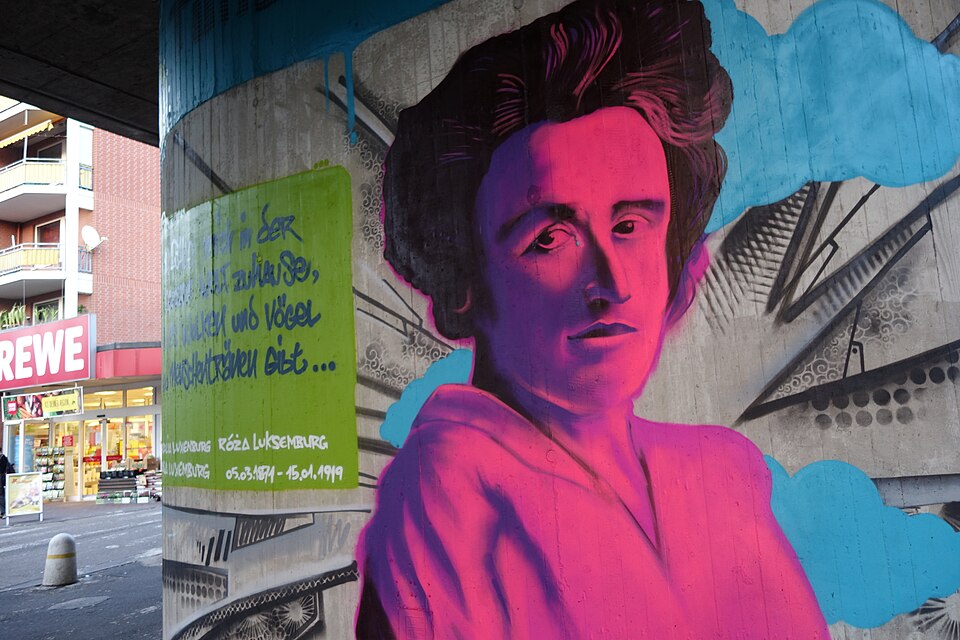
—You are accused of wanting chaos, the disorder of the streets. What do you say to those who fear you as a fury?
Let them read me instead of caricaturing me! They paint me as a firebrand, a sower of chaos, when I have never stopped defending the consciousness of the masses against adventure and the coup de force of a handful. I do not want a minority to seize power in the name of the people; I want the people to take it themselves, with open eyes. Freedom, Mathilde — and I wrote you this — only has meaning for those who think differently. The disorder I demand is the one that overthrows the unjust order of cannons and stock exchanges. Those who fear me truly fear the proletariat conscious of its strength. I am not a fury: I am an economist who has read Marx and who refuses to lie to the workers.
Freedom only has meaning for those who think differently.
—These letters I smuggle out of here — you speak of birds, of clouds. Where does this gentleness come from, in prison?
From the window, Mathilde, simply from the window. People think a cell shrinks the soul; it enlarges it, on the contrary, if you know how to look. I listen to the tits in the morning, I watch the passage of clouds, I note the first flower that forces its way between two paving stones in the yard. This is not weakness or escape: whoever cannot marvel at a flight of starlings will not be able to love people enough to want to free them. Theory without tenderness for the living becomes dry, hard, inhuman. You who receive these pages know that I never separate the revolutionary from the woman who weeps at a beaten buffalo. My revolution, you see, is a matter of the whole heart.
Whoever cannot marvel at a flight of starlings will not be able to love people enough.
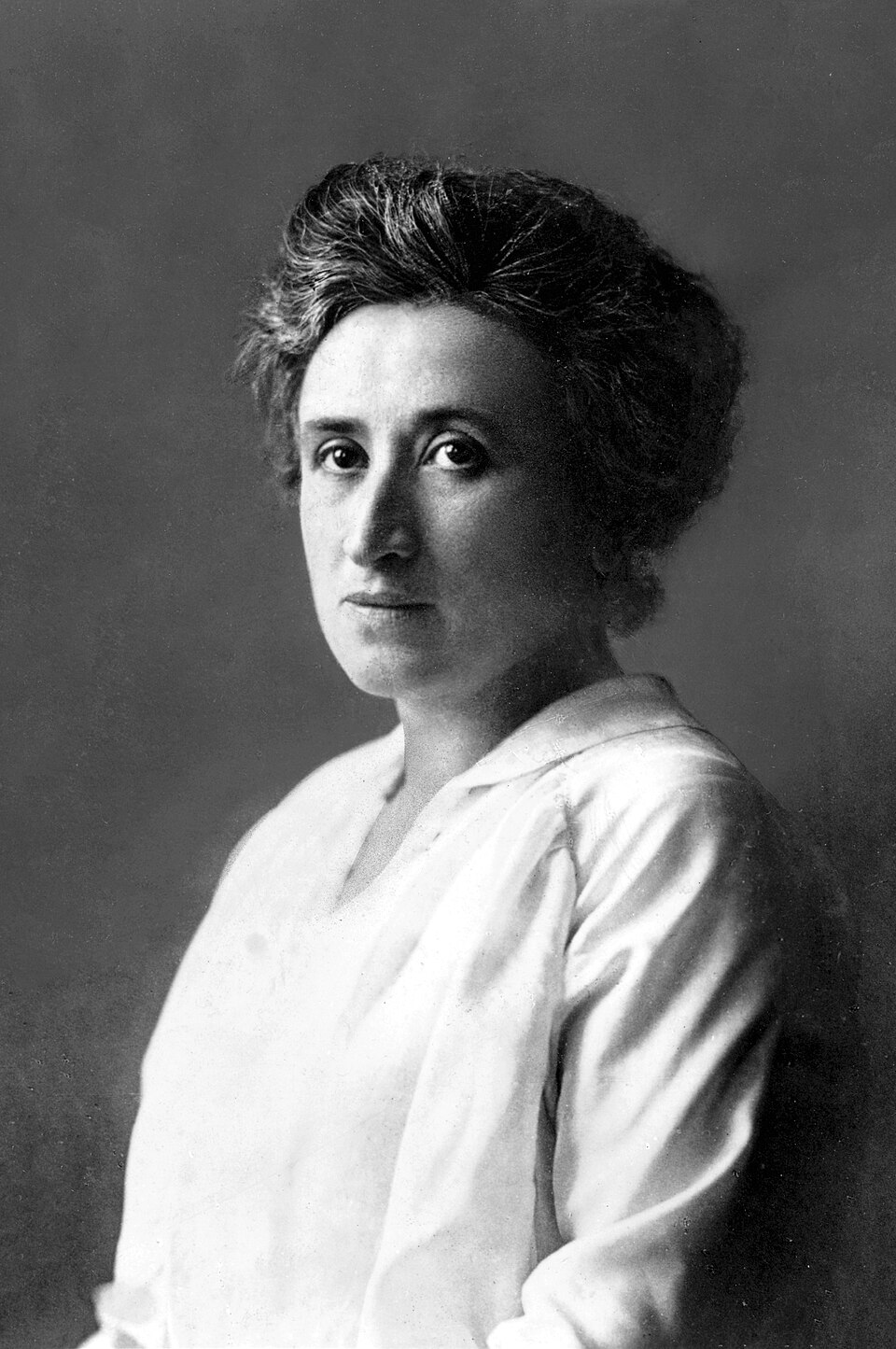
—You recently wrote to me about freedom and doubt. What did you want to tell me, in that note I keep?
That freedom is never something you receive ready-made, Mathilde. It is conquered, like everything worthwhile. And it begins precisely where one dares to doubt, where one dares to ask forbidden questions. A faith that admits no objection is no longer a conviction; it is a dogma — and dogma is the death of living thought. I distrust those who want to found socialism on obedience and silence. The day we forbid doubt among our own comrades, we will have betrayed everything I am behind these bars for. That is why I write these things to you, rather than to a newspaper: to you I can confide my uncertainties without them becoming weapons against the cause. Doubt, properly held, is the beginning of fidelity.
Freedom begins where one dares to doubt.
—You who studied economics in Zurich, tell me: why did that big book on capital cost you so much?
Because it was necessary to show where this machine is going, Mathilde, and no one wanted to see it. In The Accumulation of Capital, in 1913, I sought to understand how capital, in order to survive, must constantly realize its surplus value and transform it into new capital. But it cannot do so indefinitely within its own borders: it must ceaselessly conquer new markets, non-capitalist peoples, lands to devour. That is the secret mechanism of the imperialism you see today bloodying the world! War is not an accident; it is the very logic of accumulation pushed to its limit. I was much attacked for this book, even within our ranks. But I do not write to please; I write so that the worker understands the machinery that crushes him.
War is not an accident; it is the very logic of accumulation.
—When all this is over, Rosa, what do you hope to leave to those who will continue the path after us?
Not formulas to recite, Mathilde, above all not! I dread more than anything disciples who turn a living thought into a catechism. What I would like to leave is a method: to face reality squarely, never to separate theory from the action of the masses, and to keep that courage to say no when everyone says yes. I wrote in prison an Introduction to Political Economy so that workers themselves could understand, without master or priest. If people remember of me that one must think for oneself and love justice more than one's own comfort, then I will not have lived in vain. The rest — my mistakes, my quarrels — let time do with them what it will. You who have copied so many of my pages know that I never sought to be right alone, but to awaken.
I dread more than anything disciples who turn a living thought into a catechism.
Read further
This imaginary interview was generated by artificial intelligence from sources documented in Rosa Luxemburg's profile. It dramatises what the figure might have said based on what we know about them, but does not constitute attested historical testimony. For primary sources and factual documentation, refer to the full profile.