Kids interview Rosa Luxemburg
by Charactorium · Rosa Luxemburg (1871 — 1919) · Philosophy · Politics · 5 min read
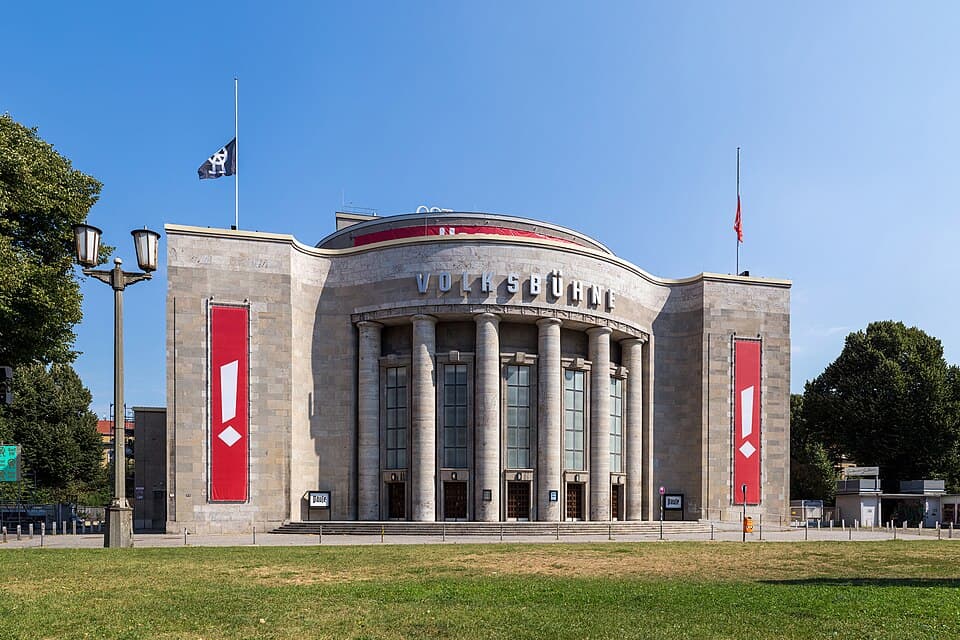
That morning, two middle school students on a field trip push open the door of a small room filled with books and newspapers. A sharp-eyed woman waits for them, a shawl over her shoulders. She motions for them to sit close: Rosa Luxemburg is about to speak to them as if they were young friends.
—Where were you born, and what was your childhood like?
I was born in 1871 in Zamość, a small Polish town that then belonged to the tsar's empire. Imagine dirt roads, horses, no engine noise. As a child, I had a bone disease: I kept a slight limp all my life. You know, my child, that could have made me sad. But I decided to turn my room into a kingdom. I read, I learned languages. In the end, I spoke five: Polish, Russian, German, French, and Latin. When the body moves slowly, the mind can run far.
When the body moves slowly, the mind can run far.
—Why did you get married just for papers?
Ah, sharp eye! Yes, in 1898, I married a certain Gustav Lübeck. But we weren't in love: it was what we called a sham marriage, a fake marriage. Imagine a locked door, and this marriage was the key. The tsar was persecuting me for my ideas. By marrying Gustav, I became German, and Germany could no longer send me back to Poland. Before that, I had already studied at Zurich, in Switzerland, where I earned a doctorate in economics. Sometimes, to stay free to think, you have to be a little cunning with the rules.
—What's the difference between changing things gradually and making a revolution?
Now that's a question that occupied me all my life! In 1899, I wrote a text, Reform or Revolution. A man named Bernstein said: no need to turn everything upside down, let's improve society bit by bit, like renovating an old house room by room. I answered: you can repaint the walls all you want, but if the foundations are cracked, the house will collapse. The two paths, gradual or sudden, don't lead to the same place. Reformism is the idea of changing everything gently, through the law. I didn't believe in it. I thought we had to rebuild the whole house.
You can repaint the walls, but if the foundations are cracked, the house will collapse.
—Did you see a real revolution? What was it like?
Yes! In 1905, in Russia, the people rose up against the tsar. I was there, and I was even imprisoned. But I saw something incredible: millions of workers, on the same day, putting down their tools and stopping work. We call that a mass strike. Imagine all the factories suddenly falling silent, trains stopping, the whole city holding its breath. The bosses then discover a simple truth: without the workers' arms, their machines are worthless. In 1906, I wrote a book to tell of this power. It's the workers' silence that makes the most noise.
It's the workers' silence that makes the most noise.
—You always talk about the 'proletariat' — what does that mean?
That's a big word, let me explain. The proletariat are all the people who own nothing but their two hands to work. No factory, no land, no fortune: just their strength and courage. In the morning, they sell their day's labor for a little bread. In my time, there were millions of them, in mines, spinning mills, dark workshops. I spent my afternoons with them, in meetings, writing pamphlets. I wanted them to understand one thing: alone, they are weak; together, they are the most powerful force in the world.
—Why were you against the war when everyone else was for it?
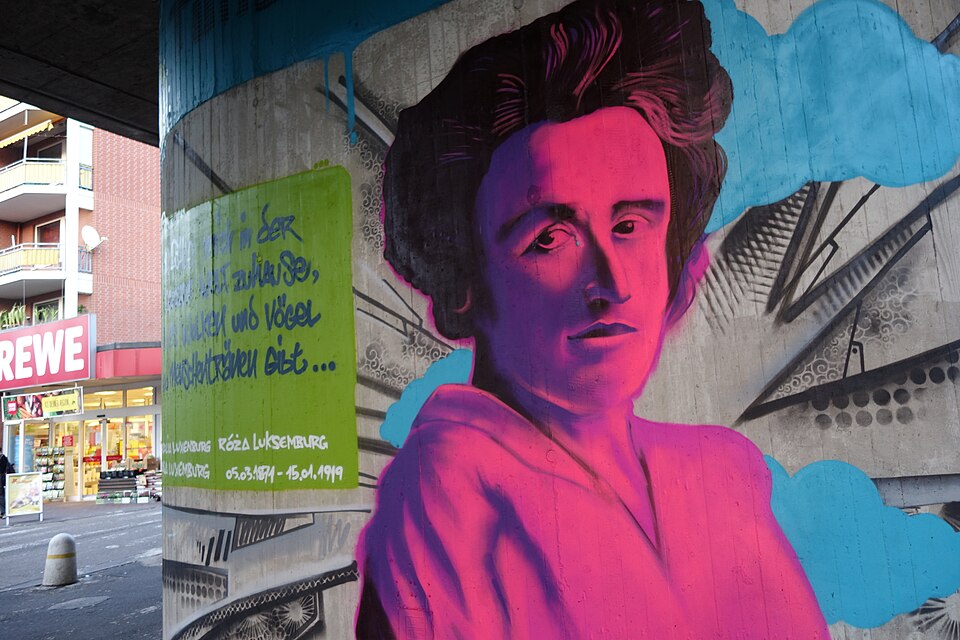
In 1914, when the Great War broke out, almost everyone was cheering, flags waving. My heart was heavy. French workers were asked to kill German workers, when they had the same life, the same poverty. For whom? For the powerful. I refused to be silent. With my friend Karl Liebknecht, in 1916, I founded the Spartacus League, a small group that dared to say no to war. It cost me prison. But you know, my child, saying 'no' when the whole crowd shouts 'yes' is sometimes the greatest courage.
Saying 'no' when the whole crowd shouts 'yes' is sometimes the greatest courage.
—You said we had to choose between two paths — which were they?
Yes, in 1918, I issued an appeal to the workers. I told them humanity had arrived at a fork in the road. On one side, barbarism: war, violence, people tearing each other apart endlessly. On the other, socialism: a world where we share, where no one crushes anyone. And between the two, I repeated, there is no third road. Imagine a traveler arriving at a fork in the night. He must choose; he can't just stand there. For me, this choice was the most important of all. That's what I wanted to engrave in hearts: choose, always, and don't hide.
—What was prison like? You must have been terribly bored.
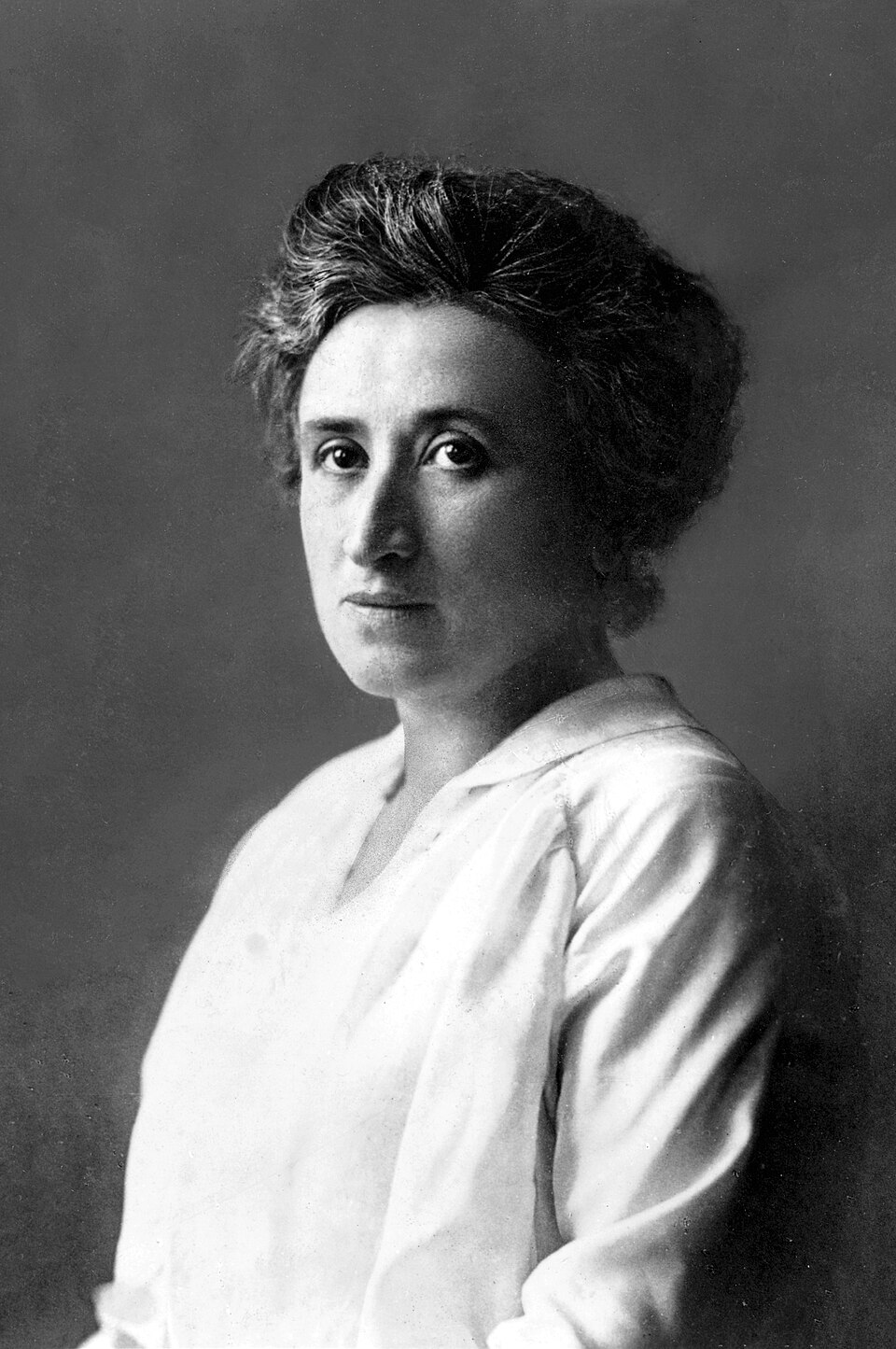
I spent a large part of the war locked up, especially in Breslau. A cell, walls, and chains: yes, it was hard. But let me tell you a secret. Through my little window, I watched the birds. I learned to recognize their songs, I noted the tits passing by, the color of the sky. I wrote letters to my friends, secretly, full of these little wonders. The theorist who spoke of revolution also knew how to weep with joy at a flower. They had only imprisoned my body. My gaze flew away with the birds over the walls.
They had only imprisoned my body: my gaze flew away with the birds.
—Were you afraid of dying for your ideas?
I won't lie to you, my child: it was dangerous. But you see, I once wrote that freedom is not received like a gift. It is conquered, and it begins where you dare to ask questions, where you doubt. So how could I have stayed silent out of fear? I had spent my life telling people to be brave. I had to be brave too. I was killed in 1919, in Berlin, by soldiers. But you see, I'm still here, in front of you, talking to you. That's the real victory: ideas don't die in a canal.
Freedom is conquered, where you dare to ask questions.
—If you were talking to us today, what would you want us to remember?
If I could slip one thing into your pocket, it would be this: never believe something just because it's repeated to you. All my life, I wrote, in my newspapers, my pamphlets, my books. Not to be right against others, but to awaken sleepy minds. Look at the world, ask questions, doubt. When you see an injustice, don't say 'that's how it is.' Ask 'why?'. I overcame a lame leg, exile, prison. You already have the greatest strength: your curiosity. Keep it precious; it's worth more than all the gold in the world.
When you see an injustice, don't say 'that's how it is' — ask 'why?'.
Read further
This imaginary interview was generated by artificial intelligence from sources documented in Rosa Luxemburg's profile. It dramatises what the figure might have said based on what we know about them, but does not constitute attested historical testimony. For primary sources and factual documentation, refer to the full profile.