Imaginary dialogue between Maurice Wilkins and Rosalind Franklin
by Charactorium · Rosalind Franklin (1920 — 1958) · Sciences · 5 min read
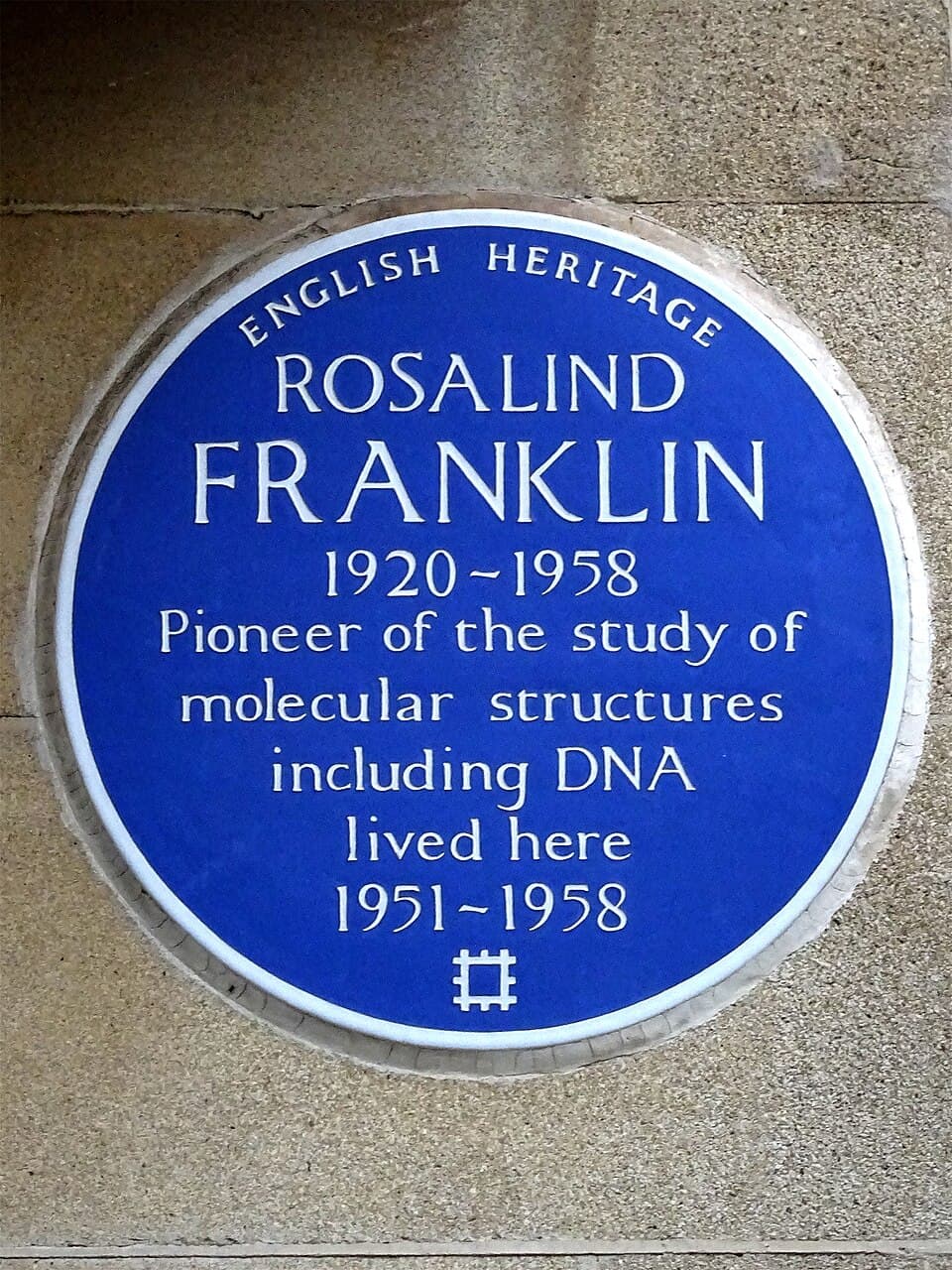
It is in the cluttered laboratory of Birkbeck College that Maurice Wilkins meets Rosalind Franklin, on a gray autumn afternoon in 1957. On the bench, diffraction images of the tobacco mosaic virus are still drying, and the acrid smell of developer hangs in the room. The two researchers have known each other for six years, since King's College where their collaboration quickly turned to mistrust. Wilkins comes that day without any apparent rivalry, almost at peace, to listen to the woman he so misunderstood.
—Rosalind, even before our quarrels at King's, you learned diffraction in Paris. What did that French lab really give you?
Paris made me a crystallographer, Maurice. At the Central Laboratory of Physical Chemistry, between 1947 and 1948, I learned to tame X-rays like one learns a musical instrument — patiently, with my fingers as much as my mind. Jacques Mering showed me that you could read disordered matter, coal, fibers, without betraying it. It was a demanding but joyful science, free from the hierarchies that stifled me elsewhere. I worked entire days on my diffractograms, and in the evenings I walked along the Seine, free. Everything I later did on DNA rests on those Parisian gestures. Without Paris, there would have been neither Photo 51 nor anything else.
Paris made me a crystallographer, like one learns a musical instrument — with my fingers as much as my mind.
—When you arrived at our lab in 1951, I thought you were my assistant, while you knew you were head of your own research. Do you forgive that misunderstanding?
That misunderstanding, Maurice, was never mine. I was entrusted with the DNA diffraction unit, with my own hands and my own judgment, and I was presented to you as an assistant. How can you build a science together on such a misunderstanding? I did not come to King's College to serve, but to search. I was perhaps stiff, I admit; but I was defending the only ground a woman could then hope to hold: the rigor of her own data. You found me difficult. I was simply determined not to disappear behind someone else's work.
I was defending the only ground a woman could hold: the rigor of her own data.
—Let's talk about it, finally. Photograph 51, that image from 1952 on its plate — what did you see, you, when you developed it first?
I saw a cross. A large, clear cross in the center of the image, and around it, those spots arranged with a regularity that leaves no doubt: the signature of a helix, Maurice. The B form was so well hydrated, so well oriented, that the pattern shouted its geometry. But I am a crystallographer, not a fortune-teller: I refused to proclaim a structure that my measurements did not yet fully demonstrate. I needed the numbers, the spacings, the Patterson function. That caution, which I have been so reproached for, was not blindness — it was honesty. Photograph 51 spoke clearly; I wanted it to speak correctly.
Photograph 51 spoke clearly; I wanted it to speak correctly.
—You know that image circulated to Cambridge, to Watson and Crick. How do you feel knowing that others built their model on your picture?
That my work fed their model does not hurt me in itself, Maurice — science advances that way, from hand to hand. What weighs on me is the manner. My data were looked at without my having a say, my diffractograms were made to speak before I had made them speak myself. I had my own calculations, my own conclusions toward the double helix; I was not a mere supplier of raw material. If we had truly collaborated, you and I, perhaps that model would have borne our four names. I do not claim glory. I only ask that the crystallographer not be erased behind the crystal.
I do not claim glory. I ask that the crystallographer not be erased behind the crystal.
—At King's, you were excluded from the professors' common room, reserved for men. How did you bear those daily humiliations?
One does not bear such things, Maurice: one gets around them, day after day, until exhaustion. Lunch was taken among men, decisive conversations took place where I could not enter. I learned to do without, to concentrate my life in the laboratory, where my images, at least, did not judge me for my sex. Some took my reserve for arrogance. But when every word can be held against you, silence becomes armor. I was not cold; I was on guard. And believe me, nothing wears out a female researcher more than having to prove twice what a colleague states once.
Nothing wears out a female researcher more than having to prove twice what a colleague states once.
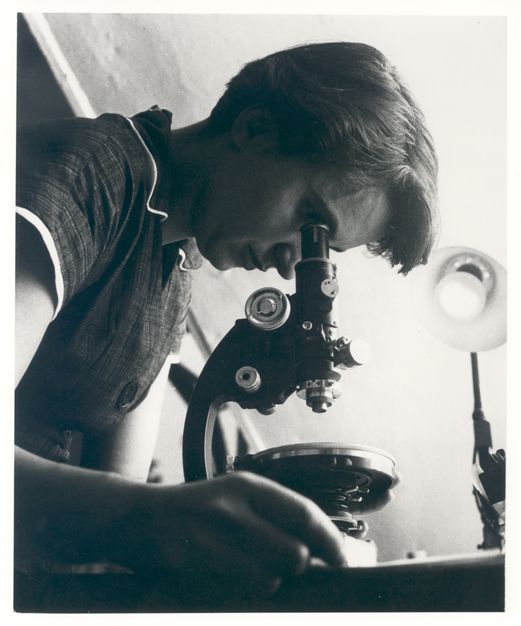
—People often forget that before DNA, you studied coal during the war. Does that distant work seem to belong to the same life?
To the same life, yes, and to the same method. During the war, in London, I studied the microstructure of coal, its porosity, how it transforms under heat — research useful for the defense effort, especially for gas masks. It seems humble next to DNA, but that is where I understood how X-rays reveal the hidden order of the dullest substances. Coal taught me patience before imperfect matter. The molecule of life or a lump of coal: for the crystallographer, it is the same eye, the same rigor. Nothing in my path is a detour; everything converges.
Coal taught me patience before imperfect matter.
—Here at Birkbeck, you left DNA for viruses. Why this turn to the tobacco mosaic virus after so many battles?
Because at Birkbeck, at last, I was allowed to breathe. John Bernal welcomed me with trust, without asking me to justify my existence. The tobacco mosaic virus is a magnificent object for diffraction: regular, helical, almost docile under the rays. I was able to show that its RNA was not at the center, as was believed, but wound inside the protein coat. That is a discovery I am as proud of as of DNA. And this work freed me from the resentments of King's. Here, my team is united, my images speak, I am listened to. I have rediscovered the pure joy of searching — that of Paris, that of my beginnings.
The virus freed me from resentments; I rediscovered the pure joy of searching.
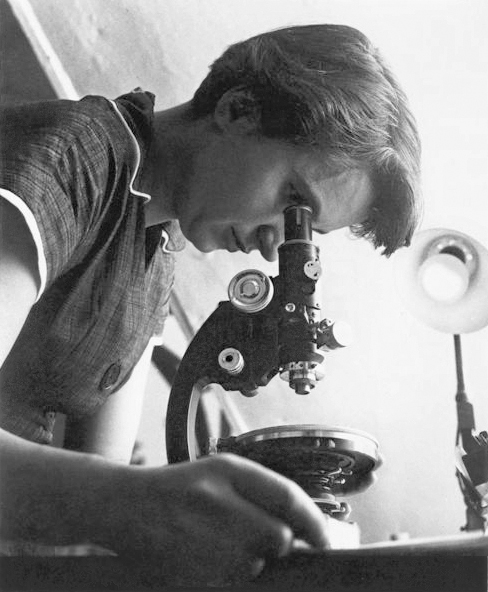
—All those years bent over the diffractometer, exposed to rays without much protection — did you think about the cost it might exact?
We didn't think about it, Maurice, neither you nor I. X-rays were our daily tools; we worked for hours near the tubes without fear. Today I wonder, inevitably. My body has paid a tribute I did not see coming. But I do not intend to turn my science into regret: we moved forward with the means and caution of our time, no more. If I shortened something, it was by doing exactly what I loved. Many men die old from a life they did not choose; I lived every day in the research I had chosen. That too is a form of luck.
If I shortened something, it was by doing exactly what I loved.
—Since your illness, diagnosed last year in 1956, you have not left the bench. Where does this stubbornness to keep working come from?
From the fact that work is the only thing illness has not taken from me. I have been operated on, treated, and between hospitalizations I come back here, to my viruses, to my images. My hands still hold, my eye still reads diffractograms: as long as that lasts, why stop? I do not want pity, Maurice, least of all yours. Research gives me a horizon when medicine promises none. My team counts on me, the TMV has not given up all its secrets, and I still have so much to understand. As long as there is an open question on the bench, I am not truly sick — I am busy.
As long as there is an open question on the bench, I am not sick — I am busy.
—If history should one day remember the woman of science you are, what would you like it to retain, beyond our quarrels?
Let it retain the data, Maurice, not the quarrels. Let it simply say: here is a researcher who never claimed more than what her images demonstrated. I do not need to be painted as a martyr or a heroine; those pictures always betray the truth of a life. I would like people to look at my diffractograms of coal, DNA, viruses, and recognize in them the same rigor, the same honesty before matter. The rest — the closed common rooms, the shared wrongs between you and me — belongs to our human pettiness. Science, however, does not lie. It is to her that I entrust my name, not to grudges.
Let it retain the data, not the quarrels: I never claimed more than what my images demonstrated.
This imaginary interview was generated by artificial intelligence from sources documented in Rosalind Franklin's profile. It dramatises what the figure might have said based on what we know about them, but does not constitute attested historical testimony. For primary sources and factual documentation, refer to the full profile.